

 作者中心
作者中心 专家审稿
专家审稿 责编办公
责编办公 编辑办公
编辑办公
Range-ambiguous Clutter Separation and Suppression Method for Airborne Bistatic Radar Based on Beam Pattern Reconstruction
-
摘要: 空时自适应处理(STAP)是机载雷达地/海杂波抑制和运动目标检测的关键技术。然而,在距离模糊条件下,机载双基地雷达所面临的杂波非平稳性会破坏训练样本的独立同分布假设,导致传统STAP方法性能显著下降。针对该问题,该文首先分析了基于常规波束形成的解模糊方法中存在的主瓣增益损失与旁瓣抑制之间的固有矛盾;继而提出一种基于阻塞矩阵级联自适应波束形成的距离模糊杂波分离方法,虽在一定程度上提升了性能,但因引入噪声畸变而存在局限性。为克服上述方法的不足,该文进一步提出一种基于波束图重构的距离模糊杂波抑制方法。在主瓣杂波估计和子阵处理的基础上,该方法通过构建包含波束保形约束与旁瓣控制项的优化问题,直接设计空域滤波器权值,从而在分离不同模糊距离杂波的同时,有效兼顾主瓣目标增益与低旁瓣性能。随后,对分离后的杂波进行角度-多普勒补偿,并利用子阵级多普勒三通道联合处理空时自适应处理(3DT-STAP)完成最终抑制。仿真结果表明,与典型方法相比,该文所提方法能够更有效地分离不同模糊距离区间的杂波,主瓣凹口宽度显著收窄,且输出信杂噪比损失控制在3 dB以内,显著提升了距离模糊场景下的杂波抑制性能与目标检测能力。Abstract: Space-Time Adaptive Processing (STAP) is a key technique used for ground/sea clutter suppression and moving target detection in airborne radar. However, under range ambiguity conditions, the inherent clutter nonstationarity in airborne bistatic radar violates the independent and identically distributed assumption required for training samples, significantly degrading the performance of conventional STAP methods. To address this issue, this study first analyzed the limitations of the Conventional Beamforming (CBF)-based disambiguation approach, which exhibits a trade-off between mainlobe gain loss and sidelobe suppression. A method based on a cascaded blocking matrix and adaptive beamforming is proposed for separating range-ambiguous clutter. Although this method improves upon the CBF-based approach, it introduces noise distortion, which limits further improvements in clutter separation and suppression accuracy. Hence, a novel method based on beam pattern reconstruction is proposed to overcome this drawback. This method formulates an optimization problem incorporating beam-maintenance and sidelobe-control terms to design spatial filter weights, effectively separating range-ambiguous clutter while preserving the mainlobe target gain and suppressing sidelobe clutter. Subsequently, angle-Doppler compensation is applied to the separated clutter, followed by final suppression using a subarray-based STAP method incorporating a joint three-channel Doppler transform. Simulation results revealed that compared with typical methods, the proposed approach more effectively separated clutter, significantly narrowed the mainlobe notch width, and limited the output signal-to-clutter-plus-noise ratio loss to <3 dB, thereby markedly enhancing clutter suppression performance and target detection capability under range ambiguity conditions.
-
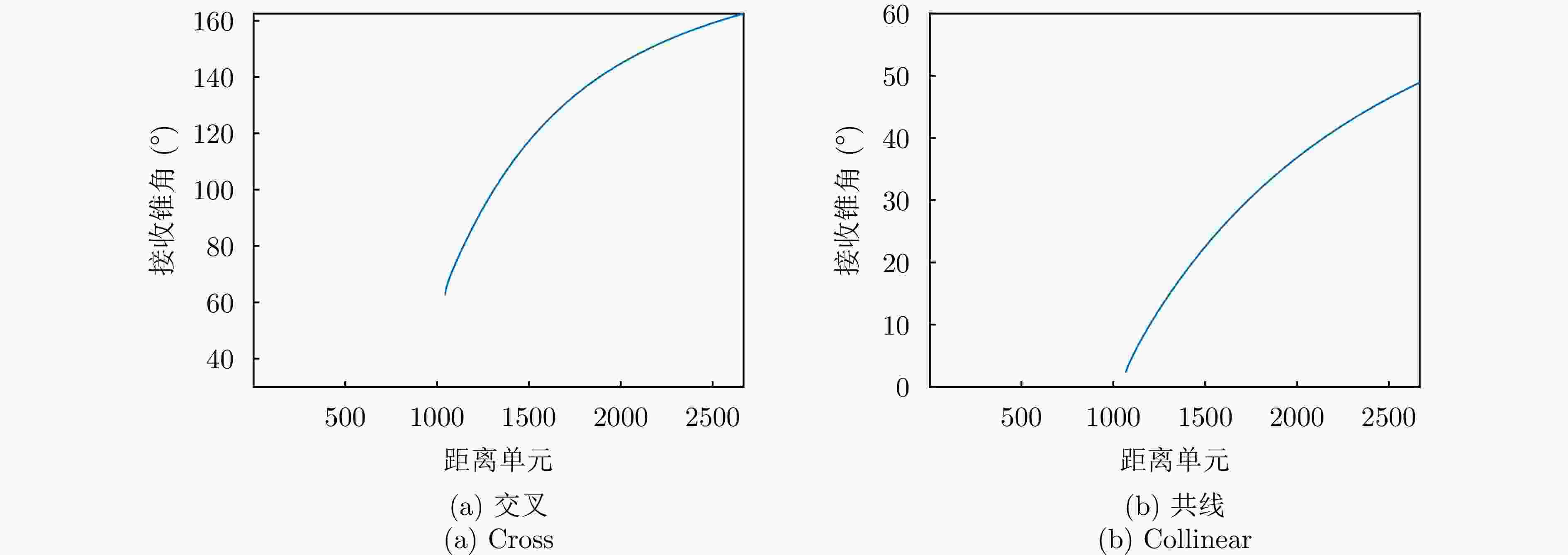
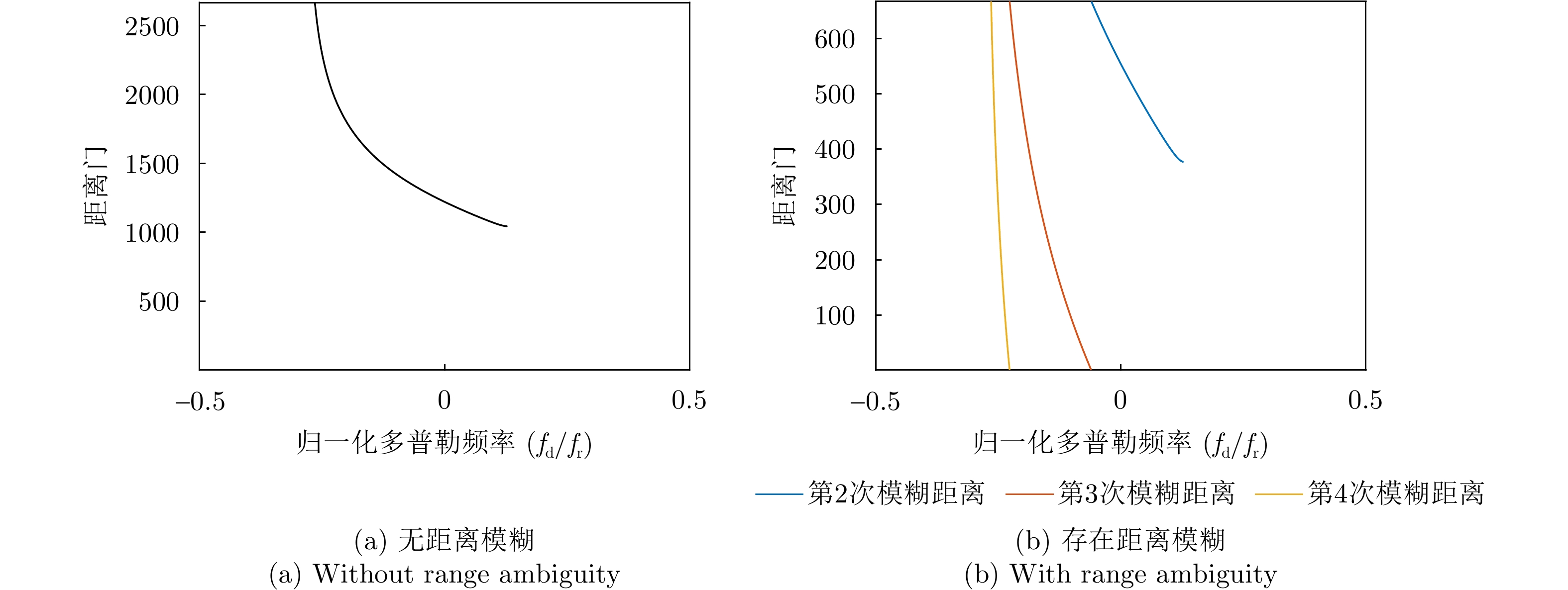
图 3 不同配置下不同距离单元的主瓣杂波接收锥角变化情况图
Figure 3. Mainlobe clutter receiving cone angle variation for different range cells under different configurations
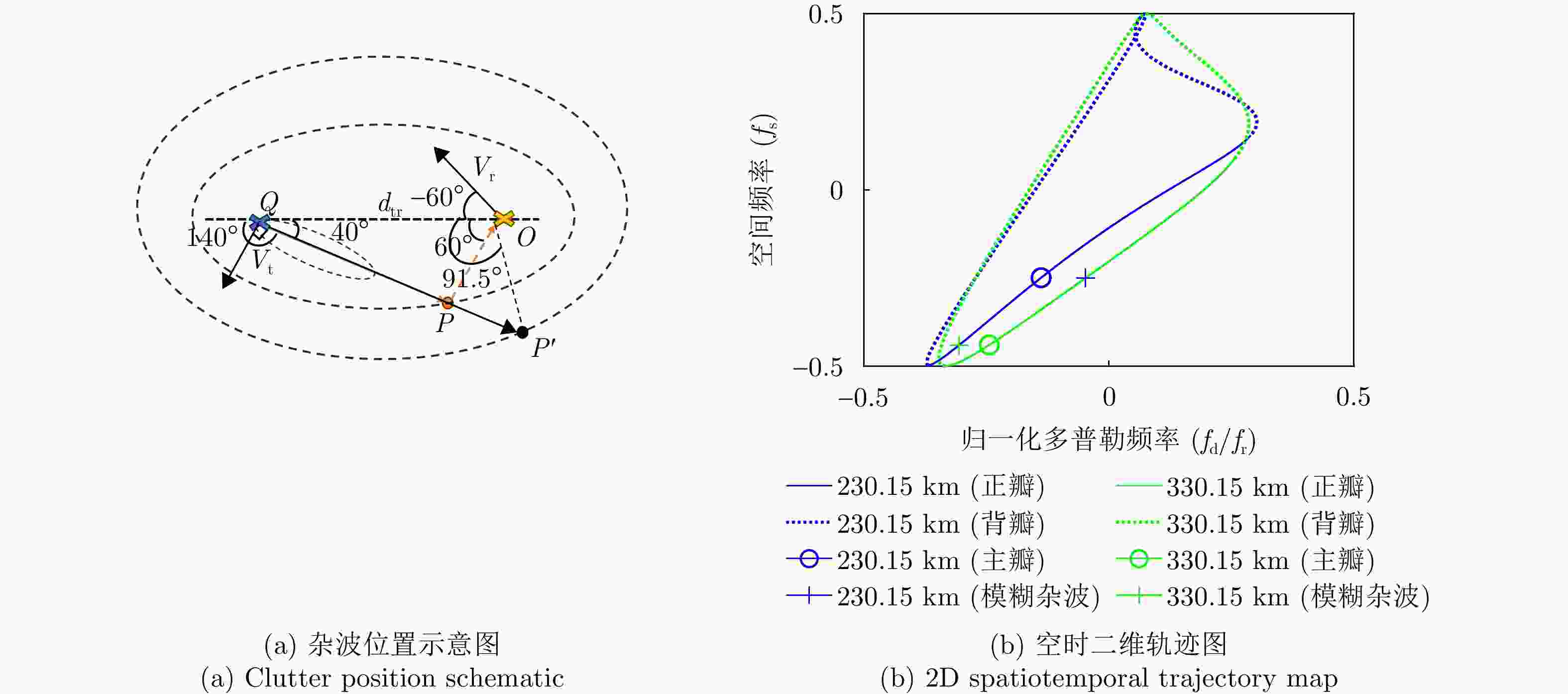
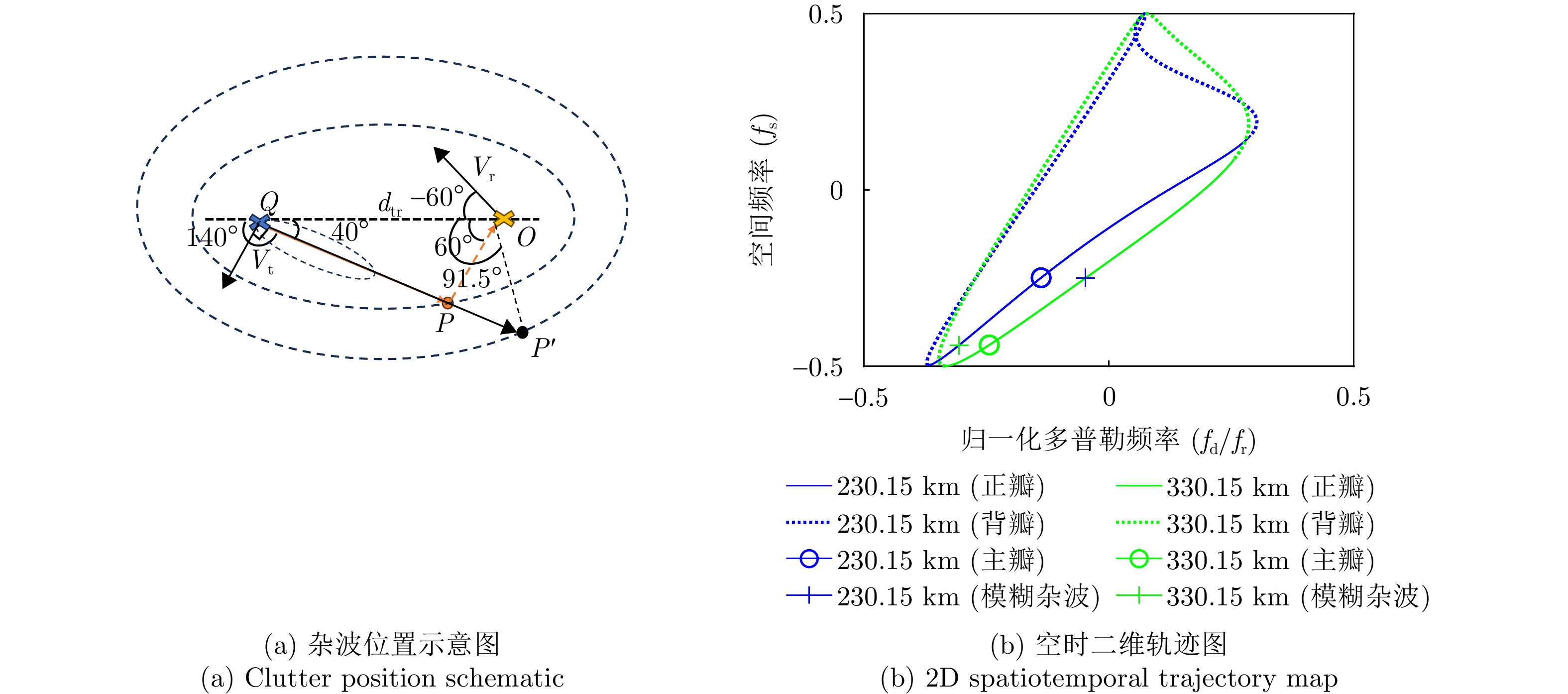
图 4 交叉配置下第201个距离单元的杂波模糊示意图
Figure 4. Clutter ambiguity diagram for the 201st range cell under cross configuration
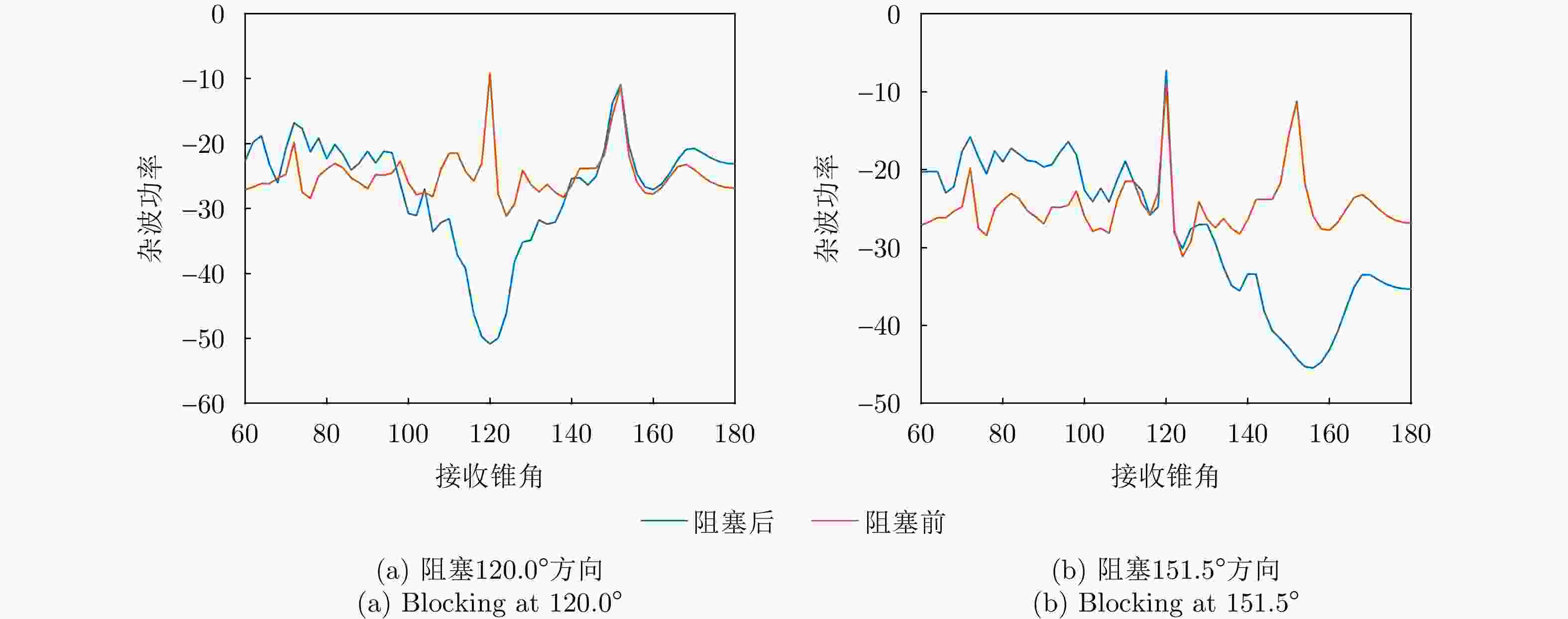
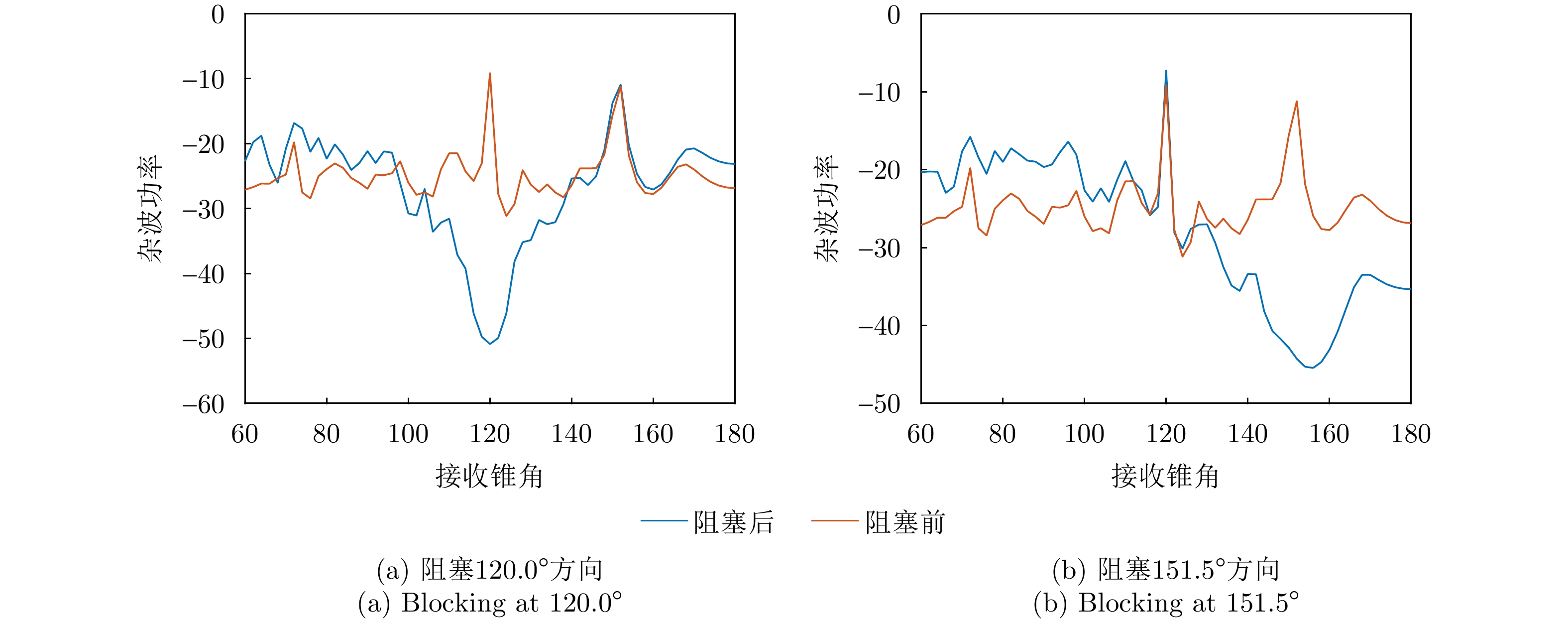
图 5 阻塞矩阵作用前后杂波功率对比
Figure 5. Clutter power comparison before and during blocking matrix operation
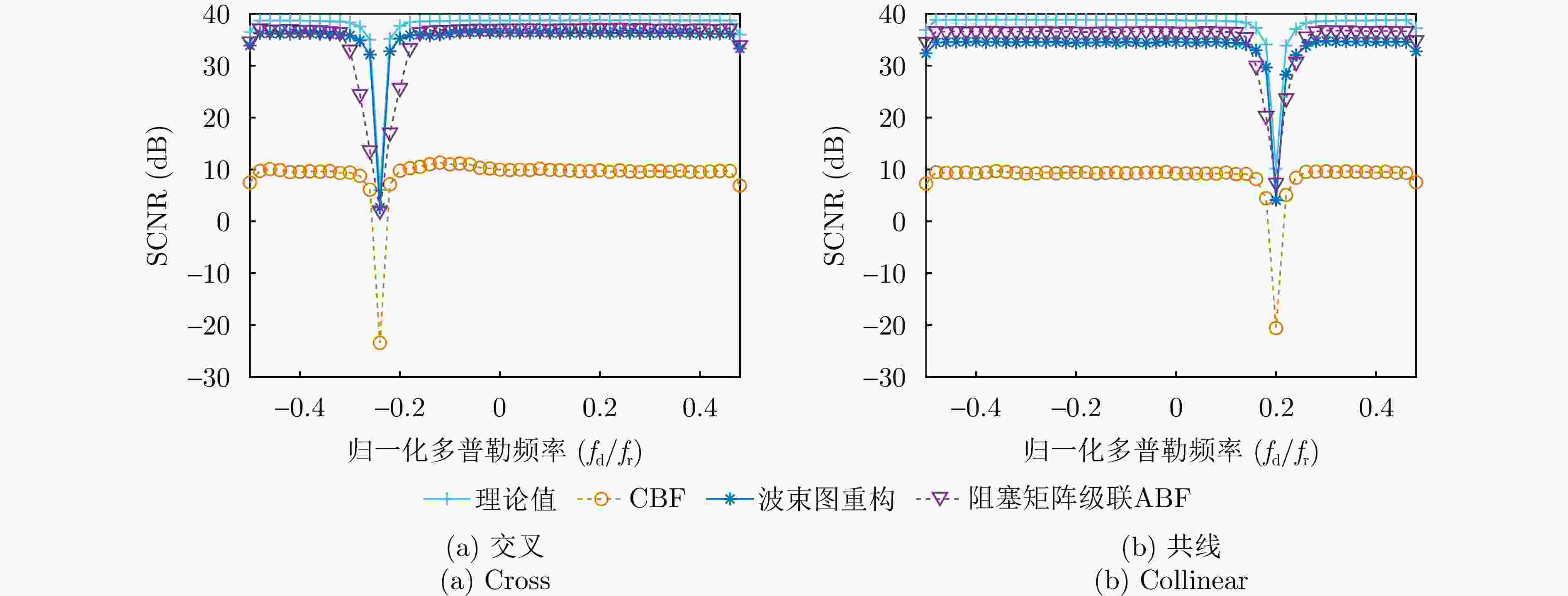
图 7 不同配置下各方法的输出SCNR曲线
Figure 7. Output SCNR curves for different methods under different configurations
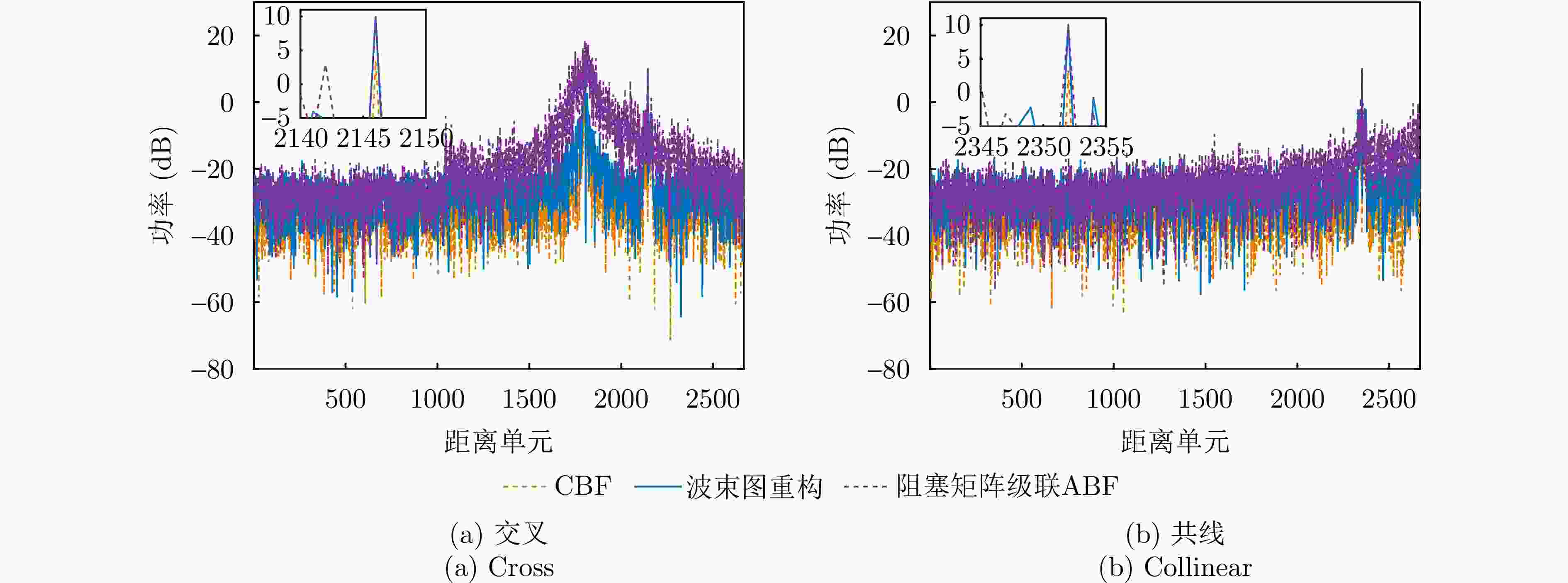
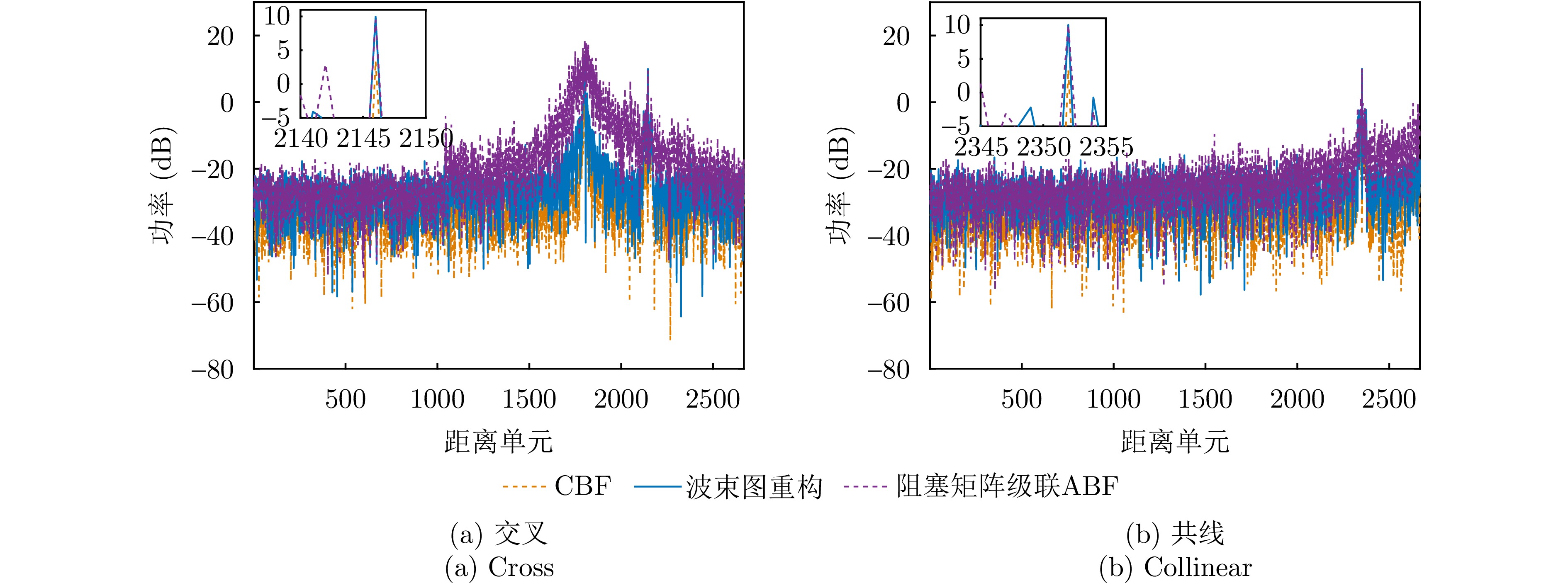
图 8 不同方法在不同配置下的目标所在多普勒通道输出功率
Figure 8. The output power for the Doppler channels of the target under for different methods different configurations

图 9 所提方法在不同配置下的双基距离和-速度盲区图
Figure 9. The bistatic range-velocity ambiguity diagram for the proposed method under different configurations
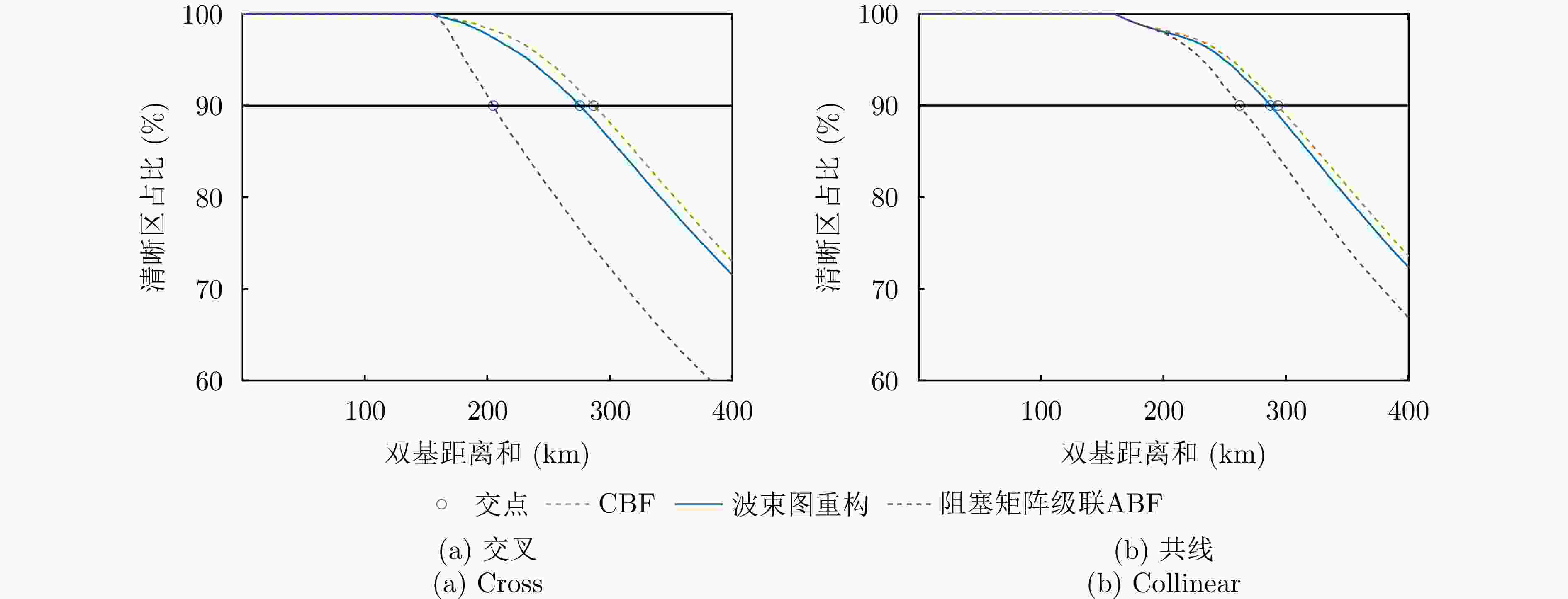
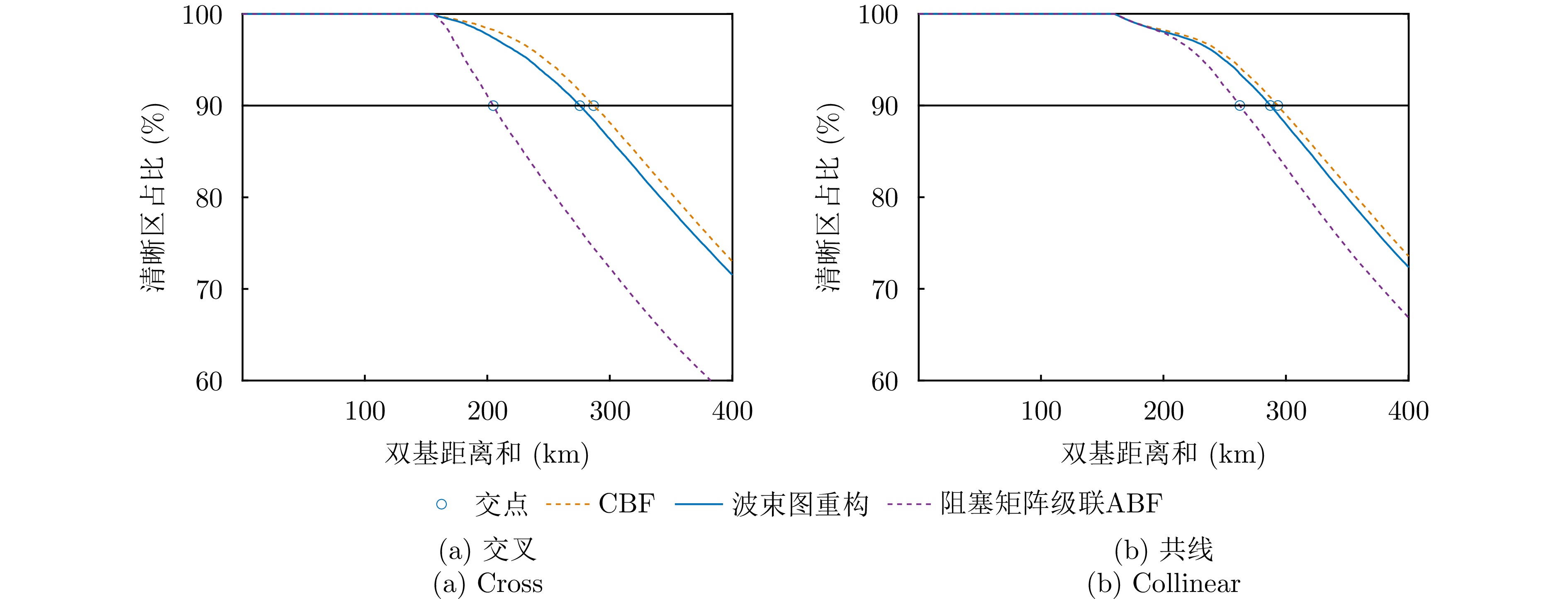
图 10 不同方法的清晰区占比随不同径向距离在不同配置下的变化结果
Figure 10. Variation of the clear zone proportion with different bistatic range sum for different methods under different configurations
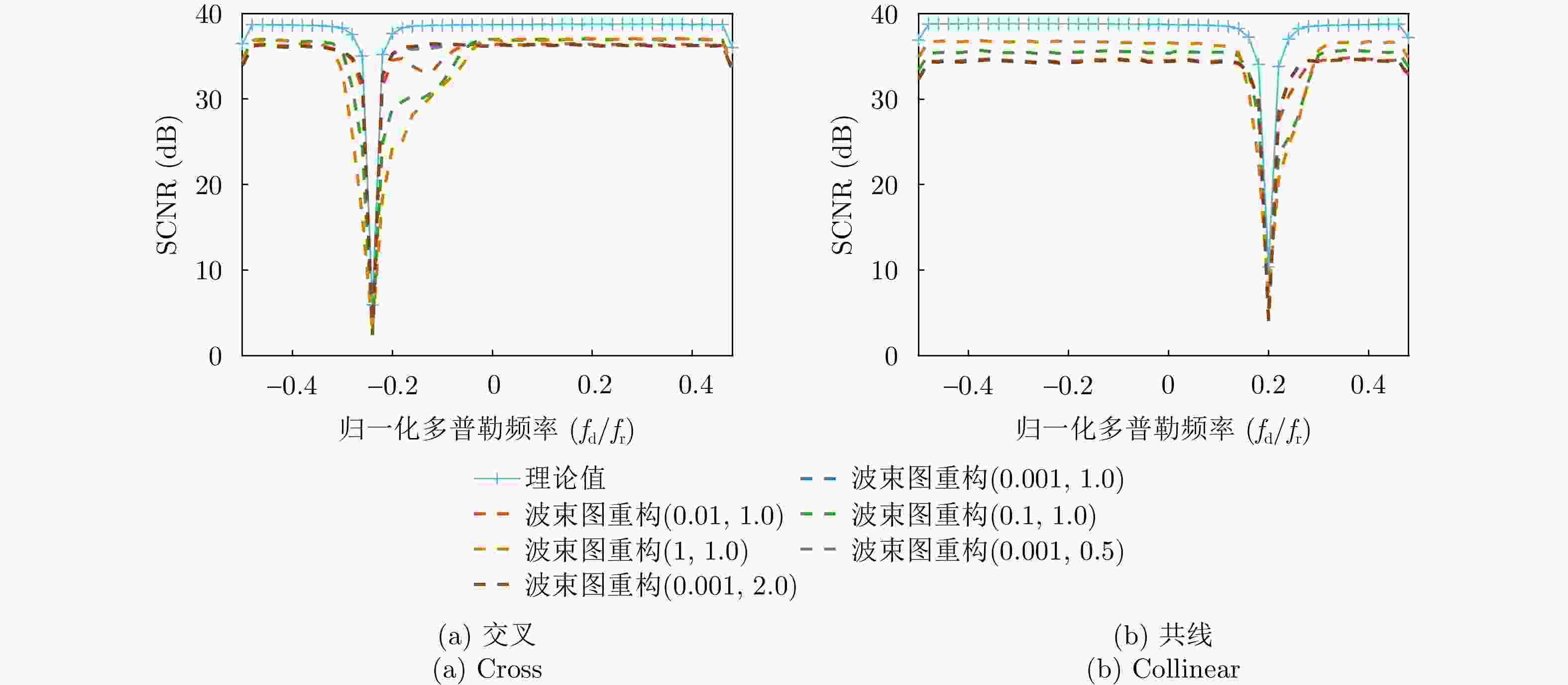
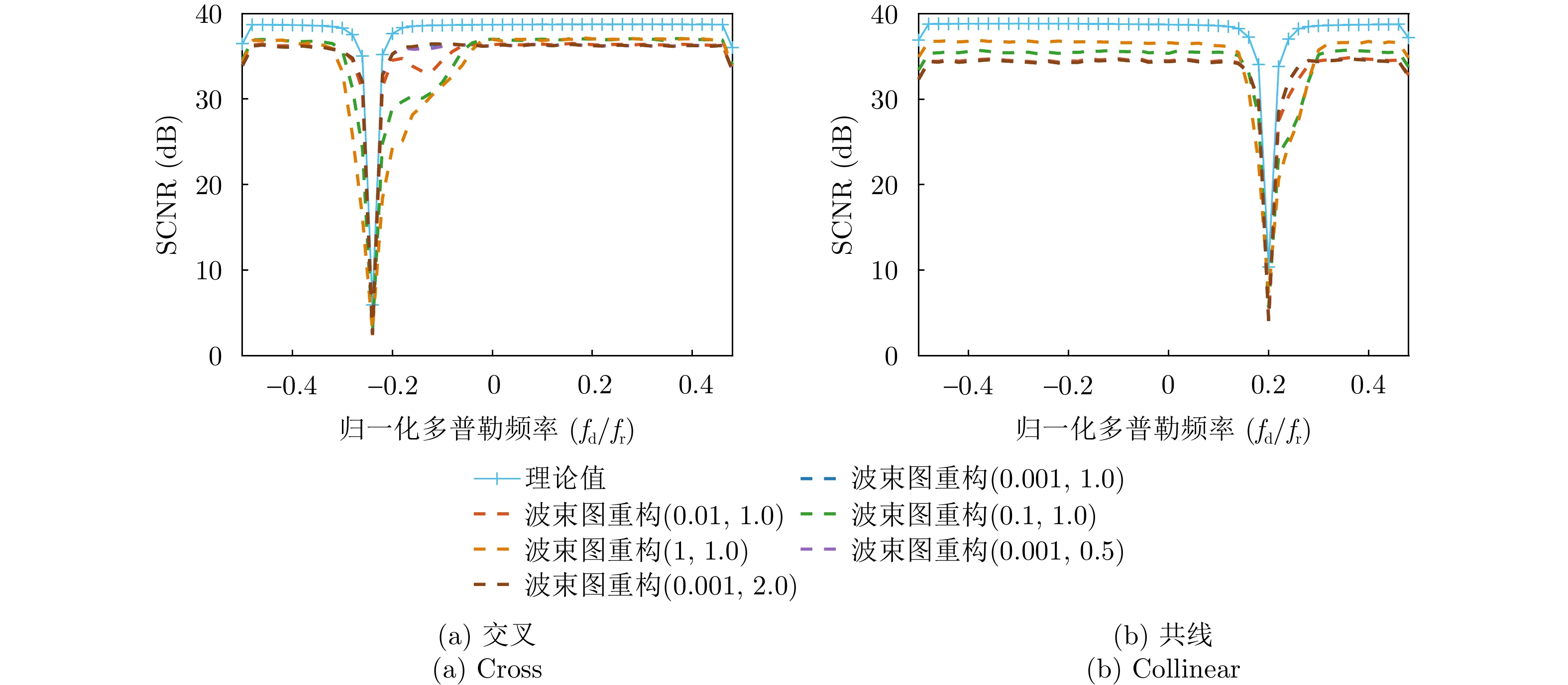
图 11 所提方法在不同参数组合对应的SCNR曲线
Figure 11. SCNR curves corresponding to different parameter combinations of the proposed method
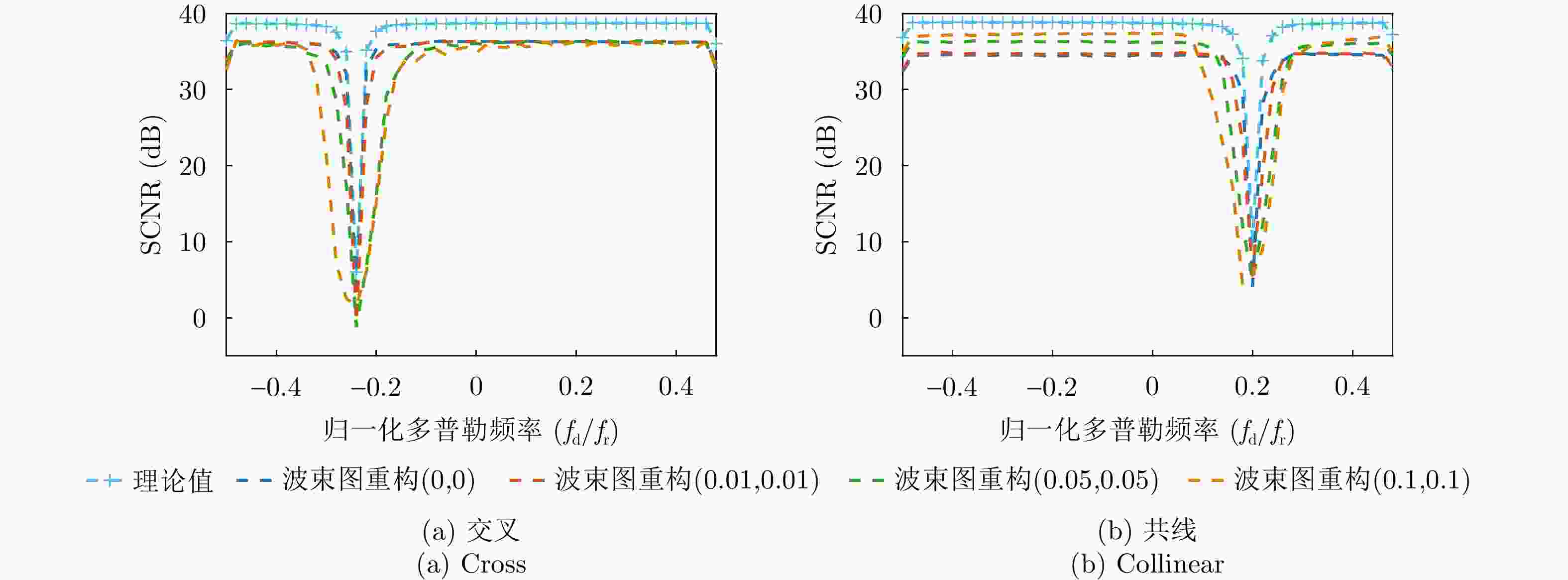
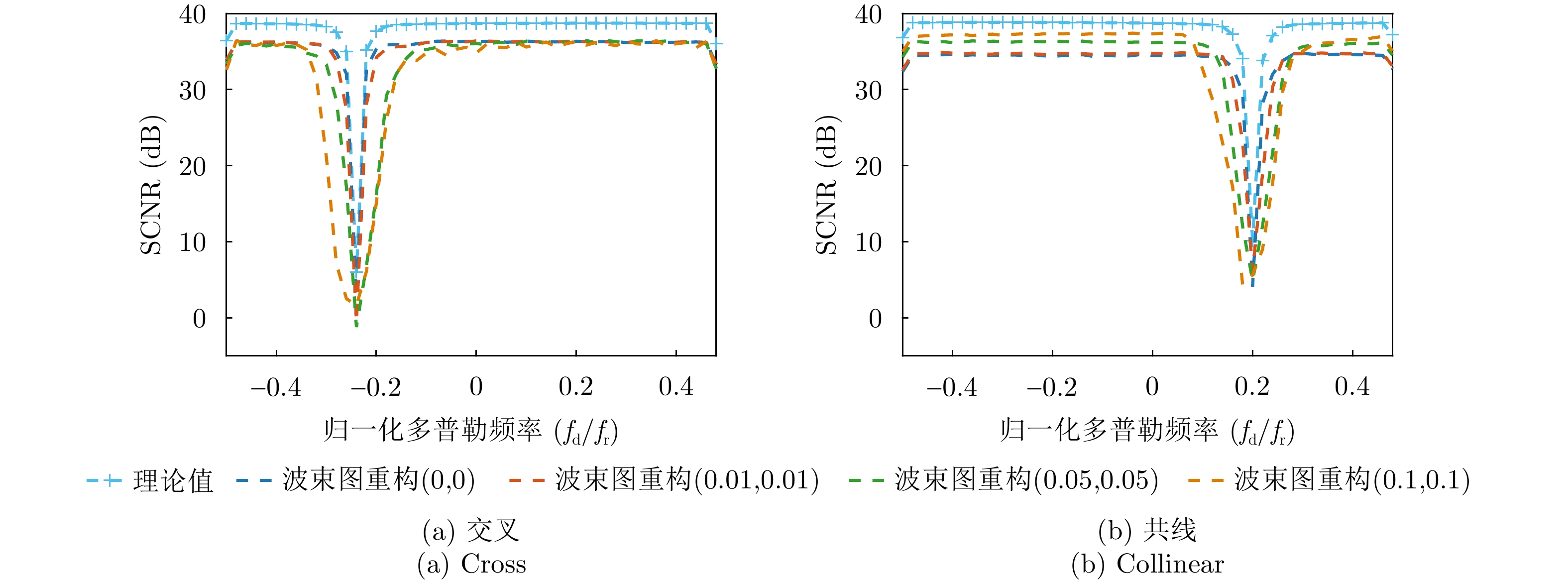
图 12 所提方法在不同补偿量下对应的SCNR曲线
Figure 12. SCNR curves corresponding to different compensation amounts for the proposed method
表 1 双基地机载雷达系统参数
Table 1. Bistatic airborne radar system parameters
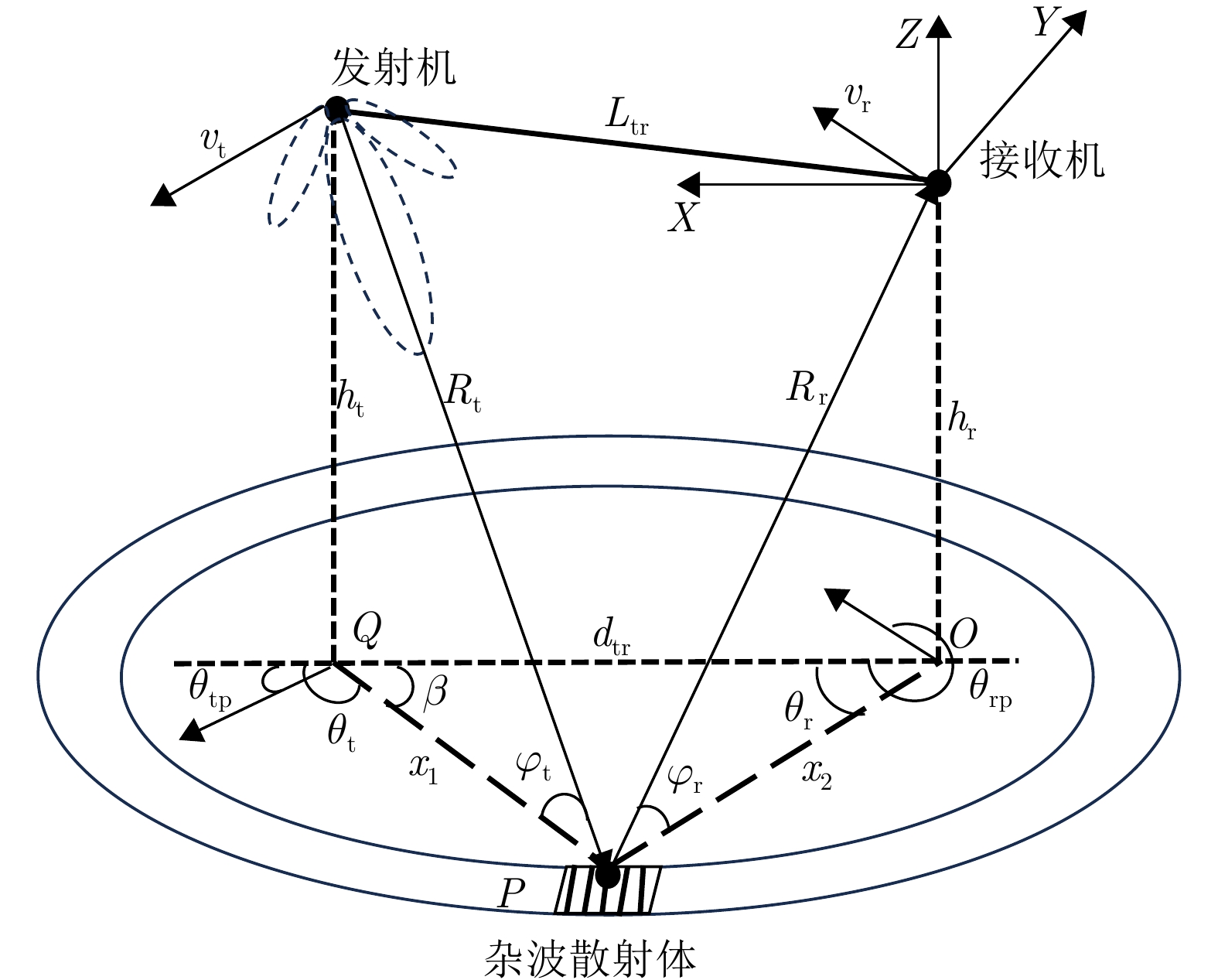
参数 数值 参数 数值 载频$ {f}_{\text{c}} $ 1.25 GHz 脉冲重复频率$ {f}_{\text{r}} $ 3000 Hz接收机瞬时带宽$ {B}_{0} $ 2 MHz 工作波长$ \lambda $ 0.24 m 雷达距离分辨率$ \Delta R $ 150 m 最大不模糊距离$ {R}_{\mathrm{u}} $ 100 km 俯仰向阵元个数M 1 方位向阵元个数N 32 阵元及子阵阵元间距d 0.12 m 相干脉冲数K 32 发射机高度$ {h}_{\mathrm{t}} $ 10 km 接收机高度$ {h}_{\mathrm{r}} $ 6 km 双基基线距离$ {L}_{\text{tr}} $ 150 km 方位角$ {\theta }_{\mathrm{t}} $与$ {\theta }_{\mathrm{r}} $的取值范围 0~$ 2\text{π} $ 发射偏航角$ {\theta }_{\text{tp}} $的取值范围 $ -\text{π} $~$\text{π} $ 接收偏航角$ {\theta }_{\text{rp}} $的取值范围 $ -\text{π} $~$\text{π} $ 发射载机速度$ {v}_{\mathrm{t}} $ 150 m/s 接收载机速度$ {v}_{\mathrm{r}} $ 200 m/s  下载: 导出CSV
1 基于波束图重构的机载双基地雷达距离模糊杂波分离与抑制方法
1. Range-ambiguous clutter separation and suppression method for airborne bistatic radar based on beam pattern reconstruction
滑窗重叠子阵预处理:根据约束条件$ {N}_{\text{e}} \gt {N}_{\text{r}} $和$ \Delta \psi\ge {102}^{\circ}/{N}_{\text{e}} $,获得子阵数据$ {\boldsymbol{X}}_{lp} $; 步骤1:距离模糊杂波分离:通过Capon谱估计得到接收锥角$ {\hat{\psi }}_{lq} $,然后通过式(38)计算空域自适应滤波器权值$ {\boldsymbol{w}}_{lq} $,最后根据式(39)得到
解模糊后数据$ {\boldsymbol{Z}}_{{{N}_{\text{s}}}K×{{N}_{\mathrm{r}}}L} $;步骤2:ADC补偿:通过式(40)构造补偿矩阵$ {\boldsymbol{T}}_{\mathrm{ADC},i} $,通过式(41)计算$ {\tilde{\boldsymbol{Z}}}_{i} $; 步骤3:杂波抑制:构造降维矩阵$ {\bar{\boldsymbol{T }}}_{k}={\tilde{\boldsymbol{F}}}_{k}\otimes {\boldsymbol{I}}_{\tilde{N}} $,然后通过式(42)计算空时自适应滤波器权值$ {\bar{\hat{\boldsymbol{w}} }}_{k} $。给定待检测距离单元的数据$ {\boldsymbol{Z}}_{\text{cut}} $,最
终通过式(44)得到输出$ {\bar{\tilde{\boldsymbol{Z}} }}_{\text{cut}} $。
下载: 导出CSV
表 2 不同配置下的目标参数
Table 2. Target parameters under different bistatic configurations
参数 数值 交叉 共线 目标信噪比$ \mathrm{SN}{\mathrm{R}}_{\text{t}} $ 10 dB 10 dB 双基距离和$ {R}_{\text{s}} $ 321.9 km 352.8 km 目标径向速度$ {v}_{\text{t}} $ –144.0 m/s 115.2 m/s 目标归一化多普勒频率$ \bar{f}_{\text{d,T}}^{} $ –0.20 0.16 目标所在多普勒通道数k 16 34 目标所在距离单元数i 2146 2352 第i个距离单元的主瓣
杂波中心($ {\bar{f}}_{\text{d},0} $, $ f_{\text{s},0}^{} $)(–0.24, –0.43) (0.20, 0.36)
下载: 导出CSV
表 3 不同方法在旁瓣区的平均输出SCNR
Table 3. Average output SCNR in the sidelobe region for different methods
方法 旁瓣区平均SCNR (dB) 交叉配置 共线配置 理论值 39.03 39.03 CBF 9.30 8.86 波束图重构 36.33 34.58 阻塞矩阵级联ABF 37.19 36.82
下载: 导出CSV
-
[1] 谢文冲, 段克清, 王永良. 机载雷达空时自适应处理技术研究综述[J]. 雷达学报, 2017, 6(6): 575–586. doi: 10.12000/JR17073.XIE Wenchong, DUAN Keqing, and WANG Yongliang. Space time adaptive processing technique for airborne radar: An overview of its development and prospects[J]. Journal of Radars, 2017, 6(6): 575–586. doi: 10.12000/JR17073. [2] 王赵隆, 张小宽, 冯为可, 等. 基于智能多分类和迁移学习的和差波束弹载雷达运动目标检测方法[J]. 雷达学报(中英文), 2025, 14(6): 1430–1450. doi: 10.12000/JR25089.WANG Zhaolong, ZHANG Xiaokuan, FENG Weike, et al. Moving target detection method based on intelligent multiclassification and transfer learning for missile-borne radars with sum-difference beams[J]. Journal of Radars, 2025, 14(6): 1430–1450. doi: 10.12000/JR25089. [3] WEN Cai, HUANG Yan, PENG Jinye, et al. Slow-time FDA-MIMO technique with application to STAP radar[J]. IEEE Transactions on Aerospace and Electronic Systems, 2022, 58(1): 74–95. doi: 10.1109/TAES.2021.3098100. [4] BRENNAN L E and REED L S. Theory of adaptive radar[J]. IEEE Transactions on Aerospace and Electronic Systems, 1973, AES-9(2): 237–252. doi: 10.1109/TAES.1973.309792. [5] XIAO Daipeng, LIU Weijian, LIU Jun, et al. Bayesian Rao test for distributed target detection in interference and noise with limited training data[J]. Science China Information Sciences, 2026, 69(2): 122301. doi: 10.1007/s11432-024-4422-3. [6] 王慧娟, 汤子跃, 朱振波, 等. 固定坐标系机载双基地雷达杂波建模与特性分析[J]. 哈尔滨工业大学学报, 2019, 51(5): 110–117. doi: 10.11918/j.issn.0367-6234.201809038.WANG Huijuan, TANG Ziyue, ZHU Zhenbo, et al. Modeling and characteristic analysis of clutter for airborne bistatic radar in fixed coordinate system[J]. Journal of Harbin Institute of Technology, 2019, 51(5): 110–117. doi: 10.11918/j.issn.0367-6234.201809038. [7] 王安安, 谢文冲, 陈威, 等. 双基地机载雷达杂波和主瓣压制干扰抑制方法[J]. 系统工程与电子技术, 2023, 45(3): 699–707. doi: 10.12305/j.issn.1001-506X.2023.03.10.WANG An’an, XIE Wenchong, CHEN Wei, et al. Clutter and main-lobe suppression jamming suppression method for bistatic airborne radar[J]. Systems Engineering and Electronics, 2023, 45(3): 699–707. doi: 10.12305/j.issn.1001-506X.2023.03.10. [8] BORSARI G K. Mitigating effects on STAP processing caused by an inclined array[C]. 1998 IEEE Radar Conference, RADARCON'98. Challenges in Radar Systems and Solutions, Dallas, USA, 1998: 135–140. doi: 10.1109/nrc.1998.677990. [9] PEARSON F and BORSARI G K. Simulation and analysis of adaptive interference suppression for bistatic surveillance radars[C]. The Adaptive Sensor Array Processing Workshop, Lexington, Massachusetts, 2001. [10] HIMED B, ZHANG Y, and HAJJARI A. STAP with angle-Doppler compensation for bistatic airborne radars[C]. 2002 IEEE Radar Conference, Long Beach, USA, 2002: 311–317. doi: 10.1109/NRC.2002.999737. [11] JIANG Longwei, LAN Lan, LIAO Guisheng, et al. OP-RBC-based STAP method for clutter suppression in bistatic end-fire array airborne radar[C]. 2024 International Radar Conference, Rennes, France, 2024: 1–7. doi: 10.1109/RADAR58436.2024.10993975. [12] MELVIN W L, HIMED B, and DAVIS M E. Doubly adaptive bistatic clutter filtering[C]. 2003 IEEE Radar Conference, Huntsville, USA, 2003: 171–178. doi: 10.1109/NRC.2003.1203398. [13] VARADARAJAN V and KROLIK J. Joint space-time interpolation for bistatic STAP[C]. The Thrity-Seventh Asilomar Conference on Signals, Systems & Computers, 2003, Pacific Grove, USA, 2003: 60–65. doi: 10.1109/ACSSC.2003.1291866. [14] LI Xinzhe, XIE Wenchong, and WANG Yongliang. Clutter suppression algorithm for non-side looking airborne radar with high pulse repetition frequency based on elevation-compensation-prefiltering[J]. IET Radar, Sonar & Navigation, 2020, 14(1): 19–26. doi: 10.1049/iet-rsn.2019.0041. [15] MENG Xiangdong, WANG Tong, WU Jianxin, et al. Short-range clutter suppression for airborne radar by utilizing prefiltering in elevation[J]. IEEE Geoscience and Remote Sensing Letters, 2009, 6(2): 268–272. doi: 10.1109/LGRS.2008.2012126. [16] CUI Ning, DUAN Keqing, XING Kun, et al. Beam-space reduced-dimension 3D-STAP for nonside-looking airborne radar[J]. IEEE Geoscience and Remote Sensing Letters, 2022, 19: 3506505. doi: 10.1109/LGRS.2021.3080291. [17] XU Huajian, YANG Zhiwei, TIAN Min, et al. An angle-Doppler spectrum separation approach of near-range ambiguous clutter for airborne non-side-looking array radar[C]. 2016 CIE International Conference on Radar, Guangzhou, China, 2016: 1–5. doi: 10.1109/RADAR.2016.8059581. [18] WANG Yuzhuo and ZHU Shengqi. Range ambiguous clutter suppression for FDA-MIMO forward looking airborne radar based on main lobe correction[J]. IEEE Transactions on Vehicular Technology, 2021, 70(3): 2032–2046. doi: 10.1109/TVT.2021.3057436. [19] QIU Zizhou, DUAN Keqing, and LIAO Zhipeng. Range ambiguous clutter suppression for forward-looking airborne radar based on frequency coding and phase waveforms modulation in slow-time[J]. IEEE Transactions on Aerospace and Electronic Systems, 2024, 60(6): 8470–8482. doi: 10.1109/TAES.2024.3431512. [20] CHEN Haowen, LI Xiang, YANG Jin, et al. Effects of geometry configurations on ambiguity properties for bistatic MIMO radar[J]. Progress in Electromagnetics Research B, 2011, 30: 117–133. doi: 10.2528/PIERB11032803. [21] CHEN Wei, XIE Wenchong, and WANG Yongliang. Range-dependent ambiguous clutter suppression for airborne SSF-STAP radar[J]. IEEE Transactions on Aerospace and Electronic Systems, 2022, 58(2): 855–867. doi: 10.1109/TAES.2021.3104528. [22] CAI Wen, MA Changzheng, PENG Jinye, et al. Bistatic FDA-MIMO radar space-time adaptive processing[J]. Signal Processing, 2019, 163: 201–212. doi: 10.1016/j.sigpro.2019.05.025. [23] WANG Yi, ZHU Shengqi, HE Xiongpeng, et al. A range-ambiguous clutter suppression method via EPC-MIMO bistatic airborne radar[C]. The 2022 5th International Conference on Information Communication and Signal Processing, Shenzhen, China, 2022: 344–348. doi: 10.1109/ICICSP55539.2022.10050631. [24] 孟祥东. 空时二维自适应信号处理与动目标检测[D]. [博士论文], 西安电子科技大学, 2009: 61–81.MENG Xiangdong. Space-time adaptive processing and moving target indication[D]. [Ph.D. dissertation], Xidian University, 2009: 61–81. [25] LI Jiyang, DUAN Xiaohu, LI Jia, et al. Interrupted-sampling and non-uniform periodic repeater jamming against mDT-STAP system[J]. Electronics, 2022, 12(1): 152. doi: 10.3390/electronics12010152. [26] WARD J. Space-time adaptive processing for airborne radar[C]. IEE Colloquium on Space-Time Adaptive Processing, London, UK, 1998: 2/1–2/6. doi: 10.1049/ic:19980240. [27] 魏民, 李小波, 王理. 减小距离模糊影响的机载双基地雷达配置方法[J]. 雷达学报, 2017, 6(1): 106–113. doi: 10.12000/JR16082.WEI Min, LI Xiaobo, and WANG Li. A method for reducing the impact of range ambiguity[J]. Journal of Radars, 2017, 6(1): 106–113. doi: 10.12000/JR16082. [28] LAPIERRE F D, VERLY J G, and VAN DROOGENBROECK M. New solutions to the problem of range dependence in bistatic STAP radars[C]. 2003 IEEE Radar Conference, Huntsville, USA, 2003: 452–459. doi: 10.1109/NRC.2003.1203440. [29] 王永良, 陈辉, 彭应宁, 等. 空间谱估计理论与算法[M]. 北京: 清华大学出版社, 2004: 36–37.WANG Yongliang, CHEN Hui, PENG Yingning, et al. Theory and Algorithm of Spatial Spectrum Estimation[M]. Beijing: Tsinghua University Press, 2004: 36–37. [30] 居宇欢. 数字阵列雷达抗主瓣干扰方法研究[D]. [硕士论文], 电子科技大学, 2024. doi: 10.27005/d.cnki.gdzku.2024.003320.JU Yuhuan. Research on mainlobe interference suppression in digital array radar[D]. [Master dissertation], University of Electronic Science and Technology of China, 2024. doi: 10.27005/d.cnki.gdzku.2024.003320. [31] COLONE F, FORNARI M, and LOMBARDO P. A spectral slope-based approach for mitigating bistatic STAP clutter dispersion[C]. 2007 IEEE Radar Conference, Waltham, USA, 2007: 408–413. doi: 10.1109/RADAR.2007.374251. [32] MIRANDA R K, DA COSTA J P C L, and ANTREICH F. High accuracy and low complexity adaptive generalized sidelobe cancelers for colored noise scenarios[J]. Digital Signal Processing, 2014, 34: 48–55. doi: 10.1016/j.dsp.2014.07.015. [33] MENG Haoyu, QU Xiaodong, ZHANG Xingyu, et al. Mainlobe interference suppression method based on blocking matrix preprocessing with low sidelobe constraint[C]. 2022 Asia-Pacific Signal and Information Processing Association Annual Summit and Conference, Chiang Mai, Thailand, 2022: 2065–2070. doi: 10.23919/apsipaasc55919.2022.9980066. -




计量
- 文章访问数:
- HTML全文浏览量:
- PDF下载量:
- 被引次数: 0