

 作者中心
作者中心 专家审稿
专家审稿 责编办公
责编办公 编辑办公
编辑办公
Indoor Target Tracking Method for Millimeter-wave Radar Based on Multipath Extension Mapping
-
摘要: 随着毫米波雷达技术在室内目标检测与跟踪领域的广泛应用,多径效应逐渐成为影响目标跟踪精度的关键因素。室内毫米波雷达目标跟踪易受多径效应干扰,而传统点目标跟踪方法忽略目标的扩展特性与多路径传播机制,难以有效抑制由多径引起的虚假目标。为此,该文提出一种基于多径扩展投影的毫米波雷达室内目标跟踪方法(EM-ETT)。首先,采用随机矩阵模型表征目标几何形状,将扩展状态建模为逆Wishart分布;然后,结合蒙特卡罗统计传播机制构建扩展投影框架,通过对真实目标散射点进行非线性多径映射生成鬼影点云,并拟合其扩展状态先验;进一步地,引入目标-路径匹配策略,通过几何一致性与似然评估建立多径传播路径关联,提升状态辨识能力。实测结果表明,在多径干扰的多目标场景下,所提方法能显著提升状态估计精度,有效避免虚假轨迹生成,相比传统点目标跟踪算法在跟踪准确率与鲁棒性方面均具有明显优势。Abstract: With the widespread use of millimeter-wave radar technology in indoor target detection and tracking, multipath effects have become a key factor affecting tracking accuracy. Indoor millimeter-wave radar target tracking is highly susceptible to multipath interference, and conventional point-target tracking methods, which ignore the extended characteristics of targets and the multipath propagation mechanism, struggle to effectively suppress ghost targets caused by multipath reflections. To address this issue, this paper proposes an Extension Mapping-based Extended Target Tracking (EM-ETT) method for indoor target tracking using millimeter-wave radar. First, a random matrix model is used to characterize the target’s geometric shape, with the extension modeled as an inverse Wishart distribution. Next, an extended projection framework is constructed by integrating a Monte Carlo-based statistical propagation mechanism. Through nonlinear multipath mapping of scattering points from the true target, ghost point clouds are generated, and their extended state priors are estimated. Furthermore, a target-path association method is introduced to establish path associations in multipath propagation based on geometric consistency and likelihood evaluation, enhancing state discrimination capability. Experimental results demonstrate that in multitarget scenarios with multipath interference, the proposed method significantly improves state estimation accuracy and effectively prevents the generation of false trajectories. Compared with conventional point-target tracking algorithms, the proposed method exhibits significant advantages in both tracking accuracy and robustness.
-
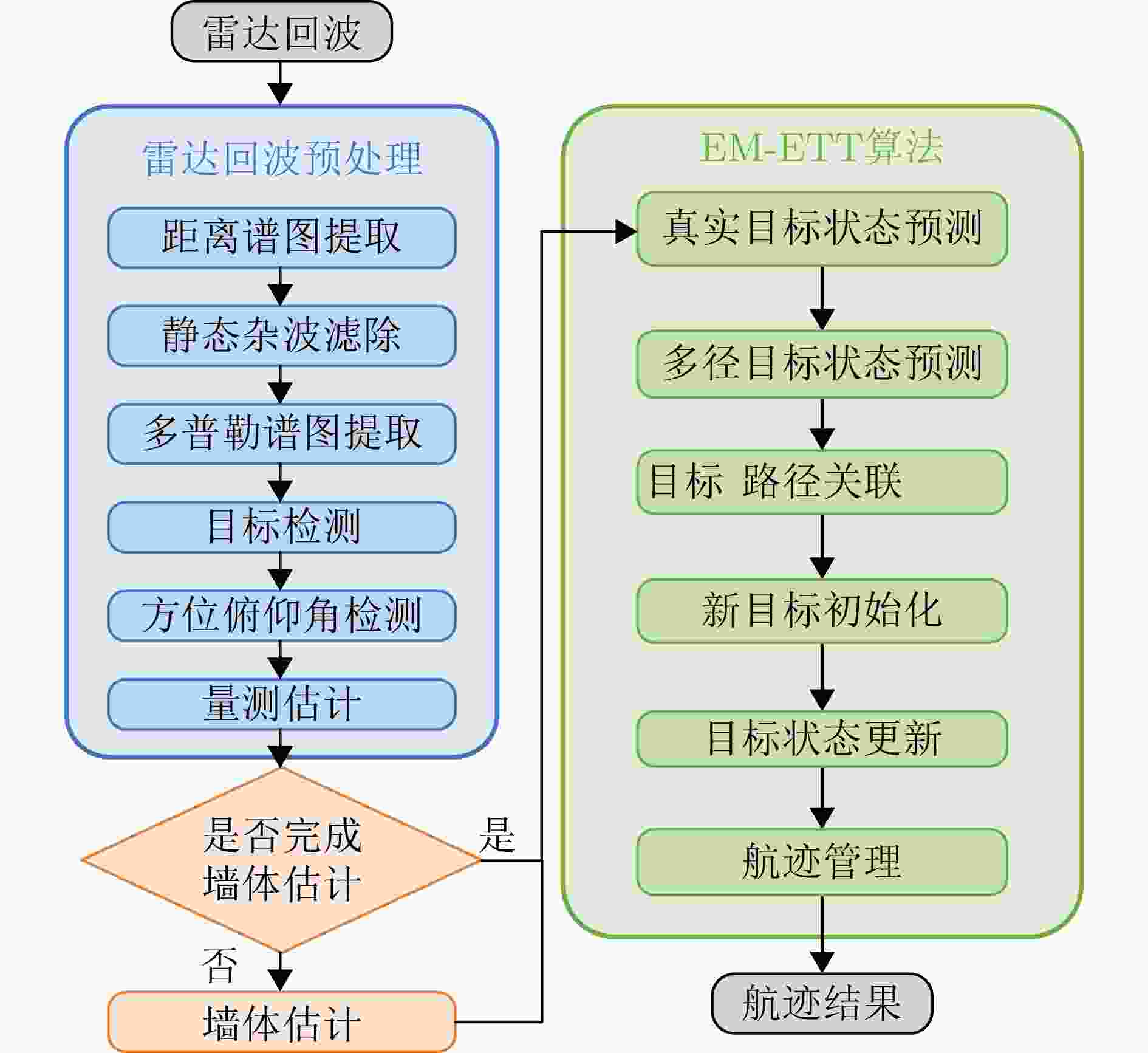
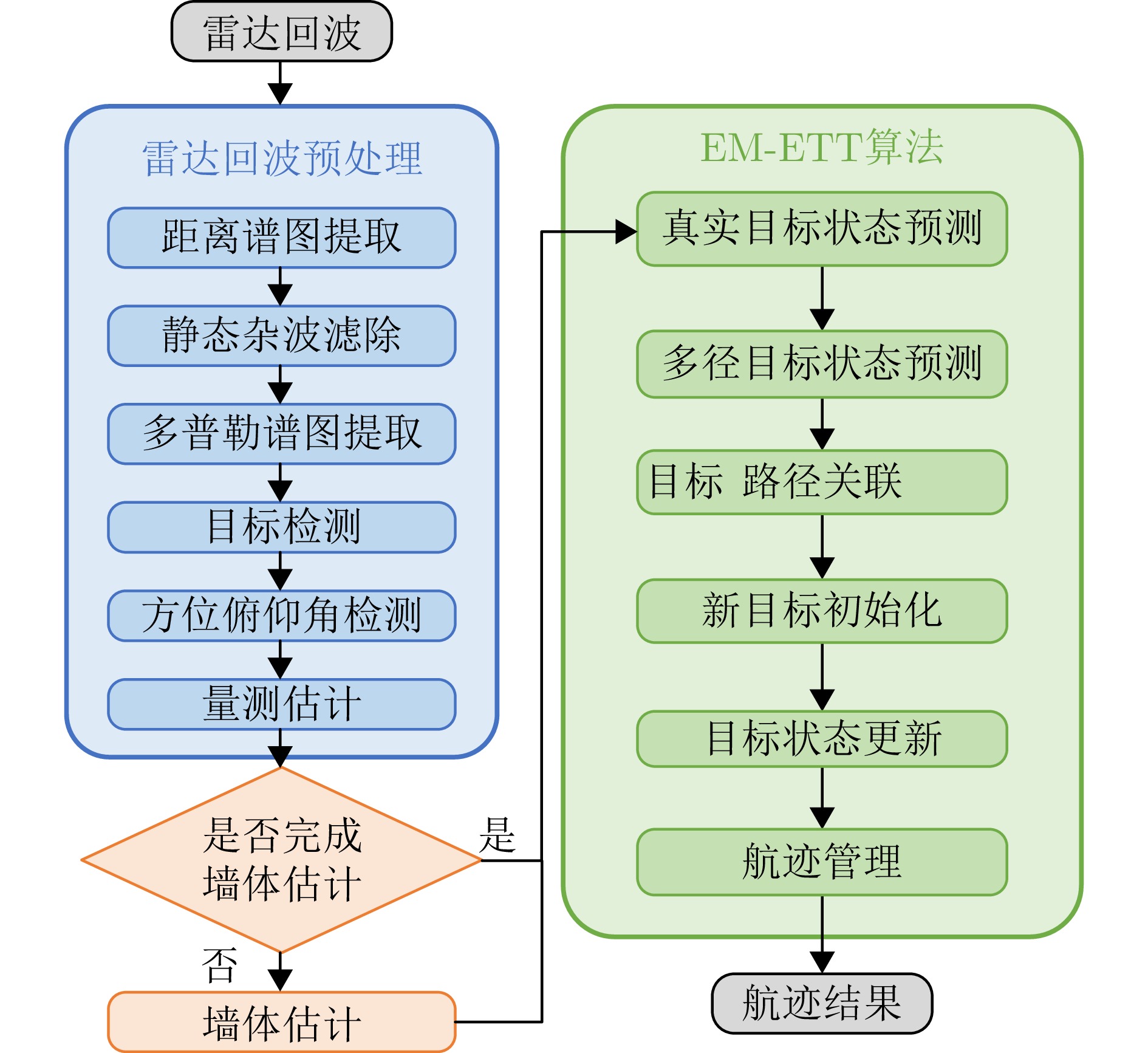
图 5 多径场景下扩展目标跟踪算法流程图
Figure 5. Flowchart of the extended target tracking algorithm in multipath scenarios
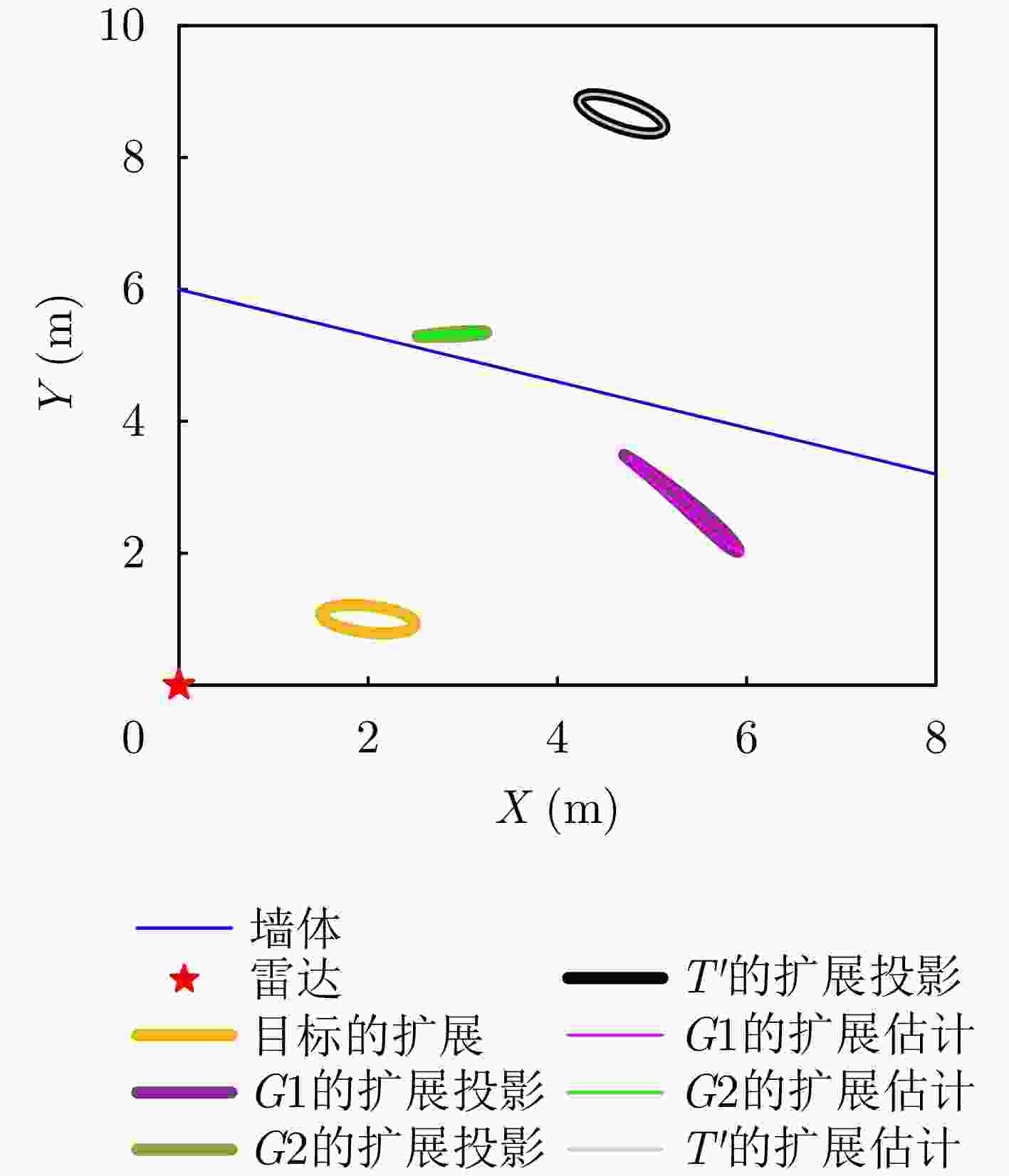
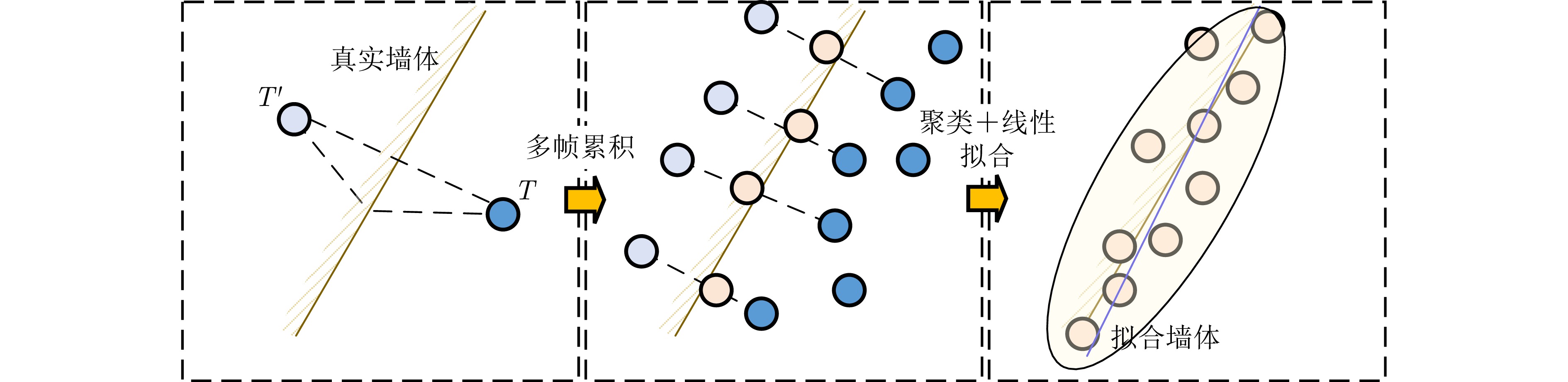
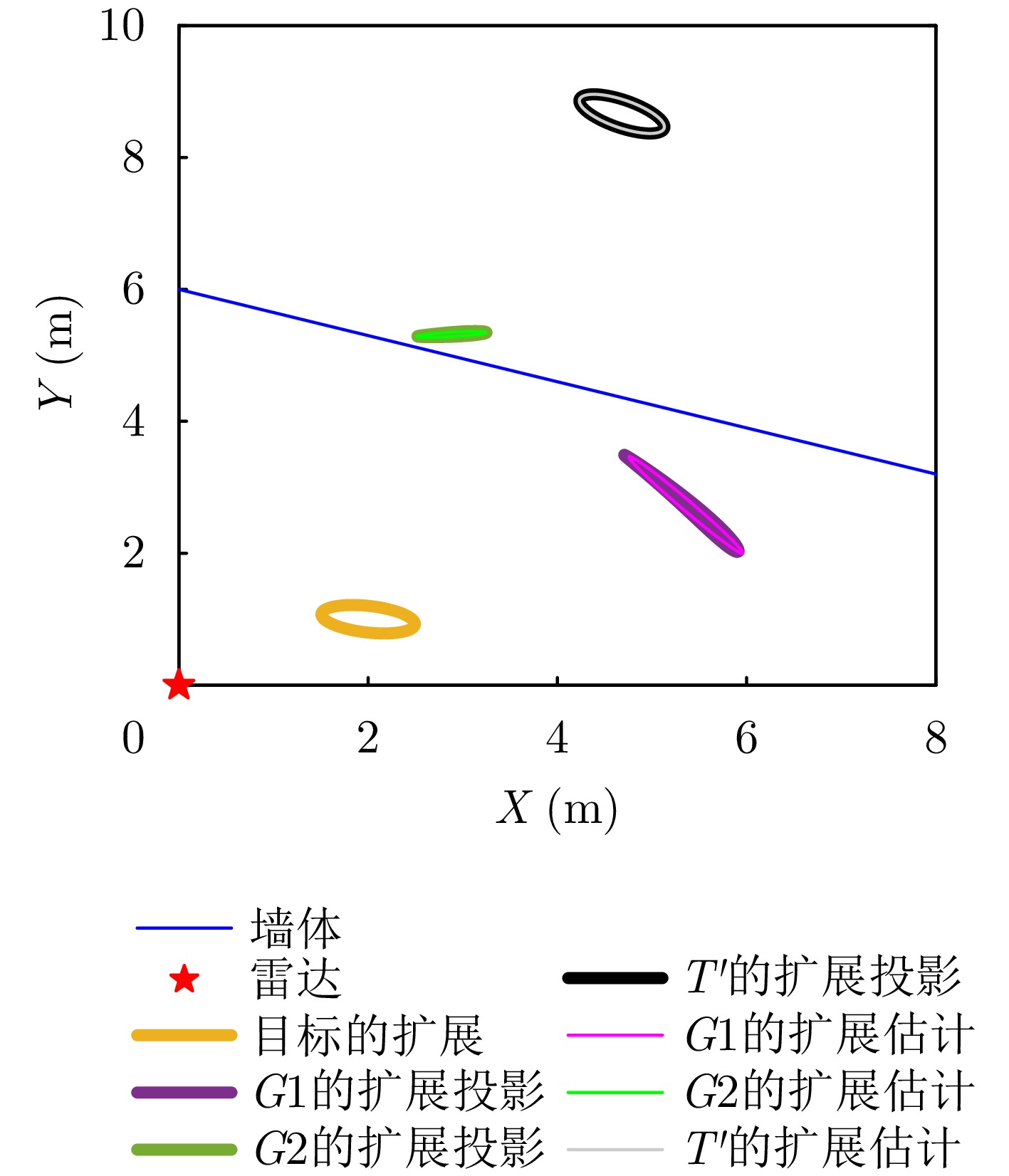
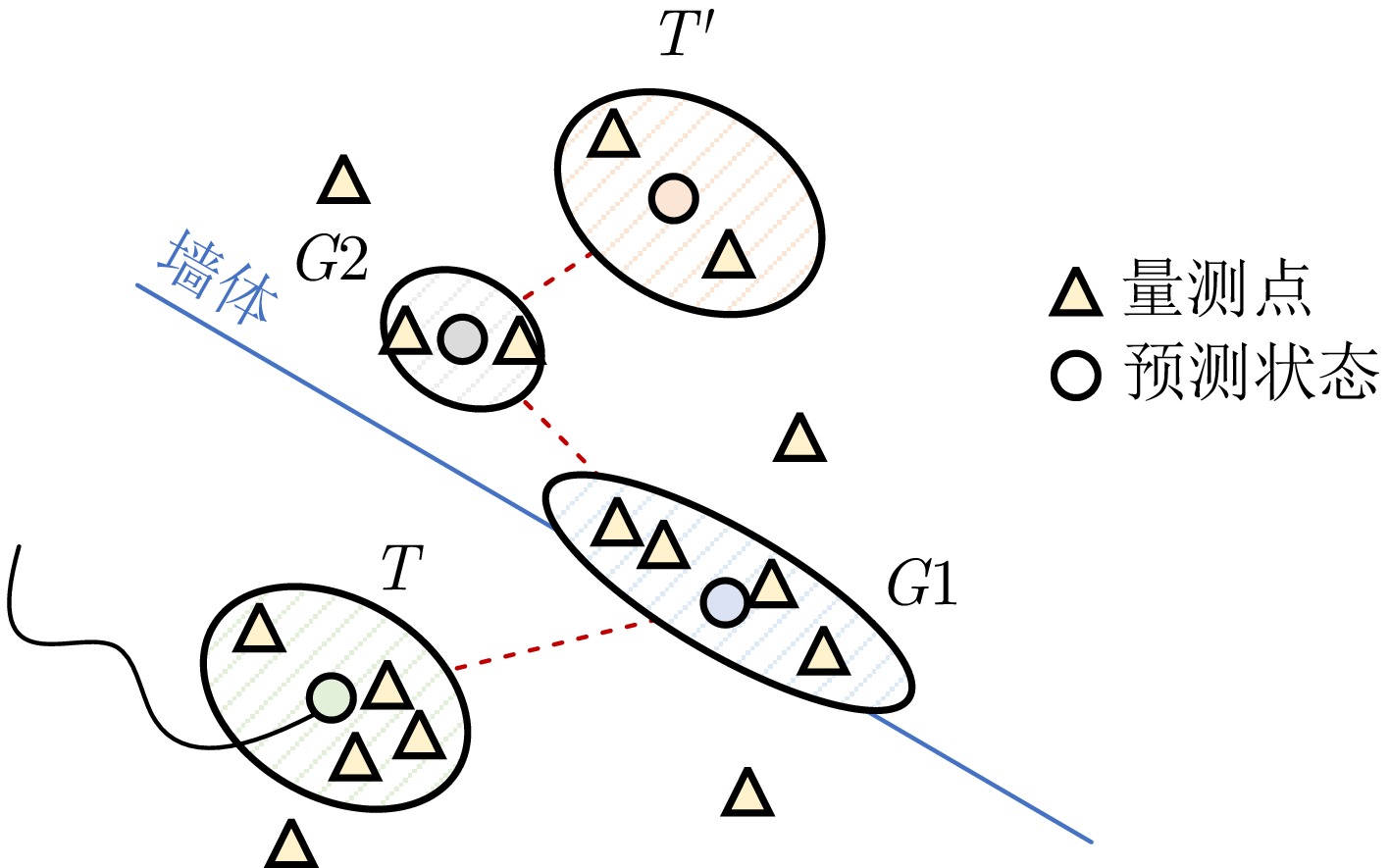
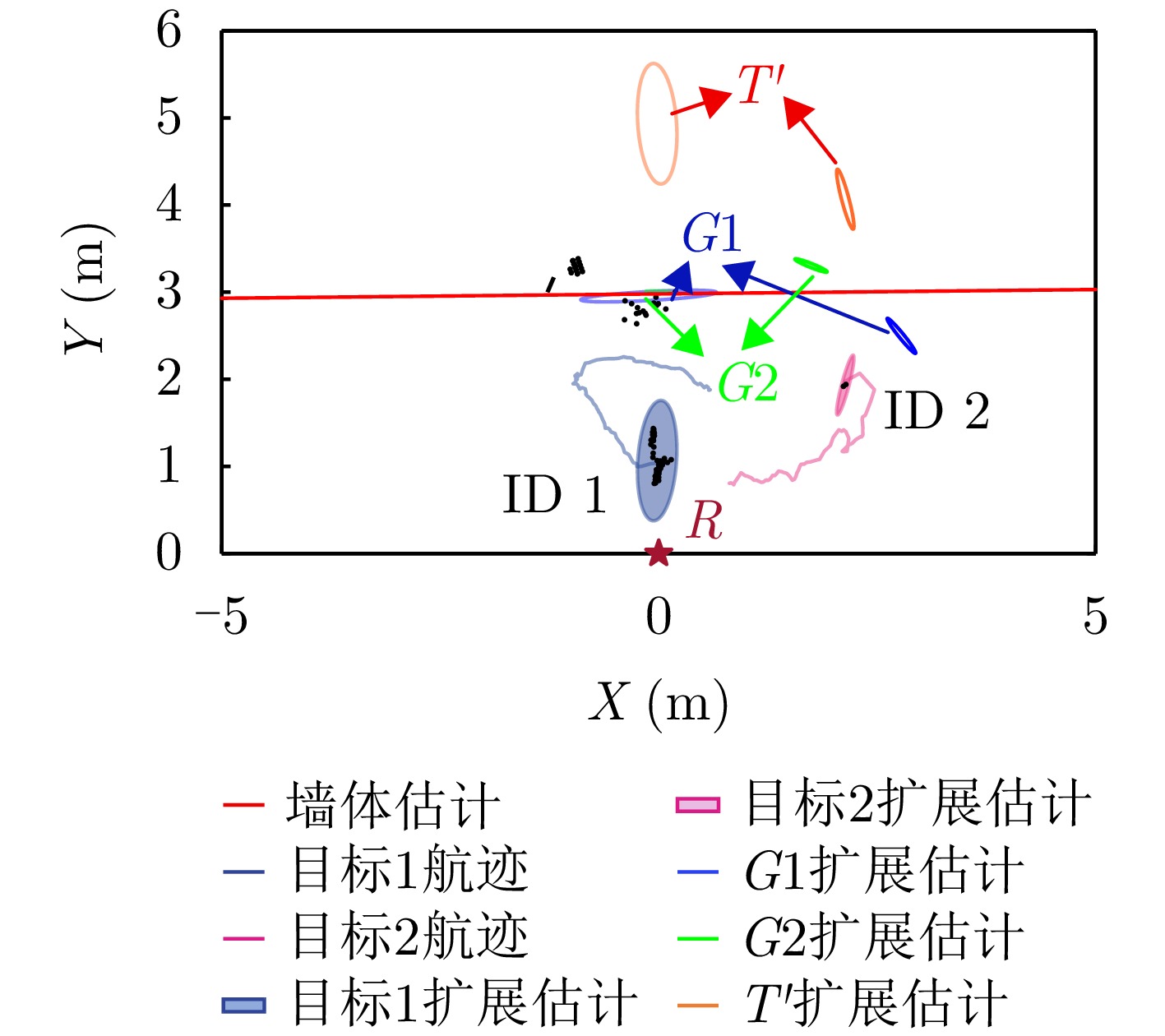
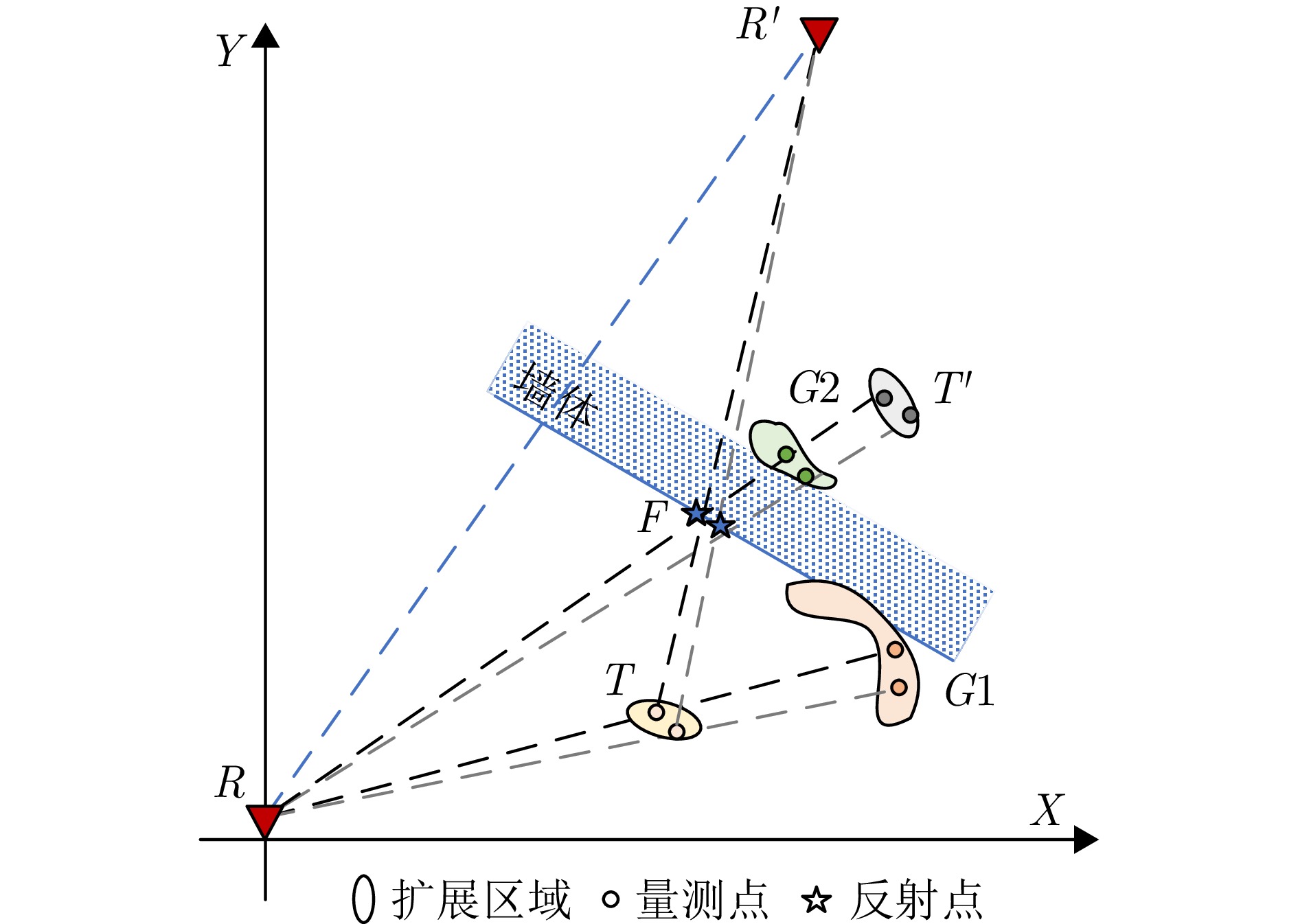
图 6 多径扩展目标状态预测示意图
Figure 6. Illustration of the predicted results of extended multipath target states
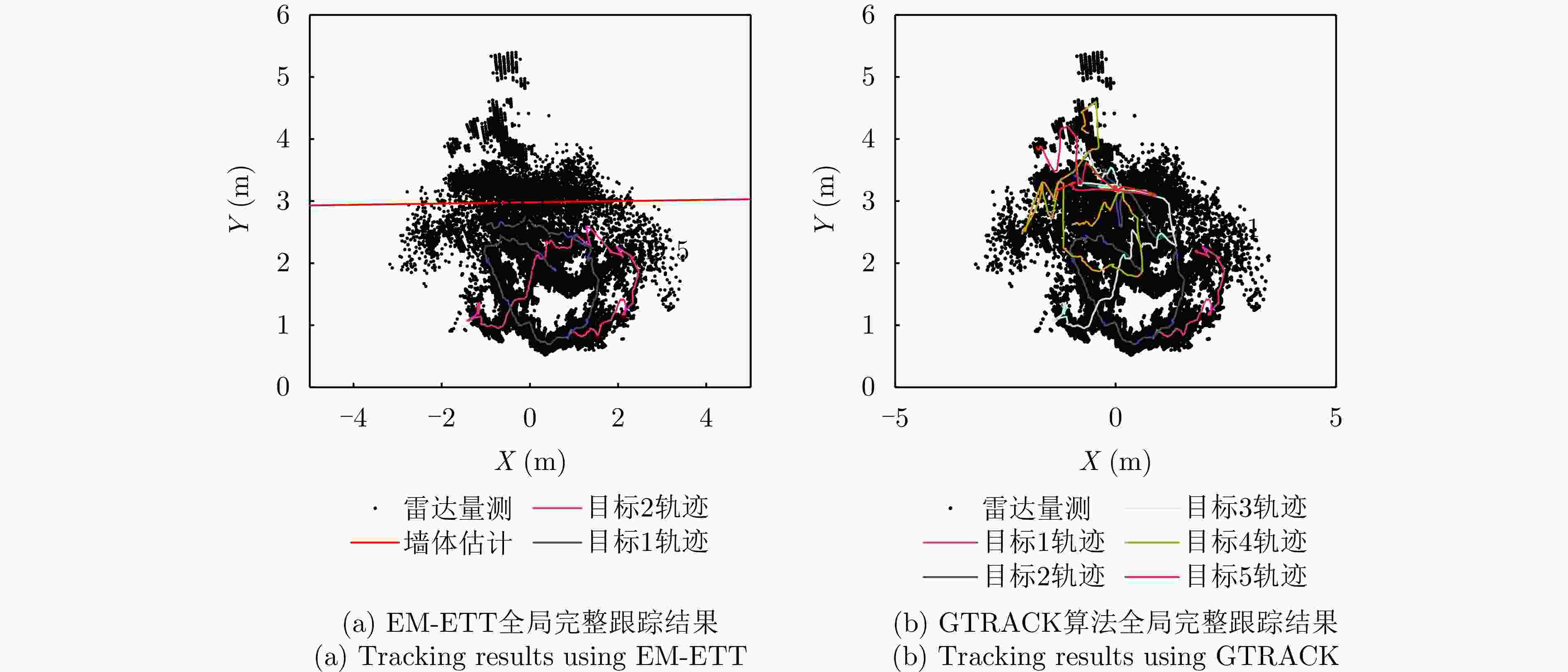
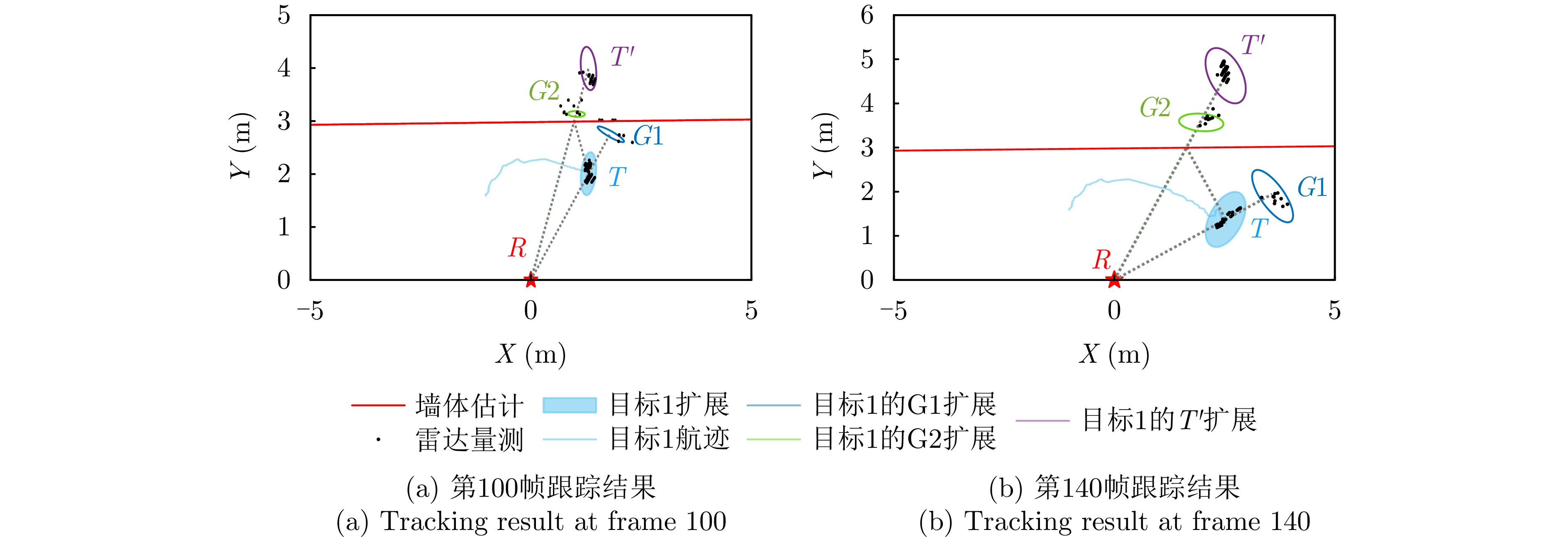
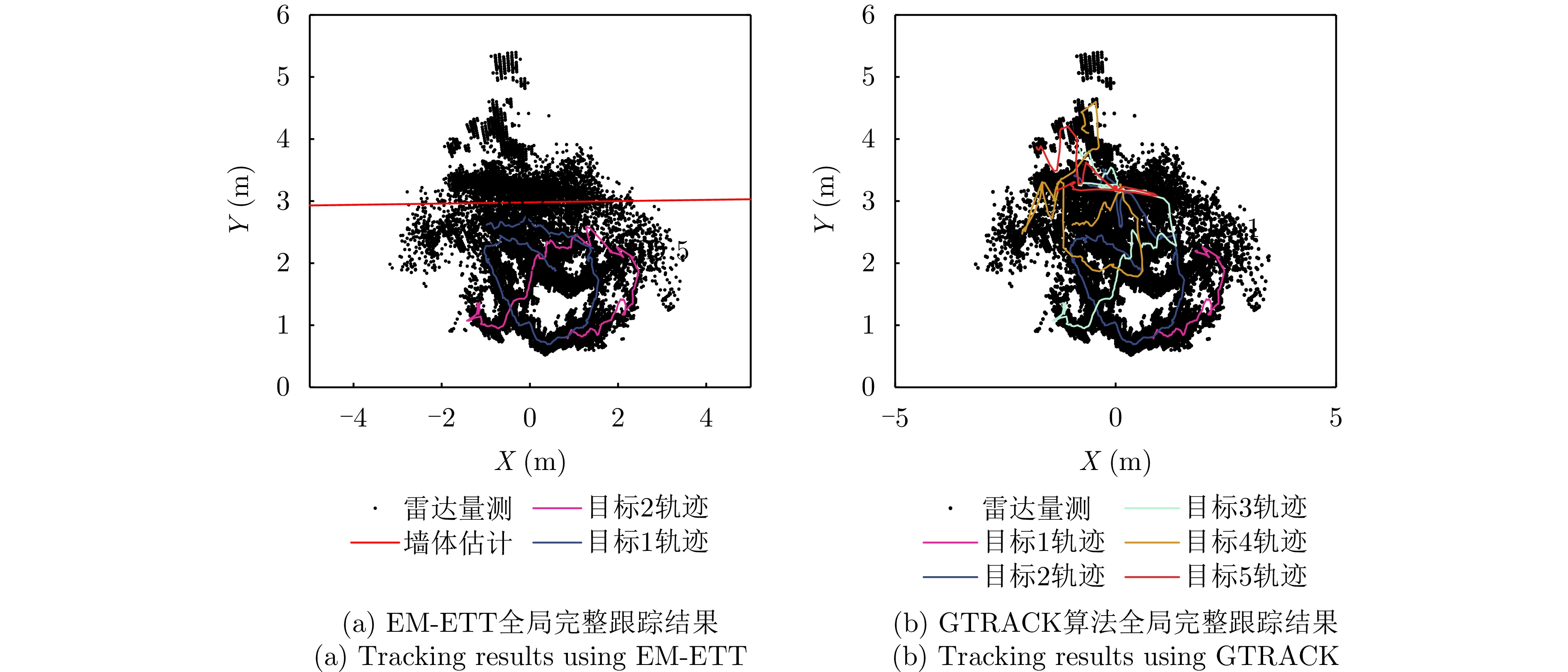
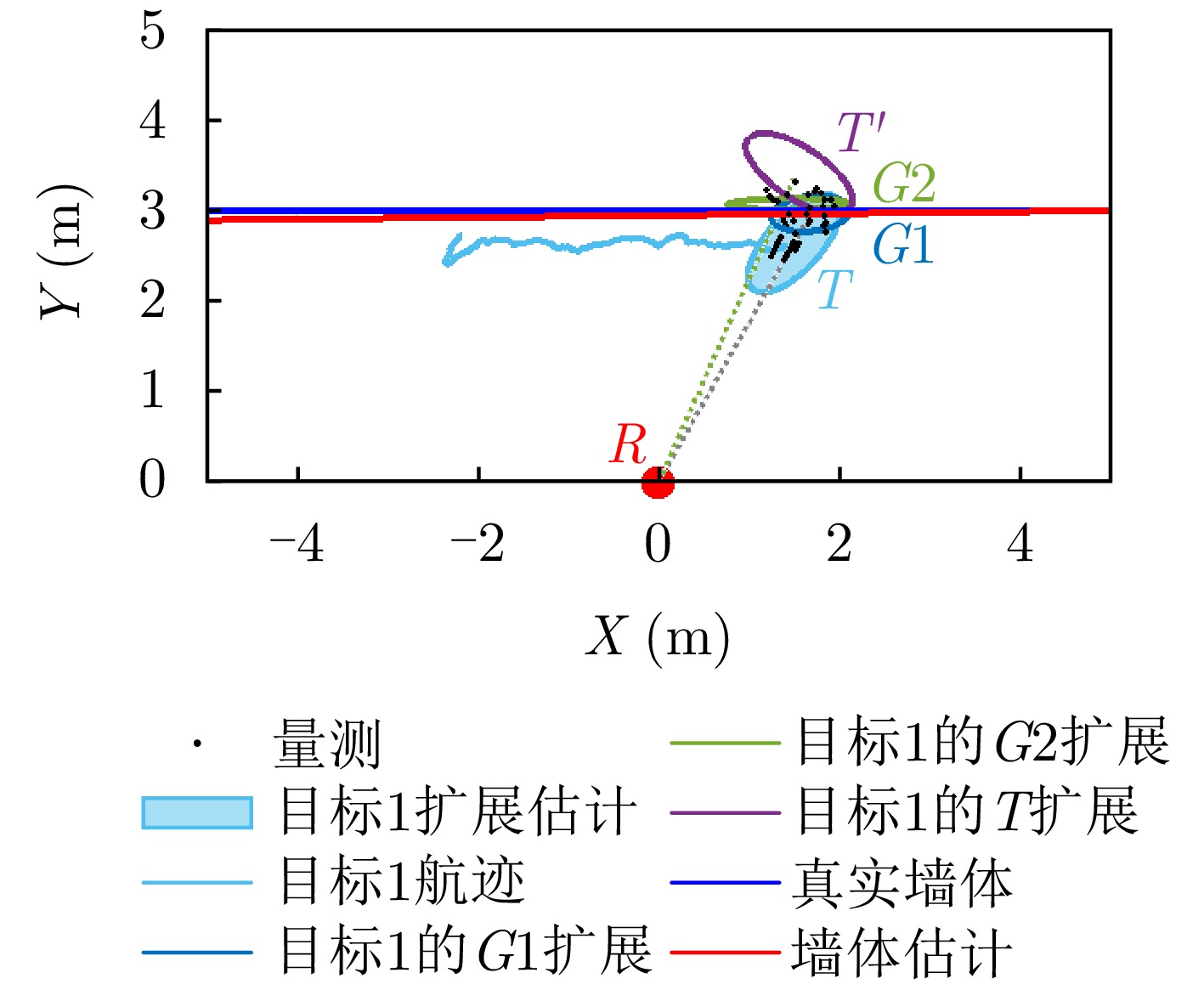
图 12 基于EM-ETT和GTRACK方法的多目标跟踪结果对比图
Figure 12. Comparison of multi-target tracking results using EM-ETT and GTRACK
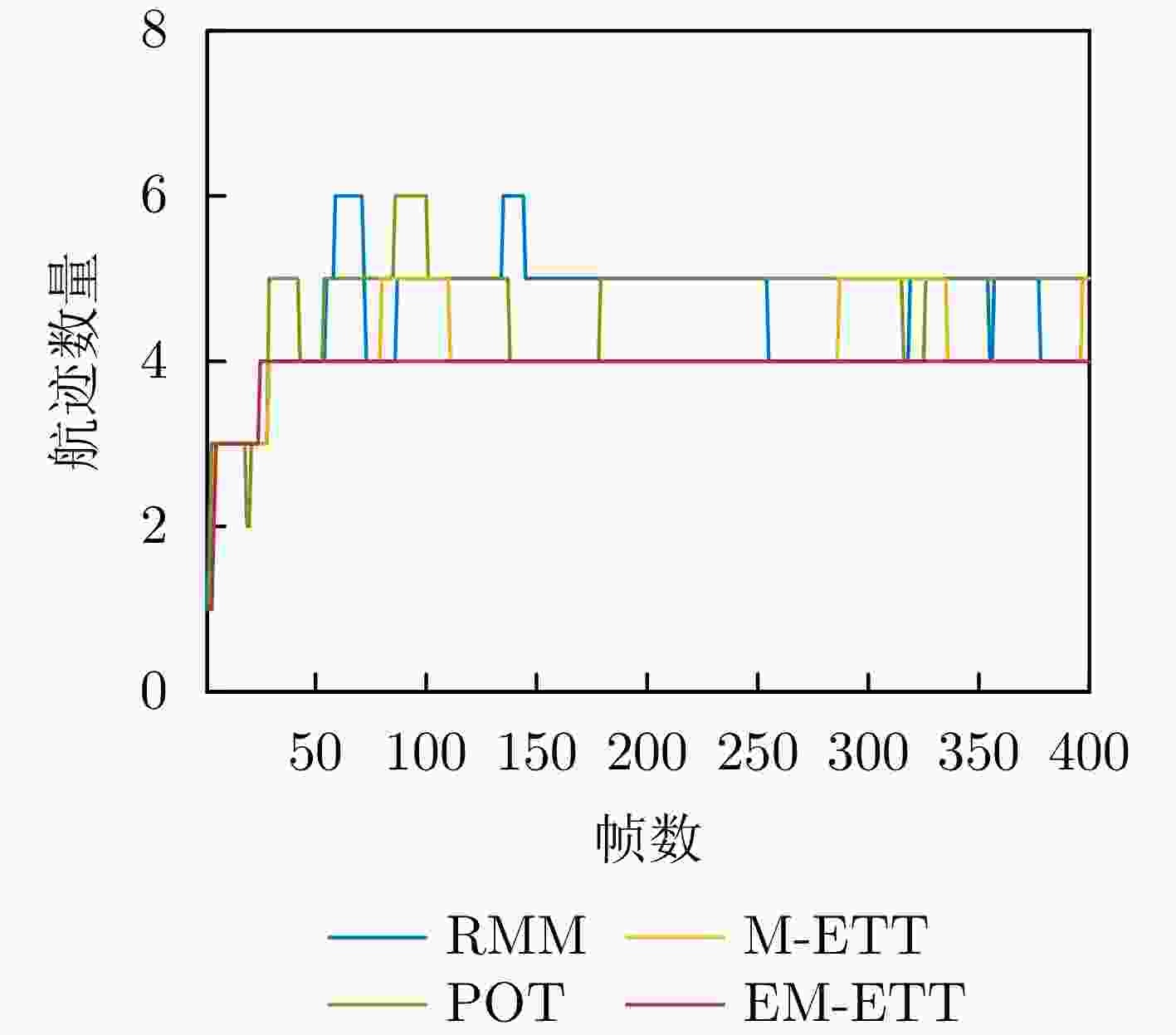
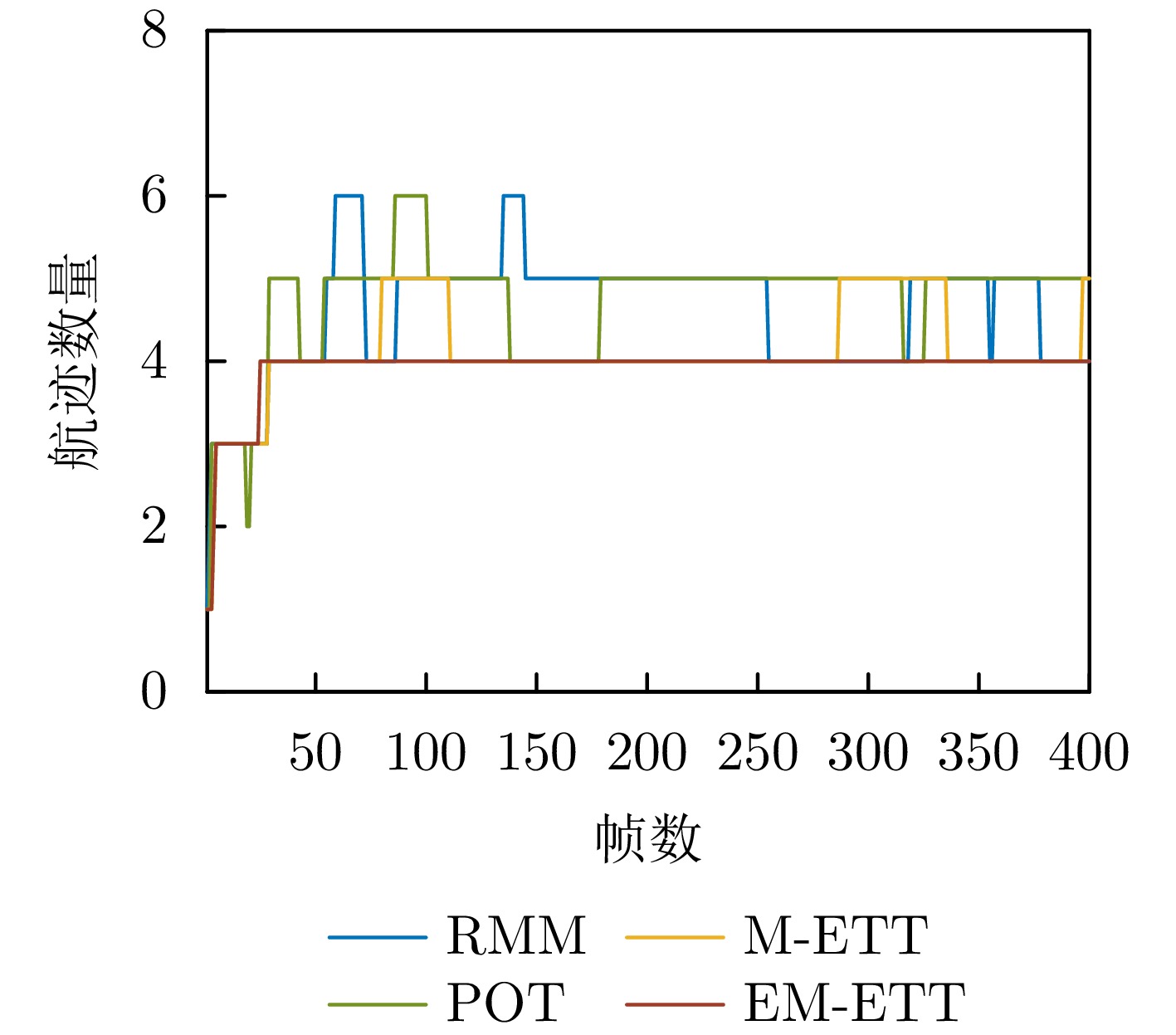
图 17 4人场景下轨迹数量估计变化图
Figure 17. Variation of the estimated number of tracks in the four-target scenario
表 1 雷达参数设置
Table 1. Radar parameter settings
参数 数值 起始频率 60 GHz 有效带宽 960 MHz 频率斜率 30.018 MHz/μs 采样率 2 MHz 啁啾周期 50 μs 帧周期 50 ms 每个啁啾的样本数 64 每帧的啁啾数 128  下载: 导出CSV
表 2 目标运动轨迹设置
Table 2. Target trajectory configurations
起点 终点 离墙距离 数据量 (–3.0, 2.5) (3.0, 2.5) 0.5 m 4组 (–3.0, 2.0) (3.0, 2.0) 1.0 m 4组 (–3.0, 1.5) (3.0, 1.5) 1.5 m 4组 (–3.0, 1.0) (3.0, 1.0) 2.0 m 4组
下载: 导出CSV
表 3 多目标跟踪结果对比表(%)
Table 3. Comparison of multi-target tracking results (%)
人数 RMM POT M-ETT EM-ETT Ri Rf Ra Ri Rf Ra Ri Rf Ra Ri Rf Ra 1 0.22 11.24 88.54 0.56 10.73 88.71 0.22 0.43 99.35 0.25 0.32 99.43 2 0.70 18.80 80.50 1.35 16.55 82.10 0.55 2.27 97.18 0.66 1.21 98.13 3 1.36 21.72 76.92 3.34 19.58 77.08 1.95 5.44 92.61 1.33 1.63 97.04 4 1.05 23.25 75.70 2.26 22.45 75.29 1.31 7.98 90.71 1.08 3.25 95.67 注:表中加粗数值表示最优结果。
下载: 导出CSV
表 4 多径识别率(%)
Table 4. Multipath recognition rate (%)
人数 Rm 1 99.89 2 97.35 3 94.29 4 90.60
下载: 导出CSV
表 5 算法运行时间对比
Table 5. Comparison of computational time
算法 运行时间(ms) RMM 3.18 POT 2.23 M-ETT 3.74 EM-ETT 3.92
下载: 导出CSV
-
[1] ZHANG Jia, XI Rui, HE Yuan, et al. A survey of mmWave-based human sensing: Technology, platforms and applications[J]. IEEE Communications Surveys & Tutorials, 2023, 25(4): 2052–2087. doi: 10.1109/COMST.2023.3298300. [2] SOUMYA A, KRISHNA MOHAN C, and CENKERAMADDI L R. Recent advances in mmWave-radar-based sensing, its applications, and machine learning techniques: A review[J]. Sensors, 2023, 23(21): 8901. doi: 10.3390/s23218901. [3] CUI Han and DAHNOUN N. High precision human detection and tracking using millimeter-wave radars[J]. IEEE Aerospace and Electronic Systems Magazine, 2021, 36(1): 22–32. doi: 10.1109/MAES.2020.3021322. [4] GRANSTRÖM K, BAUM M, and REUTER S. Extended object tracking: Introduction, overview and applications[EB/OL]. https://doi.org/10.48550/arXiv.1604.00970, 2016. [5] JIANG Meiqiu, GUO Shisheng, LUO Haolan, et al. A robust target tracking method for crowded indoor environments using mmWave radar[J]. Remote Sensing, 2023, 15(9): 2425. doi: 10.3390/rs15092425. [6] SHAMSFAKHR F, MACII D, PALOPOLI L, et al. A multi-target detection and position tracking algorithm based on mmWave-FMCW radar data[J]. Measurement, 2024, 234: 114797. doi: 10.1016/j.measurement.2024.114797. [7] HUANG Xu, CHEENA H, THOMAS A, et al. Indoor detection and tracking of people using mmWave sensor[J]. Journal of Sensors, 2021, 2021(1): 6657709. doi: 10.1155/2021/6657709. [8] LI Shenglei and HISHIYAMA R. An indoor people counting and tracking system using mmWave sensor and sub-sensors[J]. IFAC-PapersOnLine, 2023, 56(2): 7096–7101. doi: 10.1016/j.ifacol.2023.10.577. [9] SVENSSON L, SVENSSON D, GUERRIERO M, et al. Set JPDA filter for multitarget tracking[J]. IEEE Transactions on Signal Processing, 2011, 59(10): 4677–4691. doi: 10.1109/TSP.2011.2161294. [10] TEXAS Instruments Inc. Tracking radar targets with multiple reflection points[EB/OL]. https://dev.ti.com/tirex/explore/node?isTheia=false&node=A__AObLJnMJzRrRFRE5nTbQ1g__radar_toolbox__1AslXXD__2.20.00.05&placeholder=true, 2023. [11] LAN Jian. Extended object tracking using random matrix with extension-dependent measurement numbers[J]. IEEE Transactions on Aerospace and Electronic Systems, 2023, 59(4): 4464–4477. doi: 10.1109/TAES.2023.3241888. [12] HAAG S, DURAISAMY B, GOVAERS F, et al. Extended object tracking assisted adaptive clustering for radar in autonomous driving applications[C]. 2019 Sensor Data Fusion: Trends, Solutions, Applications (SDF), Bonn, Germany, 2019: 1–7. doi: 10.1109/SDF.2019.8916658. [13] BAUM M and HANEBECK U D. Extended object tracking with random hypersurface models[J]. IEEE Transactions on Aerospace and Electronic Systems, 2014, 50(1): 149–159. doi: 10.1109/TAES.2013.120107. [14] BAUM M, NOACK B, and HANECK U D. Extended object and group tracking with elliptic random hypersurface models[C]. 2010 13th International Conference on Information Fusion, Edinburgh, UK, 2010: 1–8. doi: 10.1109/ICIF.2010.5711854. [15] CAO Xiaomeng, LAN Jian, LI X R, et al. Automotive radar-based vehicle tracking using data-region association[J]. IEEE Transactions on Intelligent Transportation Systems, 2022, 23(7): 8997–9010. doi: 10.1109/TITS.2021.3089676. [16] CAO Xiaomeng, LAN Jian, LIU Yushuang, et al. Tracking of rectangular object using key points with regionally concentrated measurements[J]. IEEE Transactions on Intelligent Transportation Systems, 2024, 25(6): 5312–5327. doi: 10.1109/TITS.2023.3332606. [17] HAO Zhanjun, YAN Hao, DANG Xiaochao, et al. Millimeter-wave radar localization using indoor multipath effect[J]. Sensors, 2022, 22(15): 5671. doi: 10.3390/s22155671. [18] COPA E I P, AZIZ K, RYKUNOV M, et al. Radar fusion for multipath mitigation in indoor environments[C]. 2020 IEEE Radar Conference (RadarConf20), Florence, Italy, 2020: 1–5. doi: 10.1109/RadarConf2043947.2020.9266697. [19] LIU Chenwen, LIU Shengheng, ZHANG Cheng, et al. Multipath propagation analysis and ghost target removal for FMCW automotive radars[C]. IET International Radar Conference (IET IRC 2020), Chongqing, China, 2020: 330–334. doi: 10.1049/icp.2021.0554. [20] FENG Ruoyu, DE GREEF E, RYKUNOV M, et al. Multipath ghost recognition for indoor MIMO radar[J]. IEEE Transactions on Geoscience and Remote Sensing, 2022, 60: 5104610. doi: 10.1109/TGRS.2021.3109381. [21] PARK J K, PARK J H, and KIM K T. Multipath signal mitigation for indoor localization based on MIMO FMCW radar system[J]. IEEE Internet of Things Journal, 2024, 11(2): 2618–2629. doi: 10.1109/JIOT.2023.3292349. [22] LUO Haolan, ZHU Zhihao, JIANG Meiqiu, et al. An effective multipath ghost recognition method for sparse MIMO radar[J]. IEEE Transactions on Geoscience and Remote Sensing, 2023, 61: 5111611. doi: 10.1109/TGRS.2023.3335454. [23] LI Yunda and SHANG Xiaolei. Multipath ghost target identification for automotive MIMO radar[C]. 2022 IEEE 96th Vehicular Technology Conference (VTC2022-Fall), London, United Kingdom, 2022: 1–5. doi: 10.1109/VTC2022-Fall57202.2022.10012904. [24] GARCIA J M, PROPHET R, MICHEL J C F, et al. Identification of ghost moving detections in automotive scenarios with deep learning[C]. 2019 IEEE MTT-S International Conference on Microwaves for Intelligent Mobility (ICMIM), Detroit, USA, 2019: 1–4. doi: 10.1109/ICMIM.2019.8726704. [25] FENG Ruoyu, DE GREEF E, RYKUNOV M, et al. Multipath ghost classification for MIMO radar using deep neural networks[C]. 2022 IEEE Radar Conference (RadarConf22), New York City, USA, 2022: 1–6. doi: 10.1109/RadarConf2248738.2022.9764274. [26] PULFORD G W and EVANS R J. A multipath data association tracker for over-the-horizon radar[J]. IEEE Transactions on Aerospace and Electronic Systems, 1998, 34(4): 1165–1183. doi: 10.1109/7.722704. [27] PULFORD G W and LA SCALA B F. Multihypothesis Viterbi data association: Algorithm development and assessment[J]. IEEE Transactions on Aerospace and Electronic Systems, 2010, 46(2): 583–609. doi: 10.1109/TAES.2010.5461643. [28] HABTEMARIAM B, THARMARASA R, THAYAPARAN T, et al. A multiple-detection joint probabilistic data association filter[J]. IEEE Journal of Selected Topics in Signal Processing, 2013, 7(3): 461–471. doi: 10.1109/JSTSP.2013.2256772. [29] CHEN Weiyan, YANG Hongliu, BI Xiaoyang, et al. Environment-aware multi-person tracking in indoor environments with mmWave radars[J]. Proceedings of the ACM on Interactive, Mobile, Wearable and Ubiquitous Technologies, 2023, 7(3): 89. doi: 10.1145/3610902. [30] FENG Ruoyu, DE GREEF E, RYKUNOV M, et al. Multipath ghost recognition and joint target tracking with wall estimation for indoor MIMO radar[J]. IEEE Transactions on Radar Systems, 2024, 2: 154–164. doi: 10.1109/TRS.2024.3354509. [31] CHENG Qiaoling, YANG Zhaocheng, CHU Ping, et al. Space boundary-aware people tracking and counting method using MIMO radar[J]. IEEE Sensors Journal, 2025, 25(14): 27209–27220. doi: 10.1109/JSEN.2025.3577228. [32] LIAN Tongsheng, CHU Ping, YANG Zhaocheng, et al. Indoor multi-target tracking exploiting target motion characteristics and prior boundary knowledge using multiple-input multiple-output radar[J]. Chinese Journal of Electronics, 2025, 34(6): 1767–1777. doi: 10.23919/cje.2024.00.165. [33] TUNCER B and ÖZKAN E. Random matrix based extended target tracking with orientation: A new model and inference[J]. IEEE Transactions on Signal Processing, 2021, 69: 1910–1923. doi: 10.1109/TSP.2021.3065136. [34] JIANG Meiqiu, LUO Haolan, GUO Shisheng, et al. Indoor human tracking with 3-D expansion estimation based on mmWave radar[J]. IEEE Transactions on Aerospace and Electronic Systems, 2025, 61(6): 16647–16665. doi: 10.1109/TAES.2025.3595827. [35] TAO Ding, ANFINSEN S N, and BREKKE C. Robust CFAR detector based on truncated statistics in multiple-target situations[J]. IEEE Transactions on Geoscience and Remote Sensing, 2016, 54(1): 117–134. doi: 10.1109/TGRS.2015.2451311. [36] WOLFEL M and MCDONOUGH J. Minimum variance distortionless response spectral estimation[J]. IEEE Signal Processing Magazine, 2005, 22(5): 117–126. doi: 10.1109/MSP.2005.1511829. [37] SCHUBERT E, SANDER J, ESTER M, et al. DBSCAN revisited, revisited: Why and how you should (still) use DBSCAN[J]. ACM Transactions on Database Systems, 2017, 42(3): 19. doi: 10.1145/3068335. [38] FELDMANN M, FRÄNKEN D, and KOCH W. Tracking of extended objects and group targets using random matrices[J]. IEEE Transactions on Signal Processing, 2011, 59(4): 1409–1420. doi: 10.1109/TSP.2010.2101064. [39] SEDEHI M, LOMBARDO P, and FARINA A. A modified M/N logic for track initiation of low observable targets using amplitude information[C]. 2006 International Radar Symposium (IRS), Kraków, Poland, 2006: 1–4. doi: 10.1109/IRS.2006.4338080. [40] Texas Instruments Inc. 60GHz mmWave sensor EVMs[EB/OL]. https://www.ti.com/lit/ug/swru546e/swru546e.pdf, 2022. [41] Texas Instruments Inc. DCA1000EVM data capture card[EB/OL]. https://www.ti.com.cn/cn/lit/pdf/spruij4, 2019. -


计量
- 文章访问数:
- HTML全文浏览量:
- PDF下载量:
- 被引次数: 0