

 作者中心
作者中心 专家审稿
专家审稿 责编办公
责编办公 编辑办公
编辑办公
Radar Scattering Characteristics and Stress Field of Lobate Scarps in the Apollo Basin on the Moon
-
摘要: 月球叶状陡坎是月表浅层逆冲断层活动形成的小型线性构造,其空间分布与应力特征为揭示月球晚期构造演化提供了关键线索。目前,叶状陡坎的应力特征与雷达散射响应间的关联机制尚不明确。该研究以阿波罗盆地叶状陡坎为研究对象,利用Mini-RF影像提取散射特性参数;然后基于高分辨率数字高程模型采用库仑软件反演区域应力场分布特征;在此基础上,从统计关联角度分析雷达散射特征与应力之间的对应关系,揭示其构造活动性与表面物质响应的关联机制。主要结论如下:(1)断层附近应变显著高于外围,最大剪应变集中于断层倾向方向,体应变显示断层上盘体积膨胀,两端及滑动面中心呈现体积收缩。(2)陡坎面与上盘区域在圆极化比与部分极化分解参数上表现出更强的散射响应,表明这些区域可能存在更高的破碎度、块石暴露或结构复杂性,然而散射差异同时受到表面粗糙度、入射几何条件和后期改造过程的综合影响。(3)基于多元线性回归和随机森林算法进行了散射参数与应力场的回归分析,说明散射特征与应力之间的关联更可能是受地形条件、表面粗糙度及局部构造等共同作用的非线性关系。总体而言,该研究建立了一个面向阿波罗盆地叶状陡坎的雷达-地形联合探索性分析框架,用于评估散射特征与应力指标之间是否存在可量化的统计对应关系,并为相似地质背景下的浅层构造活动研究提供参考。Abstract: Lunar lobate scarps are small-scale linear structures formed by shallow thrust fault activity on the lunar surface, and their spatial distribution and stress characteristics provide essential clues for understanding the late-stage tectonic evolution of the Moon. At present, the correlation mechanism between the stress characteristics of lobate scarps and their radar scattering response remains unclear. In this study, lobate scarps in the Apollo Basin are considered as the research focus, and scattering characteristic parameters are extracted from Mini-RF images. Subsequently, the Coulomb software is used to invert the distribution characteristics of the regional stress field based on high-resolution digital elevation models. On this basis, the correspondence between radar scattering characteristics and stress is analyzed using statistical correlation methods, revealing the underlying relationship between tectonic activity and surface material response. The main conclusions are as follows. (1) The strain near the fault is markedly higher than that in the surrounding areas, with the maximum shear strain concentrated in the fault dip direction. Volumetric strain indicates volume expansion within the fault hanging wall, whereas volume contraction is observed at both ends and at the center of the sliding surface. (2) The scarp face and hanging wall regions exhibit stronger scattering responses in terms of the circular polarization ratio and partial polarization decomposition parameters, suggesting higher degrees of fragmentation, boulder exposure, or structural complexity in these areas. However, the scattering differences are also influenced by the combined effects of surface roughness, incidence geometry, and subsequent modification processes. (3) The regression analysis of scattering parameters and stress fields, based on multiple linear regression and random forest algorithms, indicates that the correlation between scattering characteristics and stress is likely nonlinear, governed by the combined effects of topographic conditions, surface roughness, and local structures. Overall, this study develops an exploratory radar-topography joint analysis framework for lobate scarps in the Apollo Basin to evaluate whether a quantifiable statistical correspondence exists between scattering features and stress indicators, as well as to provide supplementary evidence for studies of shallow tectonic activity under similar geological settings.
-
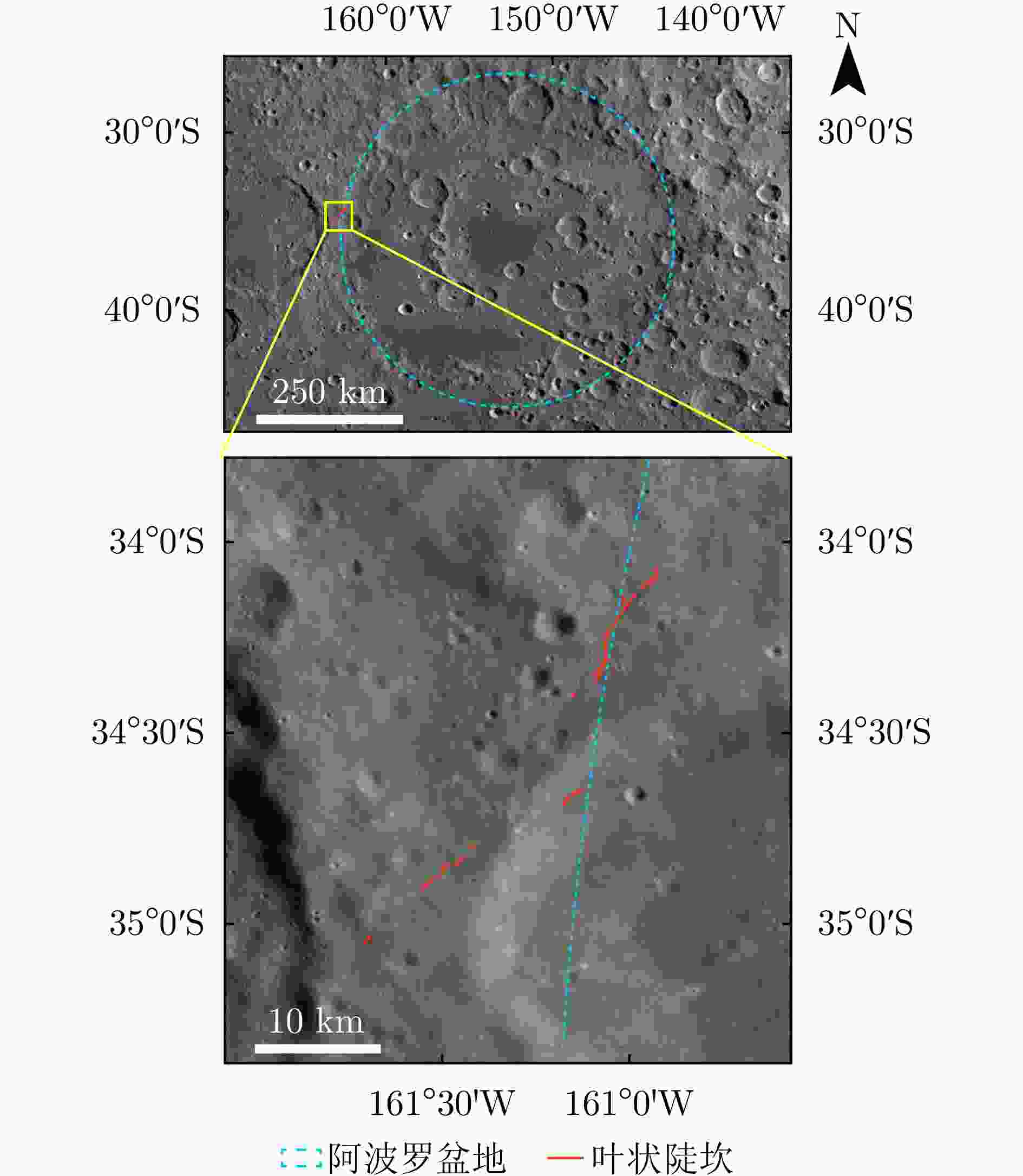
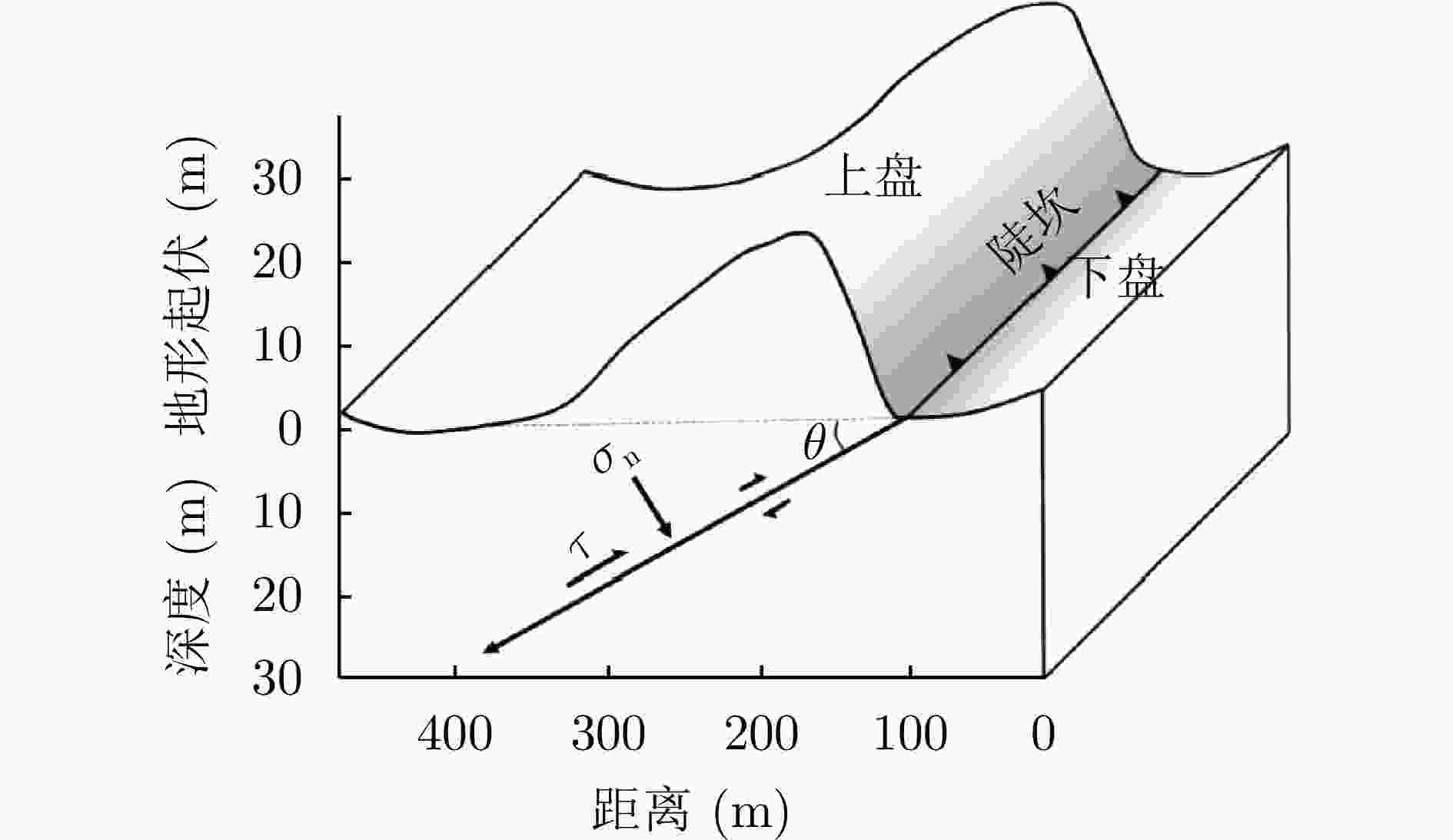
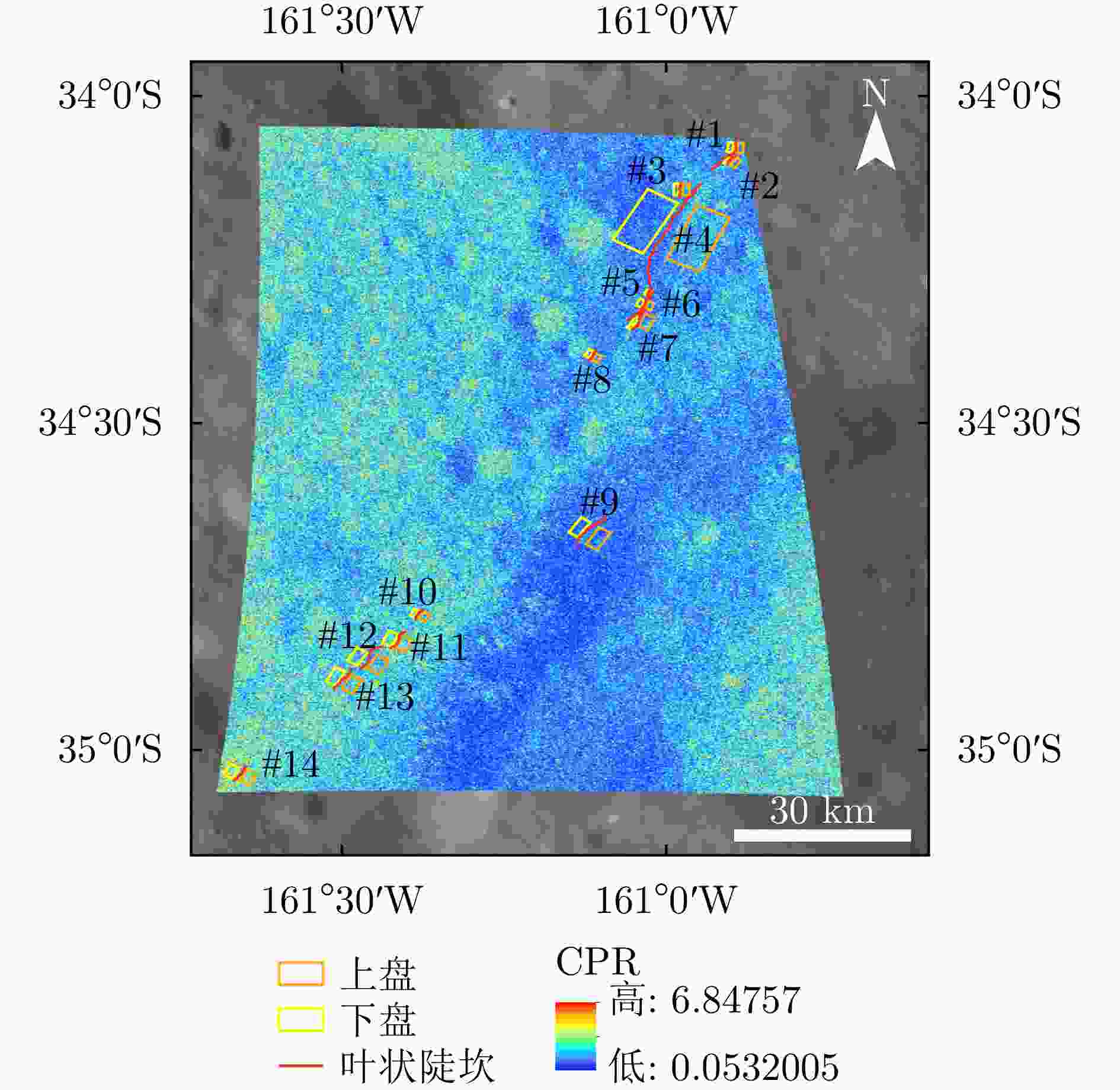
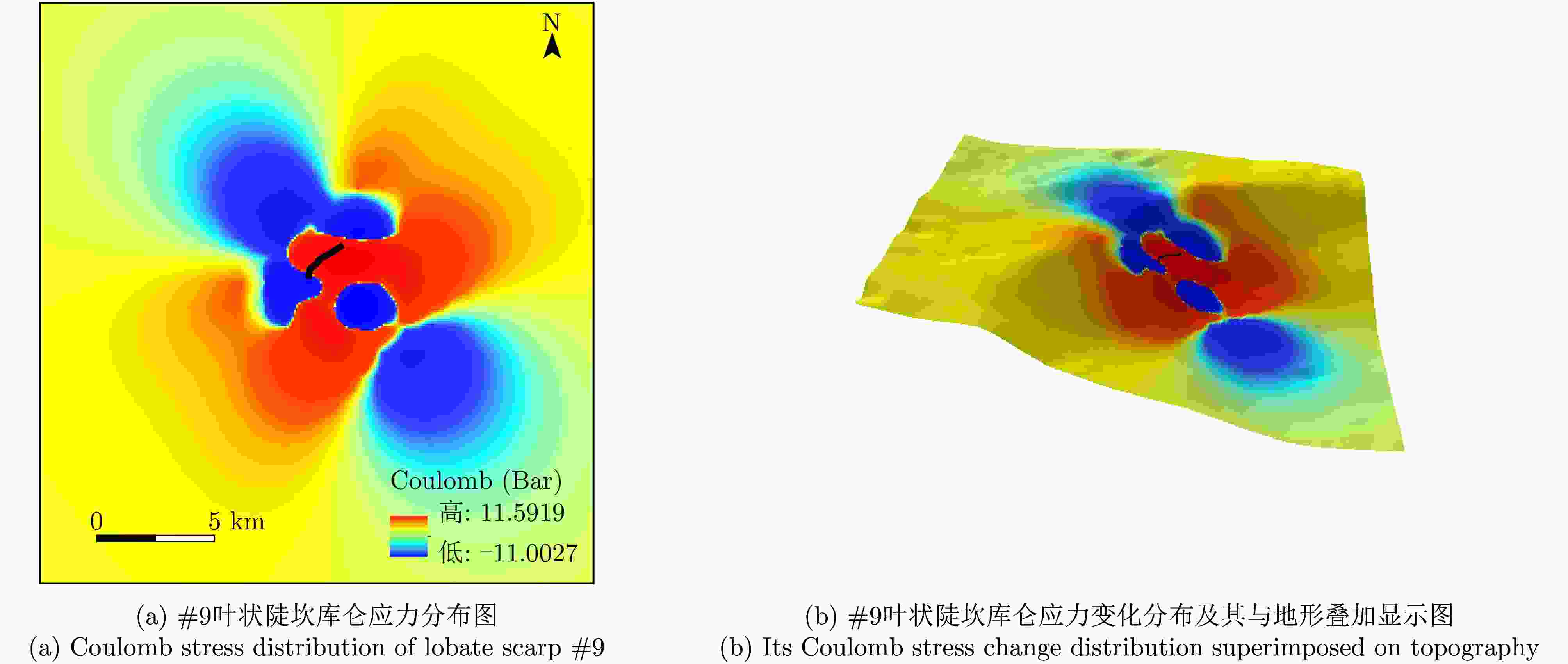
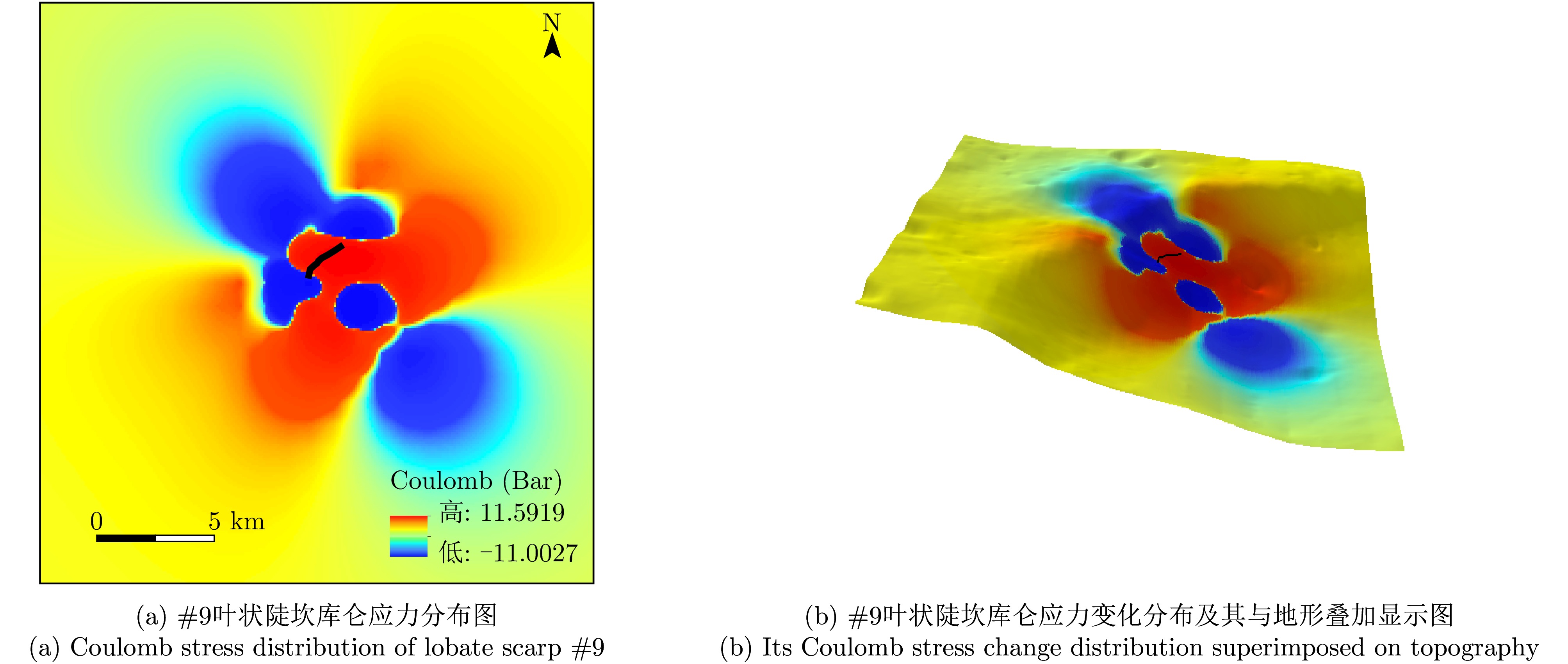
图 7 撞击坑壁9#叶状陡坎库仑应力分布图
Figure 7. Coulomb stress distribution map of lobate scarp #9 on the crater wall
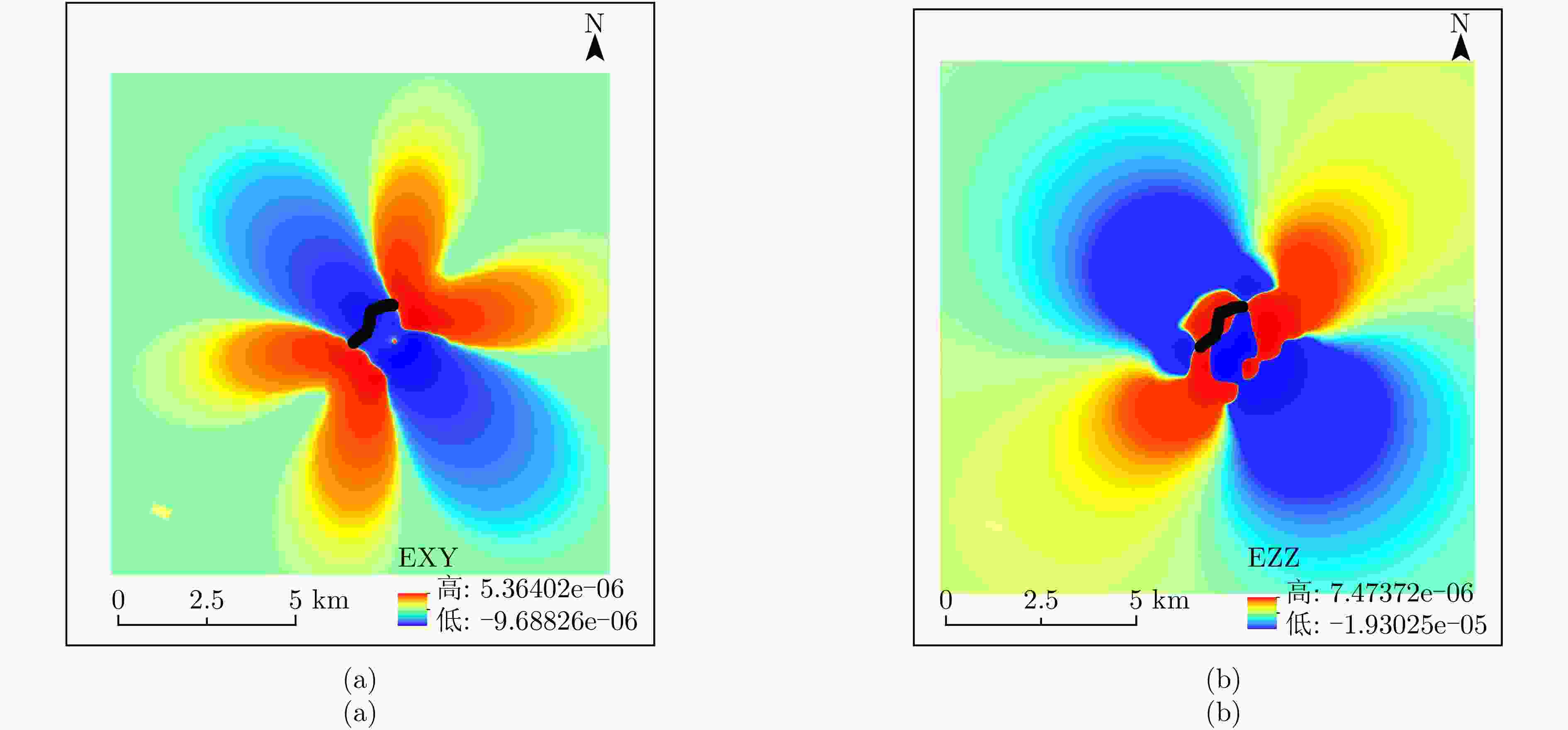
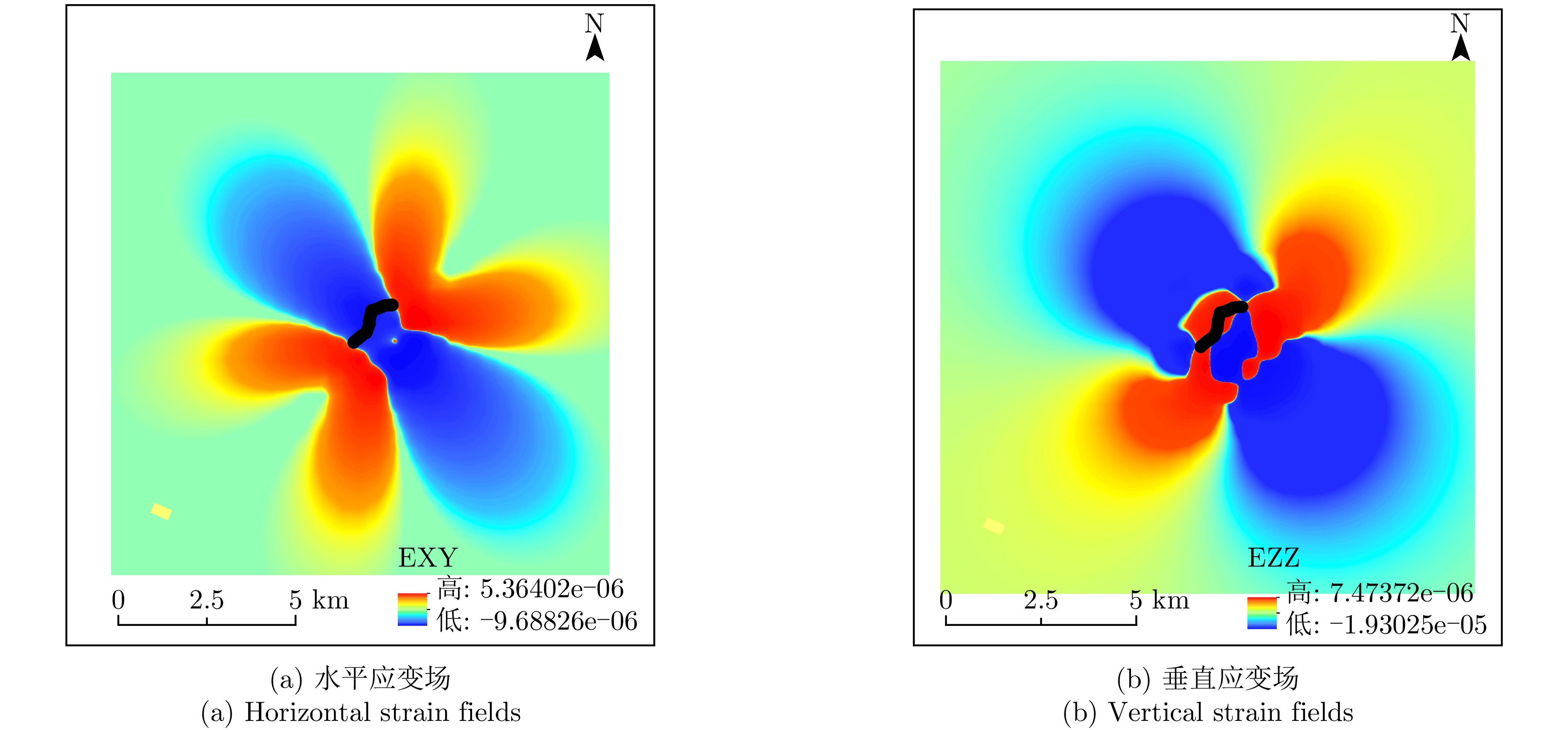
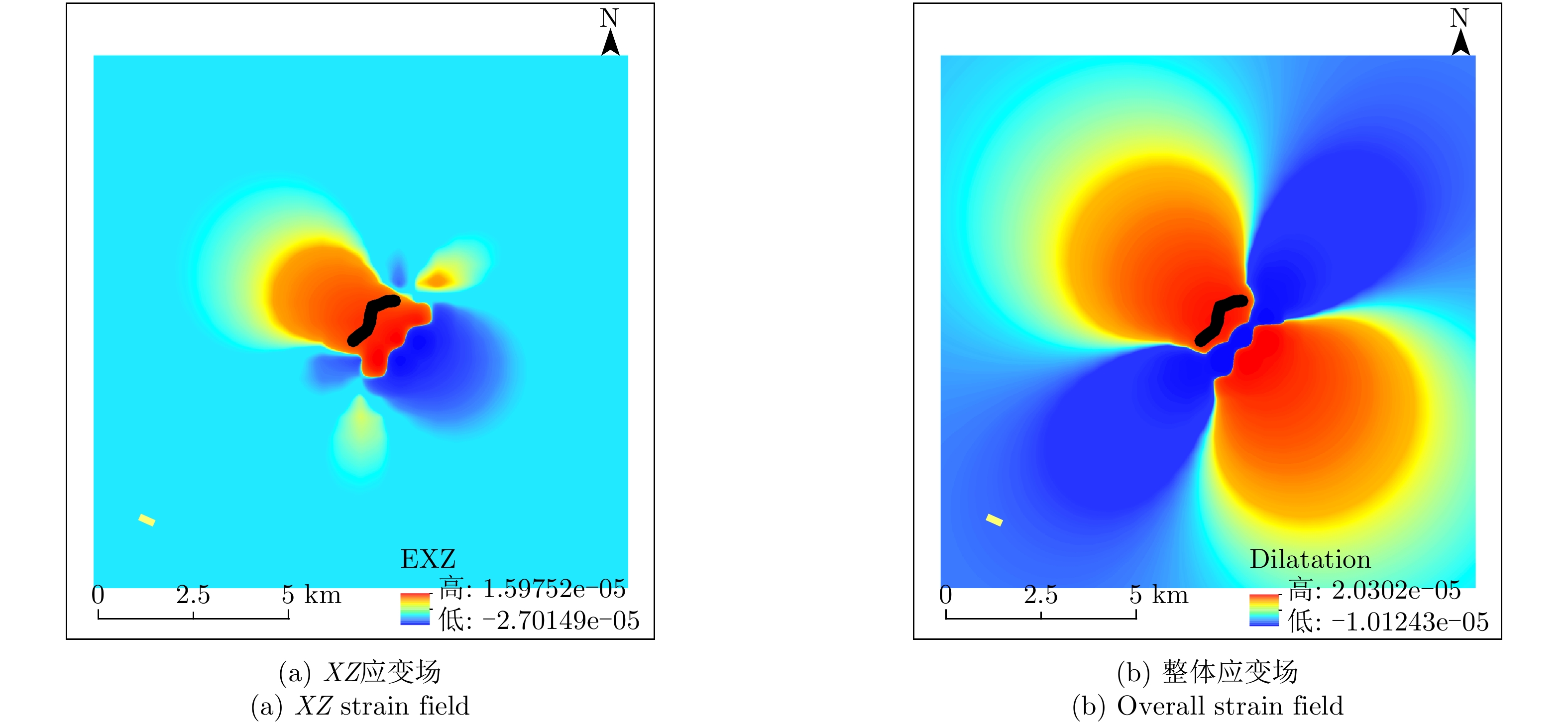
图 8 断层附近水平应变场与垂直应变场(LS07)
Figure 8. Horizontal and vertical strain fields near the fault (LS07)
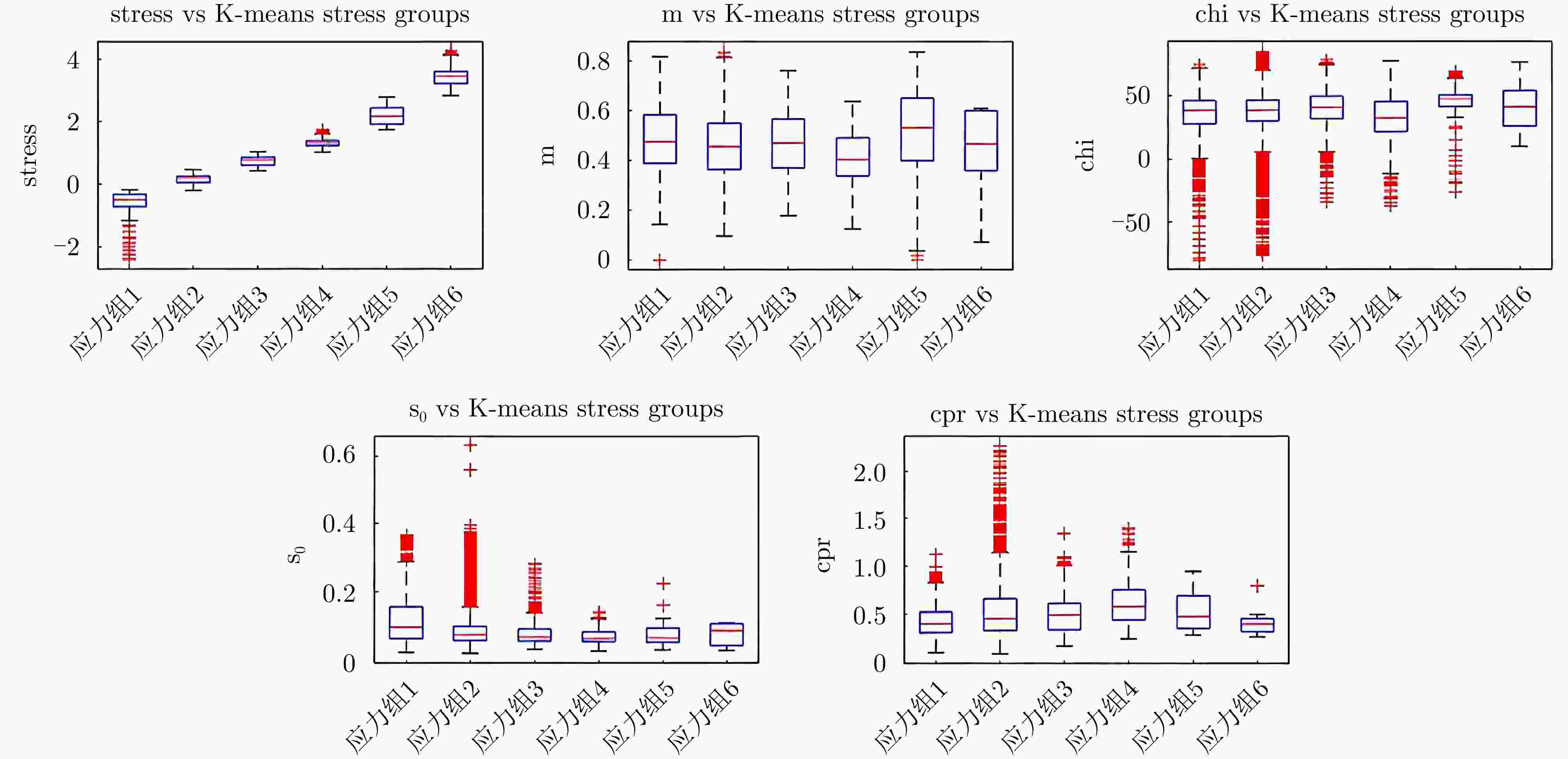
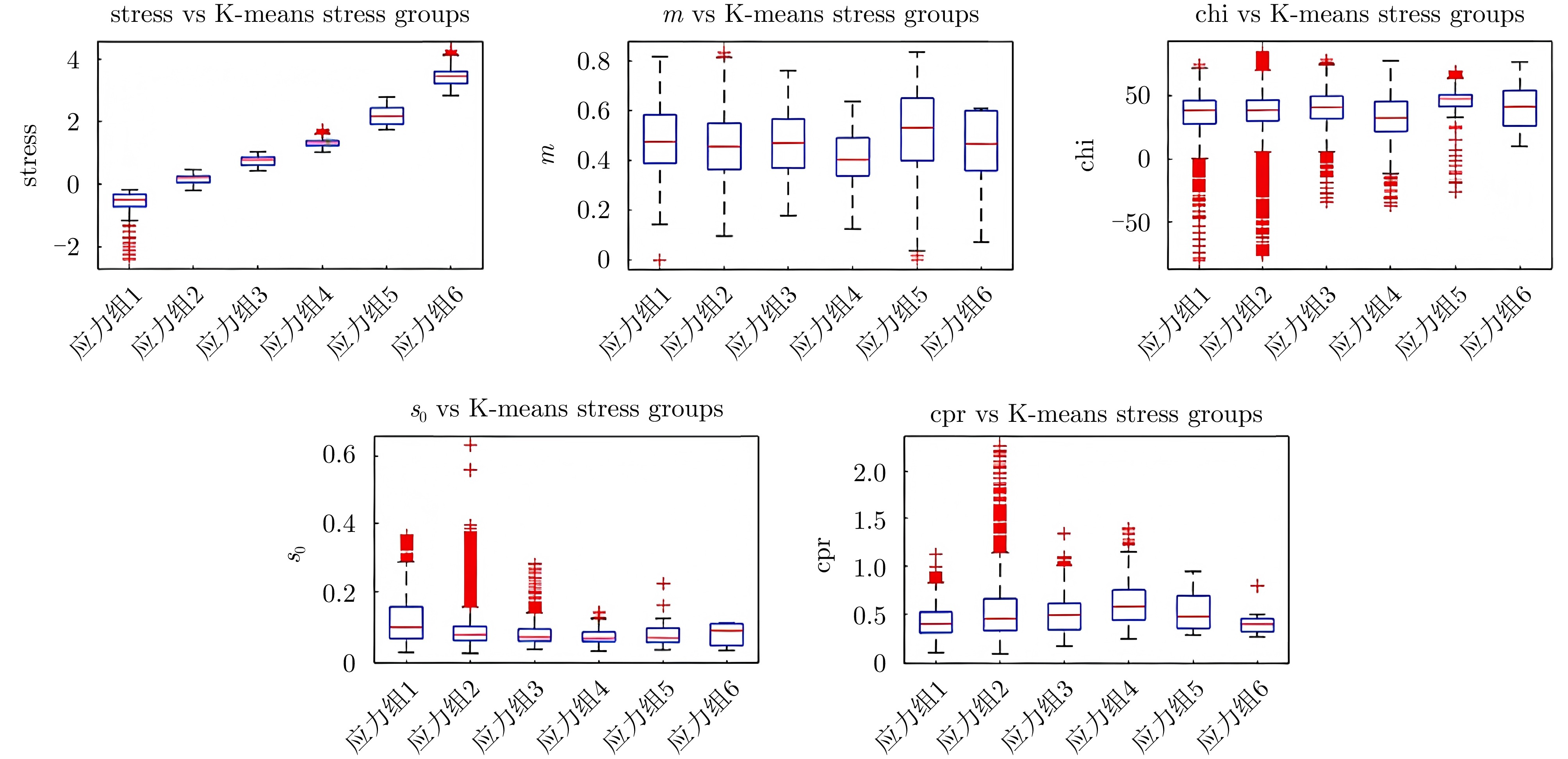
图 10 K-means聚类算法应力分层结果
Figure 10. Stress layering results based on K-means clustering algorithm
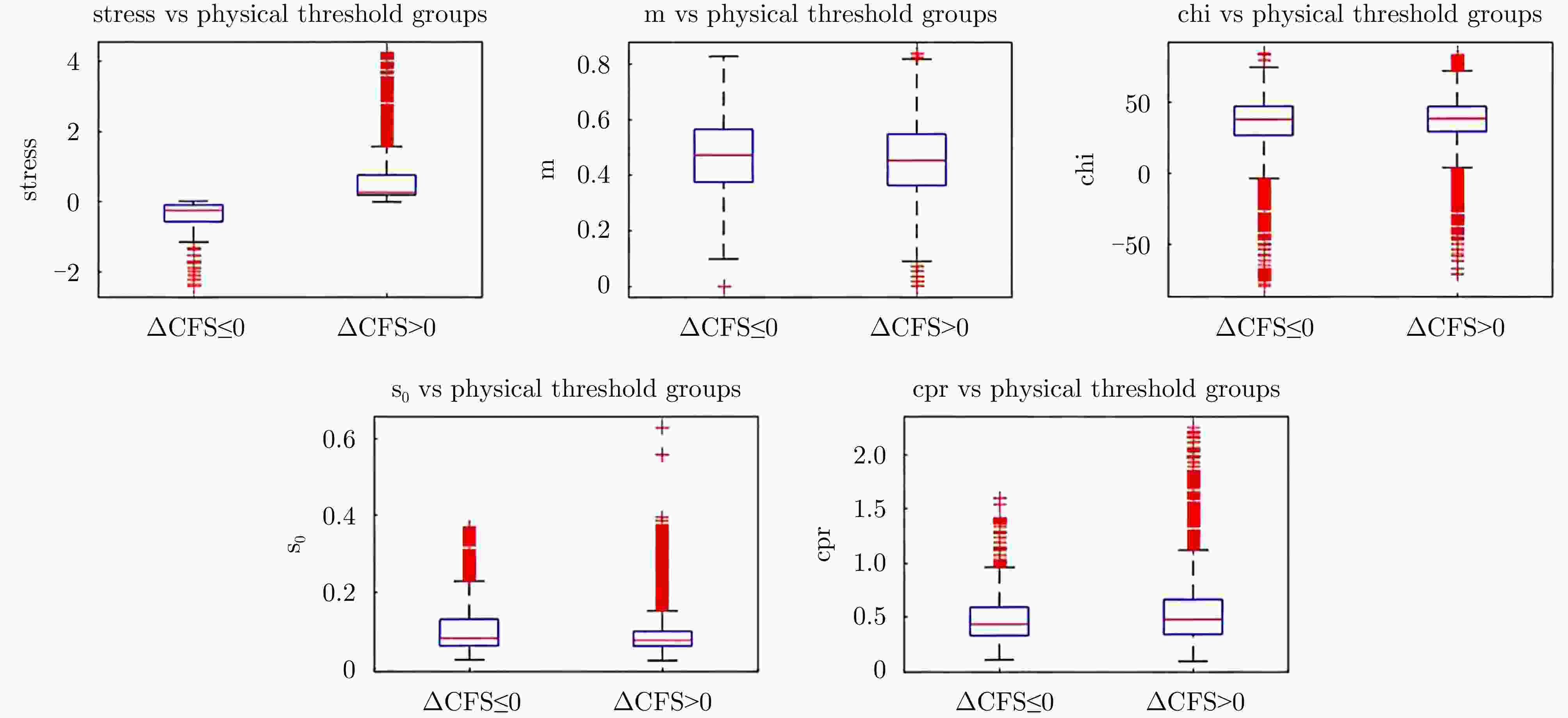
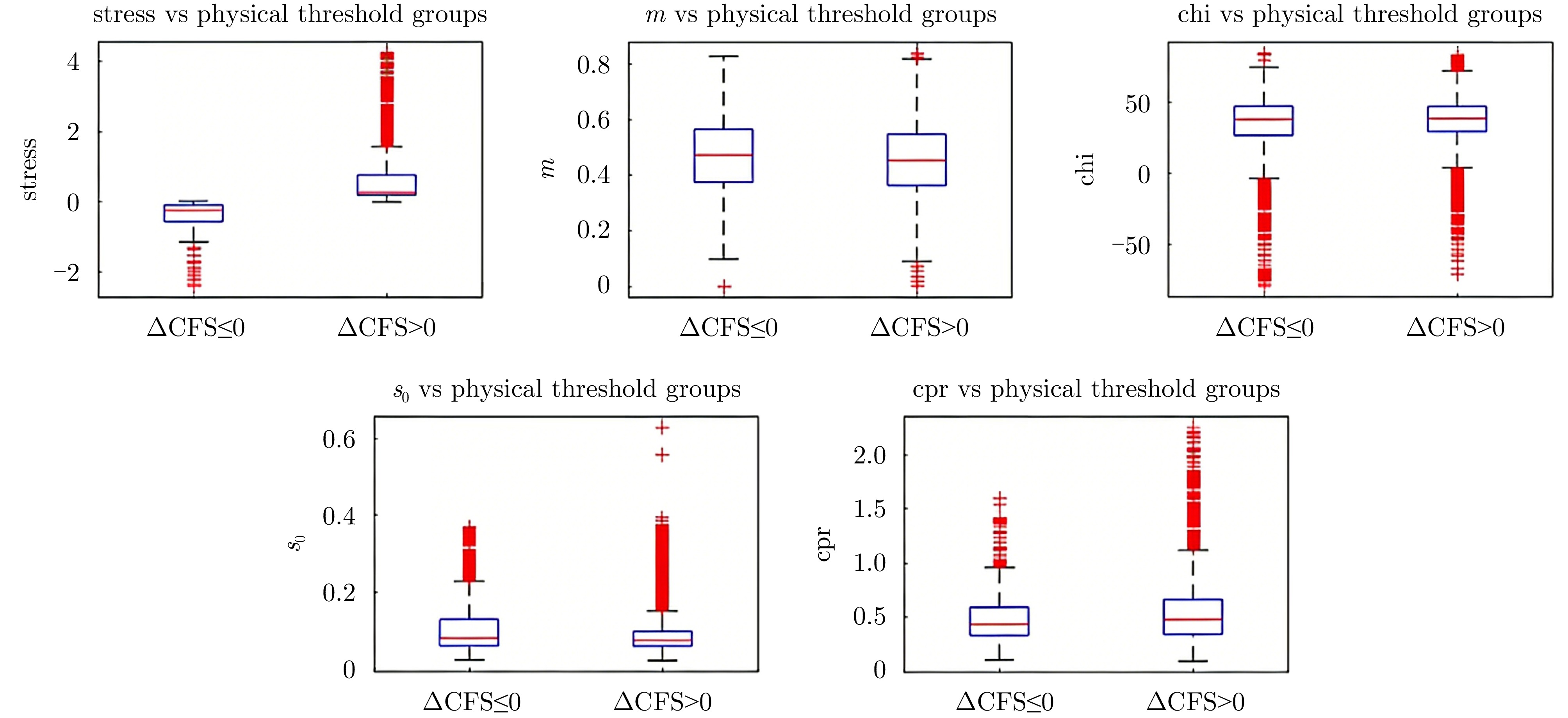
图 11 基于($\Delta $CFS=0)的物理阈值分区结果
Figure 11. Partitioning results based on the physical threshold of $\Delta $CFS = 0
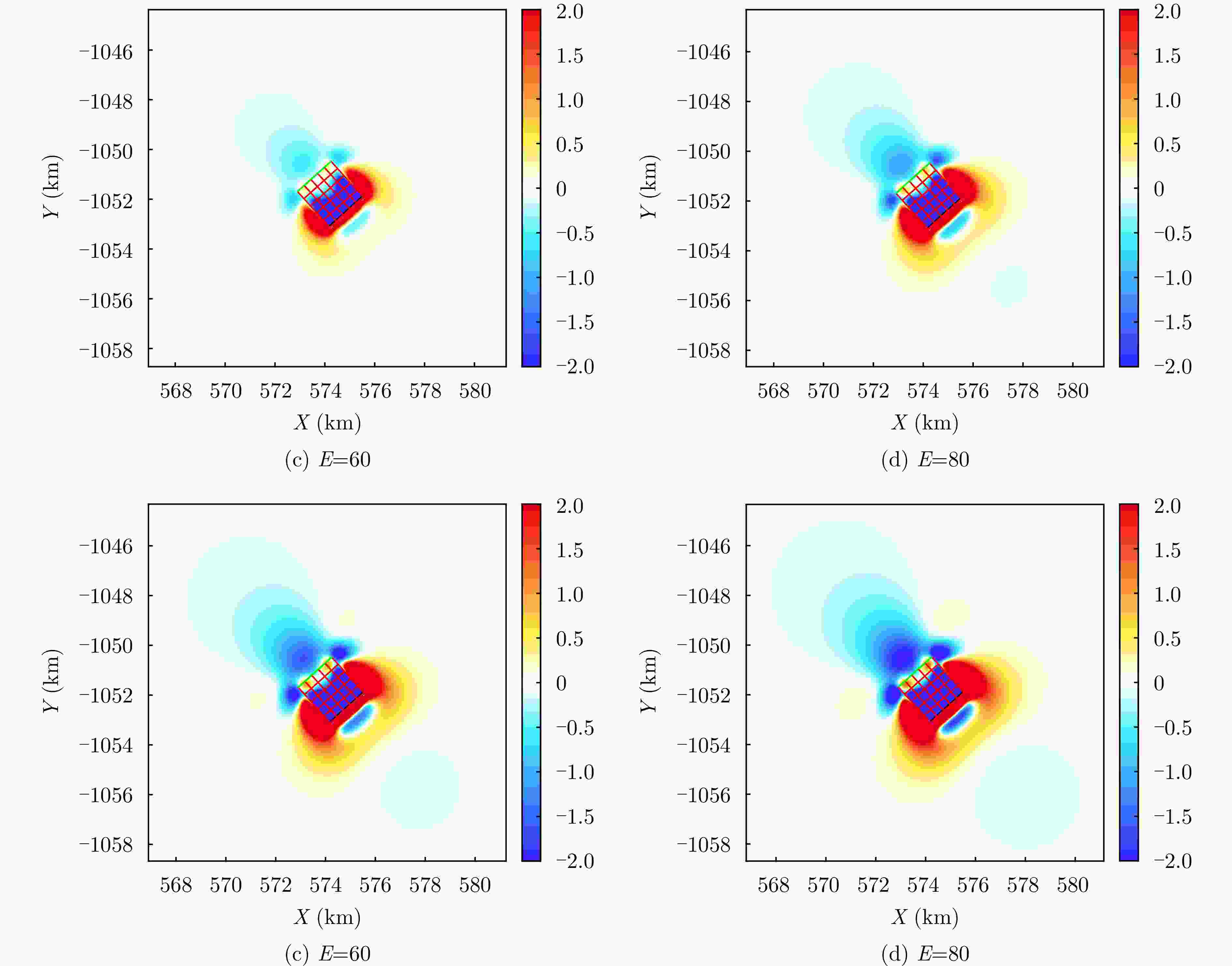
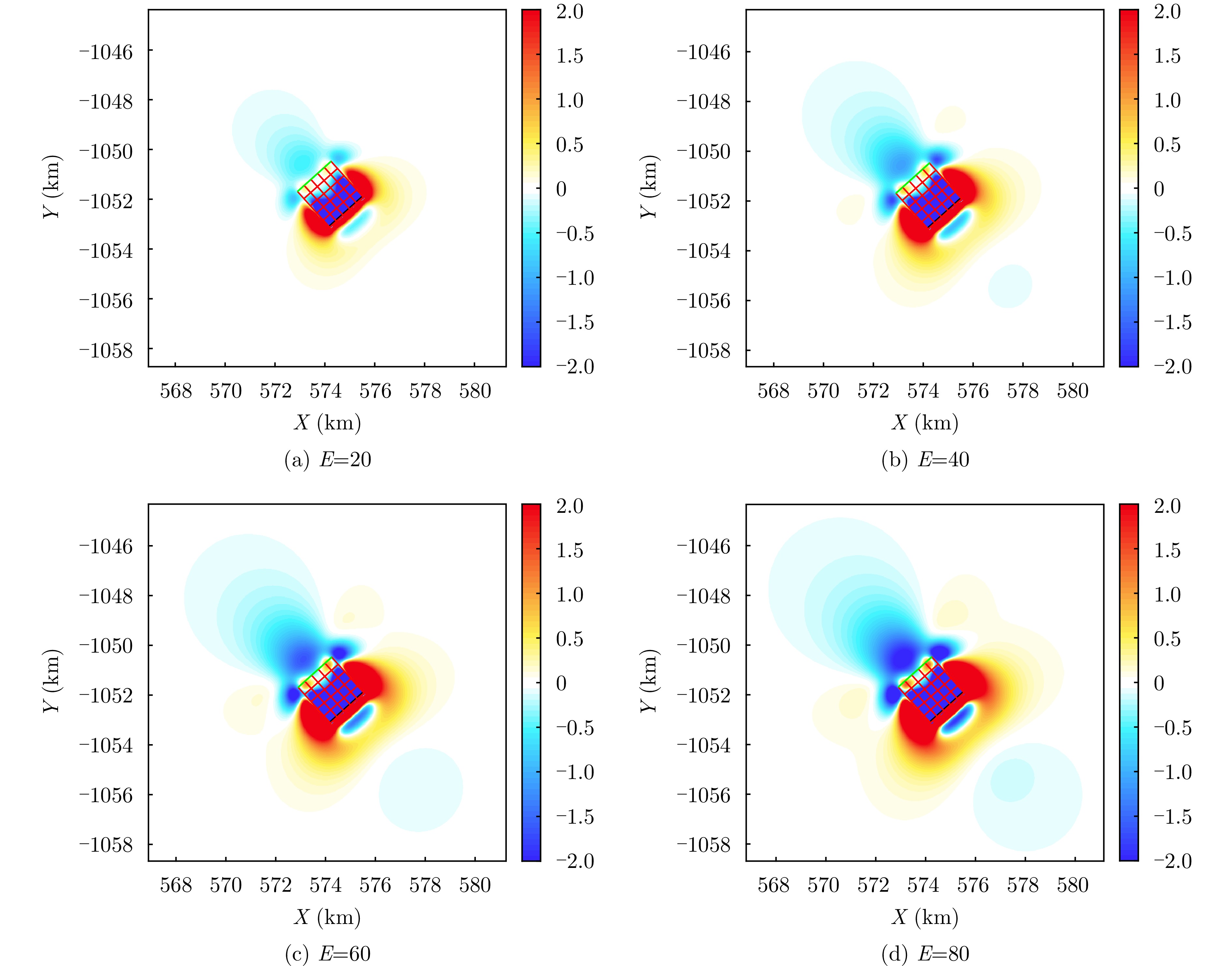
图 12 不同E参数下的库仑应力分布
Figure 12. Coulomb stress distribution under different E parameters
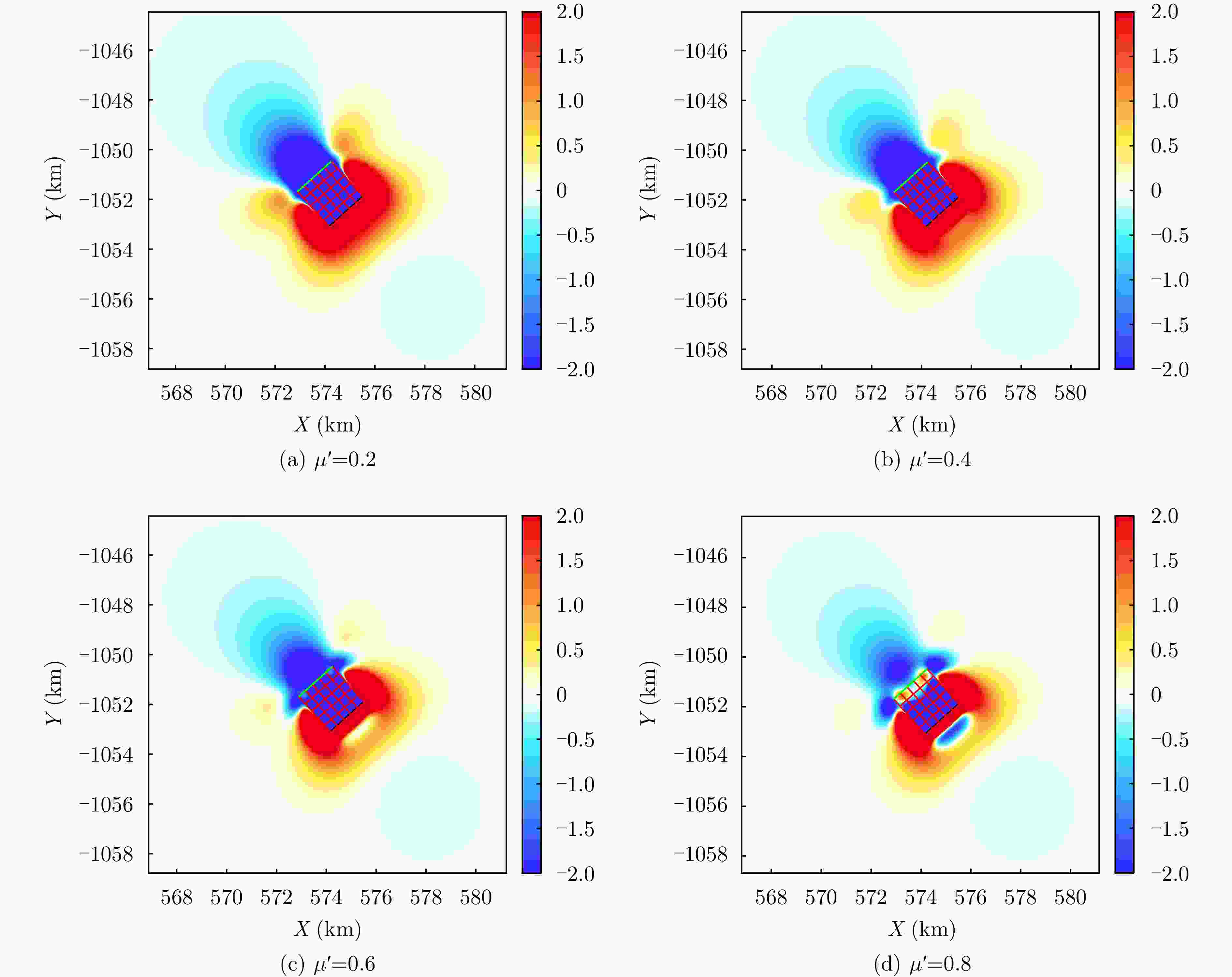
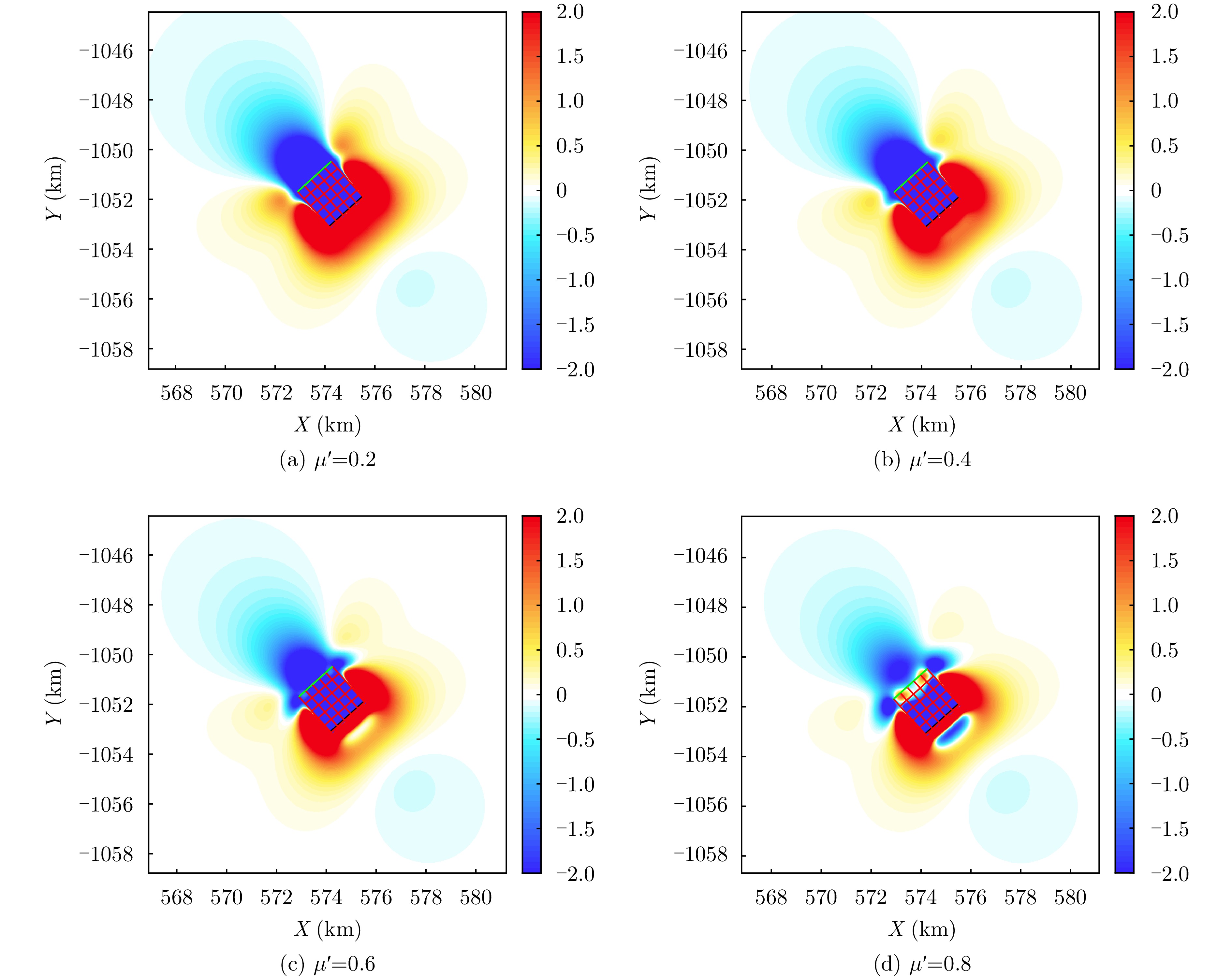
图 13 不同摩擦系数条件下的库仑应力分布
Figure 13. Coulomb stress distribution under different $\mu' $ parameters
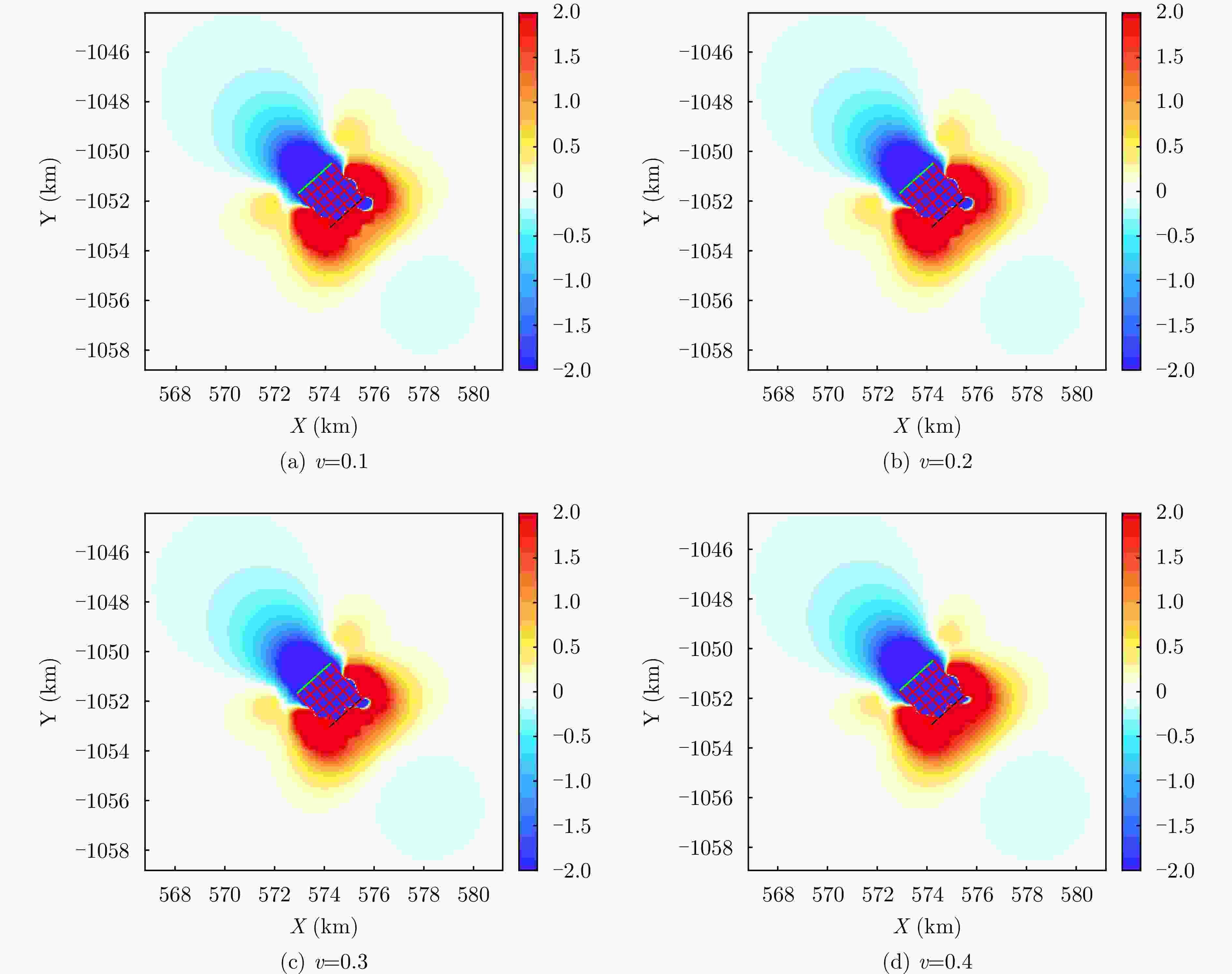
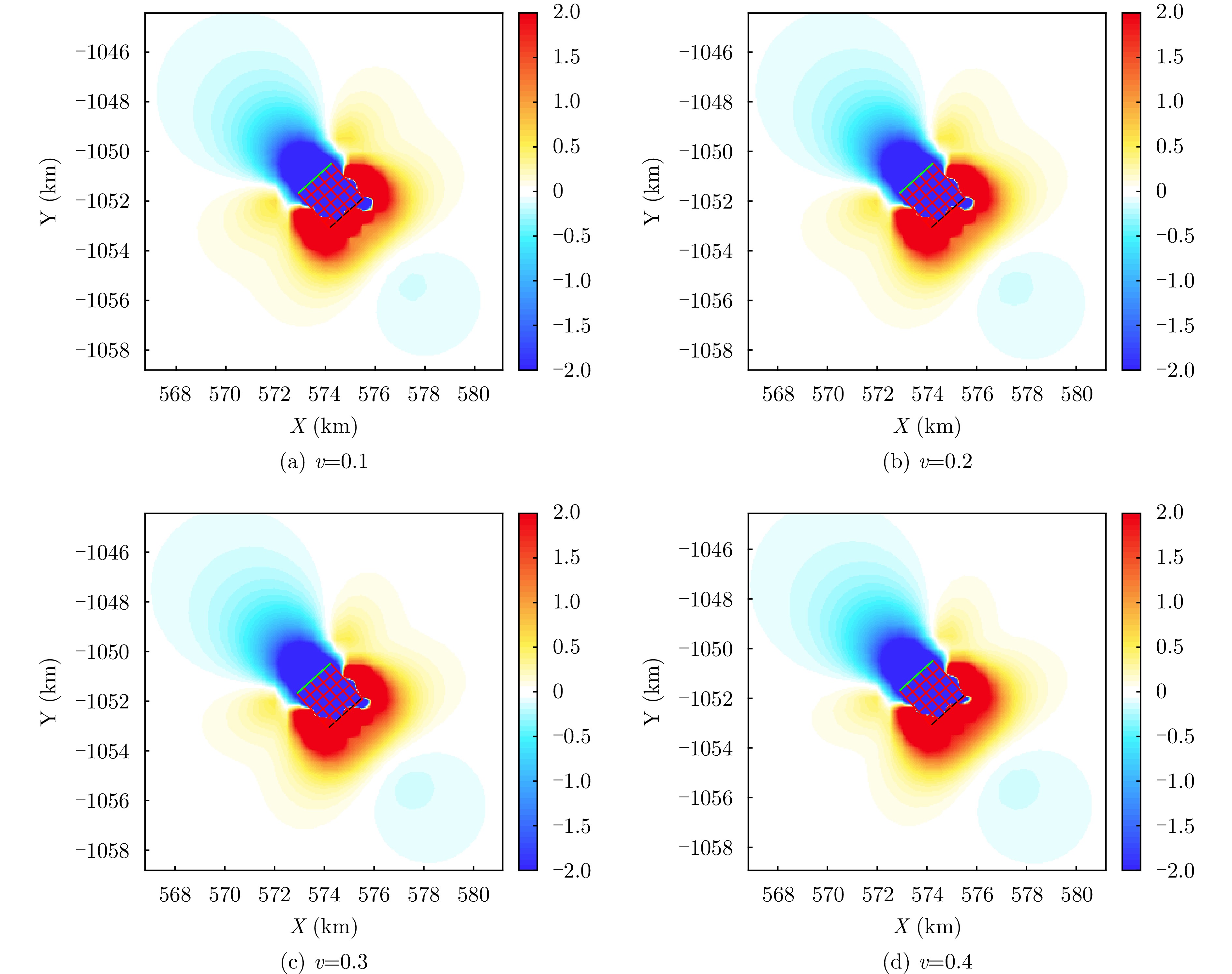
图 14 不同泊松比参数对应的库仑应力分布
Figure 14. Coulomb stress distribution under different v parameters
表 1 研究区域叶状陡坎面散射特性的统计结果
Table 1. Statistical results of surface scattering characteristics of lobate scarps in the study area
陡坎ID S0均值 CPR均值 m均值 χ均值 1 0.069 0.479 0.355 26.561 2 0.074 0.490 0.436 40.267 3 0.081 0.451 0.526 41.073 4 0.090 0.546 0.448 39.420 5 0.089 0.427 0.549 37.492 6 0.069 0.480 0.467 37.789 7 0.074 0.541 0.451 37.452 8 0.060 0.612 0.449 36.708 9 0.191 0.389 0.557 38.395 10 0.058 0.867 0.413 33.714 11 0.060 0.718 0.400 30.893 12 0.071 0.656 0.439 33.451 13 0.073 0.637 0.394 28.003 14 0.094 0.879 0.386 17.771 均值 0.083 0.583 0.448 34.213  下载: 导出CSV
表 2 研究区域叶状陡坎上盘和下盘散射特性的统计结果
Table 2. Statistical results of hanging wall and foot wall scattering characteristics of lobate scarps in the study area
陡坎ID 部位 S0均值 CPR均值 m均值 χ均值 1 下盘 0.077 0.506 0.489 38.918 2 上盘 0.057 0.469 0.342 37.813 下盘 0.075 0.439 0.528 44.549 3 上盘 0.065 0.564 0.452 36.077 下盘 0.075 0.432 0.503 42.140 4 上盘 0.074 0.512 0.469 39.509 下盘 0.106 0.392 0.554 40.286 5 上盘 0.102 0.370 0.543 38.980 下盘 0.126 0.502 0.544 43.609 6 上盘 0.087 0.449 0.518 37.791 下盘 0.089 0.379 0.572 39.166 7 上盘 0.069 0.534 0.459 39.438 下盘 0.079 0.186 0.533 38.118 8 上盘 0.064 0.593 0.425 34.996 下盘 0.175 0.438 0.550 32.211 9 上盘 0.094 0.398 0.544 38.526 下盘 0.116 0.406 0.559 36.884 10 上盘 0.052 0.758 0.369 30.306 下盘 0.071 0.579 0.427 35.291 11 上盘 0.065 0.732 0.377 27.730 下盘 0.071 0.671 0.410 31.471 12 上盘 0.086 0.571 0.449 34.133 下盘 0.080 0.618 0.430 33.592 13 上盘 0.089 0.594 0.439 34.137 下盘 0.095 0.644 0.405 32.008 14 上盘 0.065 0.887 0.348 17.569 下盘 0.064 0.910 0.327 18.737 均值 上盘 0.073 0.572 0.441 34.385 下盘 0.090 0.507 0.488 36.212
下载: 导出CSV
表 3 研究区域叶状陡坎形态参数与库仑应力统计结果
Table 3. Statistical results of morphological parameters and Coulomb stress of lobate scarps in the study area
陡坎ID 经度(°) 纬度(°) 长度(m) 深度(m) 起伏度(m) 库仑应力均值(MPa) 1 –160.877 –34.090 2266.73 804.68 13.33 0.383 2 –160.872 –34.094 685.12 222.56 7.69 1.308 3 –160.951 –34.142 866.58 296.90 13.57 0.755 4 –160.970 –34.204 5677.90 1892.46 18.81 0.270 5 –160.999 –34.298 563.50 183.68 7.56 –0.100 6 –161.007 –34.321 1970.36 645.48 7.98 –0.106 7 –161.013 –34.341 1300.02 440.93 8.41 0.073 8 –161.083 –34.395 672.92 219.58 7.64 0.001 9 –161.089 –34.659 1886.88 613.50 78.77 –0.241 10 –161.350 –34.789 652.72 220.84 13.86 0.093 11 –161.380 –34.830 1184.92 399.35 3.42 0.401 12 –161.425 –34.853 1715.37 596.13 28.13 0.570 13 –161.466 –34.890 1440.30 489.98 35.52 1.120 14 –161.622 –35.035 954.18 303.57 7.38 –0.202
下载: 导出CSV
表 4 对象内验证下模型性能对比
Table 4. Within-object validation model performance comparison
模型 MAE RMSE R2 Spearman ρ 多元线性回归 0.231 0.410 0.569 0.809 随机森林 0.136 0.256 0.832 0.916
下载: 导出CSV
表 5 5折GroupKFold交叉验证下模型泛化能力对比
Table 5. Model generalization performance comparison under 5-fold groupkfold cross-validation
模型 各折测试集R2范围 平均折间指标(MAE, RMSE, R2) OOF总体指标(MAE, RMSE, R2) 多元线性回归 –0.715~–0.084 0.472, 0.623, –0.427 0.464, 0.665, 0.132 随机森林 –0.776 ~–0.114 0.486, 0.635, –0.491 0.478, 0.674, 0.165
下载: 导出CSV
表 6 Leave-One-Group-Out交叉验证下模型泛化能力对比
Table 6. Model generalization performance comparison under leave-one-group-out cross-validation
模型 MAE RMSE R2 多元线性回归 0.467 0.658 –0.109 随机森林 0.474 0.661 –0.120
下载: 导出CSV
表 7 剔除#9后对象内验证下模型性能对比
Table 7. Within-object validation model performance comparison after excluding #9
模型 MAE RMSE R2 多元线性回归 0.235 0.415 0.568 随机森林 0.139 0.260 0.831
下载: 导出CSV
表 8 剔除#9后5折GroupKFold交叉验证下模型泛化能力对比
Table 8. Model generalization performance comparison under 5-fold GroupKfold cross-validation after excluding #9
模型 平均折间指标
(MAE, RMSE, R2)OOF总体指标
(MAE, RMSE, R2)多元线性回归 0.496, 0.642, –0.503 0.477, 0.676, –0.143 随机森林 0.510, 0.653, –0.567 0.491, 0.685, –0.175
下载: 导出CSV
表 9 剔除#9后Leave-One-Group-Out交叉验证下模型泛化能力对比
Table 9. Model generalization performance comparison under Leave-One-Group-Out cross-validation after excluding #9
模型 MAE RMSE R2 多元线性回归 0.475 0.666 –0.112 随机森林 0.481 0.668 –0.117
下载: 导出CSV
-
[1] WATTERS T R, ROBINSON M S, COLLINS G C, et al. Global thrust faulting on the Moon and the influence of tidal stresses[J]. Geology, 2015, 43(10): 851–854. doi: 10.1130/G37120.1. [2] BINDER A B and GUNGA H C. Young thrust-fault scarps in the highlands: Evidence for an initially totally molten moon[J]. Icarus, 1985, 63(3): 421–441. doi: 10.1016/0019-1035(85)90055-7. [3] BANKS M E, WATTERS T R, ROBINSON M S, et al. Morphometric analysis of small-scale lobate scarps on the Moon using data from the Lunar Reconnaissance Orbiter[J]. Journal of Geophysical Research: Planets, 2012, 117(E12): E00H11. doi: 10.1029/2011JE003907. [4] WILLIAMS N R, WATTERS T R, PRITCHARD M E, et al. Fault dislocation modeled structure of lobate scarps from Lunar Reconnaissance Orbiter Camera digital terrain models[J]. Journal of Geophysical Research: Planets, 2013, 118(2): 224–233. doi: 10.1002/jgre.20051. [5] CLARK J D, HURTADO JR J M, HIESINGER H, et al. Investigation of newly discovered lobate scarps: Implications for the tectonic and thermal evolution of the Moon[J]. Icarus, 2017, 298: 78–88. doi: 10.1016/j.icarus.2017.08.017. [6] ROGGON L, HETZEL R, HIESINGER H, et al. Length-displacement scaling of thrust faults on the Moon and the formation of uphill-facing scarps[J]. Icarus, 2017, 292: 111–124. doi: 10.1016/j.icarus.2016.12.034. [7] KUMAR P S, MOHANTY R, LAKSHMI K J P, et al. The seismically active lobate scarps and coseismic lunar boulder avalanches triggered by 3 January 1975 (MW 4.1) shallow moonquake[J]. Geophysical Research Letters, 2019, 46(14): 7972–7981. doi: 10.1029/2019GL083580. [8] MISHRA A and SENTHIL KUMAR P. Spatial and temporal distribution of lobate scarps in the lunar south polar region: Evidence for latitudinal variation of scarp geometry, kinematics and formation ages, neo-tectonic activity and sources of potential seismic risks at the artemis candidate landing regions[J]. Geophysical Research Letters, 2022, 49(18): e2022GL098505. doi: 10.1029/2022GL098505. [9] WILLIAMS J G and BOGGS D H. Tides on the Moon: Theory and determination of dissipation[J]. Journal of Geophysical Research: Planets, 2015, 120(4): 689–724. doi: 10.1002/2014JE004755. [10] WATTERS T R, WEBER R C, COLLINS G C, et al. Shallow seismic activity and young thrust faults on the moon[J]. Nature Geoscience, 2019, 12(6): 411–417. doi: 10.1038/s41561-019-0362-2. [11] WILLIAMS N R, BELL III J F, WATTERS T R, et al. Evidence for recent and ancient faulting at Mare Frigoris and implications for lunar tectonic evolution[J]. Icarus, 2019, 326: 151–161. doi: 10.1016/j.icarus.2019.03.002. [12] FRUEH T, HETZEL R, WATTERS T R, et al. Extensional structures at lunar lobate scarps[J]. Icarus, 2025, 432: 116493. doi: 10.1016/j.icarus.2025.116493. [13] SCHULTZ R A. Localization of bedding plane slip and backthrust faults above blind thrust faults: Keys to wrinkle ridge structure[J]. Journal of Geophysical Research: Planets, 2000, 105(E5): 12035–12052. doi: 10.1029/1999JE001212. [14] CLARK J D. Characterization of thrust faults on the moon using fault dynamics and three-dimensional visualizations[D]. [Ph.D. dissertation], University of Texas, 2012. [15] LI Xijian, YUE Zongyu, PENG Man, et al. Characterization of lobate scarps at the western rim of the Apollo basin using high-resolution DEMs generated using Generative Adversarial Network (GAN) based approach[J]. Icarus, 2025, 435: 116562. doi: 10.1016/j.icarus.2025.116562. [16] OKADA Y. Internal deformation due to shear and tensile faults in a half-space[J]. Bulletin of the Seismological Society of America, 1992, 82(2): 1018–1040. doi: 10.1785/BSSA08200210180. [17] 李长圣. 基于离散元的褶皱冲断带构造变形定量分析与模拟[D]. [博士论文], 南京大学, 2019.LI Changsheng. Quantitative analysis and simulation of structural deformation in the fold and thrust belt based on discrete element method[D]. [Ph.D. dissertation], Nanjing University, 2019. [18] 卢菁琛. 基于精细地壳和断层结构的青藏高原东部构造应力演化数值模拟研究[D]. [硕士论文], 中南大学, 2023. doi: 10.27661/d.cnki.gzhnu.2023.003968.LU Jingchen. Numerical simulation of tectonic stress evolution in eastern Tibetan based on a refined model in crust and fault structure[D]. [Master dissertation], Central South University, 2023. doi: 10.27661/d.cnki.gzhnu.2023.003968. [19] RANEY R K, CAHILL J T S, PATTERSON G W, et al. The m-chi decomposition of hybrid dual-polarimetric radar data with application to lunar craters[J]. Journal of Geophysical Research: Planets, 2012, 117(E12): E00H21. doi: 10.1029/2011JE003986. [20] CAHILL J T S, THOMSON B J, PATTERSON G W, et al. The Miniature Radio Frequency instrument’s (Mini-RF) global observations of Earth’s Moon[J]. Icarus, 2014, 243: 173–190. doi: 10.1016/j.icarus.2014.07.018. [21] BELL S W, THOMSON B J, DYAR M D, et al. Dating small fresh lunar craters with Mini-RF radar observations of ejecta blankets[J]. Journal of Geophysical Research: Planets, 2012, 117(E12): E00H30. doi: 10.1029/2011JE004007. [22] NYPAVER C A, THOMSON B J, FASSETT C I, et al. Prolonged rock exhumation at the rims of kilometer-scale lunar craters[J]. Journal of Geophysical Research: Planets, 2021, 126(7): e2021JE006897. doi: 10.1029/2021JE006897. [23] 郭弟均, 刘建忠, HEAD W J, 等. 月球阿波罗盆地区域月壳结构及光谱特征[J]. 深空探测学报, 2018, 5(5): 488–494. doi: 10.15982/j.issn.2095-7777.2018.05.013.GUO Dijun, LIU Jianzhong, HEAD W J, et al. Crustal structure and spectral features of lunar Apollo Basin region[J]. Journal of Deep Space Exploration, 2018, 5(5): 488–494. doi: 10.15982/j.issn.2095-7777.2018.05.013. [24] LIU Yang, WANG Yexin, DI Kaichang, et al. A generative adversarial network for pixel-scale lunar DEM generation from high-resolution monocular imagery and low-resolution DEM[J]. Remote Sensing, 2022, 14(21): 5420. doi: 10.3390/rs14215420. [25] MUKHERJEE S and SINGH P. Identification of tectonic deformations on the south polar surface of the moon[J]. Planetary and Space Science, 2015, 112: 46–52. doi: 10.1016/j.pss.2015.04.010. [26] TODA S, STEIN R S, SEVILGEN V, et al. Coulomb 3.3 graphic-rich deformation and stress-change software for earthquake, tectonic, and volcano research and teaching—user guide[R]. U.S. Geological Survey Open-File Report 2011–1060, 2011: 1–63. [27] KING G C P, STEIN R S, and LIN Jian. Static stress changes and the triggering of earthquakes[J]. Bulletin of the Seismological Society of America, 1994, 84(3): 935–953. doi: 10.1785/BSSA0840030935. [28] RICE J R. Fault stress states, pore pressure distributions, and the weakness of the San Andreas fault[J]. International Geophysics, 1992, 51: 475–503. doi: 10.1016/S0074-6142(08)62835-1. [29] SHEN Xiang, LIU Bin, and LI Qingquan. Correcting bias in the rational polynomial coefficients of satellite imagery using thin-plate smoothing splines[J]. ISPRS Journal of Photogrammetry and Remote Sensing, 2017, 125: 125–131. doi: 10.1016/j.isprsjprs.2017.01.007. [30] DRAPER N R and SMITH H. Applied Regression Analysis[M] 3rd ed. New York: Wiley, 1998. 473–504. [31] WATTERS T R and SCHULTZ R A. The fault geometry of planetary lobate scarps: Listric versus planar[C]. Lunar and Planetary Science XXXIII, Houston, USA, 2002: 1668. -


计量
- 文章访问数:
- HTML全文浏览量:
- PDF下载量:
- 被引次数: 0