

 作者中心
作者中心 专家审稿
专家审稿 责编办公
责编办公 编辑办公
编辑办公
Refocusing Satellite Antenna Motion in Compact Polarimetric ISAR Images Using a Spatial-frequency Feature-guided Brownian Bridge Diffusion Model
-
摘要: 极化逆合成孔径雷达(ISAR)是获取卫星目标高分辨率信息的重要手段。简缩极化能够平衡系统复杂度与极化信息容量,目前已广泛应用于各类地基ISAR系统。然而,在卫星过境时,为了调整观测区域,其搭载的天线部件通常会存在相对于卫星本体的独立机械转动。这类运动部件会在回波中引入额外的频率调制,造成ISAR图像散焦。基于深度学习的ISAR图像重聚焦方法通常侧重于目标整体的重聚焦,而忽略了运动部件所引起的频率特征变化,从而导致模型的聚焦性能有限。针对上述问题,该文提出了一种基于空频特征引导布朗桥扩散模型的简缩极化ISAR卫星天线运动重聚焦方法。该方法的核心思想是基于布朗桥扩散模型学习散焦ISAR图像和聚焦ISAR图像之间的映射关系,同时提取ISAR图像的空间特征和频率特征用于引导模型的学习,进而实现运动部件重聚焦。在此基础上,构建了极化ISAR卫星目标电磁仿真数据集并开展了对比实验,结果验证了所提方法具有更好的运动部件聚焦性能和泛化性能。Abstract: Polarimetric Inverse Synthetic Aperture Radar (ISAR) is an important tool for obtaining high-resolution information about satellite targets. Compact polarization provides an optimal balance between system complexity and polarization information capacity and has been widely used in various ground-based ISAR systems. However, during satellite transit, the onboard antenna components often undergo independent mechanical rotation relative to the satellite main body to adjust the observation area. This motion introduces additional frequency modulation into the echo signals, resulting in defocused ISAR images. Existing deep learning-based refocusing methods primarily focus on the global refocusing of ISAR images and often overlook the frequency feature variations induced by component motion, thereby limiting the model’s focusing capabilities. To address these challenges, this study proposes a novel refocusing method for satellite antenna motion in compact polarimetric ISAR imaging based on a spatial-frequency feature-guided Brownian bridge diffusion model. The core idea behind this method is to utilize the Brownian bridge diffusion model to learn the intricate mapping between defocused and focused ISAR images. Simultaneously, spatial and frequency features are extracted from the ISAR images to guide this learning process, thereby achieving precise refocusing of the moving components. To validate this approach, an electromagnetic simulation dataset for polarimetric ISAR satellite targets is established, and comparative experiments are conducted. The results show that the proposed method achieves superior performance in refocusing moving components and exhibits enhanced generalization capabilities.
-

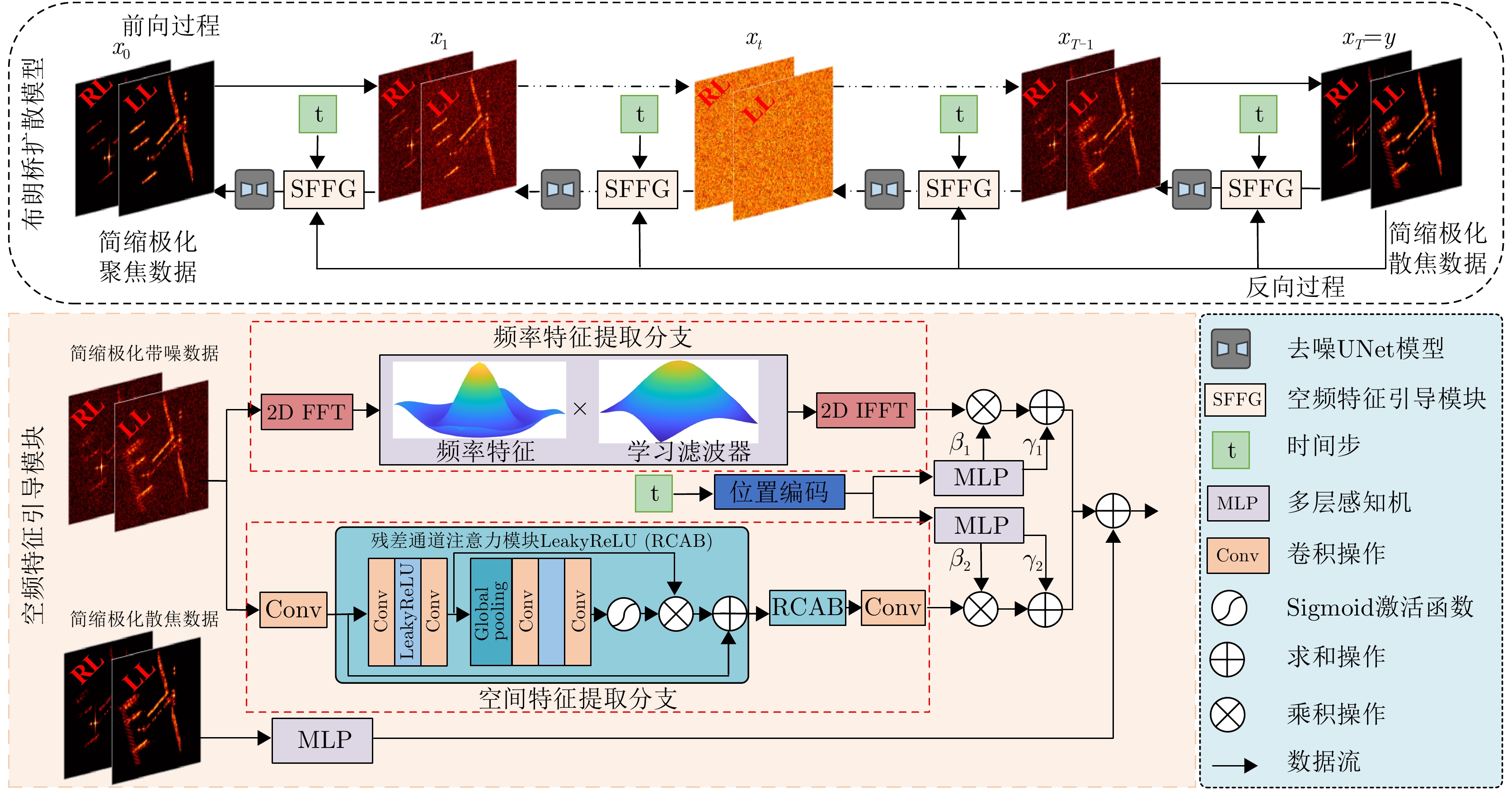
图 1 卫星天线运动重聚焦布朗桥扩散模型结构图
Figure 1. Schematic diagram of the Brownian bridge diffusion model for refocusing moving components in satellite targets
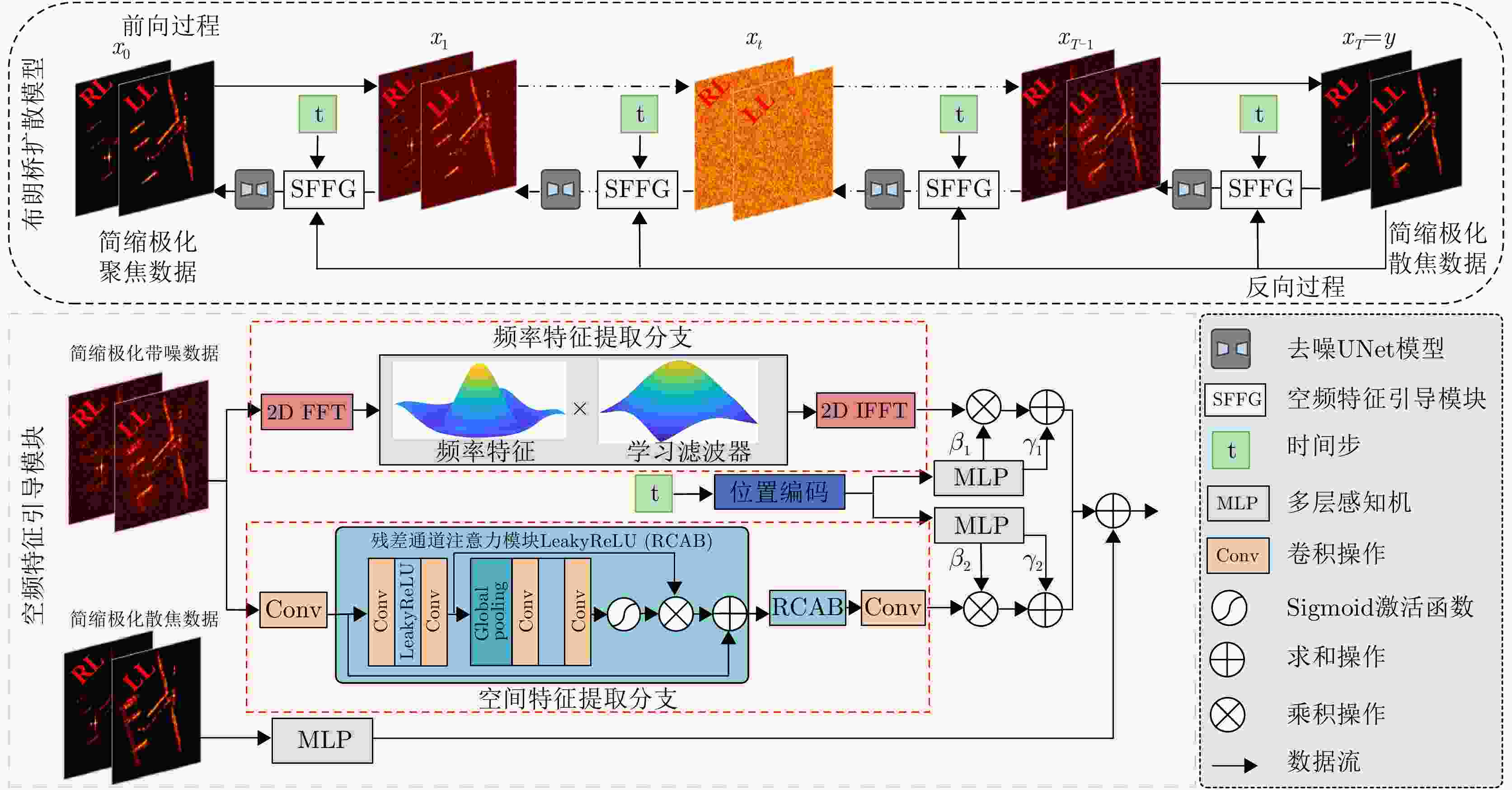
图 2 简缩极化ISAR卫星天线运动重聚焦方法框架
Figure 2. Compact polarization ISAR satellite target moving components refocusing method framework
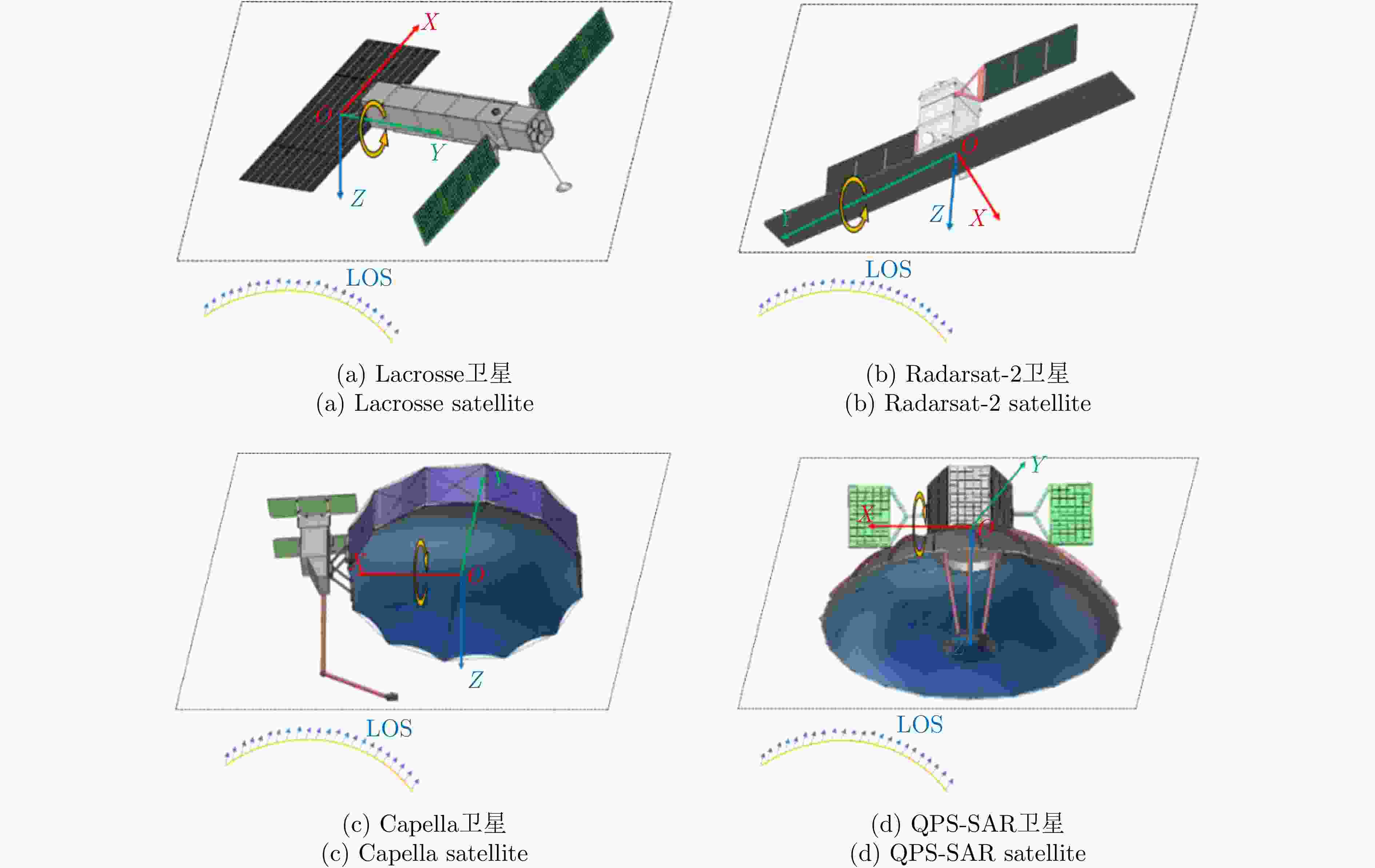
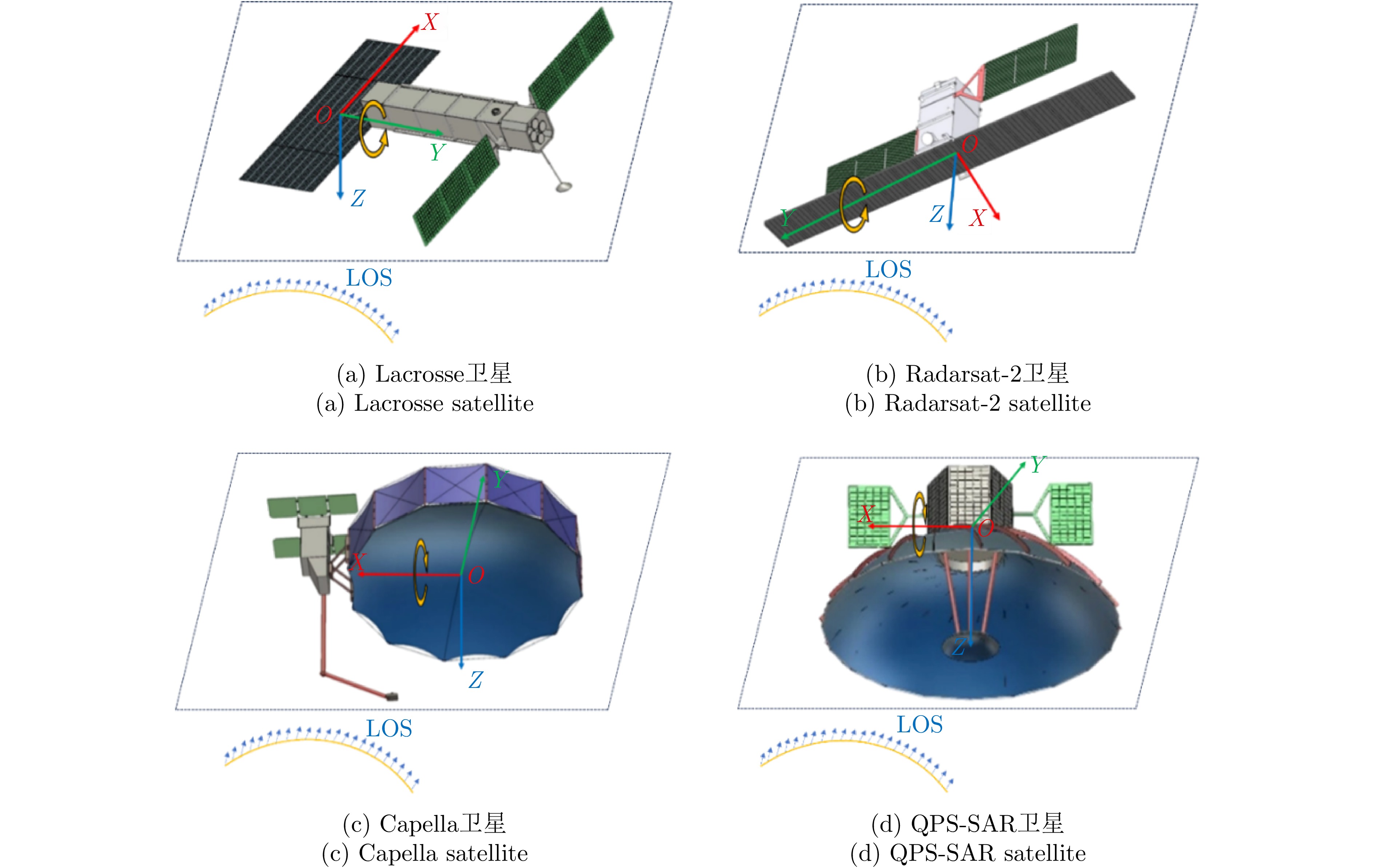
图 3 含典型天线运动的卫星电磁仿真示意图
Figure 3. Schematic diagram of satellite electromagnetic simulation with typical moving components
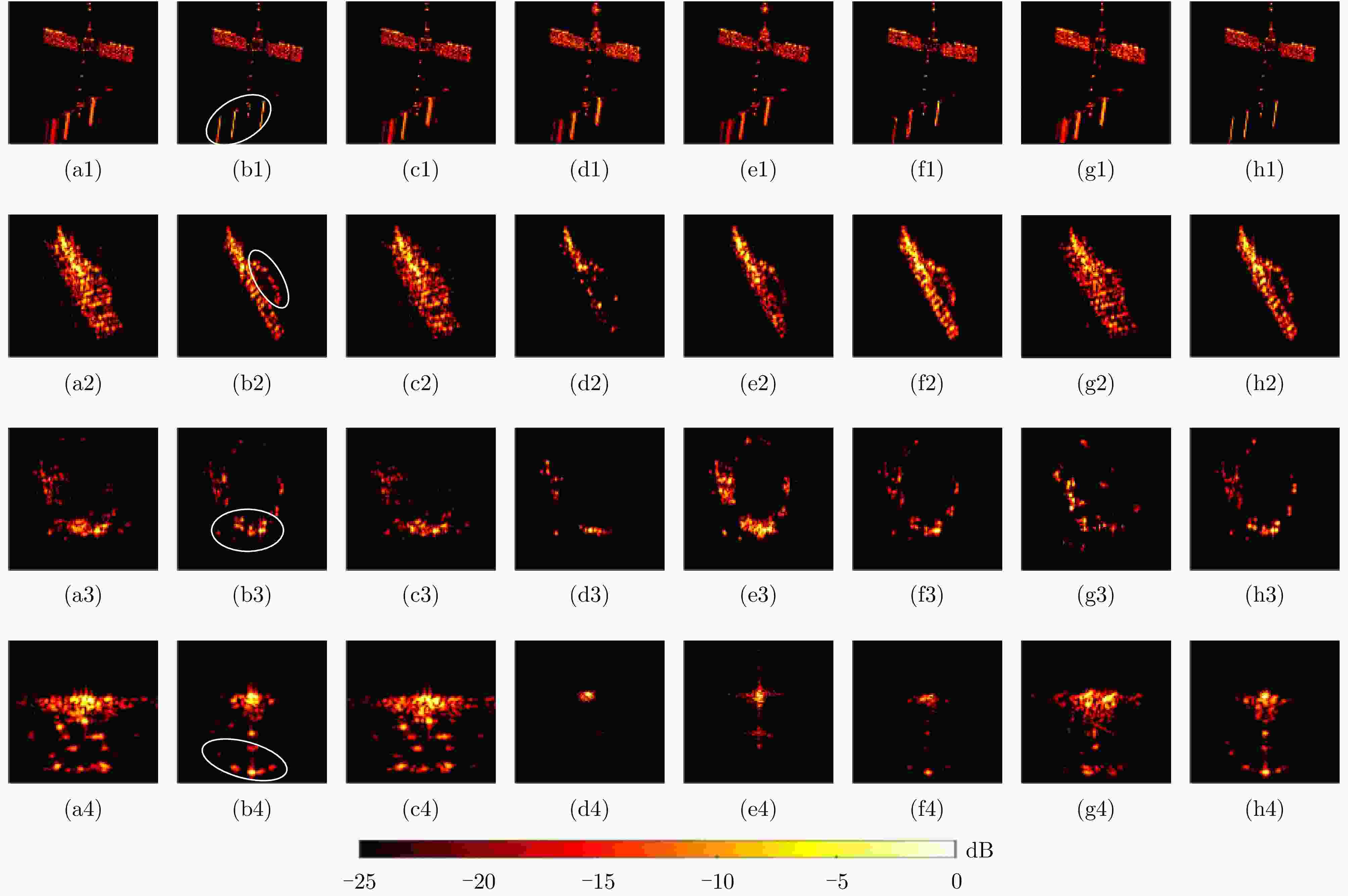
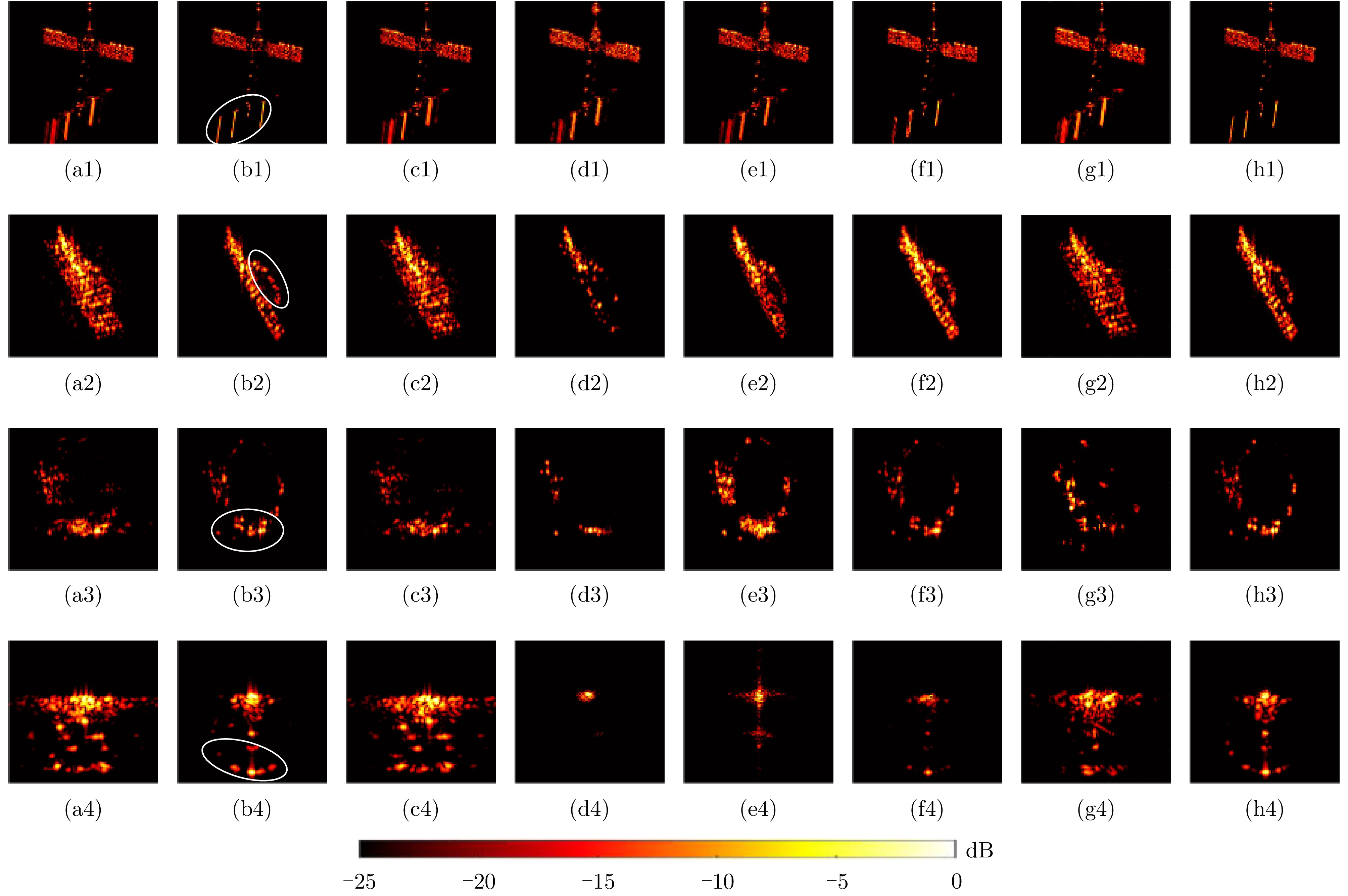
图 4 4类卫星不同方法$ {S}_{\mathrm{LL}} $通道图像聚焦对比结果
Figure 4. Comparison results of $ {S}_{\mathrm{LL}} $image focusing using different methods for four types of satellites
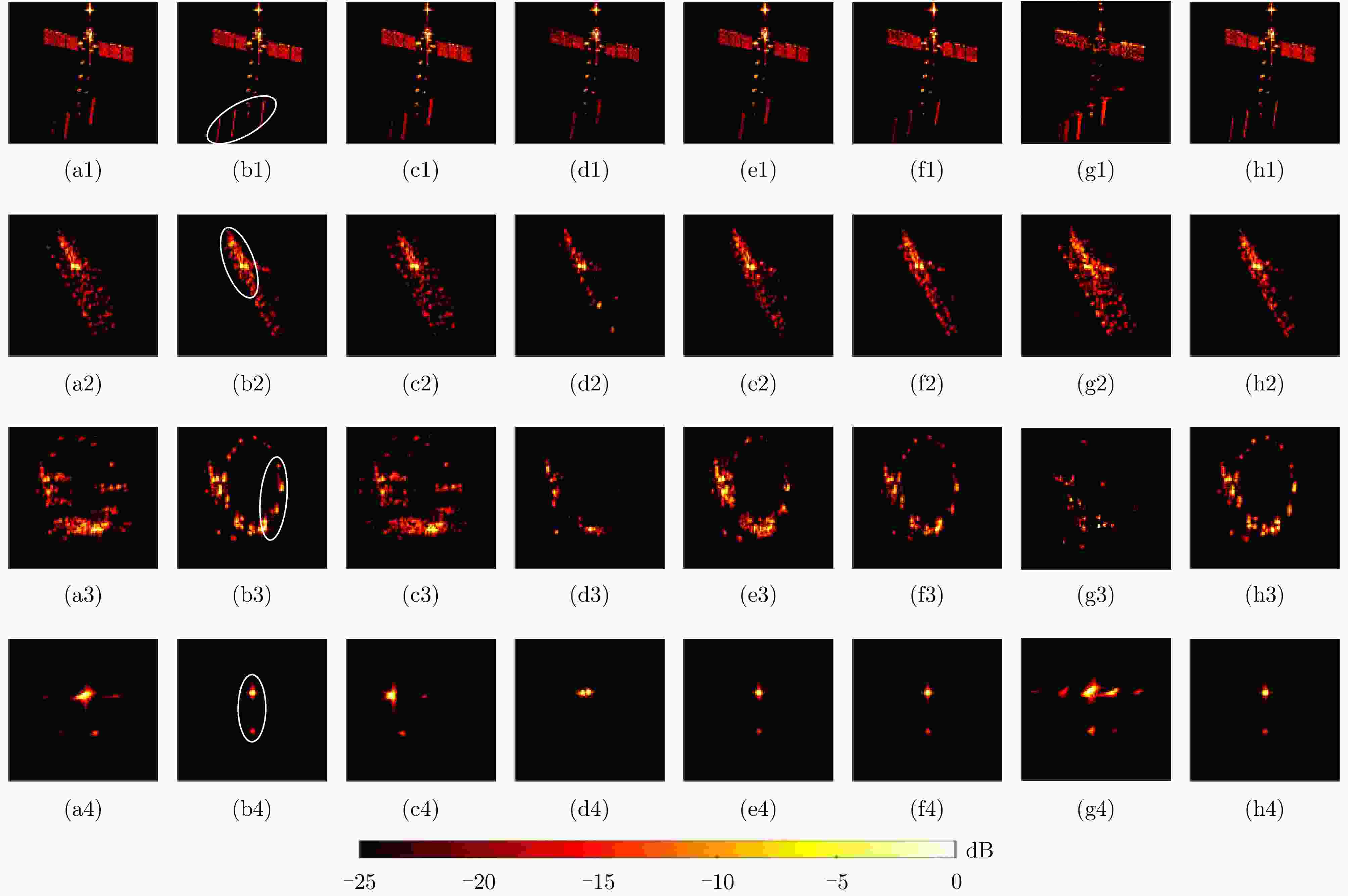
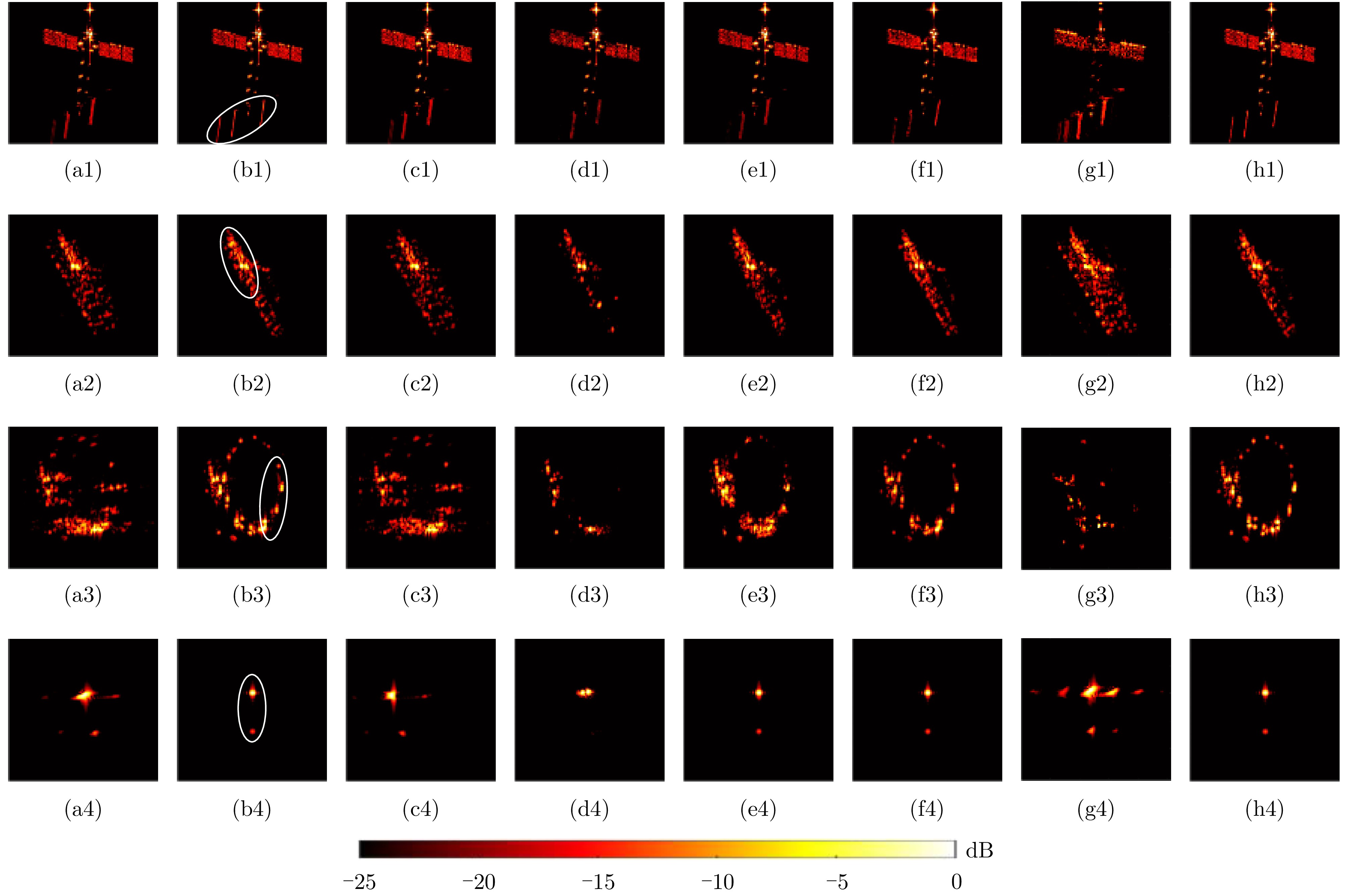
图 5 4类卫星不同方法$ {S}_{\mathrm{RL}} $通道图像聚焦对比结果
Figure 5. Comparison results of $ {S}_{\mathrm{RL}} $image focusing using different methods for four types of satellites
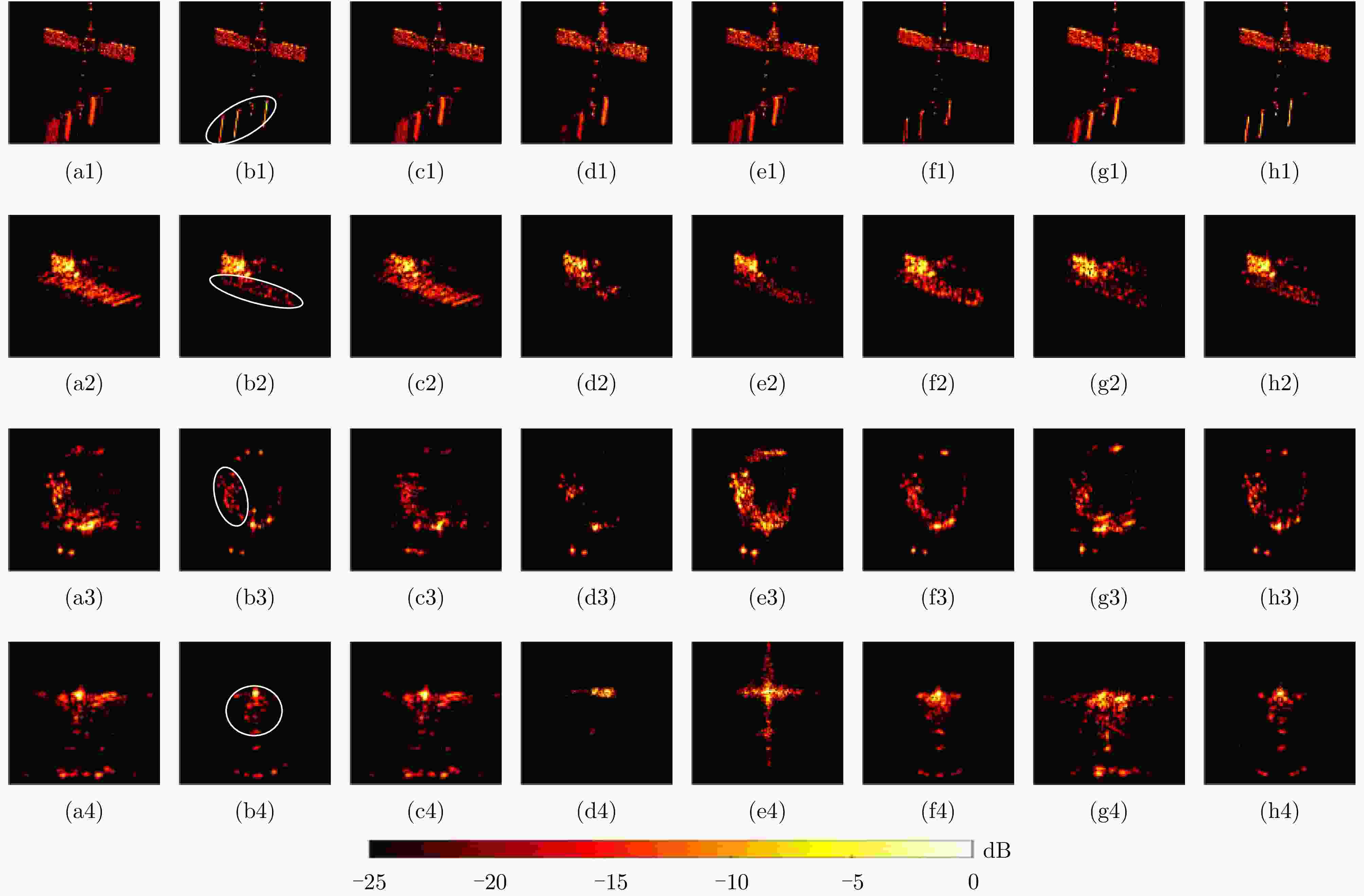
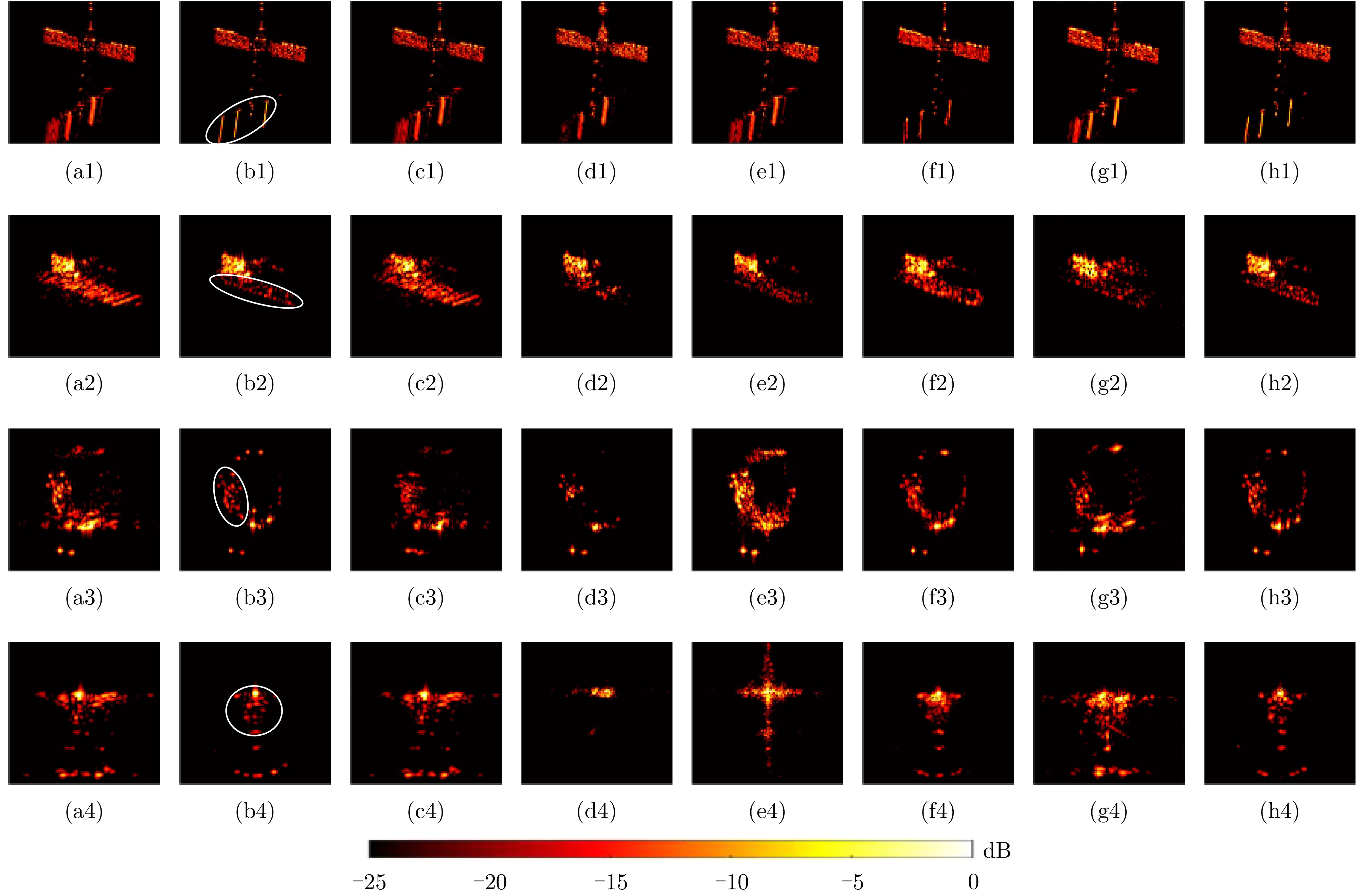
图 6 4类卫星不同方法$ {S}_{\mathrm{LL}} $通道图像部件不同转速聚焦对比结果
Figure 6. Comparison results of $ {S}_{\mathrm{LL}} $image focusing using different methods for four satellites under different rotational speeds of components
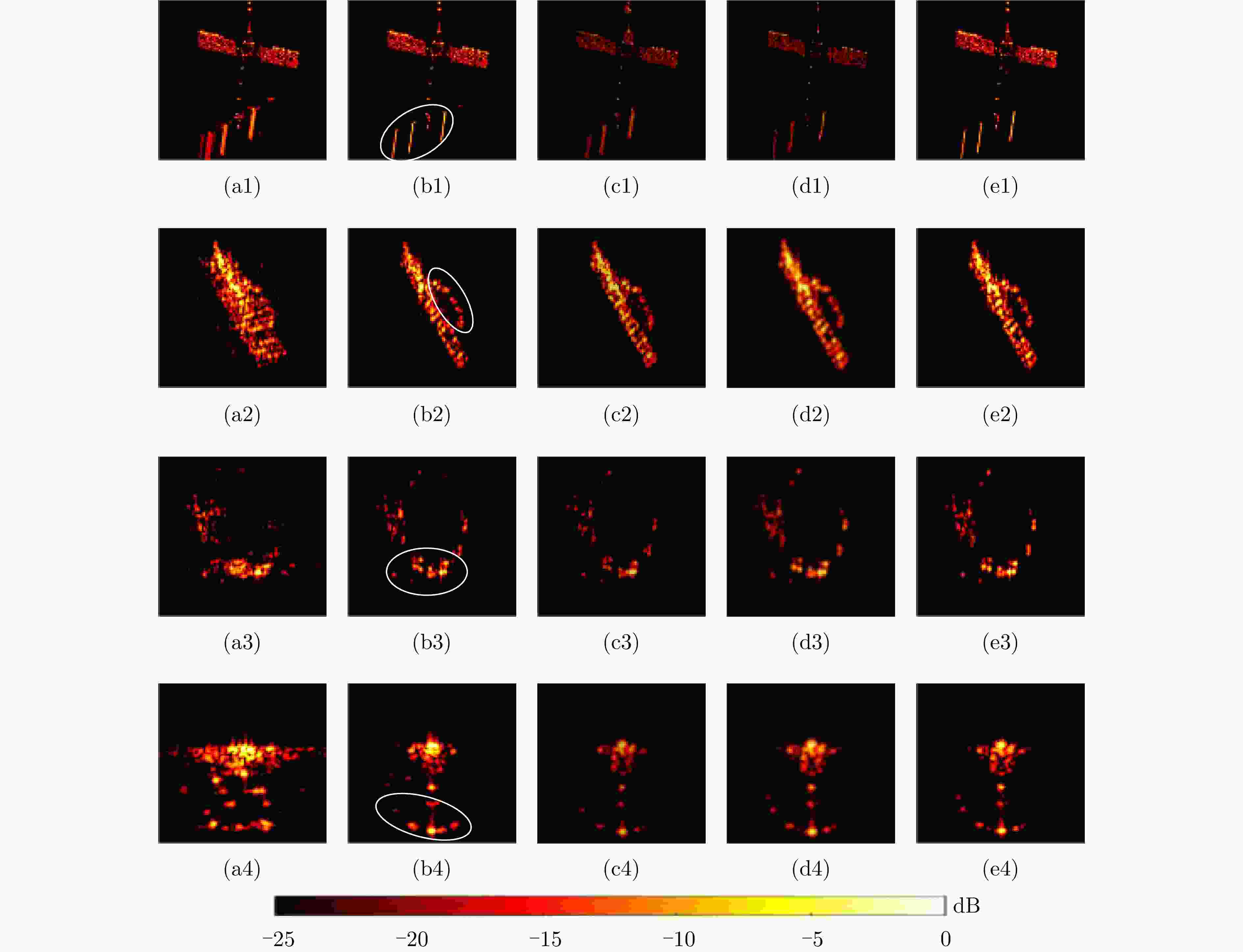
图 7 4类卫星不同模型$ {S}_{\mathrm{LL}} $通道图像聚焦对比结果
Figure 7. Comparison results of $ {S}_{\mathrm{LL}} $image focusing using different models for four types of satellites
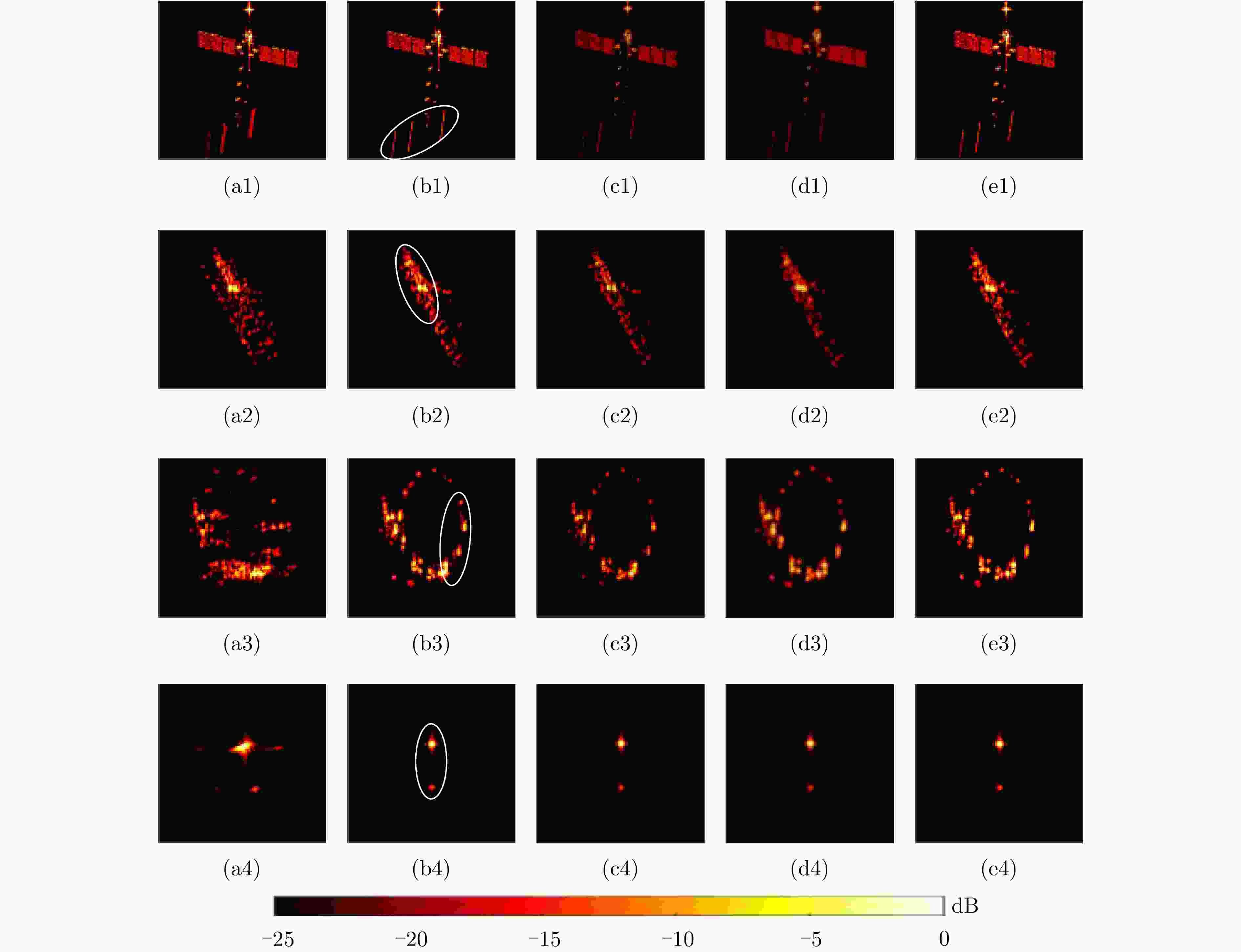
图 8 4类卫星不同模型$ {S}_{\text{R}\mathrm{L}} $通道图像聚焦对比结果
Figure 8. Comparison results of $ {S}_{\text{R}\mathrm{L}} $ image focusing using different models for four types of satellites
表 1 卫星天线运动重聚焦不同场景数据情况
Table 1. Data scenarios for refocusing of moving components in satellite target
场景 俯仰角 数据数量 $ -\!\!\!\!\lambda_{\text{train}}^{\mathrm{all}} $ 40°, 45°, 50° 876组 $ -\!\!\!\!\lambda_{\text{train}}^{40,45} $ 40°, 45° 584组 $ -\!\!\!\!\lambda_{\text{train}}^{45,50} $ 45°, 50° 584组 $ -\!\!\!\!\lambda_{\text{train}}^{40,50} $ 40°, 50° 584组 $ -\!\!\!\!\lambda_{\text{test}}^{40} $ 40° 36组 $ -\!\!\!\!\lambda_{\text{test}}^{45} $ 45° 36组 $ -\!\!\!\!\lambda_{\text{test}}^{50} $ 50° 36组  下载: 导出CSV
表 2 不同重聚焦方法MAE指标结果
Table 2. MAE results of different refocusing methods
重聚焦
方法$ -\!\!\!\!\lambda_{\text{train}}^{40,45} $ $ -\!\!\!\!\lambda_{\text{train}}^{45,50} $ $ -\!\!\!\!\lambda_{\text{train}}^{40,50} $ $ -\!\!\!\!\lambda_{\text{train}}^{\mathrm{all}} $ MAE均值↓ $ -\!\!\!\!\lambda_{\text{test}}^{40} $ $ -\!\!\!\!\lambda_{\text{test}}^{45} $ $ -\!\!\!\!\lambda_{\text{test}}^{50} $ $ -\!\!\!\!\lambda_{\text{test}}^{40} $ $ -\!\!\!\!\lambda_{\text{test}}^{45} $ $ -\!\!\!\!\lambda_{\text{test}}^{50} $ $ -\!\!\!\!\lambda_{\text{test}}^{40} $ $ -\!\!\!\!\lambda_{\text{test}}^{45} $ $ -\!\!\!\!\lambda_{\text{test}}^{50} $ $ -\!\!\!\!\lambda_{\text{test}}^{40} $ $ -\!\!\!\!\lambda_{\text{test}}^{45} $ $ -\!\!\!\!\lambda_{\text{test}}^{50} $ MiniEnt - - - - - - - - - 1.357 1.429 1.635 1.474 CV-GMTINet 0.948 1.199 1.445 0.936 1.146 1.314 0.905 1.173 1.321 0.940 1.189 1.381 1.158 CV-CFUNet 0.769 0.983 1.260 0.788 1.071 1.157 0.793 1.085 1.173 0.740 0.949 1.134 0.992 CVPHD 0.527 0.648 1.220 1.121 0.627 0.729 0.538 1.098 0.767 0.570 0.704 0.815 0.780 DDPM 0.824 0.834 0.817 0.840 0.810 0.766 0.841 0.819 0.810 0.759 0.766 0.746 0.803 所提方法 0.543 0.677 1.070 0.778 0.702 0.822 0.571 0.915 0.859 0.483 0.663 0.825 0.742 注:MiniEnt为传统的最小熵重聚焦方法,无须进行训练。
下载: 导出CSV
表 5 不同重聚焦方法图像熵指标结果(bit)
Table 5. Image entropy results of different refocusing methods (bit)
重聚焦
方法$ -\!\!\!\!\lambda_{\text{train}}^{40,45} $ $ -\!\!\!\!\lambda_{\text{train}}^{45,50} $ $ -\!\!\!\!\lambda_{\text{train}}^{40,50} $ $ -\!\!\!\!\lambda_{\text{train}}^{\mathrm{all}} $ 熵
均值↓$ -\!\!\!\!\lambda_{\text{test}}^{40} $ $ -\!\!\!\!\lambda_{\text{test}}^{45} $ $ -\!\!\!\!\lambda_{\text{test}}^{50} $ $ -\!\!\!\!\lambda_{\text{test}}^{40} $ $ -\!\!\!\!\lambda_{\text{test}}^{45} $ $ -\!\!\!\!\lambda_{\text{test}}^{50} $ $ -\!\!\!\!\lambda_{\text{test}}^{40} $ $ -\!\!\!\!\lambda_{\text{test}}^{45} $ $ -\!\!\!\!\lambda_{\text{test}}^{50} $ $ -\!\!\!\!\lambda_{\text{test}}^{40} $ $ -\!\!\!\!\lambda_{\text{test}}^{45} $ $ -\!\!\!\!\lambda_{\text{test}}^{50} $ MiniEnt - - - - - - - - - 7.589 7.614 7.965 7.723 CV-GMTINet 6.812 6.905 7.523 7.418 6.709 6.814 6.721 7.307 6.613 6.508 6.411 6.506 6.854 CV-CFUNet 6.307 6.413 7.019 6.904 6.208 6.312 6.215 6.809 6.106 6.003 5.907 6.011 6.351 CVPHD 5.809 5.914 6.522 6.417 5.706 5.811 5.713 6.308 5.605 5.502 5.409 5.510 5.852 DDPM 6.125 6.224 6.103 6.358 6.225 6.079 6.154 6.056 5.911 5.267 5.342 6.124 5.997 所提方法 4.803 4.908 5.412 5.306 4.704 4.809 4.711 5.207 4.605 4.402 4.308 4.406 4.798 注:MiniEnt为传统的最小熵重聚焦方法,无须进行训练。
下载: 导出CSV
表 3 不同重聚焦方法SSIM指标结果
Table 3. SSIM results of different refocusing methods
重聚焦
方法$ -\!\!\!\!\lambda_{\text{train}}^{40,45} $ $ -\!\!\!\!\lambda_{\text{train}}^{45,50} $ $ -\!\!\!\!\lambda_{\text{train}}^{40,50} $ $ -\!\!\!\!\lambda_{\text{train}}^{\mathrm{all}} $ SSIM均值↑ $ -\!\!\!\!\lambda_{\text{test}}^{40} $ $ -\!\!\!\!\lambda_{\text{test}}^{45} $ $ -\!\!\!\!\lambda_{\text{test}}^{50} $ $ -\!\!\!\!\lambda_{\text{test}}^{40} $ $ -\!\!\!\!\lambda_{\text{test}}^{45} $ $ -\!\!\!\!\lambda_{\text{test}}^{50} $ $ -\!\!\!\!\lambda_{\text{test}}^{40} $ $ -\!\!\!\!\lambda_{\text{test}}^{45} $ $ -\!\!\!\!\lambda_{\text{test}}^{50} $ $ -\!\!\!\!\lambda_{\text{test}}^{40} $ $ -\!\!\!\!\lambda_{\text{test}}^{45} $ $ -\!\!\!\!\lambda_{\text{test}}^{50} $ MiniEnt - - - - - - - - - 0.911 0.924 0.921 0.919 CV-GMTINet 0.935 0.921 0.909 0.938 0.927 0.919 0.942 0.927 0.920 0.936 0.923 0.912 0.926 CV-CFUNet 0.955 0.942 0.924 0.954 0.935 0.932 0.954 0.934 0.931 0.959 0.947 0.936 0.942 CVPHD 0.981 0.977 0.939 0.940 0.979 0.974 0.981 0.944 0.972 0.978 0.973 0.969 0.967 DDPM 0.923 0.903 0.912 0.907 0.918 0.925 0.922 0.905 0.910 0.937 0.949 0.936 0.921 所提方法 0.979 0.973 0.949 0.964 0.972 0.968 0.977 0.956 0.965 0.981 0.975 0.966 0.969 注:MiniEnt为传统的最小熵重聚焦方法,无须进行训练。
下载: 导出CSV
表 4 不同重聚焦方法PSNR指标结果(dB)
Table 4. PSNR results of different refocusing methods (dB)
重聚焦
方法$ -\!\!\!\!\lambda_{\text{train}}^{40,45} $ $ -\!\!\!\!\lambda_{\text{train}}^{45,50} $ $ -\!\!\!\!\lambda_{\text{train}}^{40,50} $ $ -\!\!\!\!\lambda_{\text{train}}^{\mathrm{all}} $ PSNR 均值↑ $ -\!\!\!\!\lambda_{\text{test}}^{40} $ $ -\!\!\!\!\lambda_{\text{test}}^{45} $ $ -\!\!\!\!\lambda_{\text{test}}^{50} $ $ -\!\!\!\!\lambda_{\text{test}}^{40} $ $ -\!\!\!\!\lambda_{\text{test}}^{45} $ $ -\!\!\!\!\lambda_{\text{test}}^{50} $ $ -\!\!\!\!\lambda_{\text{test}}^{40} $ $ -\!\!\!\!\lambda_{\text{test}}^{45} $ $ -\!\!\!\!\lambda_{\text{test}}^{50} $ $ -\!\!\!\!\lambda_{\text{test}}^{40} $ $ -\!\!\!\!\lambda_{\text{test}}^{45} $ $ -\!\!\!\!\lambda_{\text{test}}^{50} $ MiniEnt - - - - - - - - - 27.868 28.793 28.542 28.401 CV-GMTINet 30.123 28.663 28.171 29.709 28.346 28.091 29.701 27.815 27.978 30.047 28.800 28.379 28.819 CV-CFUNet 30.471 29.312 27.628 30.637 27.704 28.979 30.740 27.773 28.854 31.369 29.908 29.559 29.411 CVPHD 34.377 34.548 28.974 28.720 34.548 34.745 34.008 28.525 33.191 33.013 32.140 31.782 32.381 DDPM 30.743 30.566 31.253 30.855 30.669 30.352 30.666 30.484 29.132 31.815 32.640 31.318 30.874 所提方法 35.290 33.920 30.521 32.521 33.553 33.611 35.173 30.918 33.106 36.251 34.309 33.042 33.518 注:MiniEnt为传统的最小熵重聚焦方法,无须进行训练。
下载: 导出CSV
表 6 不同重聚焦方法在部件不同转速条件下的定量指标的均值
Table 6. Mean quantitative indicators of different refocusing methods under different rotational speeds of components
重聚焦方法 MAE ↓ SSIM ↑ PSNR (dB) ↑ 图像熵(bit) ↓ MiniEnt 1.468 0.914 27.815 8.679 CV-GMTINet 1.206 0.922 28.962 7.312 CV-CFUNet 0.999 0.945 29.825 6.769 CVPHD 0.974 0.954 30.794 6.413 DDPM 0.982 0.917 29.452 6.554 所提方法 0.931 0.957 32.410 5.128 注:表内加粗数值表示最优。
下载: 导出CSV
表 7 消融实验定量指标的均值
Table 7. Mean quantitative indicators for the ablation experiment
方法 模块/损失 MAE ↓ SSIM ↑ PSNR (dB)↑ 图像熵(bit) ↓ 空频特征引导模块 像素损失 模型A × √ 0.769 0.966 32.877 5.138 模型B √ × 0.797 0.966 32.505 5.079 所提方法 √ √ 0.742 0.969 33.518 4.798 注:表内加粗数值表示最优。
下载: 导出CSV
表 8 方法复杂度与推理效率对比
Table 8. Comparison of methods complexity and inference efficiency
方法 参数量(M) CPU单帧推理
时间(s)GPU单帧推理
时间(s)MiniEnt - 5.34±0.35 6.47±0.47 CV-GMTINet 12.6 18.87±0.21 0.86±0.08 CV-CFUNet 10.9 17.43±0.19 0.68±0.07 CVPHD 7.8 9.23±0.13 0.47±0.05 DDPM 15.3 169.24±0.53 1.09±0.12 所提方法 18.2 189.34±0.67 1.22±0.09
下载: 导出CSV
-
[1] CUI Xingchao, FU Yaowen, SU Yi, et al. Physical parameters joint estimation of satellite parabolic antenna with key frame Pol-ISAR images[J]. IEEE Transactions on Geoscience and Remote Sensing, 2024, 62: 5100416. doi: 10.1109/TGRS.2023.3335960. [2] LI Mingdian, XIAO Shunping, and CHEN Siwei. Polarimetric ISAR space target structure recognition based on embedded scattering mechanism and semi-supervised representation learning[J]. IEEE Transactions on Geoscience and Remote Sensing, 2025, 63: 5102019. doi: 10.1109/TGRS.2025.3533930. [3] 陈思伟. 成像雷达极化旋转域解译: 理论与应用[M]. 北京: 科学出版社, 2024: 1–251.CHEN Siwei. Imaging Radar Polarimetric Rotation Domain Interpretation: Theory and Applications[M]. Beijing: Science Press, 2024: 1–251. [4] CHEN Siwei. Imaging Radar Polarimetric Rotation Domain Interpretation: Theory and Applications[M]. Boca Raton, FL, USA: CRC Press, 2024: 1–260. doi: 10.1201/9781003461296. [5] LI Mingdian, XIAO Shunping, and CHEN Siwei. Compact polarimetric ISAR space target components recognition with dual-branch correlation aggregation graph attention network[J]. IEEE Transactions on Geoscience and Remote Sensing, 2025, 63: 5107917. doi: 10.1109/TGRS.2025.3607102. [6] LI Mingdian, DENG Junwu, XIAO Shunping, et al. NLSAN: A non-local scene awareness network for compact polarimetric ISAR image super-resolution[J]. IEEE Transactions on Geoscience and Remote Sensing, 2023, 61: 5111416. doi: 10.1109/TGRS.2023.3331822. [7] PEI Zijian, LI Mingdian, and CHEN Siwei. Quad-Pol ISAR data reconstruction from compact-pol mode based on polarimetric and spatial feature aggregation network[J]. IEEE Geoscience and Remote Sensing Letters, 2025, 22: 3503705. doi: 10.1109/LGRS.2025.3557943. [8] SOUYRIS J C, IMBO P, FJORTOFT R, et al. Compact polarimetry based on symmetry properties of geophysical media: The π/4 mode[J]. IEEE Transactions on Geoscience and Remote Sensing, 2005, 43(3): 634–646. doi: 10.1109/TGRS.2004.842486. [9] STACY N and PREISS M. Compact polarimetric analysis of X-band SAR data[C]. The 6th European Conference on Synthetic Aperture Radar, Dresden, Germany, 2006: 1–4. [10] RANEY R K. Hybrid-polarity SAR architecture[J]. IEEE Transactions on Geoscience and Remote Sensing, 2007, 45(11): 3397–3404. doi: 10.1109/TGRS.2007.895883. [11] 何其芳, 张群, 罗迎, 等. 正弦调频Fourier-Bessel变换及其在微动目标特征提取中的应用[J]. 雷达学报, 2018, 7(5): 593–601. doi: 10.12000/JR17069.HE Qifang, ZHANG Qun, LUO Ying, et al. A sinusoidal frequency modulation Fourier-Bessel transform and its application to micro-Doppler feature extraction[J]. Journal of Radars, 2018, 7(5): 593–601. doi: 10.12000/JR17069. [12] 符吉祥, 邢孟道, 徐丹, 等. 一种基于微波光子超高分辨雷达机翼振动参数估计方法[J]. 雷达学报, 2019, 8(2): 232–242. doi: 10.12000/JR19001.FU Jixiang, XING Mengdao, XU Dan, et al. Vibration-parameters estimation method for airplane wings based on microwave-photonics ultrahigh-resolution radar[J]. Journal of Radars, 2019, 8(2): 232–242. doi: 10.12000/JR19001. [13] 万显荣, 谢德强, 易建新, 等. 基于STFT谱图滑窗相消的微动杂波去除方法[J]. 雷达学报, 2022, 11(5): 794–804. doi: 10.12000/JR22157.WAN Xianrong, XIE Deqiang, YI Jianxin, et al. Micro-Doppler clutter removal method based on the cancelation of sliding STFT spectrogram[J]. Journal of Radars, 2022, 11(5): 794–804. doi: 10.12000/JR22157. [14] 李中余, 桂亮, 海宇, 等. 基于变分模态分解与优选的超高分辨ISAR成像微多普勒抑制方法[J]. 雷达学报(中英文), 2024, 13(4): 852–865. doi: 10.12000/JR24043.LI Zhongyu, GUI Liang, HAI Yu, et al. Ultrahigh-resolution ISAR micro-Doppler suppression methodology based on variational mode decomposition and mode optimization[J]. Journal of Radars, 2024, 13(4): 852–865. doi: 10.12000/JR24043. [15] MU Huilin, ZHANG Yun, JIANG Yicheng, et al. CV-GMTINet: GMTI using a deep complex-valued convolutional neural network for multichannel SAR-GMTI system[J]. IEEE Transactions on Geoscience and Remote Sensing, 2022, 60: 5201115. doi: 10.1109/TGRS.2020.3047112. [16] ZHANG Yun, YUAN Haoxuan, LI Hongbo, et al. Complex-valued graph neural network on space target classification for defocused ISAR images[J]. IEEE Geoscience and Remote Sensing Letters, 2022, 19: 4512905. doi: 10.1109/lgrs.2022.3185709. [17] YUAN Haoxuan, LI Hongbo, ZHANG Yun, et al. High-resolution refocusing for defocused ISAR images by complex-valued Pix2pixHD network[J]. IEEE Geoscience and Remote Sensing Letters, 2022, 19: 4027205. doi: 10.1109/lgrs.2022.3210036. [18] HUA Qinglong, ZHANG Yun, JIANG Yicheng, et al. CV-CFUNet: Complex-valued channel fusion UNet for refocusing of ship targets in SAR images[J]. IEEE Transactions on Aerospace and Electronic Systems, 2023, 59(4): 4478–4492. doi: 10.1109/taes.2023.3242233. [19] LI Bo, XUE Kaitao, LIU Bin, et al. BBDM: Image-to-image translation with brownian bridge diffusion models[C]. IEEE/CVF Conference on Computer Vision and Pattern Recognition, Vancouver, Canada, 2023: 1952–1961. doi: 10.1109/CVPR52729.2023.00194. [20] KIM S H and CHUNG D. Conditional Brownian bridge diffusion model for VHR SAR to optical image translation[J]. IEEE Geoscience and Remote Sensing Letters, 2025, 22: 4008305. doi: 10.1109/LGRS.2025.3562401. [21] ZHANG Yulun, LI Kunpeng, LI Kai, et al. Image super-resolution using very deep residual channel attention networks[C]. 15th European Conference on Computer Vision, Munich, Germany, 2018: 294–310. doi: 10.1007/978-3-030-01234-2_18. [22] VASWANI A, SHAZEER N, PARMAR N, et al. Attention is all you need[C]. The 31st International Conference on Neural Information Processing Systems, Long Beach, USA, 2017: 6000–6010. [23] 陈思伟, 李铭典, 崔兴超. Pol-ISARSpaceTarget-1.0: 极化ISAR空间目标精细识别电磁仿真数据集[J]. 信号处理, 2025, 41(8): 1443–1454. doi: 10.12466/xhcl.2025.08.013.CHEN Siwei, LI Mingdian, and CUI Xingchao. Pol-ISARSpaceTarget-1.0: Polarimetric ISAR electromagnetic simulation dataset for space target fine recognition[J]. Journal of Signal Processing, 2025, 41(8): 1443–1454. doi: 10.12466/xhcl.2025.08.013. [24] 刘源, 焦金龙, 王晨, 等. FEKO仿真原理与工程应用[M]. 北京: 机械工业出版社, 2017: 1–512.LIU Yuan, JIAO Jinlong, WANG Chen, et al. Principles and Engineering Applications of FEKO Simulation[M]. Beijing: China Machine Press, 2017: 1–512. [25] 侯庆森, 李光祚, 徐仲秋, 等. 基于联合运动参数快速估计的空间目标ISAR成像方法[J]. 雷达学报(中英文), 2025, 14(2): 424–438. doi: 10.12000/JR24251.HOU Qingsen, LI Guangzuo, XU Zhongqiu, et al. A ISAR imaging method for space targets based on fast estimation of joint motion parameters[J]. Journal of Radars, 2025, 14(2): 424–438. doi: 10.12000/JR24251. [26] SHE Yuchen, LI Shuang, LI Yinkang, et al. Slew path planning of agile-satellite antenna pointing mechanism with optimal real-time data transmission performance[J]. Aerospace Science and Technology, 2019, 90: 103–114. doi: 10.1016/j.ast.2019.04.028. [27] LIPPS R and KERR D. Polar reformatting for ISAR imaging[C]. IEEE Radar Conference, RADARCON’98. Challenges in Radar Systems and Solutions, Dallas, USA, 1998: 275–280. doi: 10.1109/NRC.1998.678014. [28] LI Xi, LIU Guosui, and NI Jinlin. Autofocusing of ISAR images based on entropy minimization[J]. IEEE Transactions on Aerospace and Electronic Systems, 1999, 35(4): 1240–1252. doi: 10.1109/7.805442. [29] HO J, JAIN A, and ABBEEL P. Denoising diffusion probabilistic models[C]. The 34th International Conference on Neural Information Processing Systems, Vancouver, Canada, 2020: 574. -




计量
- 文章访问数:
- HTML全文浏览量:
- PDF下载量:
- 被引次数: 0