

 作者中心
作者中心 专家审稿
专家审稿 责编办公
责编办公 编辑办公
编辑办公
A Domain-adversarial Wavelet Residual Network for Crevasse Detection Using Ground-penetrating Radar
-
摘要: 基于探地雷达数据的冰裂隙检测研究对于冰川和气候研究、冰川地区活动安全性具有重要的意义。针对极地环境中冰裂隙纹理特征差异大易误检、检测实时性和检测泛化能力不足等难题,提出一种兼顾高精度与实时性的基于域对抗学习的冰裂隙自动检测方法。基于不同区域、复杂场景下的探地雷达数据,该文通过构建特征提取器与域判别器之间的对抗博弈机制,使模型能够在保持判别性特征提取能力的同时,有效缩小不同数据源之间的分布差异,从而实现跨域特征对齐,提升模型在不同数据源和复杂场景下的鲁棒性与稳定性。在特征提取阶段,设计并构建了基于小波残差网络的冰裂隙特征提取器。该模块通过在残差网络的首层引入可学习的多尺度小波卷积模块,实现在多尺度空间中自适应提取探地雷达数据中的冰裂隙特征,显著增强冰裂隙与连续雪层在特征空间的区分能力。实验基于2015年南极麦克默多剪切带与北极格陵兰岛两个数据集,所提模型的冰裂隙检测平均准确率达95.70%,F1指数达95.50%,虚警率达1.87%,单样本平均推理时间为5.26 ms,满足在冰裂隙数据采集下的裂隙实时预警需求。多项实验结果综合表明,所提方法可在多场景、跨区域探地雷达数据中实现高精度、低虚警率与实时性的统一,适用于保障南极科考通行安全与冰川裂隙检测等场景。Abstract: Crevasse detection using Ground Penetrating Radar (GPR) is crucial for glacier and climate studies and for ensuring safety in glacial regions. To address challenges including large texture variability in crevasses in polar environments, high false-alarm rates, limited real-time performance, and poor generalization, this study proposes a domain-adversarial learning-based automatic crevasse detection method that balances high accuracy and real-time efficiency. Using GPR data acquired from diverse regions and complex scenarios, an adversarial learning mechanism is established between a feature extractor and a domain discriminator, enabling the method to maintain discriminative feature extraction while effectively reducing interdomain distribution discrepancies. This leads to cross-domain feature alignment, enhancing robustness and generalization across heterogeneous data sources. In the feature extraction stage, a wavelet-residual-network-based crevasse feature extractor is designed. By introducing a learnable multiscale wavelet convolution module into the first layer of the residual network, the model adaptively extracts multiscale crevasse features from GPR data, significantly enhancing the separability between crevasse regions and continuous snow layers in the feature space. Experiments were conducted on two GPR datasets: The 2015 McMurdo Shear Zone dataset from Antarctica and a Greenland dataset from the Arctic region. The experimental results demonstrate that the proposed model achieves an average detection accuracy of 95.70%, an F1-score of 95.50%, and a false-alarm rate of 1.87%, with an average inference time of 5.26 ms per sample, thereby meeting the requirements for real-time crevasse warning during field GPR acquisition. Overall, the proposed method achieves a favorable balance among high accuracy, low false-alarm rate, and real-time performance across multiscene and cross-regional GPR data, demonstrating its suitability for safety assurance during Antarctic expeditions and for glacier crevasse detection in polar research.
-
Key words:
- Crevasse detection /
- Ground penetrating radar /
- Deep learning /
- Adversarial learning /
- Wavelet-ResNet
-
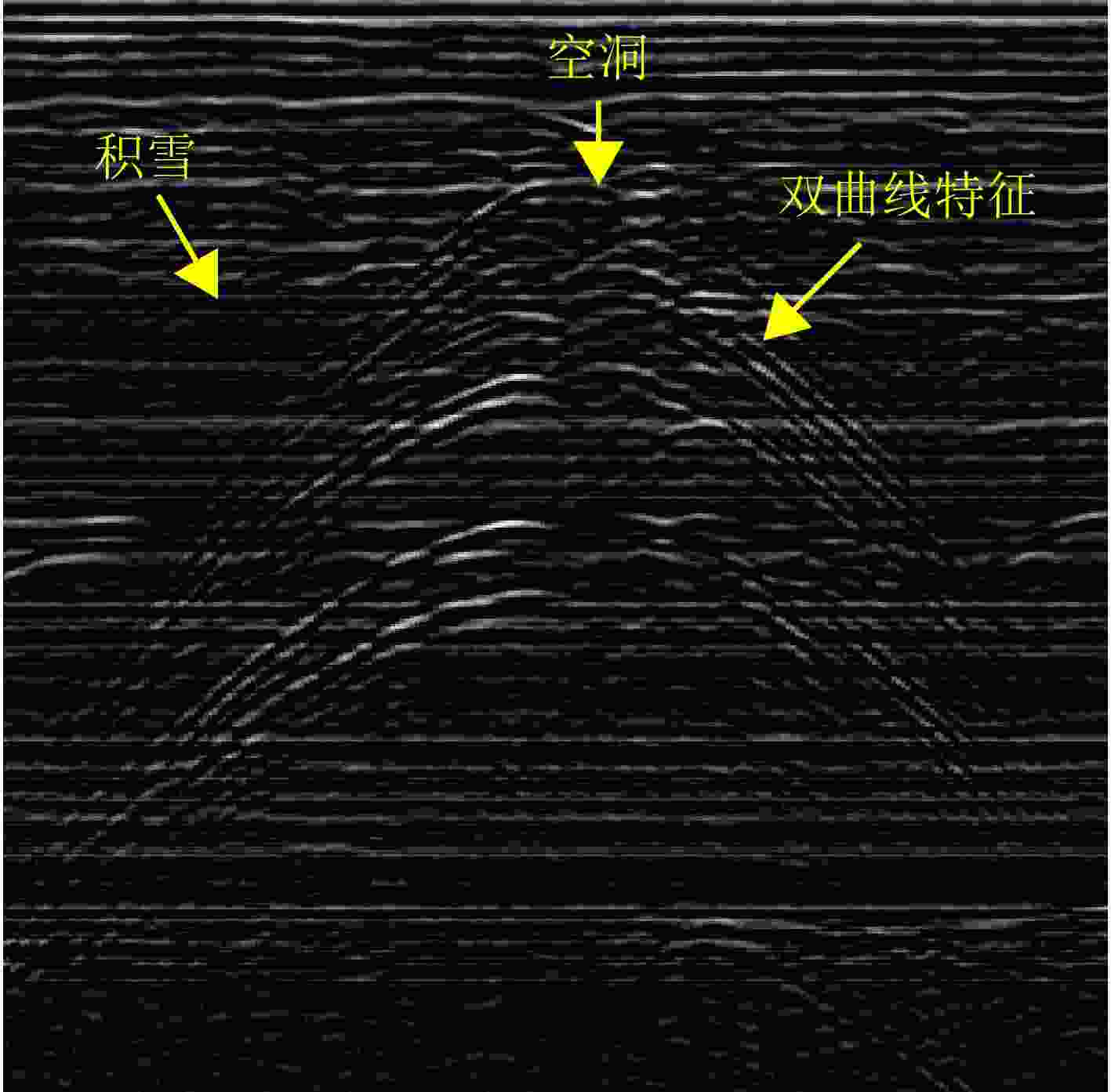
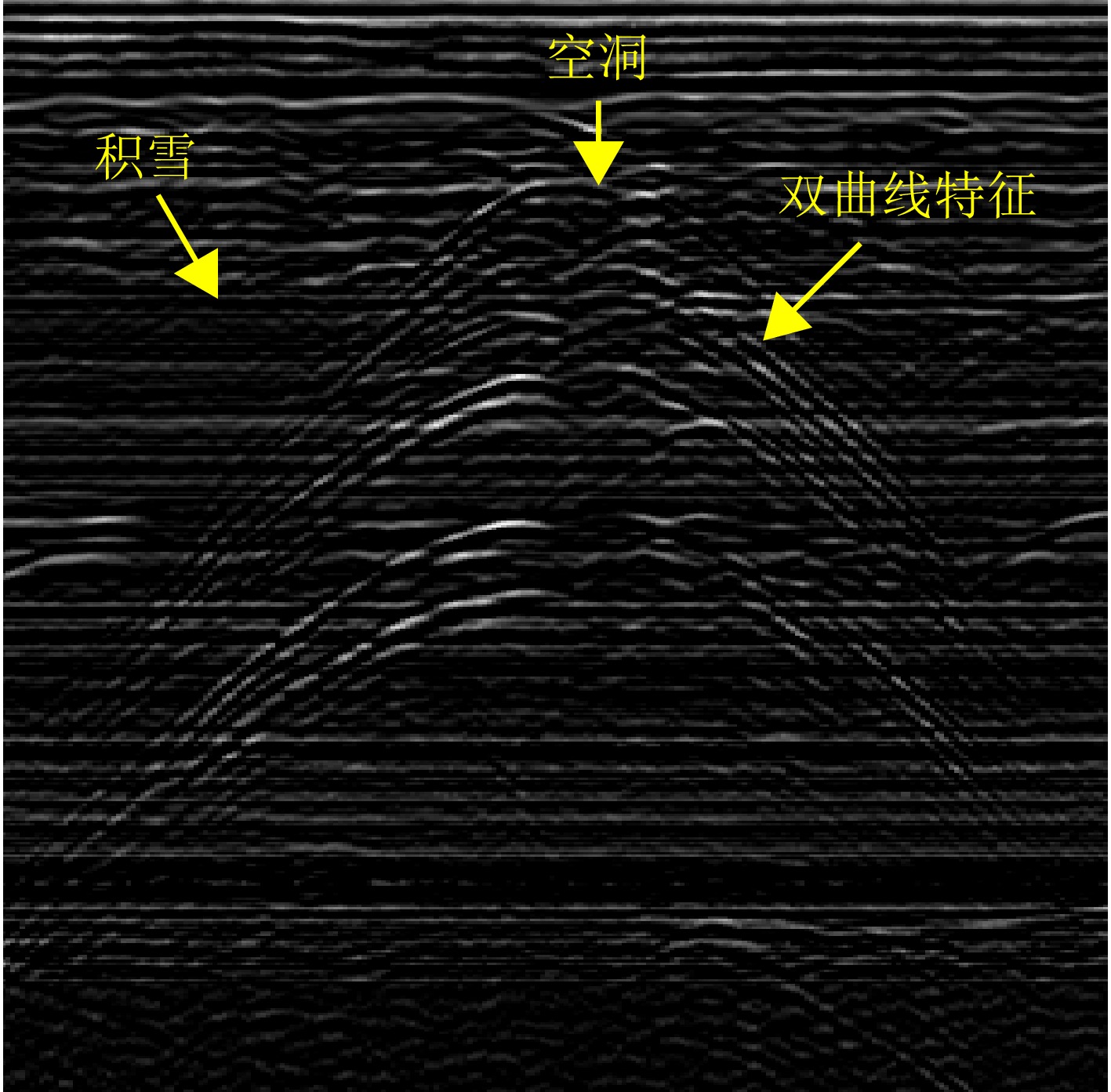
图 1 冰裂隙探地雷达图像的特征结构图
Figure 1. Dimensional structural diagram of crevasse features in GPR images
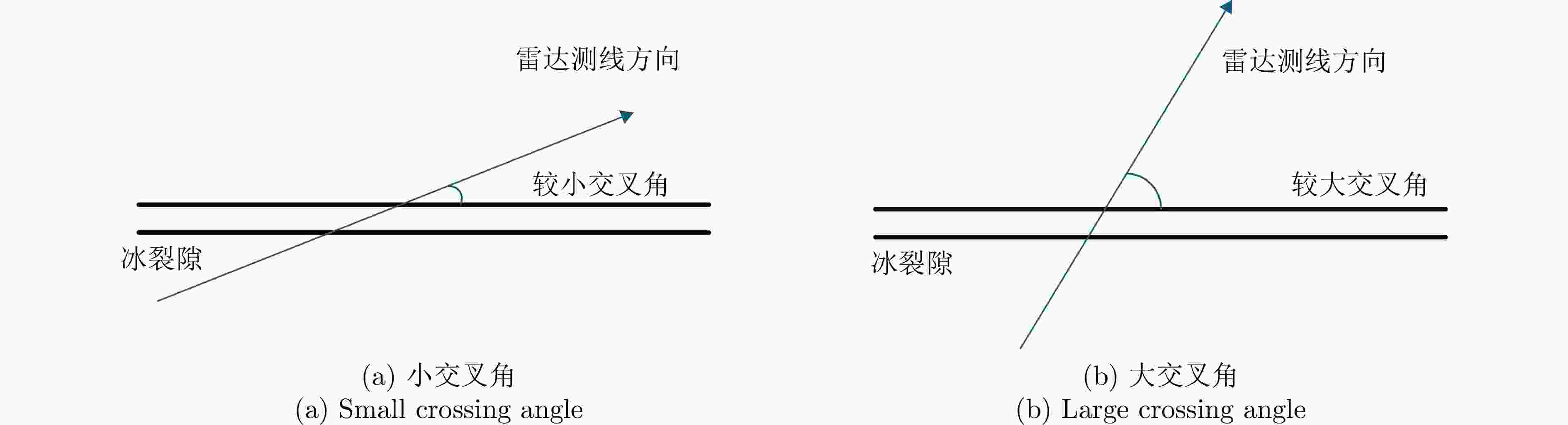
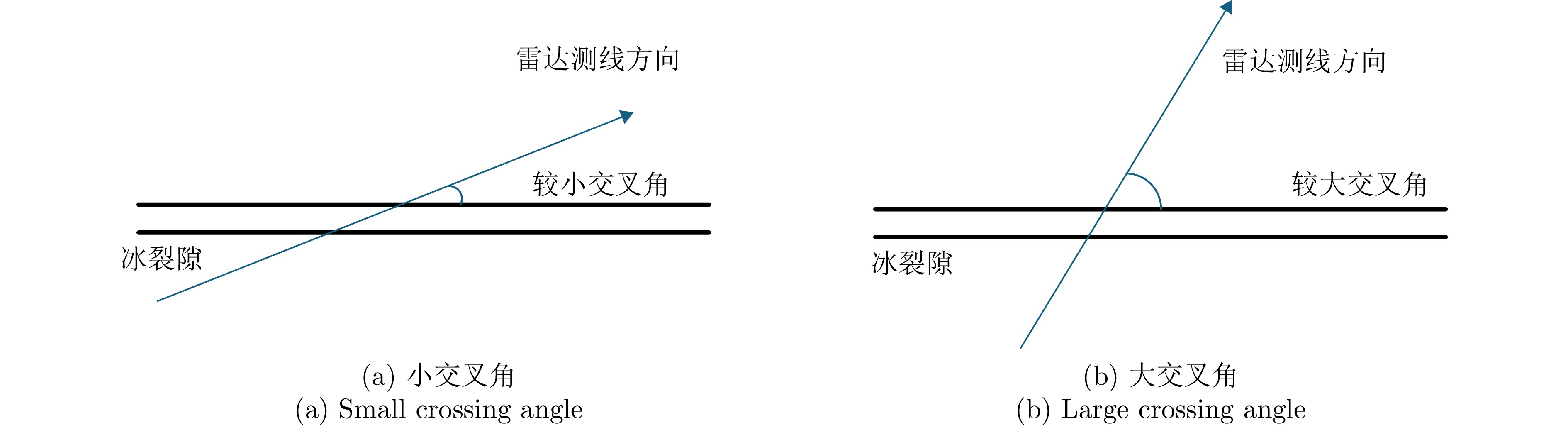
图 2 雷达测线与裂隙方向夹角示意图
Figure 2. Schematic diagram of angle between radar profile and crevasse orientation
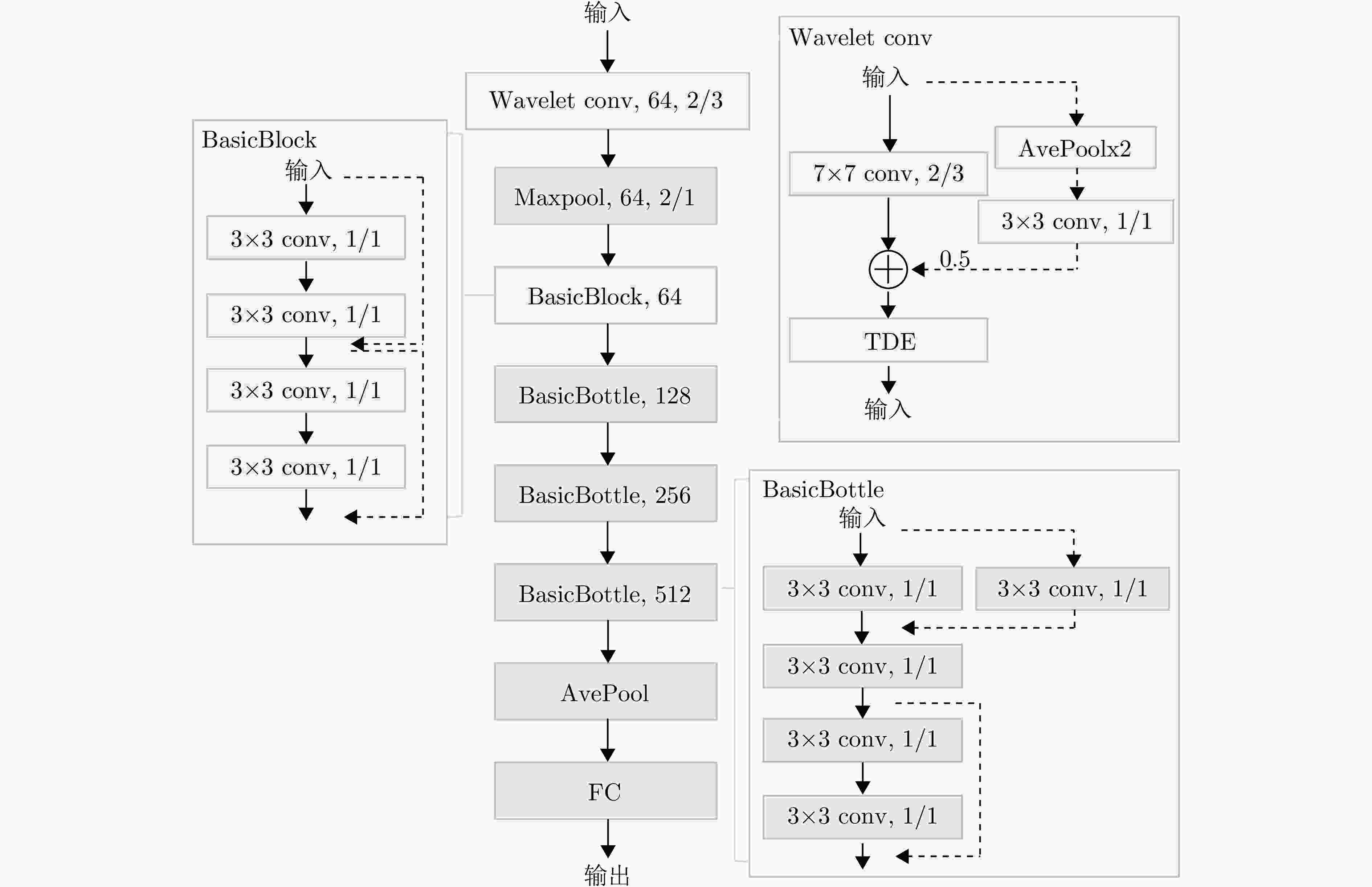
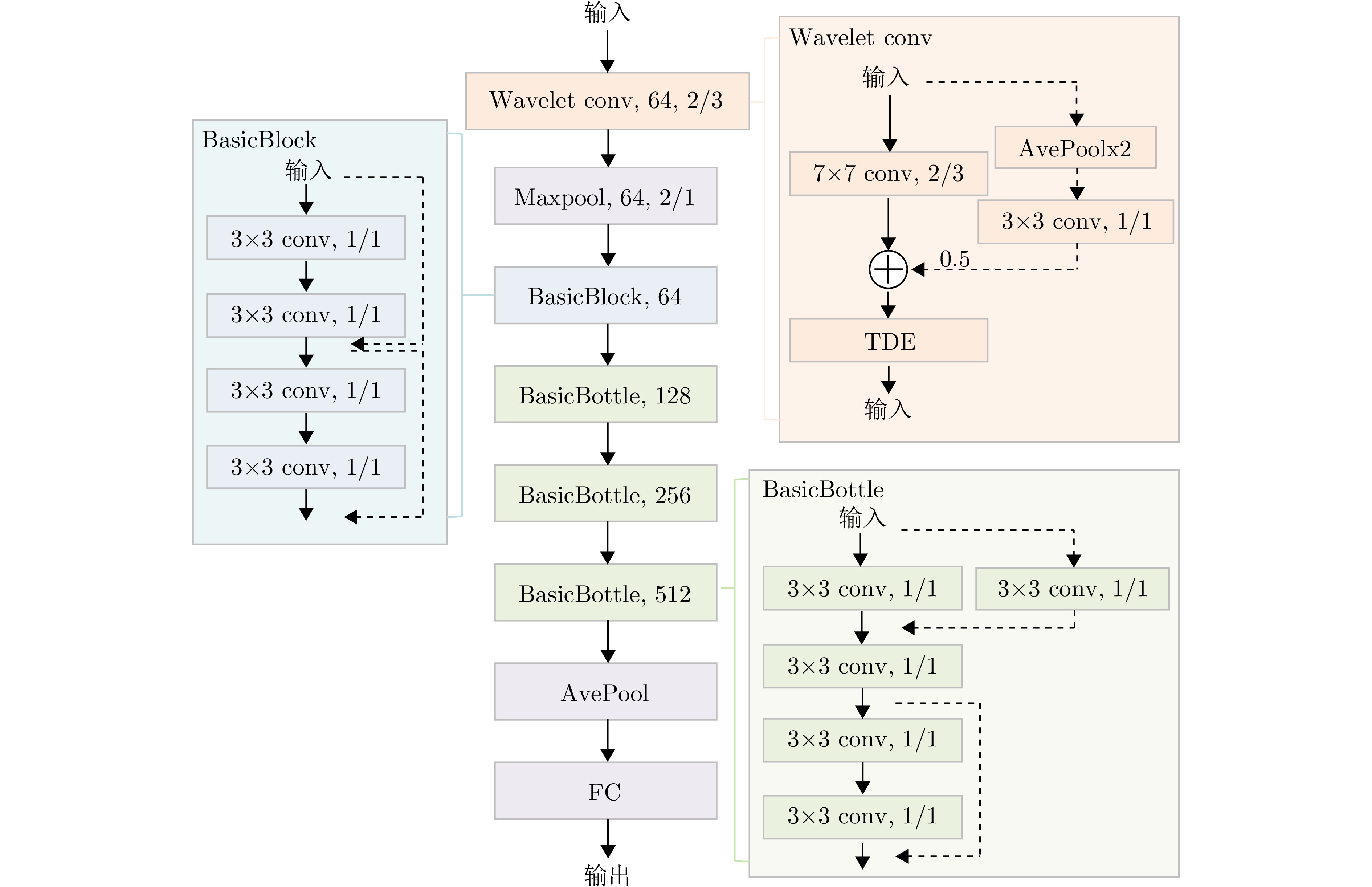
图 4 小波残差网络模块结构图(图中层后参数按“通道数,步长/填充(如64, 2/3)”标注)
Figure 4. Schematic diagram of the Wavelet-ResNet module (The numbers after each layer denote “channels, stride/padding” (e.g., 64, 2/3))
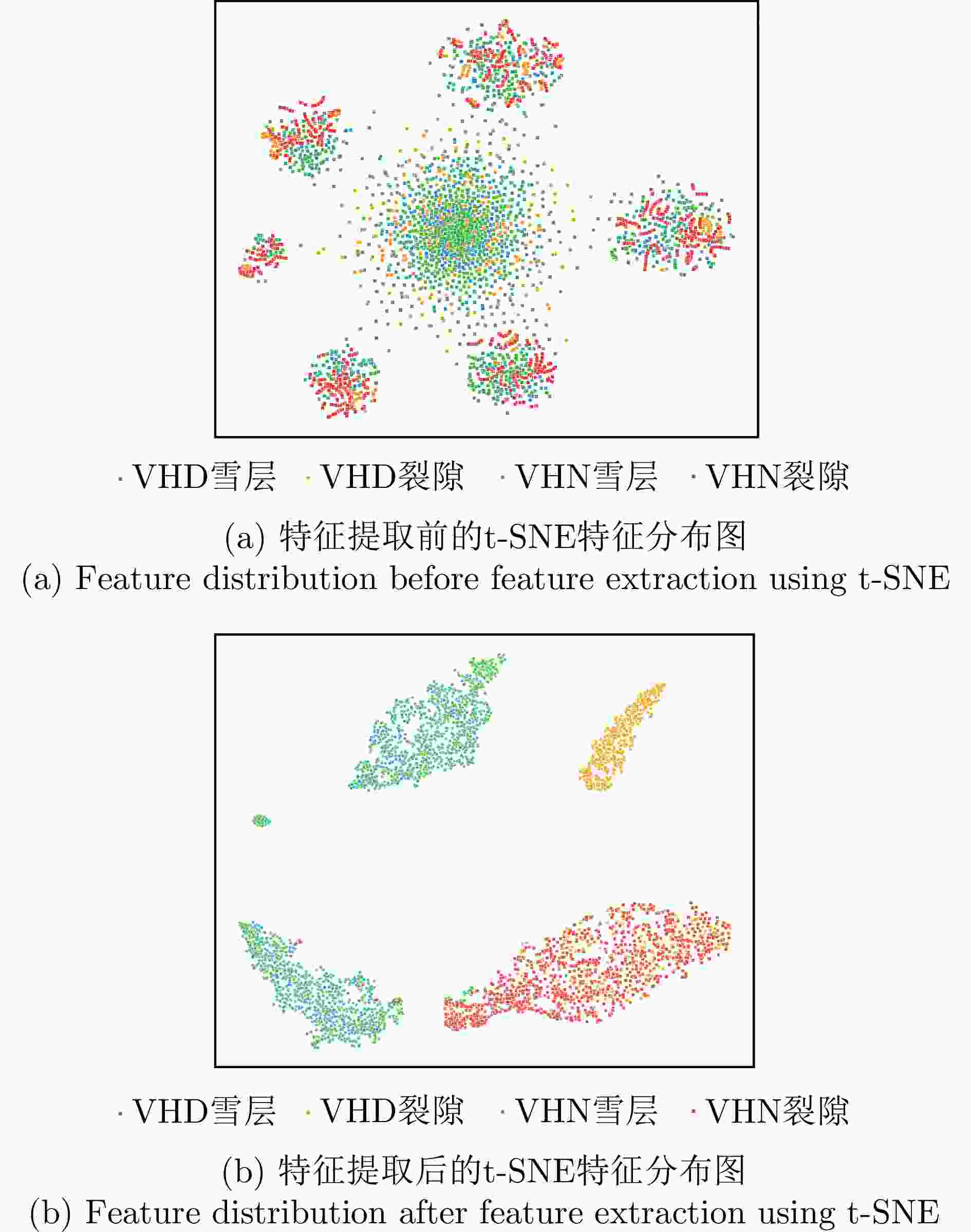
图 6 CDAN-Wavelet-ResNet模型特征提取前后t-SNE特征分布图对比
Figure 6. Comparison of t-SNE feature distribution before and after feature extraction of the CDAN-Wavelet-ResNet model
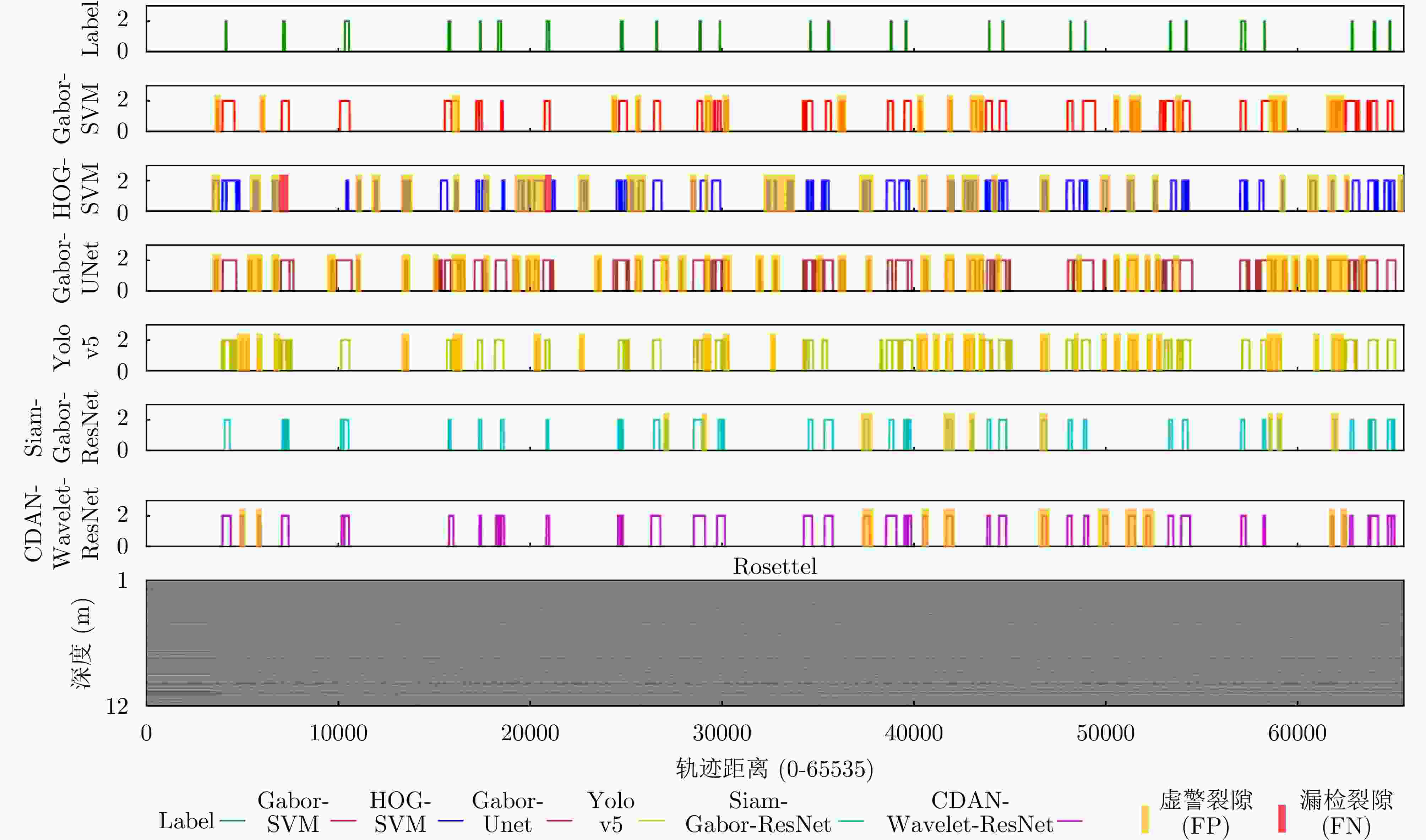
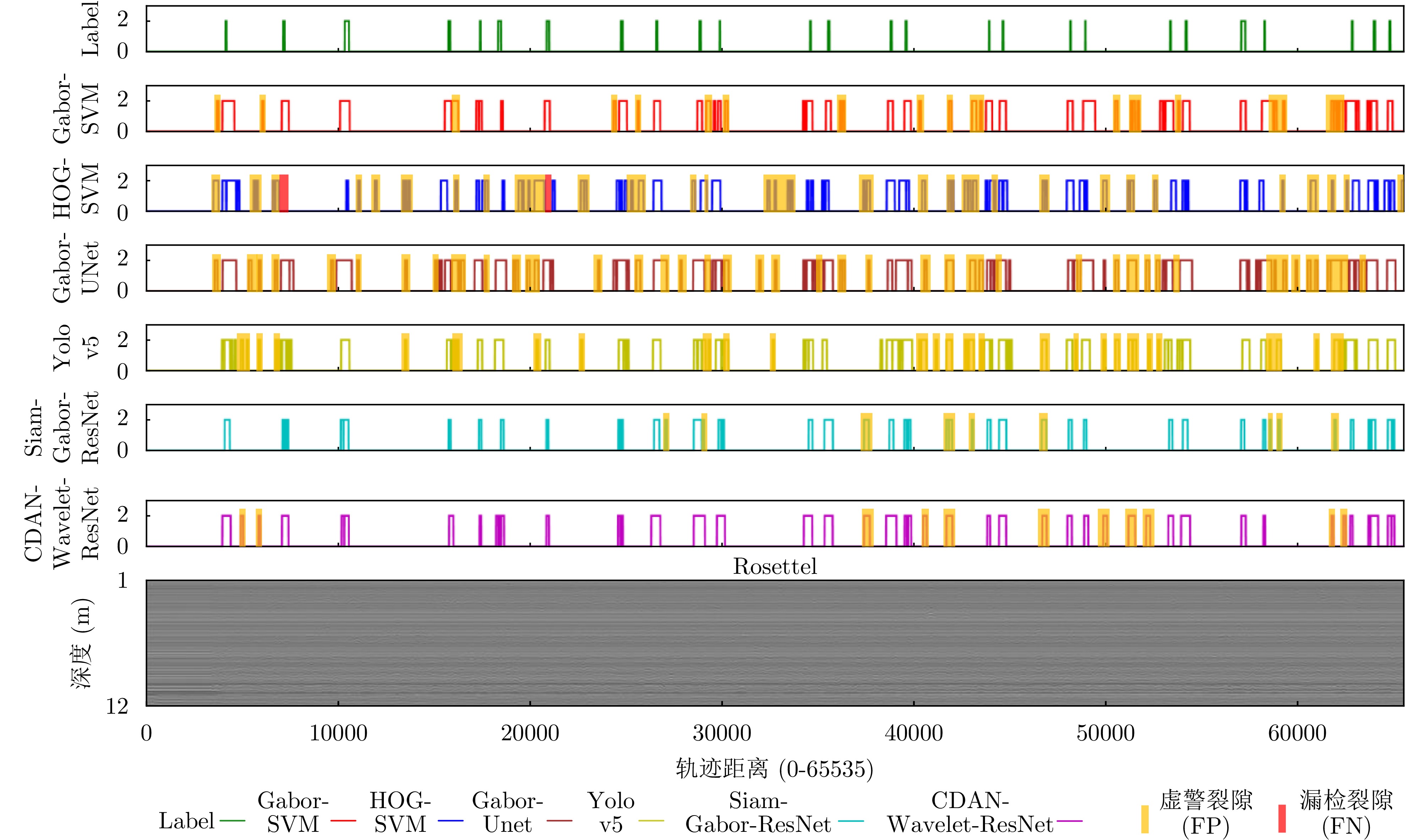
图 7 Rosette 1 GPR数据的测试结果的比较图
Figure 7. Comparison of test results from Rosette 1 GPR data
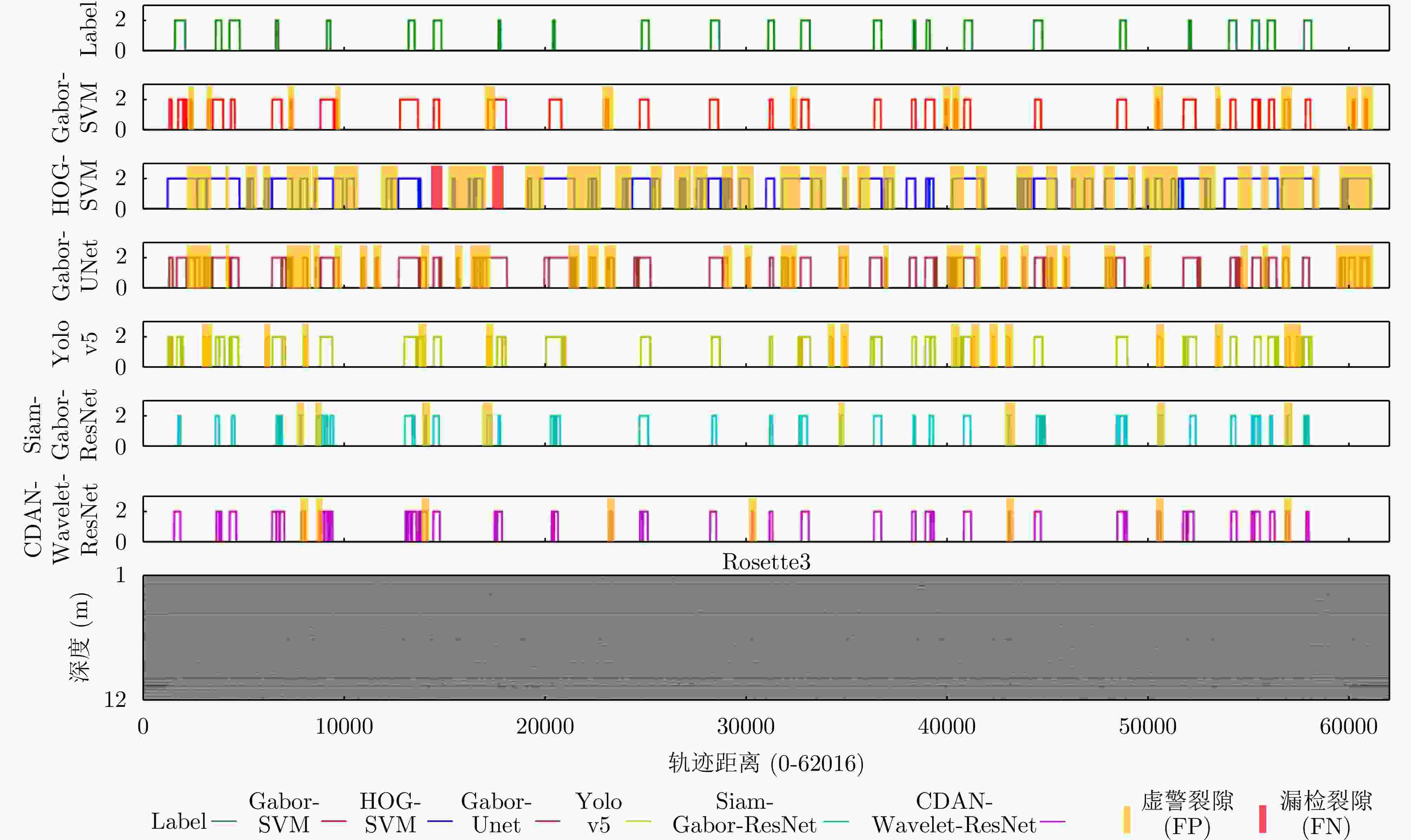
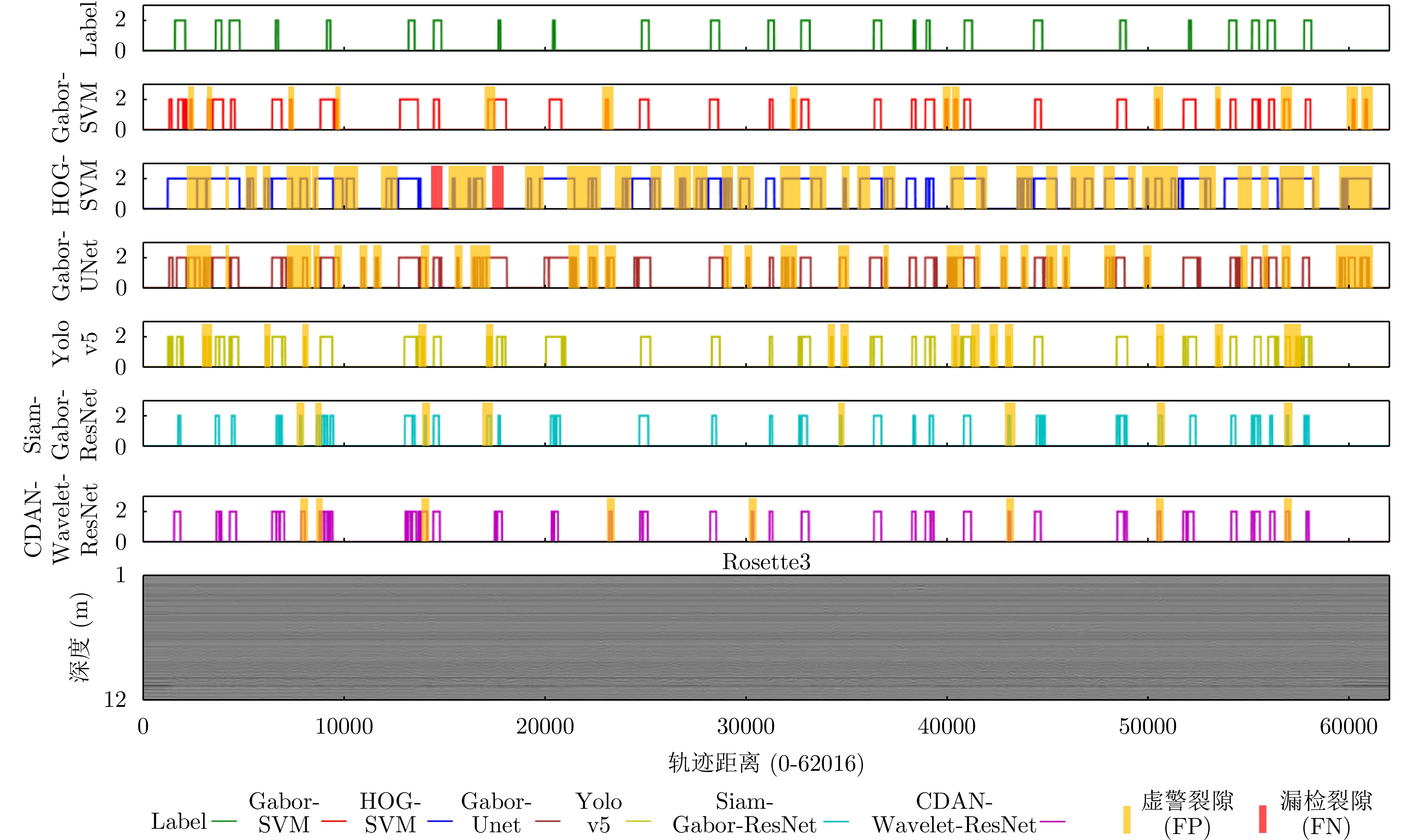
图 8 Rosette 3 GPR数据的测试结果的比较图
Figure 8. Comparison of test results from Rosette 3 GPR data
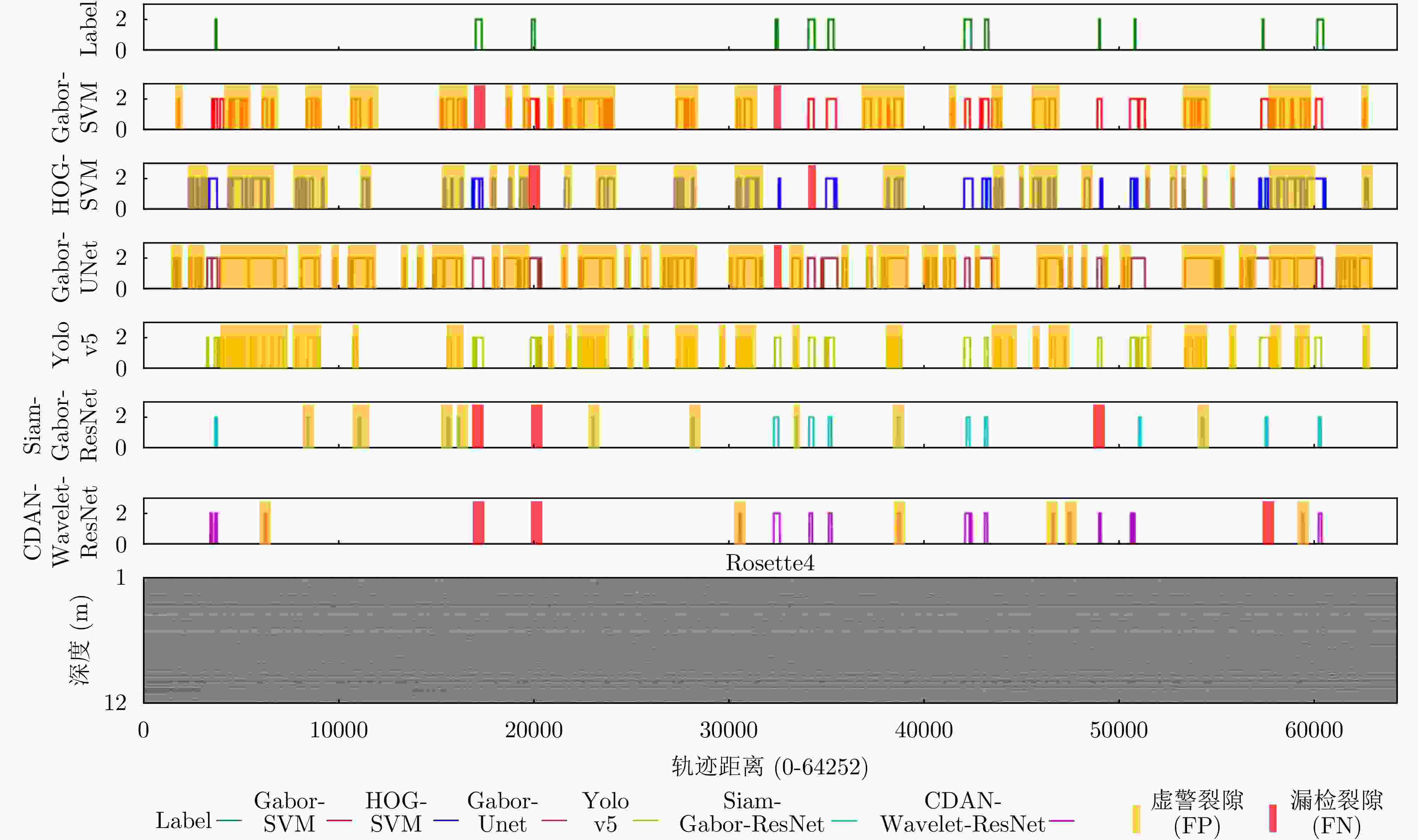
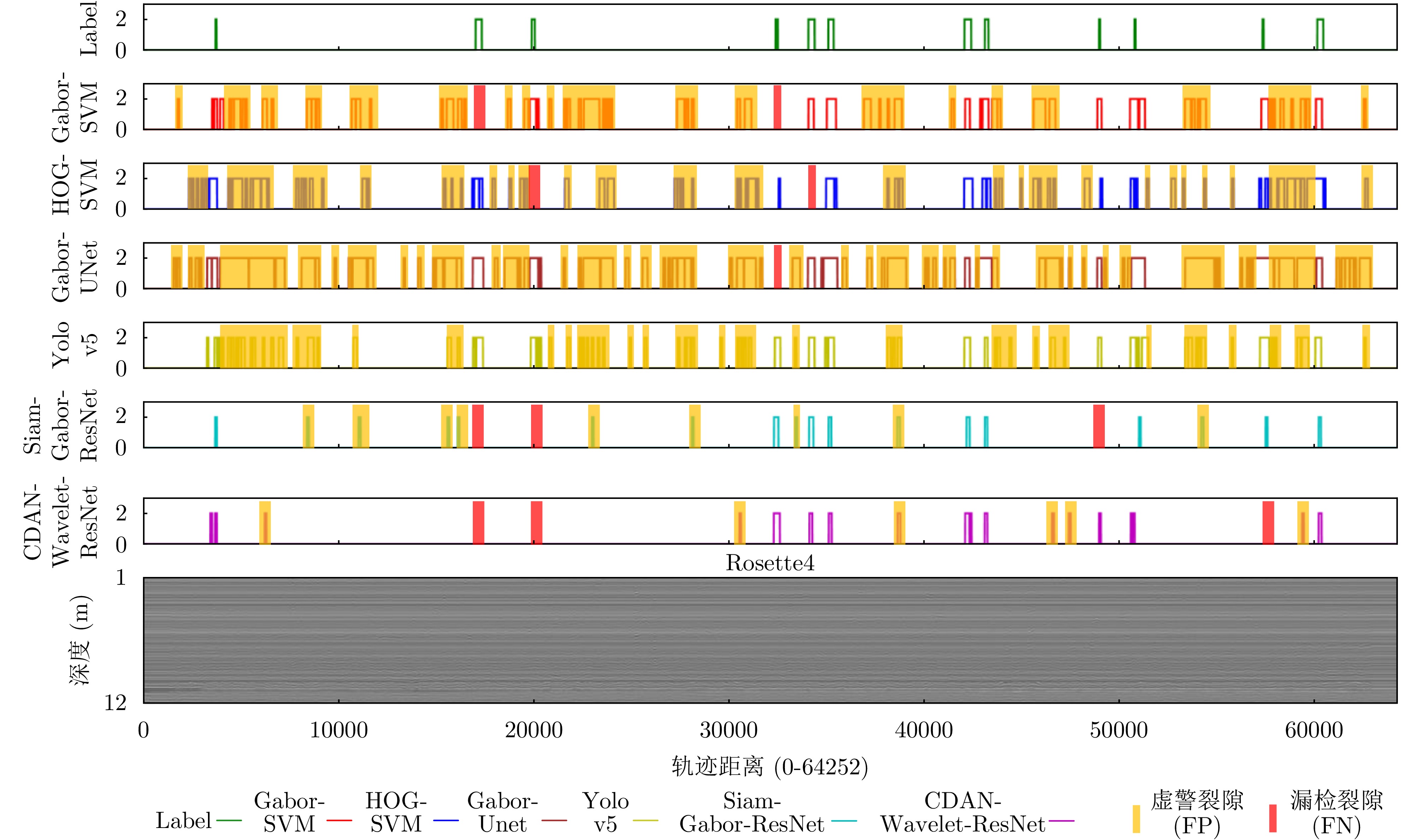
图 9 Rosette 4 GPR数据的测试结果的比较图
Figure 9. Comparison of test results from Rosette 4 GPR data
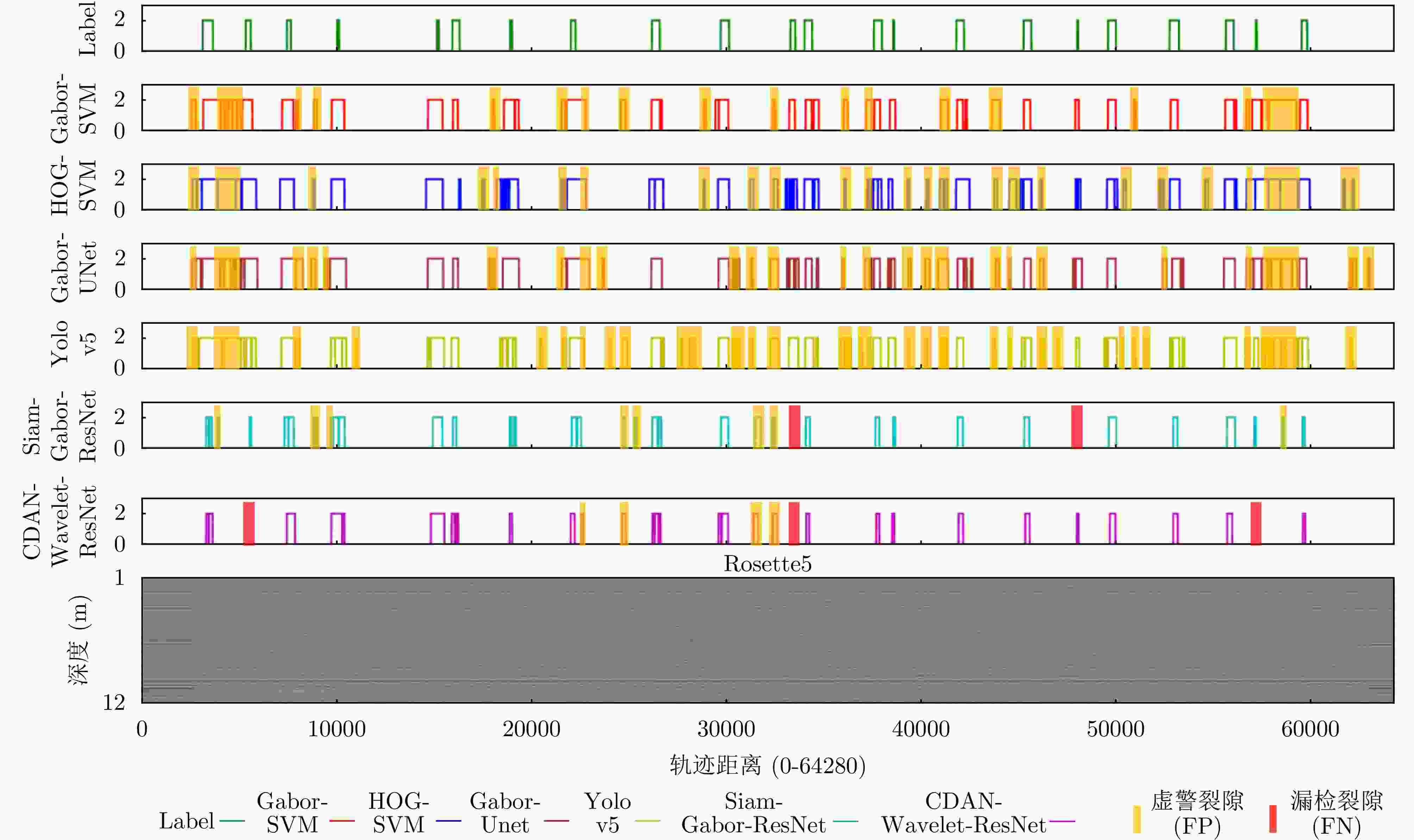
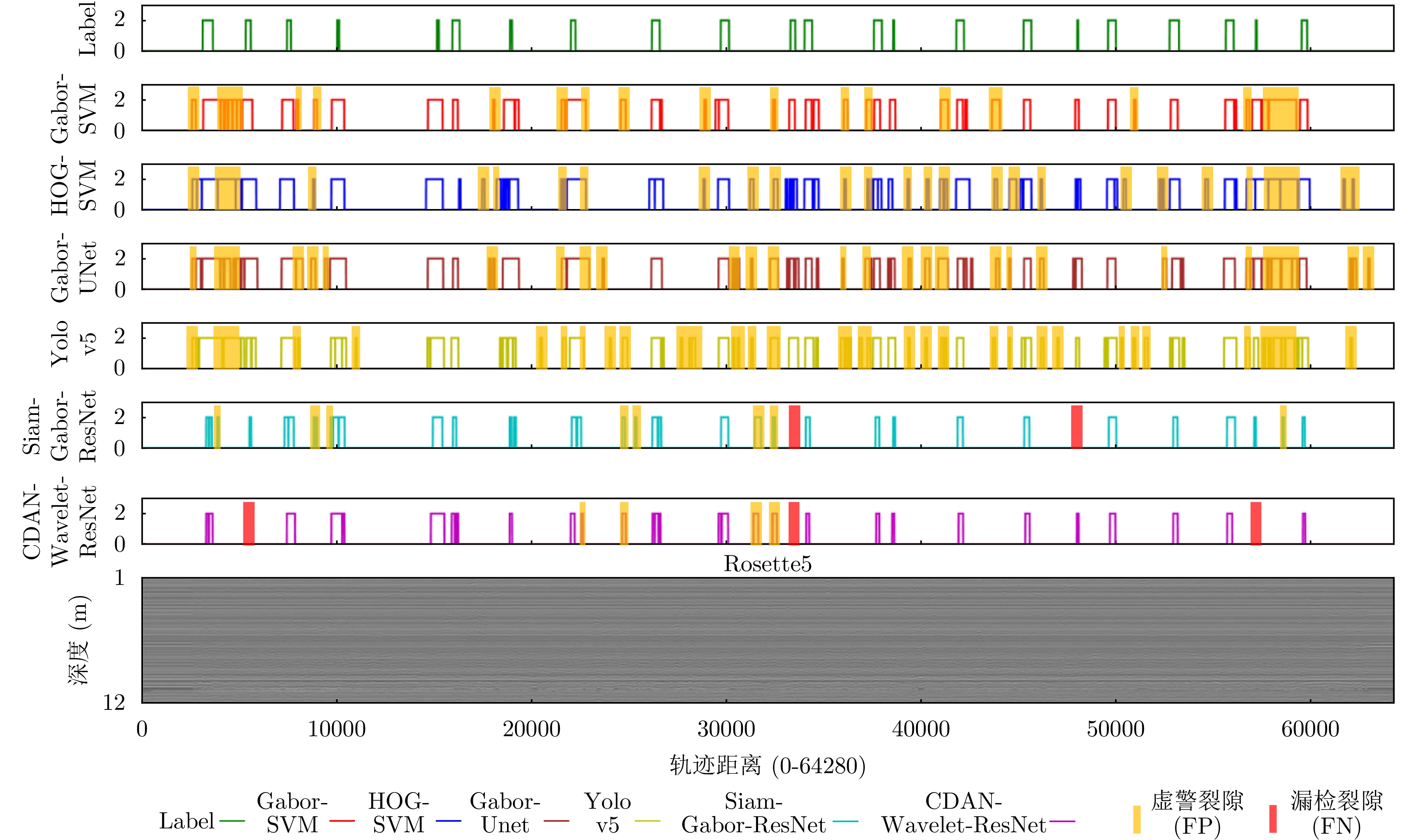
图 10 Rosette 5 GPR数据的测试结果的比较图
Figure 10. Comparison of test results from Rosette 5 GPR data
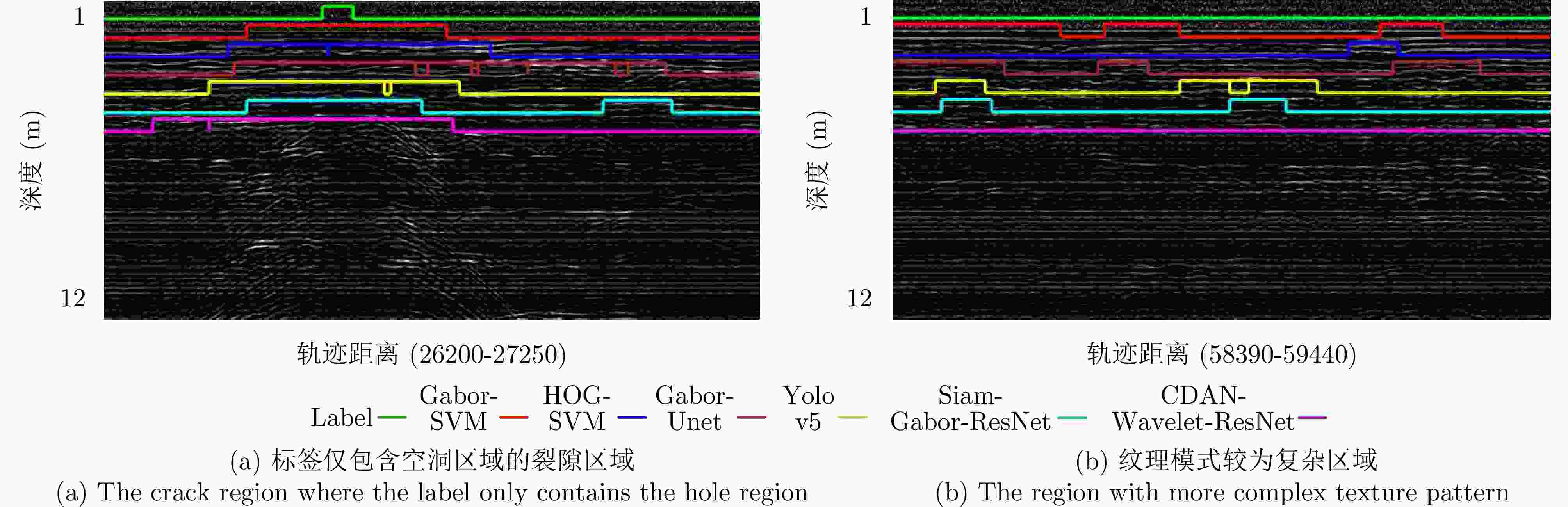
图 11 Rosette 1的GPR数据上的冰裂隙误检区域详细结果
Figure 11. Detailresults of crevasse false detection area on Rosette 1 GPR data
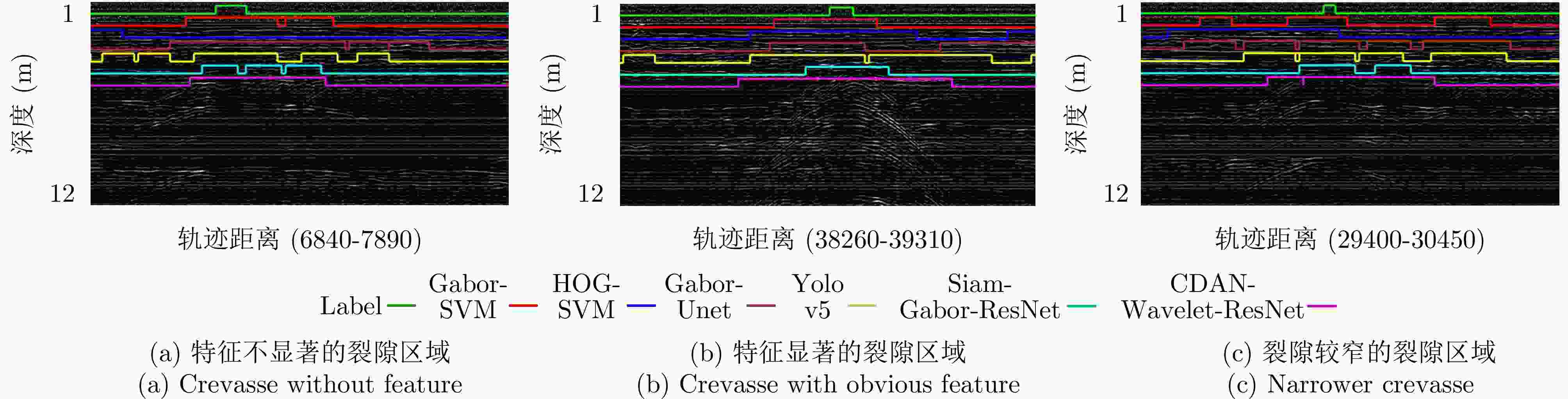
图 12 Rosette 1的GPR数据上的冰裂隙检测详细结果
Figure 12. Details results of crevasse detection on Rosette 1 GPR data
表 1 VHD数据集和VHN数据集的滑窗样本量信息
Table 1. Sliding window sample size information of the VHD dataset and VHN dataset
样本量 VHD数据集 VHN数据集 McMurdo Greenland McMurdo Greenland 冰裂隙样本数量 226 479 0 702 雪层样本数量 1232 1115 1232 1115 总计样本数量 3052 3049  下载: 导出CSV
表 2 10次随机实验结果对比(%)
Table 2. Comparison of 10-fold cross-validation experimental results (%)
模型 AR PR RR F1 FAR Gabor-SVM[19] 93.20(4.57) 98.59(1.21) 89.65(7.52) 93.72(4.08) 1.50(2.89) HOG-SVM[18] 80.30(5.73) 85.93(2.75) 76.24(9.93) 80.47(6.42) 14.53(2.94) Gabor-UNet[21] 92.42(5.41) 95.48(4.18) 89.06(10.70) 92.15(6.75) 4.22(3.96) YOLOv5[36] 89.53(3.94) 92.31(5.09) 86.25(7.22) 89.17(4.39) 7.19(5.46) Siam-Gabor-UNet[22] 90.39(5.45) 96.92(3.19) 83.44(10.97) 89.67(6.74) 2.66(2.86) Siam-Gabor-ResNet[22] 94.38(3.47) 97.55(3.22) 91.09(5.61) 94.11(3.73) 2.34(3.11) CDAN-Wavelet-ResNet 95.70(3.23) 98.12(2.61) 93.28(6.27) 95.50(3.48) 1.87(2.68) 注:表中加粗数值表示最优结果。
下载: 导出CSV
表 3 CDAN-Wavelet-ResNet模型在10次随机实验中的按裂隙分类结果
Table 3. Crevasse-level classification results of the CDAN-Wavelet-ResNet model in a 10-fold cross-validation experiment
折数 裂隙总数 正确检测数-50%阈值 AR-50%阈值(%) 1 32 32 100 2 26 26 100 3 30 30 100 4 21 21 100 5 25 25 100 6 28 28 100 7 30 30 100 8 24 24 100 9 26 26 100 10 33 32 96.97
下载: 导出CSV
表 4 计算量、参数量及单一滑窗样本测试时间对比
Table 4. Comparison of computational complexity, parameter count, and single sliding window sample test time
下载: 导出CSV
表 5 在完整GPR数据上的误检和漏检数量对比
Table 5. Comparison of the number of FDs and MDs on complete GPR data
模型 Rosette 1 Rosette 3 Rosette 4 Rosette 5 总计 FD MD FD MD FD MD FD MD Gabor-SVM[19] 30 0 14 0 60 2 23 0 129 HOG-SVM[18] 51 2 69 1 72 2 33 0 230 Gabor-UNet[21] 79 0 57 0 102 1 39 0 278 YOLOv5[36] 50 0 20 0 68 0 54 0 192 Siam-Gabor-UNet[22] 54 0 45 0 82 0 46 0 227 Siam-Gabor-ResNet[22] 10 0 9 0 9 3 9 2 42 CDAN-Wavelet-ResNet 11 0 8 0 6 3 4 3 35
下载: 导出CSV
表 6 CDAN-Wavelet-ResNet模型消融实验结果(%)
Table 6. CDAN-Wavelet-ResNet model ablation experiment results (%)
消融部分 AR PR RR F1 FAR 无 95.70 98.12 93.28 95.50 1.87 Wavelet-ResNet 94.69 97.36 91.87 94.42 2.50 CDAN 95.62 96.70 94.22 95.45 2.97 Wavelet-ResNet + CDAN 94.61 96.46 92.65 94.02 3.44 注:表中加粗数值表示最优结果。
下载: 导出CSV
-
[1] COLGAN W, RAJARAM H, ABDALATI W, et al. Glacier crevasses: Observations, models, and mass balance implications[J]. Reviews of Geophysics, 2016, 54(1): 119–161. doi: 10.1002/2015RG000504. [2] HERZFELD U C, TRANTOW T, LAWSON M, et al. Surface heights and crevasse morphologies of surging and fast-moving glaciers from ICESat-2 laser altimeter data - Application of the density-dimension algorithm (DDA-ice) and evaluation using airborne altimeter and Planet SkySat data[J]. Science of Remote Sensing, 2021, 3: 100013. doi: 10.1016/j.srs.2020.100013. [3] FUJITA K, THOMPSON L G, AGETA Y, et al. Thirty-year history of glacier melting in the Nepal Himalayas[J]. Journal of Geophysical Research: Atmospheres, 2006, 111(D3): D03109. doi: 10.1029/2005JD005894. [4] RASMUSSEN L A, CONWAY H, KRIMMEL R M, et al. Surface mass balance, thinning and iceberg production, Columbia Glacier, Alaska, 1948–2007[J]. Journal of Glaciology, 2011, 57(203): 431–440. doi: 10.3189/002214311796905532. [5] EDER K, REIDLER C, MAYER C, et al. Crevasse detection in Alpine areas using ground penetrating radar as a component for a mountain guide system[J]. The International Archives of the Photogrammetry, Remote Sensing and Spatial Information Sciences, 2008, 37: 837–841. [6] 周廷刚, 任贾文. 遥感原理与应用[M]. 2版. 北京: 科学出版社, 2022: 2–7.ZHOU Tinggang and REN Jiawen. Principles and Applications of Remote Sensing[M]. 2nd ed. Beijing: Science Press, 2022: 2–7. [7] THOMPSON S S, COOK S, KULESSA B, et al. Comparing satellite and helicopter-based methods for observing crevasses, application in East Antarctica[J]. Cold Regions Science and Technology, 2020, 178: 103128. doi: 10.1016/j.coldregions.2020.103128. [8] MARSH O J, PRICE D, COURVILLE Z R, et al. Crevasse and rift detection in Antarctica from TerraSAR-X satellite imagery[J]. Cold Regions Science and Technology, 2021, 187: 103284. doi: 10.1016/j.coldregions.2021.103284. [9] HUANG Ronggang, JIANG Liming, WANG Hansheng, et al. A bidirectional analysis method for extracting glacier crevasses from airborne LiDAR point clouds[J]. Remote Sensing, 2019, 11(20): 2373. doi: 10.3390/rs11202373. [10] BAURLEY N R, TOMSETT C, and HART J K. Assessing UAV-based laser scanning for monitoring glacial processes and interactions at high spatial and temporal resolutions[J]. Frontiers in Remote Sensing, 2022, 3: 1027065. doi: 10.3389/frsen.2022.1027065. [11] ZHAO Lin, ZHOU Hui, ZHU Xinge, et al. LIF-Seg: LiDAR and camera image fusion for 3D LiDAR semantic segmentation[J]. IEEE Transactions on Multimedia, 2024, 26: 1158–1168. doi: 10.1109/TMM.2023.3277281. [12] DELANEY A J, ARCONE S A, O’BANNON A, et al. Crevasse detection with GPR across the Ross Ice Shelf, Antarctica[C]. The Tenth International Conference on Grounds Penetrating Radar, 2004. GPR2004, Delft, Netherlands, 2004: 777–780. [13] KOVACS A and ABELE G. Crevasse detection using an impulse radar system[J]. Antarctic Journal of the United States, 1974, 9(4): 177–178. [14] 邢治瑞, 稂时楠, 赵博, 等. 极地冰雪探测冰雷达技术发展回顾与展望[J]. 极地研究, 2023, 35(4): 591–606. doi: 10.13679/j.jdyj.20220431.XING Zhirui, LANG Shinan, ZHAO Bo, et al. Review and prospect of ice radar technology for polar ice and snow detection[J]. Chinese Journal of Polar Research, 2023, 35(4): 591–606. doi: 10.13679/j.jdyj.20220431. [15] 崔祥斌, 孙波, 田钢, 等. 冰雷达探测研究南极冰盖的进展与展望[J]. 地球科学进展, 2009, 24(4): 392–402. doi: 10.11867/j.issn.1001-8166.2009.04.0392.CUI Xiangbin, SUN Bo, TIAN Gang, et al. Progress and prospect of ice radar in investigating and researching antarctic ice sheet[J]. Advances in Earth Science, 2009, 24(4): 392–402. doi: 10.11867/j.issn.1001-8166.2009.04.0392. [16] TAURISANO A, TRONSTAD S, BRANDT O, et al. On the use of ground penetrating radar for detecting and reducing crevasse-hazard in Dronning Maud Land, Antarctica[J]. Cold Regions Science and Technology, 2006, 45(3): 166–177. doi: 10.1016/j.coldregions.2006.03.005. [17] WILLIAMS R M, RAY L E, LEVER J H, et al. Crevasse detection in ice sheets using ground penetrating radar and machine learning[J]. IEEE Journal of Selected Topics in Applied Earth Observations and Remote Sensing, 2014, 7(12): 4836–4848. doi: 10.1109/JSTARS.2014.2332872. [18] WALKER B and RAY L. Multi-class crevasse detection using ground penetrating radar and feature-based machine learning[C]. IGARSS 2019 - 2019 IEEE International Geoscience and Remote Sensing Symposium, Yokohama, Japan, 2019: 3578–3581. doi: 10.1109/IGARSS.2019.8899148. [19] LIU Yan, FANG Chao, JI Xuanyuan, et al. Gabor filter banks used for crevasse detection with ground-penetrating radar data[C]. 18th International Conference on Ground Penetrating Radar, Golden, USA, 2020: 372–375. doi: 10.1190/gpr2020-097.1. [20] LIU Yan, LI Haoming, HUANG Mingzhe, et al. Ice crevasse detection with ground penetrating radar using faster R-CNN[C]. 2020 15th IEEE International Conference on Signal Processing (ICSP), Beijing, China, 2020: 596–599. doi: 10.1109/ICSP48669.2020.9321072. [21] WANG Min, CHEN Deyuan, ZHAO Bo, et al. Gabor-based U-Net crevasse detection with ground penetrating radar data[C]. 19th International Conference on Ground Penetrating Radar, Golden, USA, 2022: 102–106. doi: 10.1190/gpr2022-091.1. [22] CHEN Deyuan, WANG Min, WU Wei, et al. Siam-Gabor-ResNet used for crevasse detection with ground-penetrating radar data[J]. IEEE Transactions on Geoscience and Remote Sensing, 2025, 63: 5105013. doi: 10.1109/TGRS.2025.3575735. [23] HE Kaiming, ZHANG Xiangyu, REN Shaoqing, et al. Deep residual learning for image recognition[C]. 2016 IEEE Conference on Computer Vision and Pattern Recognition, Las Vegas, USA, 2016: 770–778. doi: 10.1109/CVPR.2016.90. [24] 武震, 张世强, 刘时银, 等. 祁连山老虎沟12号冰川冰内结构特征分析[J]. 地球科学进展, 2011, 26(6): 631–641. doi: 10.11867/j.issn.1001-8166.2011.06.0631.WU Zhen, ZHANG Shiqiang, LIU Shiyin, et al. Structural characteristics of the No.12 glacier in Laohugou valley, Qilian Mountain based on the ground penetrating radar combined with FDTD simulation[J]. Advances in Earth Science, 2011, 26(6): 631–641. doi: 10.11867/j.issn.1001-8166.2011.06.0631. [25] YU Suxi, HE Jingyuan, WANG Yi, et al. Texture classification network integrating adaptive wavelet transform[J]. International Journal of Wavelets, Multiresolution and Information Processing, 2024, 22(5): 2450020. doi: 10.1142/S0219691324500206. [26] LEWALLE J and KELLER D S. Analysis of web defects by correlating 1-D Morlet and 2-D Mexican hat wavelet transforms[C]. SPIE 6001, Wavelet Applications in Industrial Processing III, Boston, USA, 2005: 63–74. doi: 10.1117/12.629908. [27] LONG Mingsheng, CAO Zhangjie, WANG Jianmin, et al. Conditional adversarial domain adaptation[C]. 32nd International Conference on Neural Information Processing Systems, Montréal, Canada, 2018: 1647–1657. doi: 10.5555/3326943.3327094. [28] SUN Yiran, JIN Feng, YANG Nan, et al. A low resource fault diagnosis model based on CDAN domain adaptation[C]. 2024 Global Reliability and Prognostics and Health Management Conference (PHM-Beijing), Beijing, China, 2024: 1–8. doi: 10.1109/PHM-Beijing63284.2024.10874628. [29] ARCONE S A, LEVER J H, RAY L E, et al. Ground-penetrating radar profiles of the McMurdo Shear Zone, Antarctica, acquired with an unmanned rover: Interpretation of crevasses, fractures, and folds within firn and marine ice[J]. Geophysics, 2016, 81(1): WA21–WA34. doi: 10.1190/geo2015-0132.1. [30] RAY L, JORDAN M, ARCONE S A, et al. Velocity field in the McMurdo shear zone from annual ground penetrating radar imaging and crevasse matching[J]. Cold Regions Science and Technology, 2020, 173: 103023. doi: 10.1016/j.coldregions.2020.103023. [31] LEVER J H, DELANEY A J, RAY L E, et al. Autonomous GPR surveys using the polar rover Yeti[J]. Journal of Field Robotics, 2013, 30(2): 194–215. doi: 10.1002/rob.21445. [32] WILLIAMS R M. Crevasse detection in ice sheets using ground penetrating radar and machine learning[D]. [Ph.D. dissertation], Dartmouth College, 2013. [33] KOH G, LEVER J H, ARCONE S A, et al. Autonomous FMCW radar survey of Antarctic shear zone[C]. The XIII Internarional Conference on Ground Penetrating Radar, Lecce, Italy, 2010: 1–5. doi: 10.1109/ICGPR.2010.5550174. [34] WALKER B. Multi-class crevasse detection using ground penetrating radar and feature-based machine learning[D]. [Ph.D. dissertation], Dartmouth College, 2019. [35] VAN DER MAATEN L and HINTON G. Visualizing data using t-SNE[J]. Journal of Machine Learning Research, 2008, 9(86): 2579–2605. [36] JOCHER G. Ultralytics Yolov5[EB/OL]. https://github.com/ultralytics/yolov5, 2020. doi: 10.5281/zenodo.3908559. -




计量
- 文章访问数:
- HTML全文浏览量:
- PDF下载量:
- 被引次数: 0