
 Submit Manuscript
 Peer Review
 Editor Work

- Home
- Articles & Issues
-
Data
- Dataset of Radar Detecting Sea
- SAR Dataset
- SARGroundObjectsTypes
- SARMV3D
- AIRSAT Constellation SAR Land Cover Classification Dataset
- 3DRIED
- UWB-HA4D
- LLS-LFMCWR
- FAIR-CSAR
- MSAR
- SDD-SAR
- FUSAR
- SpaceborneSAR3Dimaging
- Sea-land Segmentation
- SAR Multi-domain Ship Detection Dataset
- SAR-Airport
- Hilly and mountainous farmland time-series SAR and ground quadrat dataset
- SAR images for interference detection and suppression
- HP-SAR Evaluation & Analytical Dataset
- GDHuiYan-ATRNet
- Multi-System Maritime Low Observable Target Dataset
- DatasetinthePaper
- DatasetintheCompetition
- Report
- Course
- About
- Publish
- Editorial Board
- Chinese
Article Navigation >
Journal of Radars
>
2026
> Online First
| Citation: | ZHOU Fang, LU Zhi, ZHANG Ganlin, et al. A progressive EEG-supervised method for contactless sleep monitoring[J]. Journal of Radars, in press. doi: 10.12000/JR26120

|
A Progressive EEG-supervised Method for Contactless Sleep Monitoring
DOI: 10.12000/JR26120 CSTR: 32380.14.JR26120
More Information-
Abstract
Sleep monitoring is essential for assessing individual health. However, conventional polysomnography relies on multiple contact sensors and complex data acquisition procedures, making it difficult to meet the requirements of long-term, home-based monitoring. Radar sensing enables the contactless acquisition of respiratory and body movement signals during sleep, making it suitable for long-term home-based monitoring. Existing studies typically use large-scale public sleep datasets for pretraining or develop models for sleep staging and respiratory disorder detection based on respiratory features extracted from radar signals. The former requires cross-domain pretraining, resulting in relatively high model development and training costs, whereas the latter does not fully exploit EEG-derived knowledge, which is more directly associated with sleep-state assessment, thereby limiting sleep staging performance. To address these limitations, this paper proposes a progressive EEG-supervised method for contactless sleep monitoring. The proposed method leverages EEG and respiratory signals from a public dataset to progressively learn transferable discriminative representations through knowledge distillation and pretraining, which are then adapted to radar-based respiratory representations. This approach alleviates the modality gap between EEG and radar signals, thereby improving contactless sleep monitoring performance. Experimental results show that the proposed method effectively leverages prior knowledge from EEG to enhance radar-based sleep representation learning, achieving accuracies of 82.6% for sleep staging and 82.5% for respiratory disorder detection. These results provide a new technical perspective on contactless sleep monitoring. -

-
References
[1] BERRY R B, BROOKS R, GAMALDO C E, et al. The AASM Manual for the Scoring of Sleep and Associated Events: Rules, Terminology and Technical Specifications[M]. Darien: American Academy of Sleep Medicine, 2012: 7.[2] Grandner M A. Sleep, health, and society[J]. Sleep medicine clinics, 2022, 17(2): 117–139. doi: 10.1016/j.jsmc.2022.03.001.[3] 方震, 简璞, 张浩, 等. 基于FMCW雷达的非接触式医疗健康监测技术综述[J]. 雷达学报, 2022, 11(3): 499–516. doi: 10.12000/JR22019.FANG Zhen, JIAN Pu, ZHANG Hao, et al. Review of noncontact medical and health monitoring technologies based on FMCW radar[J]. Journal of Radars, 2022, 11(3): 499–516. doi: 10.12000/JR22019.[4] 赵翔, 王威, 李晨洋, 等. 基于毫米波雷达微动信号和脉搏波数据融合的睡眠呼吸暂停低通气综合征筛查技术[J]. 雷达学报(中英文), 2025, 14(1): 102–116. doi: 10.12000/JR24107.ZHAO Xiang, WANG Wei, LI Chenyang, et al. Diagnosis of sleep apnea hypopnea syndrome using fusion of micro-motion signals from millimeter-wave radar and pulse wave data[J]. Journal of Radars, 2025, 14(1): 102–116. doi: 10.12000/JR24107.[5] HE Hao, LI Chao, GANGLBERGER W, et al. What radio waves tell us about sleep![J]. Sleep, 2025, 48(1): zsae187. doi: 10.1093/sleep/zsae187.[6] WANG Yaqi, LU Zhi, YUE Aoxiang, et al. Self-supervised learning for contactless cardiac diagnosis with beamformed radar signals[J]. IEEE Internet of Things Journal, 2026. doi: 10.1109/JIOT.2026.3729861.[7] CAI Xinmeng, CHEN Jinbo, XU Guixin, et al. RF-HeartSSL: Self-supervised learning for RF-based cardiac sensing[J]. Proceedings of the ACM on Interactive, Mobile, Wearable and Ubiquitous Technologies, 2026, 10(2): 1–34. doi: 10.1145/3810229.[8] GENG Ruixu, ZHANG Dongheng, LI Yadong, et al. mmGuard: A countermeasure against physical adversarial attacks on mmWave radar sensing[J]. IEEE Transactions on Information Forensics and Security, 2026, 21: 5568–5582. doi: 10.1109/TIFS.2026.3698581.[9] CAI Xinmeng, CHEN Jinbo, WANG Haoyu, et al. Contactless arrhythmia detection via diversity-invariant contrastive mmWave sensing[J]. IEEE Transactions on Mobile Computing, 2026, 25(8): 13324–13339. doi: 10.1109/TMC.2026.3673334.[10] ZHAO Heng, XU Zhi, XUE Biao, et al. Client-personalized federated learning framework with heterogeneous millimeter-wave radars for contactless ECG reconstruction using heart sounds[J]. IEEE Journal of Electromagnetics, RF and Microwaves in Medicine and Biology, 2026. doi: 10.1109/JERM.2026.3727679.[11] YANG Xuan, ZHAO Heng, WANG Shaijun, et al. Accurate near-range displacement sensing in single-channel FMCW radar via CZT-MLE compensation for SL-IQI[J]. IEEE Transactions on Microwave Theory and Techniques, 2026, 74(6): 5644–5657. doi: 10.1109/TMTT.2026.3680086.[12] ZHU Tianyu, ZHANG Lin, DING Chen, et al. Efficiency-based adaptive time-Doppler sparse point clouds of human motion for radar sensing[C]. 2026 IEEE MTT-S International Wireless Symposium (IWS). 2026: 1–3.[13] LI Siheng, JIN Beihong, ZHANG Fusang, et al. Hypnos: A contactless sleep stage monitoring system using UWB signals[J]. Proceedings of the ACM on Interactive, Mobile, Wearable and Ubiquitous Technologies, 2024, 8(3): 114. doi: 10.1145/3678581.[14] ZHUANG Zhongxu, XUE Biao, AN Qiang, et al. Advancing sleep health equity through deep learning on large-scale nocturnal respiratory signals[J]. Nature Communications, 2025, 16(1): 9334. doi: 10.1038/s41467-025-64340-y.[15] ZHAO Mingmin, YUE Shichao, KATABI D, et al. Learning sleep stages from radio signals: A conditional adversarial architecture[C]. The 34th International Conference on Machine Learning, Sydney, Australia, 2017: 4100–4109.[16] CHEN Jinbo, ZHANG Dongheng, WU Zhi, et al. Contactless electrocardiogram monitoring with millimeter wave radar[J]. IEEE Transactions on Mobile Computing, 2024, 23(1): 270–285. doi: 10.1109/TMC.2022.3214721.[17] YUAN Yuqin, CHEN Jinbo, ZHANG Dongheng, et al. Atrial fibrillation detection via contactless radio monitoring and knowledge transfer[J]. Nature Communications, 2025, 16(1): 4317. doi: 10.1038/s41467-025-59482-y.[18] WU Zhi, ZHANG Dongheng, SHANG Zixin, et al. Learning-based tracking-before-detect for unconstrained indoor human tracking using RF signal[J]. IEEE Transactions on Mobile Computing, 2025, 24(6): 4777–4793. doi: 10.1109/TMC.2025.3529501.[19] ZHANG Ganlin, ZHANG Dongheng, DENG Hongyu, et al. SRAL-IRS: Swift, robust, and accurate IRS-aided localization with COTS WiFi[J]. IEEE Transactions on Wireless Communications, 2025, 24(10): 8376–8390. doi: 10.1109/twc.2025.3566158.[20] QUAN S F, HOWARD B V, IBER C, et al. The sleep heart health study: Design, rationale, and methods[J]. Sleep, 1997, 20(12): 1077–1085. doi: 10.1093/sleep/20.12.1077.[21] ZHANG Guoqiang, CUI Licong, MUELLER R, et al. The national sleep research resource: Towards a sleep data commons[J]. Journal of the American Medical Informatics Association, 2018, 25(10): 1351–1358. doi: 10.1093/jamia/ocy064.[22] GOU Jianping, YU Baosheng, MAYBANK S J, et al. Knowledge distillation: A survey[J]. International Journal of Computer Vision, 2021, 129(6): 1789–1819. doi: 10.1007/s11263-021-01453-z.[23] MIN Bonan, ROSS H, SULEM E, et al. Recent advances in natural language processing via large pre-trained language models: A survey[J]. ACM Computing Surveys, 2024, 56(2): 30. doi: 10.1145/3605943.[24] CHEN Xiaoli, WANG Rui, ZEE P, et al. Racial/ethnic differences in sleep disturbances: The multi-ethnic study of atherosclerosis (MESA)[J]. Sleep, 2015, 38(6): 877–888. doi: 10.5665/sleep.4732.[25] AWR6843AOP T I. [OL]. https://www.ti.com.cn/product/cn/AWR6843AOP.[26] LI Yadong, ZHANG Dongheng, GENG Ruixu, et al. IFNet: Deep imaging and focusing for handheld SAR with millimeter-wave signals[J]. IEEE Transactions on Mobile Computing, 2025, 24(3): 2166–2180. doi: 10.1109/TMC.2024.3489641.[27] GENG Ruixu, LI Yadong, ZHANG Dongheng, et al. DREAM-PCD: Deep reconstruction and enhancement of mmWave radar pointcloud[J]. IEEE Transactions on Image Processing, 2024, 33: 6774–6789. doi: 10.1109/TIP.2024.3512356.[28] 丁凌娜, 张宾宾, 王健阳, 等. 基于深度盲源分离的毫米波雷达驾驶员心跳感知方法研究[J]. 雷达学报(中英文), 待出版. doi: 10.12000/JR26042.DING Lingna, ZHANG Binbin, WANG Jianyang, et al. Driver heartbeat sensing using millimeter-wave radar based on deep blind source separation[J]. Journal of Radars, in press. doi: 10.12000/JR26042.[29] 元志安, 周笑宇, 刘心溥, 等. 基于RDSNet的毫米波雷达人体跌倒检测方法[J]. 雷达学报, 2021, 10(4): 656–664. doi: 10.12000/JR21015.YUAN Zhian, ZHOU Xiaoyu, LIU Xinpu, et al. Human fall detection method using millimeter-wave radar based on RDSNet[J]. Journal of Radars, 2021, 10(4): 656–664. doi: 10.12000/JR21015.[30] XU Qinyi, JIANG Chunxiao, HAN Yi, et al. Waveforming: An overview with beamforming[J]. IEEE Communications Surveys & Tutorials, 2018, 20(1): 132–149. doi: 10.1109/COMST.2017.2750201.[31] YUE Shichao, HE Hao, WANG Hao, et al. Extracting multi-person respiration from entangled RF signals[J]. Proceedings of the ACM on Interactive, Mobile, Wearable and Ubiquitous Technologies, 2018, 2(2): 86. doi: 10.1145/3214289.[32] HE Kaiming, ZHANG Xiangyu, REN Shaoqing, et al. Deep residual learning for image recognition[C]. IEEE Conference on Computer Vision and Pattern Recognition, Las Vegas, USA, 2016: 770–778. doi: 10.1109/CVPR.2016.90.[33] GU A, DAO T, ERMON S, et al. HiPPO: Recurrent memory with optimal polynomial projections[C]. The 34th International Conference on Neural Information Processing Systems, Vancouver, Canada, 2020: 125.[34] GUPTA A, GU A, and BERANT J. Diagonal state spaces are as effective as structured state spaces[C]. The 36th International Conference on Neural Information Processing Systems, New Orleans, USA, 2022: 1670.[35] GU A, GUPTA A, GOEL K, et al. On the parameterization and initialization of diagonal state space models[C]. The 36th International Conference on Neural Information Processing Systems, New Orleans, USA, 2022: 2607.[36] GU Albert, GULCEHRE Caglar, PAINE Thomas, et al. Improving the gating mechanism of recurrent neural networks[C]. The 37th International Conference on Machine Learning, 2020, 119: 3800–3809.[37] VAQUERIZO-VILLAR F, ÁLVAREZ D, GUTIÉRREZ-TOBAL G C, et al. Deep-learning Model Based on Convolutional Neural Networks to Classify Apnea-Hypopnea Events from the Oximetry Signal[M]. PENZEL T and HORNERO R. Advances in the Diagnosis and Treatment of Sleep Apnea: Filling the Gap Between Physicians and Engineers. Cham: Springer, 2022: 255–264. doi: 10.1007/978-3-031-06413-5_15.[38] CHOI J W, KOO D L, KIM D H, et al. A novel deep learning model for obstructive sleep apnea diagnosis: Hybrid CNN-Transformer approach for radar-based detection of apnea-hypopnea events[J]. Sleep, 2024, 47(12): zsae184. doi: 10.1093/sleep/zsae184. -
Proportional views

- Publishing Ethics
- Journal Insights
- Abstracting & Indexing
- Peer Review Policies
- Guide for Authors
- Conference
- ISSN 2095-283X (Print)ISSN 2097-339X (Online)
- CN 10-1030/TN
- CODEN LXEUAO
About Journal
- Sponsor: China Radio Detection and Ranging Industry Association (CRIA)
- Phone: 010-58887062
- Email:radars@aircas.ac.cn
- Publisher: Leida Xuebao Bianjibu (Editorial office of the Journal of Radars)
Contacts Us

京ICP备20021838号-14
Supported by: Beijing Renhe Information Technology Co. Ltd

Export File
Citation
Format
Content
 DownLoad:
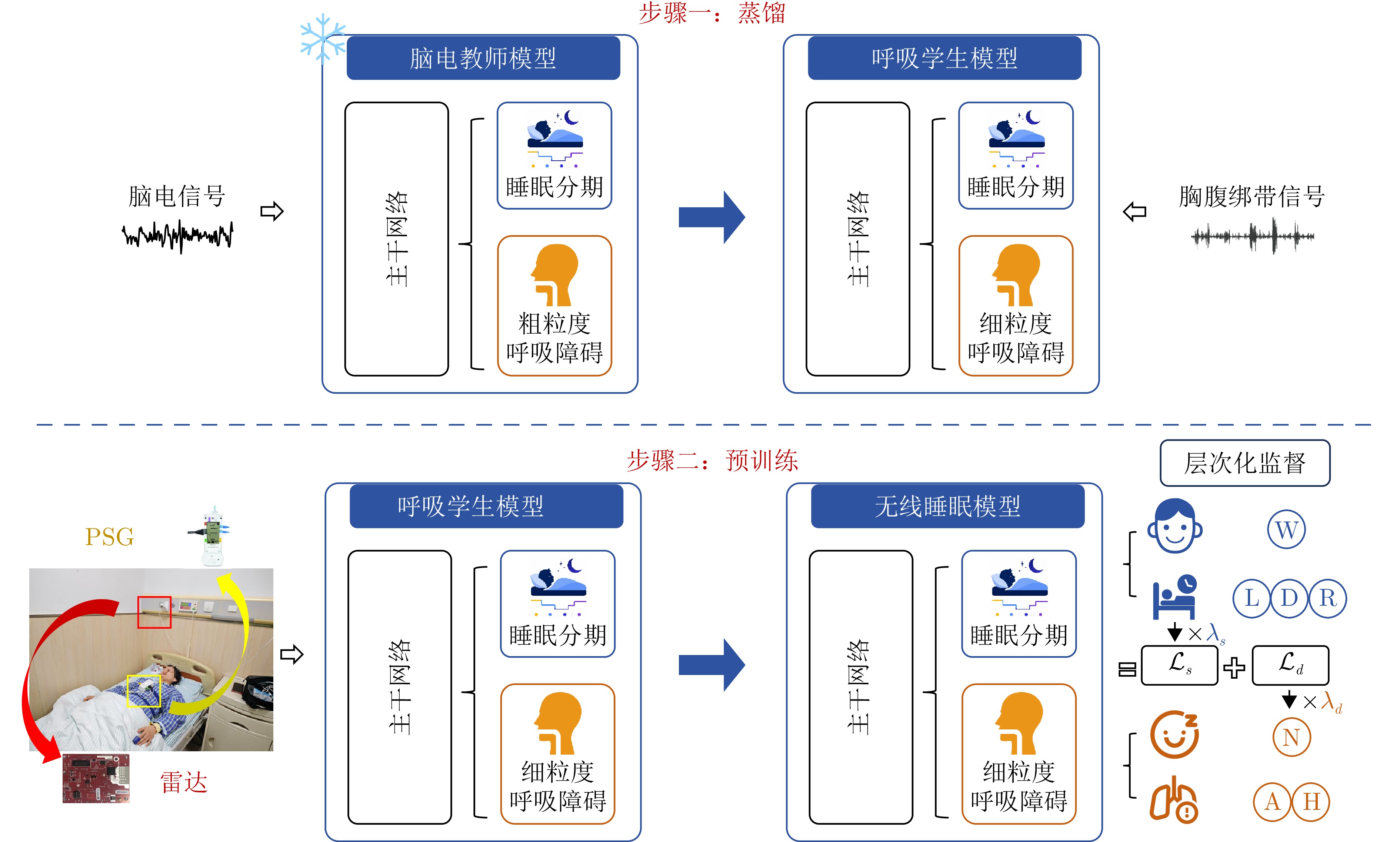
- Figure 1. An EEG-supervised progressive framework for contactless sleep monitoring
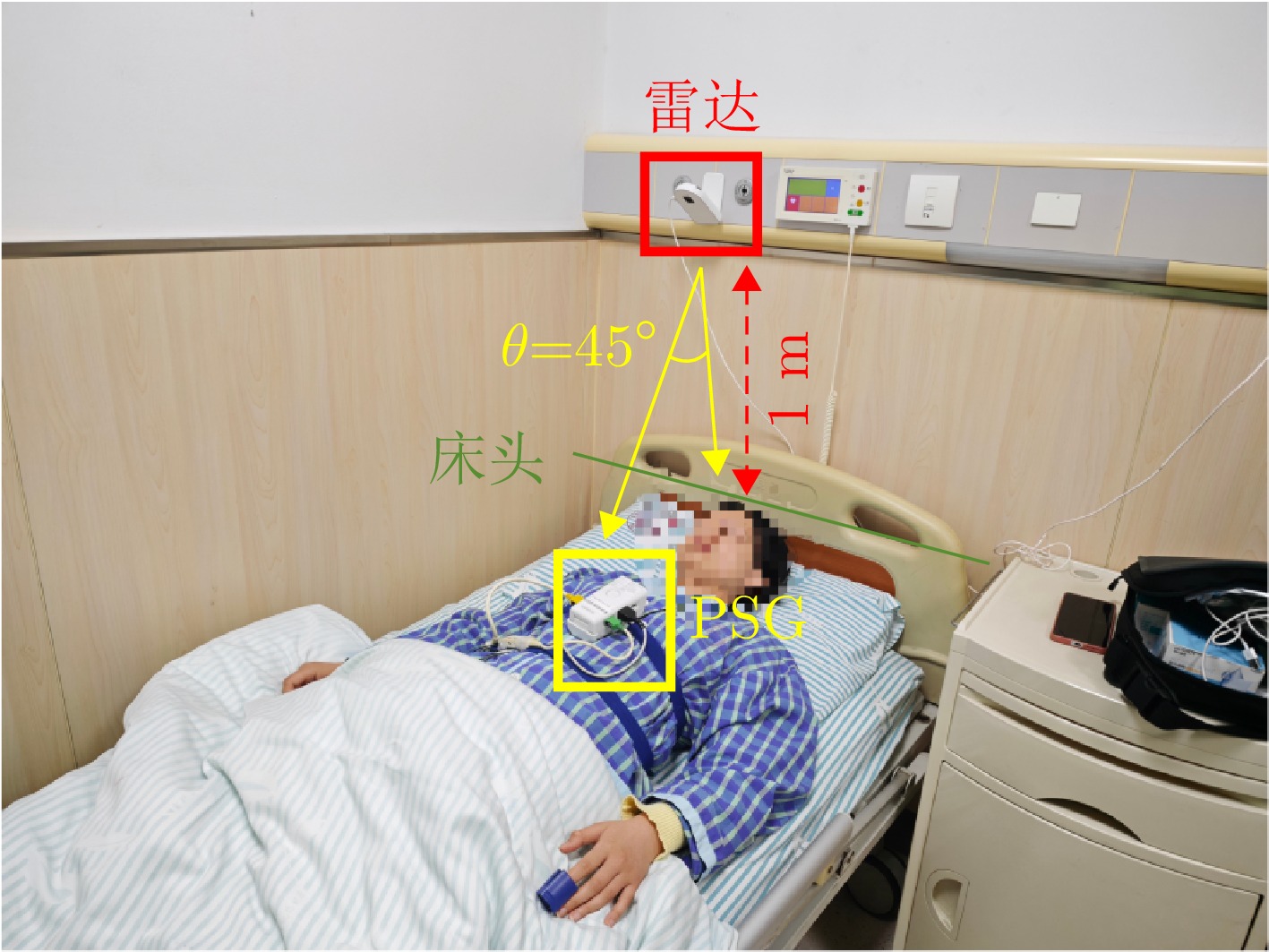
- Figure 2. Contactless sleep monitoring data acquisition scenarios
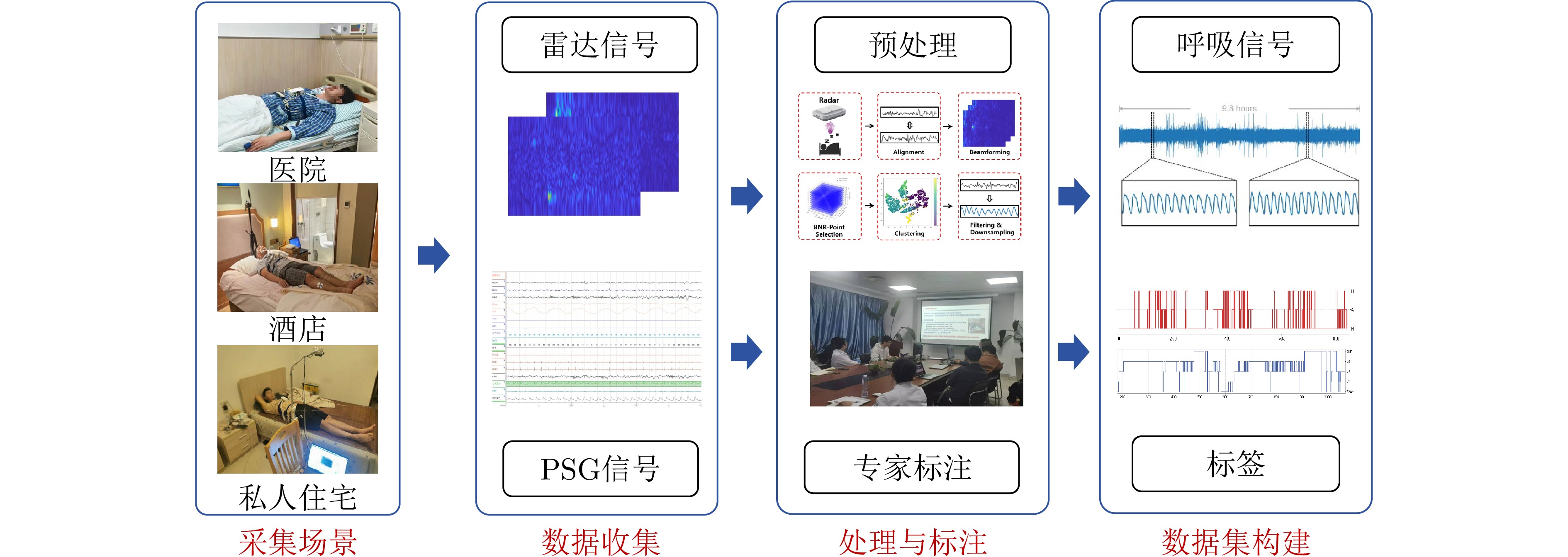
- Figure 3. Dataset construction workflow
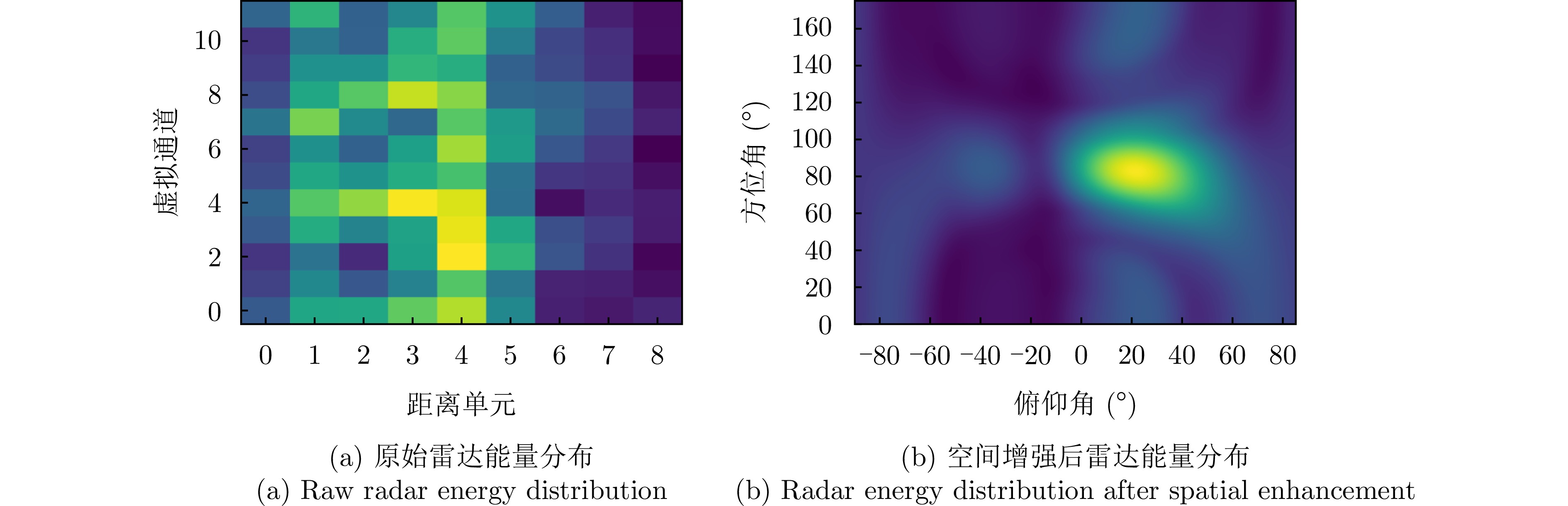
- Figure 4. Comparison of radar energy distributions before and after spatial enhancement
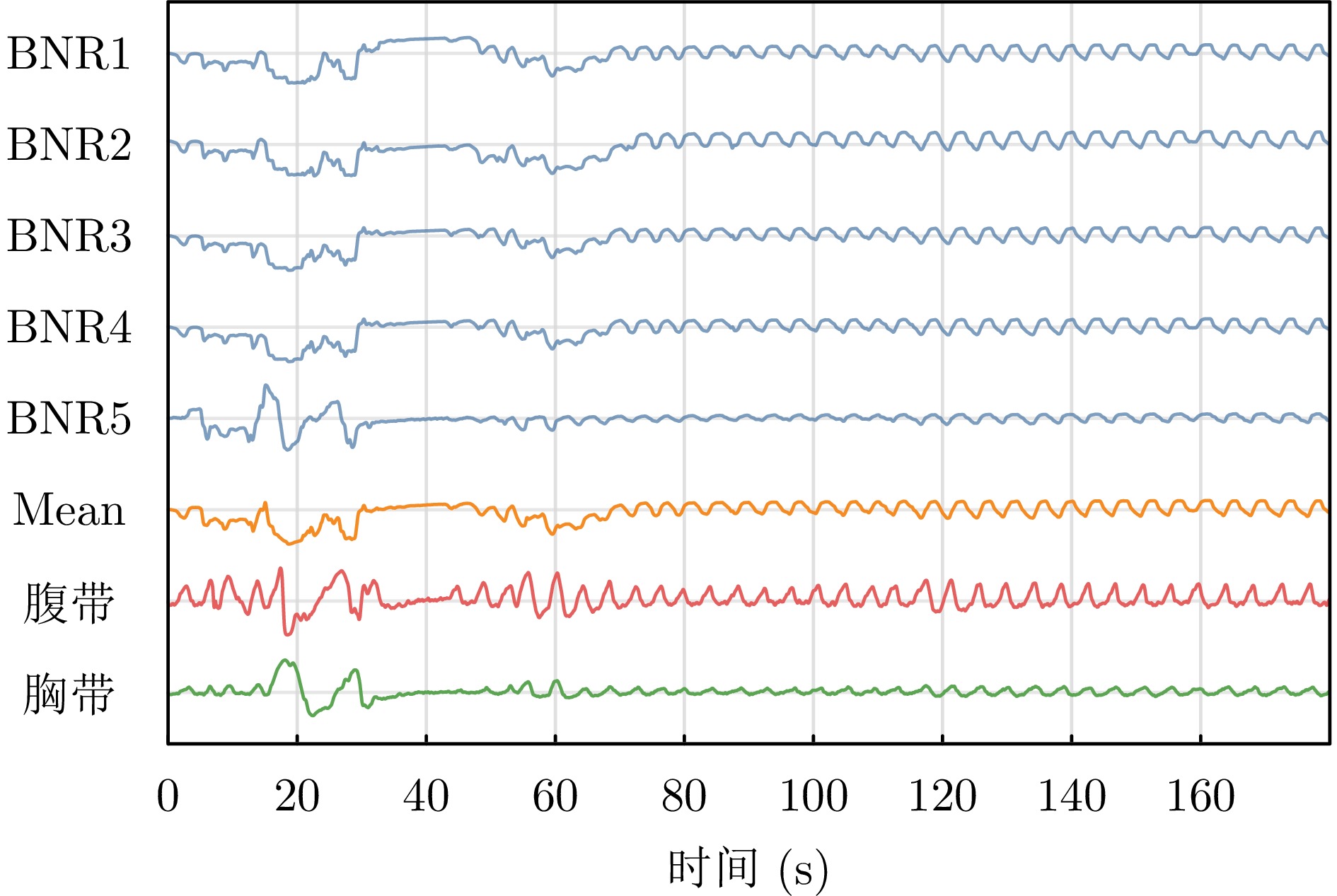
- Figure 5. Comparison of radar respiratory signals estimated from BNR and reference respiratory signals from thoracoabdominal belts
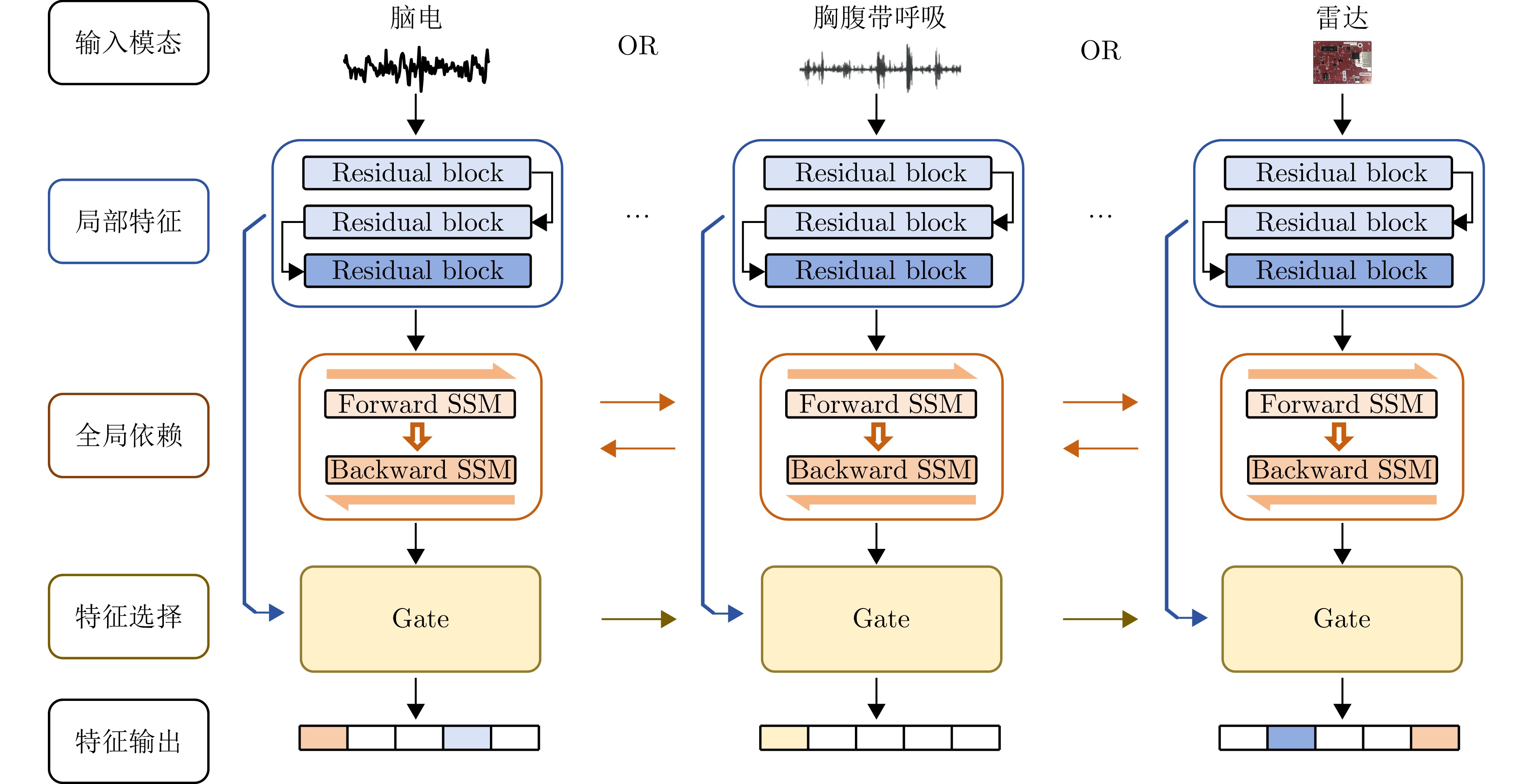
- Figure 6. Backbone framework for contactless sleep monitoring
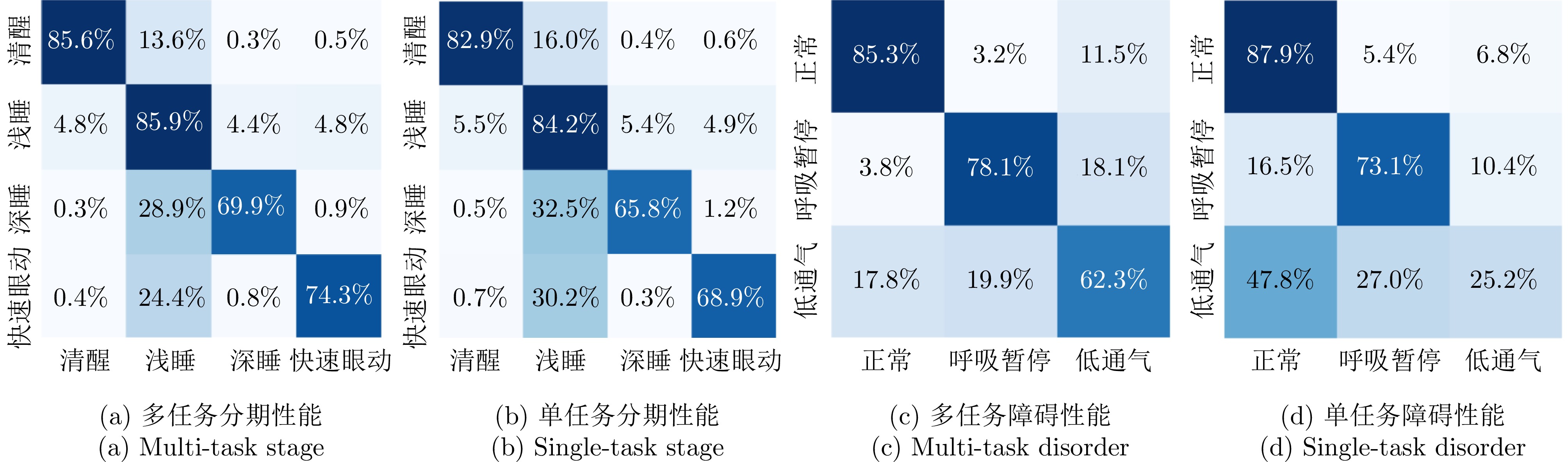
- Figure 7. Comparison of confusion matrices between single-task and multi-task learning
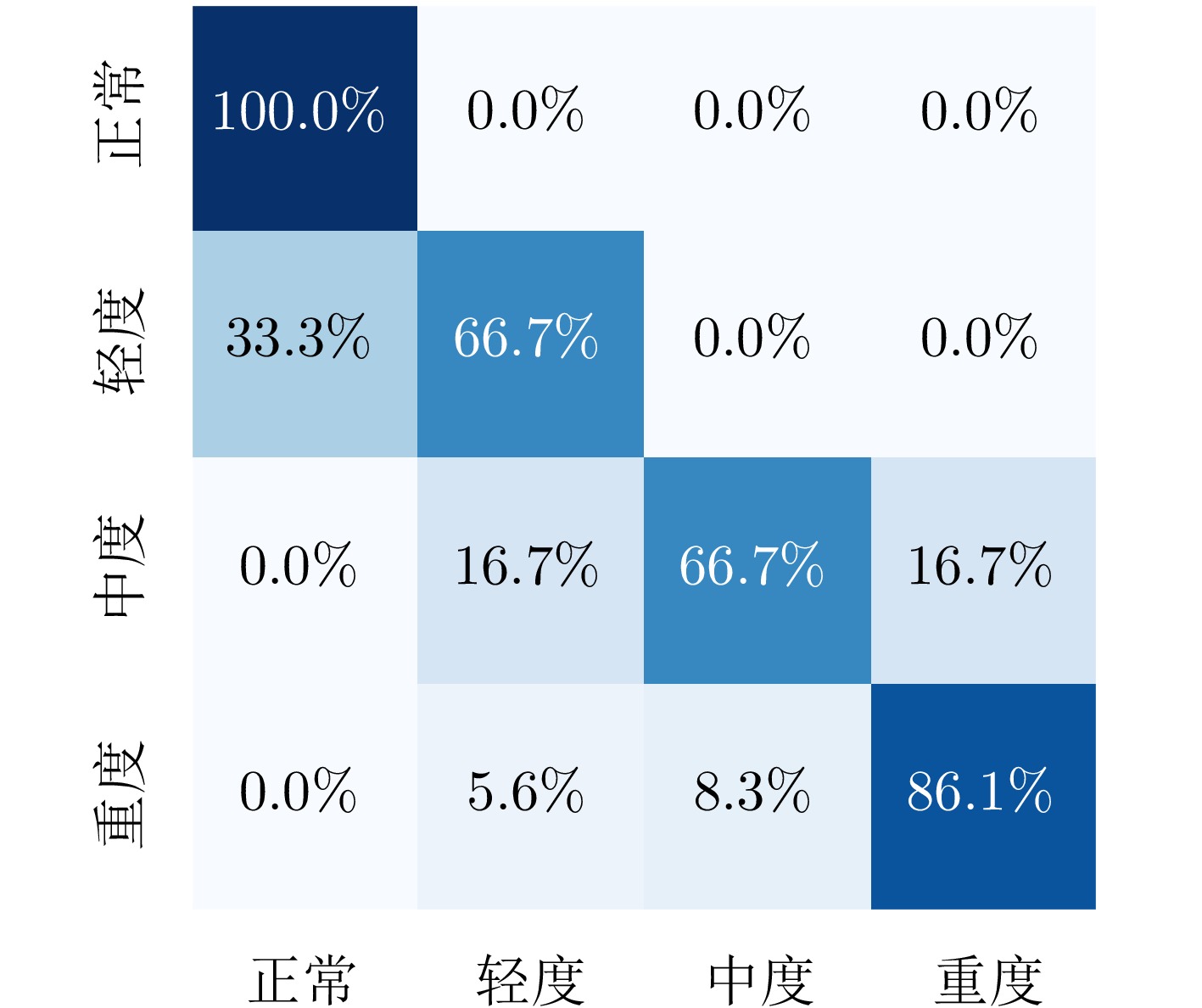
- Figure 8. Classification results of sleep-disordered breathing severity based on AHI
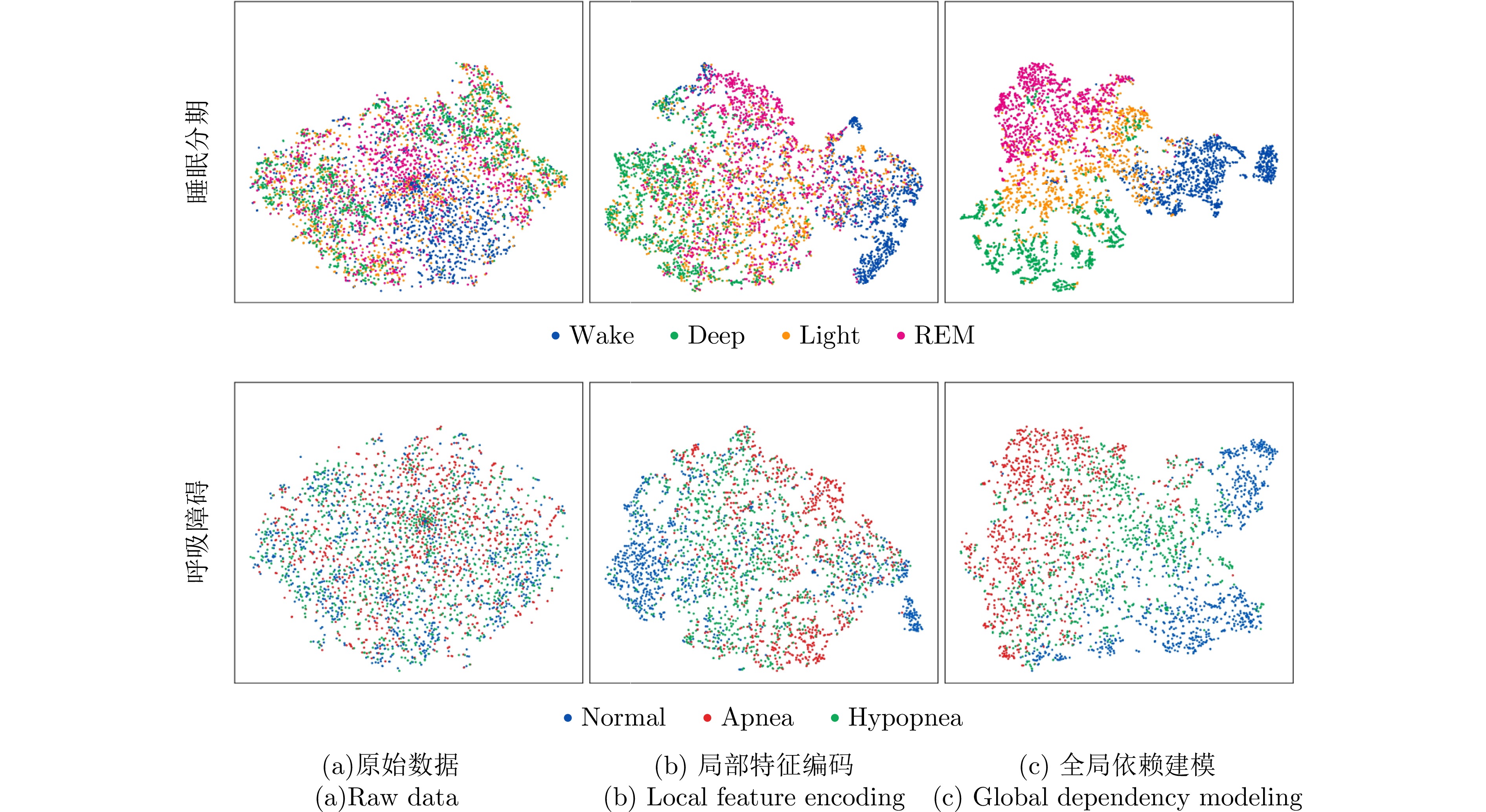
- Figure 9. Feature distribution visualization at different network stages
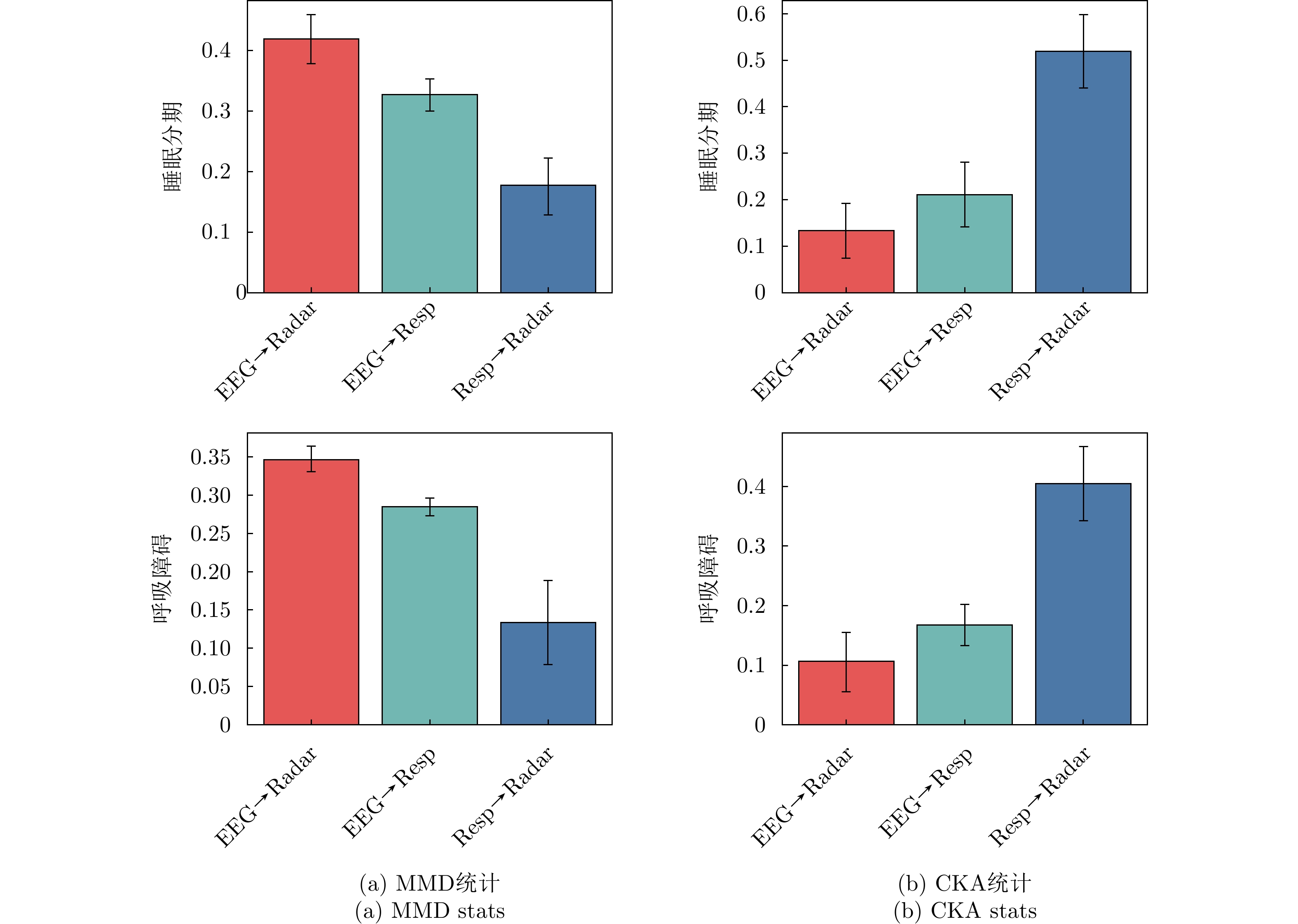
- Figure 10. Trends of feature distribution discrepancy and representation similarity across different transfer stages