
 Submit Manuscript
 Peer Review
 Editor Work
- Home
- Articles & Issues
-
Data
- Dataset of Radar Detecting Sea
- SAR Dataset
- SARGroundObjectsTypes
- SARMV3D
- AIRSAT Constellation SAR Land Cover Classification Dataset
- 3DRIED
- UWB-HA4D
- LLS-LFMCWR
- FAIR-CSAR
- MSAR
- SDD-SAR
- FUSAR
- SpaceborneSAR3Dimaging
- Sea-land Segmentation
- SAR Multi-domain Ship Detection Dataset
- SAR-Airport
- Hilly and mountainous farmland time-series SAR and ground quadrat dataset
- SAR images for interference detection and suppression
- HP-SAR Evaluation & Analytical Dataset
- GDHuiYan-ATRNet
- Multi-System Maritime Low Observable Target Dataset
- DatasetinthePaper
- DatasetintheCompetition
- Report
- Course
- About
- Publish
- Editorial Board
- Chinese

Article Navigation >
Journal of Radars
>
2026
> Online First
| Citation: | LIU Zipeng, CAI Jinhao, HU Teng, et al. Extraction of lunar wrinkle ridges structure based on multimodal semantic segmentation[J]. Journal of Radars, in press. doi: 10.12000/JR25279

|
Extraction of Lunar Wrinkle Ridges Structure Based on Multimodal Semantic Segmentation
DOI: 10.12000/JR25279 CSTR: 32380.14.JR25279
More Information-
Abstract
Lunar wrinkle ridges are important linear structures that are widely distributed in the mare regions on the lunar surface and are of great importance for studying the evolution of the lunar stress field and the history of volcanic activities. Traditional lunar Wrinkle ridge recognition and cataloging mainly rely on manual interpretation, which is inefficient and subjective. In this paper, an automatic lunar wrinkle ridge extraction method based on multimodal semantic segmentation is proposed. By constructing a high-quality lunar wrinkle ridge remote sensing image annotation dataset and introducing synthetic aperture radar data, a DeepLabv3+-based multimodal semantic segmentation network WR-Net is constructed through iterative training. A dynamic fusion module and an attention mechanism were introduced into WR-Net, which effectively optimized the feature extraction and fusion process of multimodal images and markedly improved the robustness and accuracy of the model. On the multimodal lunar wrinkle ridge test set, WR-Net achieved excellent performance (Precision = 95.516%, Recall = 89.963%, F1-Score = 92.657%, and MIoU = 92.944%). Furthermore, we used WR-Net to automatically identify and extract the lunar wrinkle ridges from the 70° south latitude to the 70° north latitude of the moon and cataloged and statistically analyzed the results. The proposed method is suitable for the recognition of lunar wrinkle ridges and provides an effective paradigm for the automatic extraction of similar linear structures on the moon and other planetary bodies. -

-
References
[1] BINDER A B. Post-imbrian global lunar tectonism: Evidence for an initially totally molten Moon[J]. The Moon and the Planets, 1982, 26(2): 117–133. doi: 10.1007/BF00929277.[2] LU Tianqi, ZHU Kai, CHEN Shengbo, et al. The 1:2,500,000-scale global tectonic map of the Moon[J]. Science Bulletin, 2022, 67(19): 1962–1966. doi: 10.1016/j.scib.2022.08.017.[3] WATTERS T R. Wrinkle ridge assemblages on the terrestrial planets[J]. Journal of Geophysical Research: Solid Earth, 1988, 93(B9): 10236–10254. doi: 10.1029/JB093iB09p10236.[4] SOLOMON S C and HEAD J W. Vertical movement in mare basins: Relation to mare emplacement, basin tectonics, and lunar thermal history[J]. Journal of Geophysical Research: Solid Earth, 1979, 84(B4): 1667–1682. doi: 10.1029/JB084iB04p01667.[5] YUE Zongyu, LI Wei, DI Kaichang, et al. Global mapping and analysis of lunar wrinkle ridges[J]. Journal of Geophysical Research: Planets, 2015, 120(5): 978–994. doi: 10.1002/2014JE004777.[6] SHARPTON V L and HEAD III J W. Stratigraphy and structural evolution of southern Mare Serenitatis: A reinterpretation based on Apollo Lunar Sounder Experiment data[J]. Journal of Geophysical Research: Solid Earth, 1982, 87(B13): 10983–10998. doi: 10.1029/JB087iB13p10983.[7] ANDREWS-HANNA J C, BESSERER J, HEAD III J W, et al. Structure and evolution of the lunar Procellarum region as revealed by GRAIL gravity data[J]. Nature, 2014, 514(7520): 68–71. doi: 10.1038/nature13697.[8] RAVAT D, PURUCKER M E, and OLSEN N. Lunar magnetic field models from lunar prospector and SELENE/Kaguya along-track magnetic field gradients[J]. Journal of Geophysical Research: Planets, 2020, 125(7): e2019JE006187. doi: 10.1029/2019JE006187.[9] WATTERS T R. Lunar wrinkle ridges and the evolution of the nearside lithosphere[J]. Journal of Geophysical Research: Planets, 2022, 127(3): e2021JE007058. doi: 10.1029/2021JE007058.[10] SPUDIS P D, MCGOVERN P J, and KIEFER W S. Large shield volcanoes on the Moon[J]. Journal of Geophysical Research: Planets, 2013, 118(5): 1063–1081. doi: 10.1002/jgre.20059.[11] MONTÉSI L G J and ZUBER M T. Clues to the lithospheric structure of Mars from wrinkle ridge sets and localization instability[J]. Journal of Geophysical Research: Planets, 2003, 108(E6): 5048. doi: 10.1029/2002JE001974.[12] WATTERS T R and JOHNSON C L. Lunar Tectonics[M]. WATTERS T R and SCHULTZ R A. Planetary Tectonics. Cambridge: Cambridge University Press, 2010: 121–182. doi: 10.1017/CBO9780511691645.005.[13] THOMPSON T J, ROBINSON M S, WATTERS T R, et al. Global lunar wrinkle ridge identification and analysis[C]. The 48th Lunar and Planetary Science Conference, The Woodlands, USA, 2017: 2665.[14] VERMA N, BHATT M, DANGI M, et al. Exploring water-ice deposits in lunar polar craters with Chandrayaan-2 DFSAR data[J]. Icarus, 2025, 432: 116492. doi: 10.1016/j.icarus.2025.116492.[15] NOZETTE S, SPUDIS P, BUSSEY B, et al. The lunar reconnaissance orbiter miniature radio frequency (Mini-RF) technology demonstration[J]. Space Science Reviews, 2010, 150(1): 285–302. doi: 10.1007/s11214-009-9607-5.[16] ONO T, KUMAMOTO A, NAKAGAWA H, et al. Lunar radar sounder observations of subsurface layers under the nearside Maria of the moon[J]. Science, 2009, 323(5916): 909–912. doi: 10.1126/science.1165988.[17] CAHILL J T S, THOMSON B J, PATTERSON G W, et al. The Miniature Radio Frequency instrument’s (Mini-RF) global observations of Earth’s Moon[J]. Icarus, 2014, 243: 173–190. doi: 10.1016/j.icarus.2014.07.018.[18] TARIQ A, YAN Jianguo, DENG Qingyun, et al. Analysis and mapping of Lunar Wrinkle Ridges (LWRs) using automated LWRs detection process with LROC-WAC and LOLA data[J]. Frontiers in Astronomy and Space Sciences, 2023, 10: 1037395. doi: 10.3389/fspas.2023.1037395.[19] ROBBINS S J, ANTONENKO I, KIRCHOFF M R, et al. The variability of crater identification among expert and community crater analysts[J]. Icarus, 2014, 234: 109–131. doi: 10.1016/j.icarus.2014.02.022.[20] ZHANG Sheng, LIU Jianzhong, MICHAEL G, et al. Detecting lunar linear structures based on multimodal semantic segmentation: The case of sinuous rilles[J]. Remote Sensing, 2024, 16(9): 1602. doi: 10.3390/rs16091602.[21] HUANG Liwei, JIANG Bitao, LV Shouye, et al. Deep-learning-based semantic segmentation of remote sensing images: A survey[J]. IEEE Journal of Selected Topics in Applied Earth Observations and Remote Sensing, 2024, 17: 8370–8396. doi: 10.1109/JSTARS.2023.3335891.[22] HU Yifan, XIAO Jun, LIU Lupeng, et al. Detection of small impact craters via semantic segmenting lunar point clouds using deep learning network[J]. Remote Sensing, 2021, 13(9): 1826. doi: 10.3390/rs13091826.[23] WAGNER R V, SPEYERER E J, ROBINSON M S, et al. New mosaicked data products from the LROC team[C]. The 46th Lunar and Planetary Science Conference, The Woodlands, USA, 2015: 1473.[24] BARKER M K, MAZARICO E, NEUMANN G A, et al. A new lunar digital elevation model from the Lunar Orbiter Laser Altimeter and SELENE Terrain Camera[J]. Icarus, 2016, 273: 346–355. doi: 10.1016/j.icarus.2015.07.039.[25] XU Zihan, ZHAO Fei, LU Pingping, et al. A robust digital elevation model-based registration method for Mini-RF/Mini-SAR images[J]. Remote Sensing, 2025, 17(4): 613. doi: 10.3390/rs17040613.[26] ZHAO Fei, LU Pingping, MENG Tingyu, et al. Selection of landing sites for the Chang’E-7 mission using multi-source remote sensing data[J]. Remote Sensing, 2025, 17(7): 1121. doi: 10.3390/rs17071121.[27] RANEY R K, CAHILL J T S, PATTERSON G W, et al. The m-chi decomposition of hybrid dual-polarimetric radar data with application to lunar craters[J]. Journal of Geophysical Research: Planets, 2012, 117(E12): E00H21. doi: 10.1029/2011JE003986.[28] PIZER S M, AMBURN E P, AUSTIN J D, et al. Adaptive histogram equalization and its variations[J]. Computer Vision, Graphics, and Image Processing, 1987, 39(3): 355–368. doi: 10.1016/S0734-189X(87)80186-X.[29] RAMPONI G. A cubic unsharp masking technique for contrast enhancement[J]. Signal Processing, 1998, 67(2): 211–222. doi: 10.1016/S0165-1684(98)00038-3.[30] CHEN L C, PAPANDREOU G, KOKKINOS I, et al. DeepLab: Semantic image segmentation with deep convolutional nets, atrous convolution, and fully connected CRFs[J]. IEEE Transactions on Pattern Analysis and Machine Intelligence, 2018, 40(4): 834–848. doi: 10.1109/TPAMI.2017.2699184.[31] HE Kaiming, ZHANG Xiangyu, REN Shaoqing, et al. Deep residual learning for image recognition[C]. 2016 IEEE Conference on Computer Vision and Pattern Recognition, Las Vegas, USA, 2016: 770–778. doi: 10.1109/CVPR.2016.90.[32] ZHAO Hengshuang, SHI Jianping, QI Xiaojuan, et al. Pyramid scene parsing network[C]. 2017 IEEE Conference on Computer Vision and Pattern Recognition, Honolulu, USA, 2017: 6230–6239. doi: 10.1109/CVPR.2017.660.[33] RONNEBERGER O, FISCHER P, and BROX T. U-Net: Convolutional Networks for Biomedical Image Segmentation[M]. NAVAB N, HORNEGGER J, WELLS W M, et al. Medical Image Computing and Computer-Assisted Intervention – MICCAI 2015. Cham: Springer, 2015: 234–241. doi: 10.1007/978-3-319-24574-4_28.[34] WOO S, PARK J, LEE J Y, et al. CBAM: Convolutional Block Attention Module[M]. FERRARI V, HEBERT M, SMINCHISESCU C, et al. Computer Vision – ECCV 2018. Cham: Springer, 2018: 3–19. doi: 10.1007/978-3-030-01234-2_1.[35] ZHAO Zixiang, BAI Haowen, ZHANG Jiangshe, et al. CDDFuse: Correlation-driven dual-branch feature decomposition for multi-modality image fusion[C]. 2023 IEEE/CVF Conference on Computer Vision and Pattern Recognition, Vancouver, Canada, 2023: 5906–5916. doi: 10.1109/CVPR52729.2023.00572.[36] SZEGEDY C, LIU Wei, JIA Yangqing, et al. Going deeper with convolutions[C]. 2015 IEEE Conference on Computer Vision and Pattern Recognition, Boston, USA, 2015: 1–9. doi: 10.1109/CVPR.2015.7298594.[37] EVERINGHAM M, VAN GOOL L, WILLIAMS C K I, et al. The PASCAL Visual Object Classes (VOC) challenge[J]. International Journal of Computer Vision, 2010, 88(2): 303–338. doi: 10.1007/s11263-009-0275-4.[38] POWERS D M W. Evaluation: From precision, recall and F-measure to ROC, informedness, markedness & correlation[J]. Journal of Machine Learning Technologies, 2011, 2(1): 2229–3981. doi: 10.9735/2229-3981.[39] LI Shutao, KANG Xudong, FANG Leyuan, et al. Pixel-level image fusion: A survey of the state of the art[J]. Information Fusion, 2017, 33: 100–112. doi: 10.1016/j.inffus.2016.05.004.[40] HIESINGER H, JAUMANN R, NEUKUM G, et al. Ages of mare basalts on the lunar nearside[J]. Journal of Geophysical Research: Planets, 2000, 105(E12): 29239–29275. doi: 10.1029/2000JE001244.[41] HIESINGER H, HEAD III J W, WOLF U, et al. Ages and stratigraphy of mare basalts in Oceanus Procellarum, Mare Nubium, Mare Cognitum, and Mare Insularum[J]. Journal of Geophysical Research: Planets, 2003, 108(E7): 5065. doi: 10.1029/2002JE001985.[42] YUE Zongyu, MICHAEL G G, DI Kaichang, et al. Global survey of lunar wrinkle ridge formation times[J]. Earth and Planetary Science Letters, 2017, 477: 14–20. doi: 10.1016/j.jpgl.2017.07.048.[43] 卢瑜. 月球雨海内部年轻皱脊研究[D]. [硕士论文]. 南京大学, 2019.LU Yu. Study on young wrinkle ridges inside Mare Imbrium[D]. [Master dissertation], Nanjing University, 2019.[44] HEAD III J W. Lunar volcanism in space and time[J]. Reviews of Geophysics, 1976, 14(2): 265–300. doi: 10.1029/RG014i002p00265.[45] HUAN Linxi, XUE Nan, ZHENG Xianwei, et al. Unmixing convolutional features for crisp edge detection[J]. IEEE Transactions on Pattern Analysis and Machine Intelligence, 2022, 44(10): 6602–6609. doi: 10.1109/TPAMI.2021.3084197.[46] ROBBINS S. A new global database of lunar impact craters >1–2 km: 1. Crater locations and sizes, comparisons with published databases, and global analysis[J]. Journal of Geophysical Research: Planets, 2019, 124(4): 871–892. doi: 10.1029/2018JE005592.[47] BILOTTI F and SUPPE J. The global distribution of wrinkle ridges on Venus[J]. Icarus, 1999, 139(1): 137–157. doi: 10.1006/icar.1999.6092.[48] WANG Chi, JIA Yingzhuo, XUE Changbin, et al. Scientific objectives and payload configuration of the Chang’E-7 mission[J]. National Science Review, 2024, 11(2): nwad329. doi: 10.1093/nsr/nwad329. -
Proportional views

- Publishing Ethics
- Journal Insights
- Abstracting & Indexing
- Peer Review Policies
- Guide for Authors
- Conference
- ISSN 2095-283X (Print)ISSN 2097-339X (Online)
- CN 10-1030/TN
- CODEN LXEUAO
About Journal
- Sponsor: China Radio Detection and Ranging Industry Association (CRIA)
- Phone: 010-58887062
- Email:radars@aircas.ac.cn
- Publisher: Leida Xuebao Bianjibu (Editorial office of the Journal of Radars)
Contacts Us

京ICP备20021838号-14
Supported by: Beijing Renhe Information Technology Co. Ltd

Export File
Citation
Format
Content
 DownLoad:
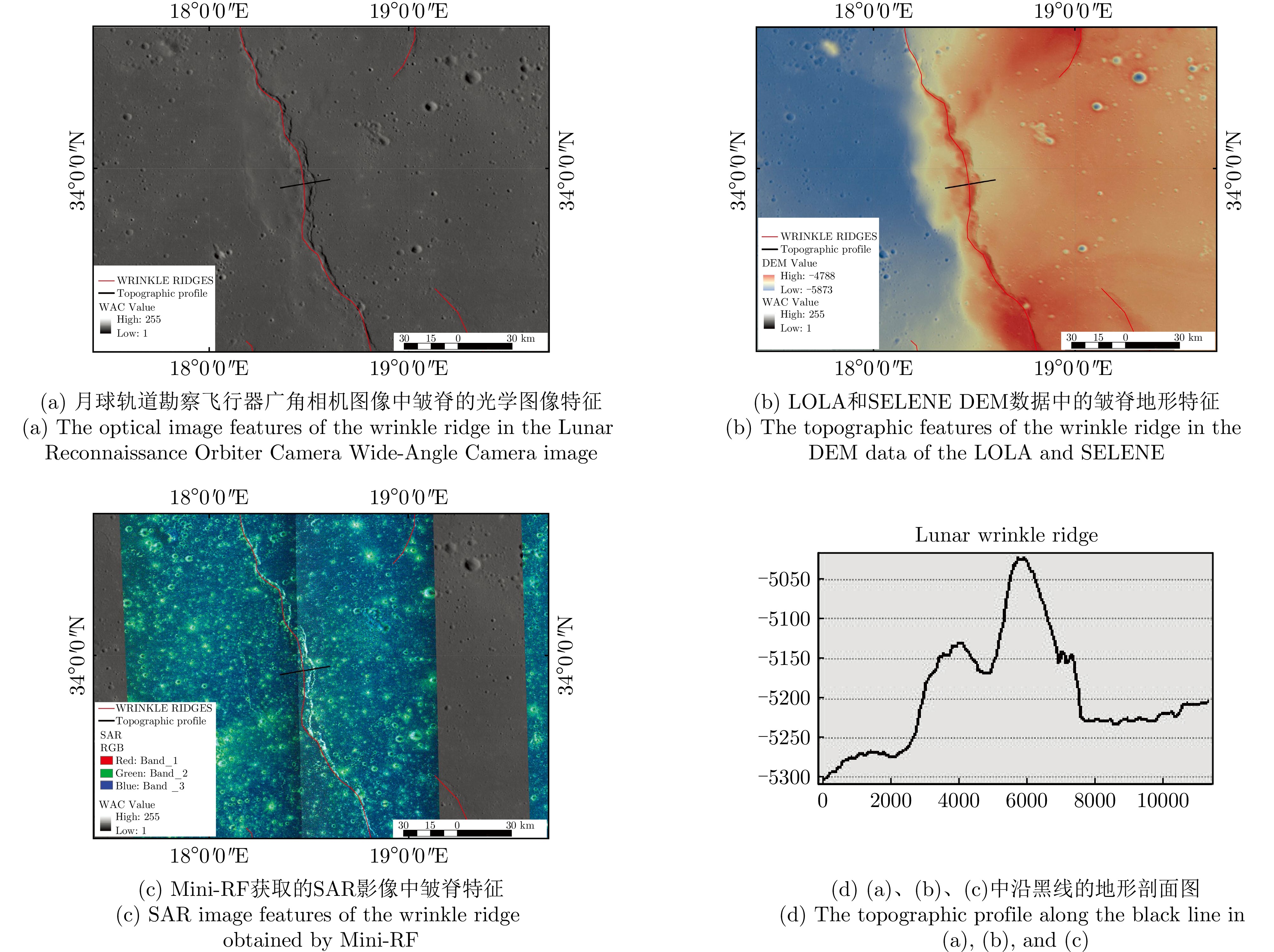
- Figure 1. Example of lunar wrinkle ridge
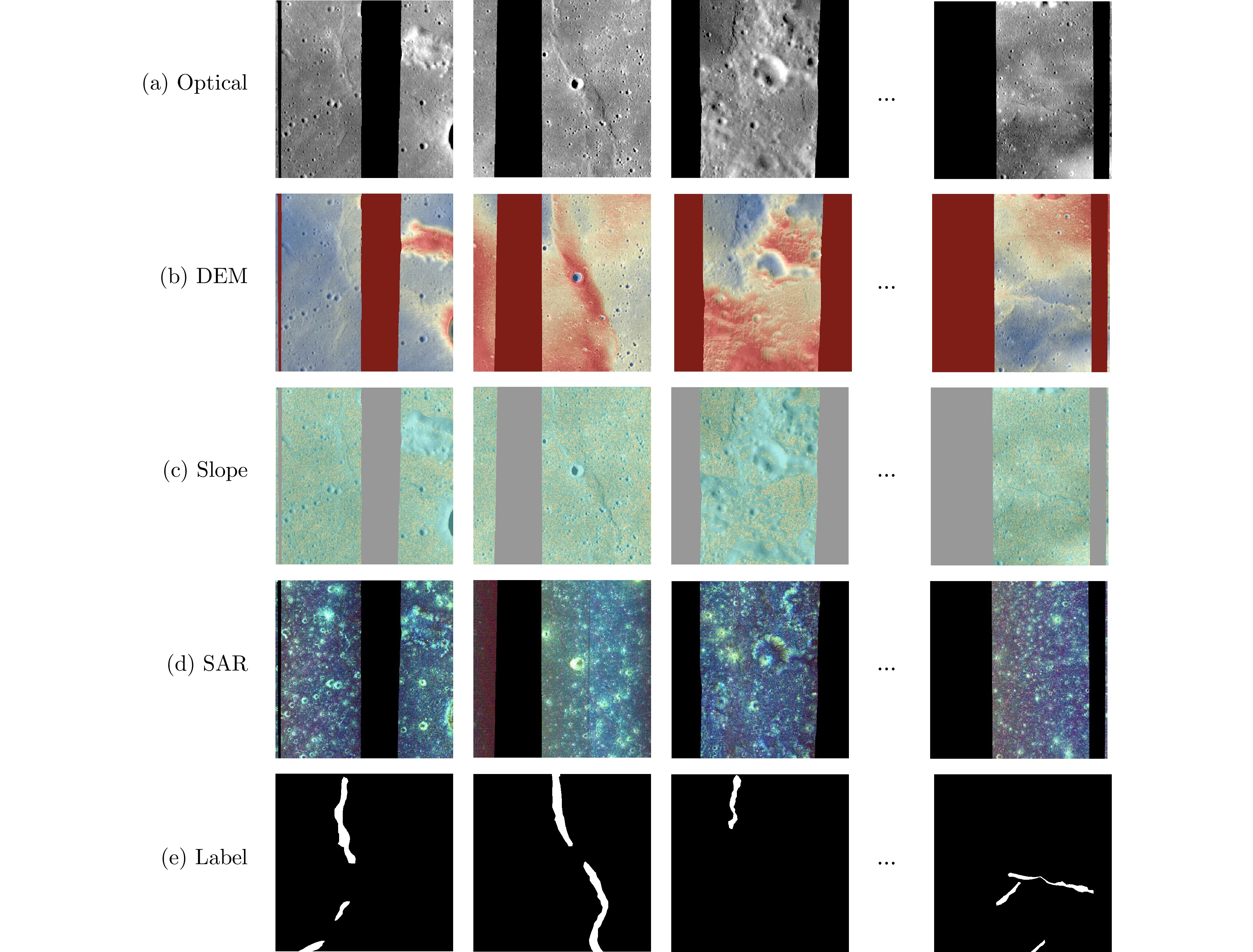
- Figure 2. Samples from multimodal dataset of wrinkle ridges
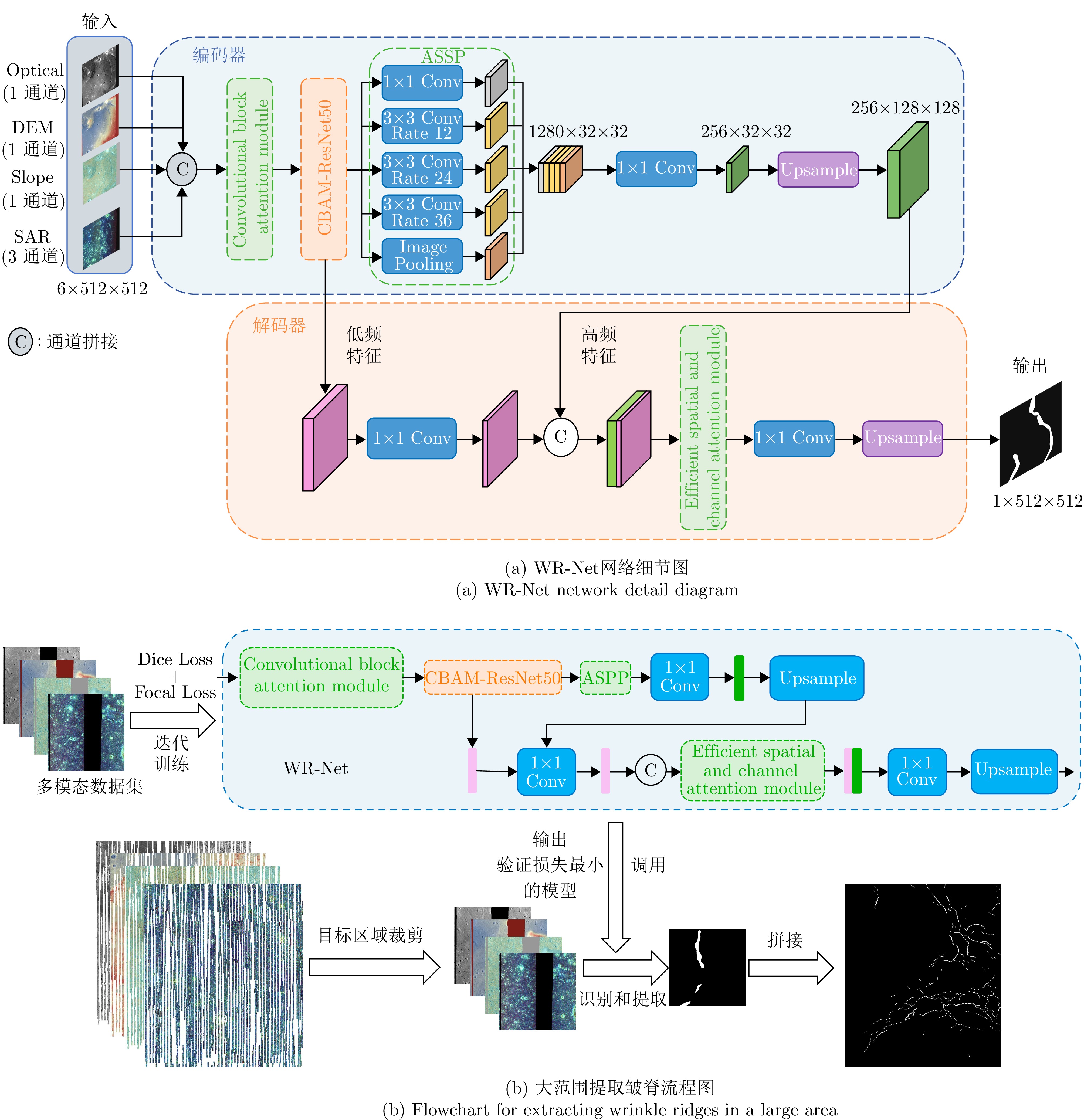
- Figure 3. Diagram of WR-Net
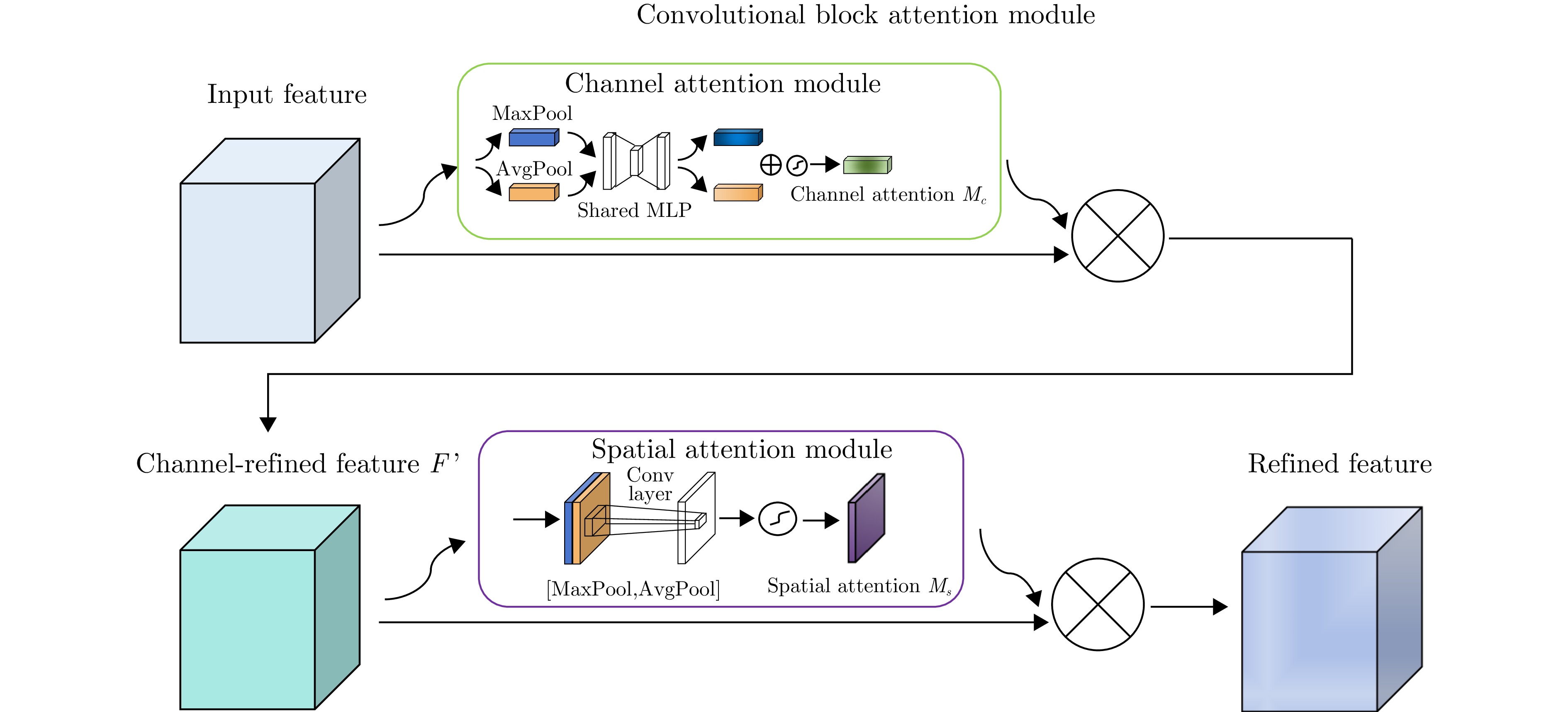
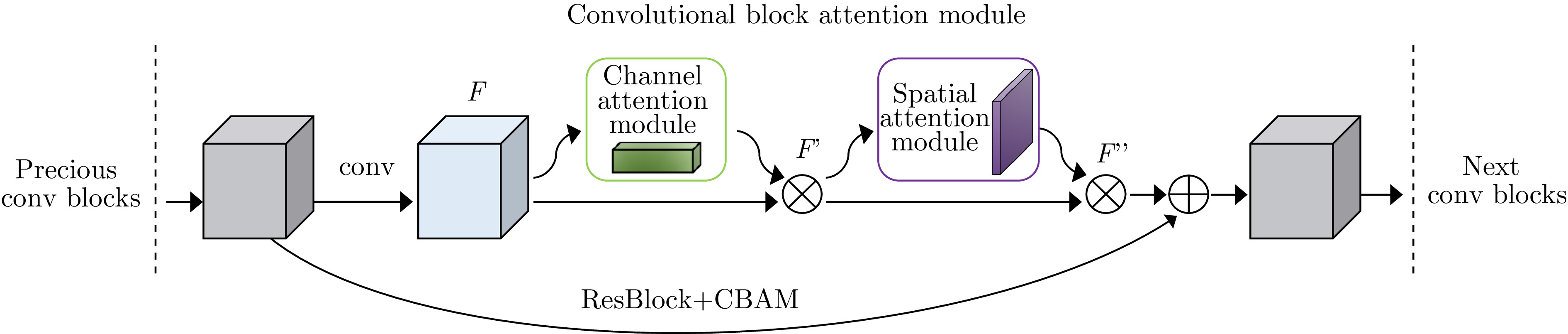
- Figure 4. Diagram of the CBAM module
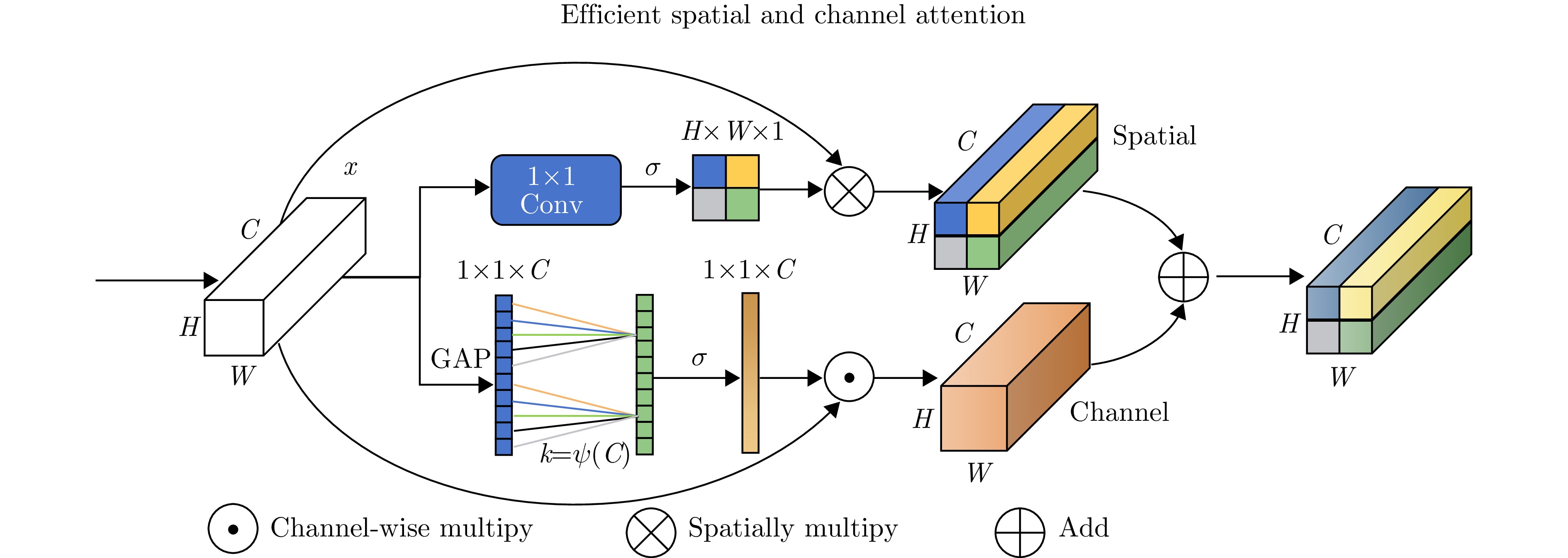
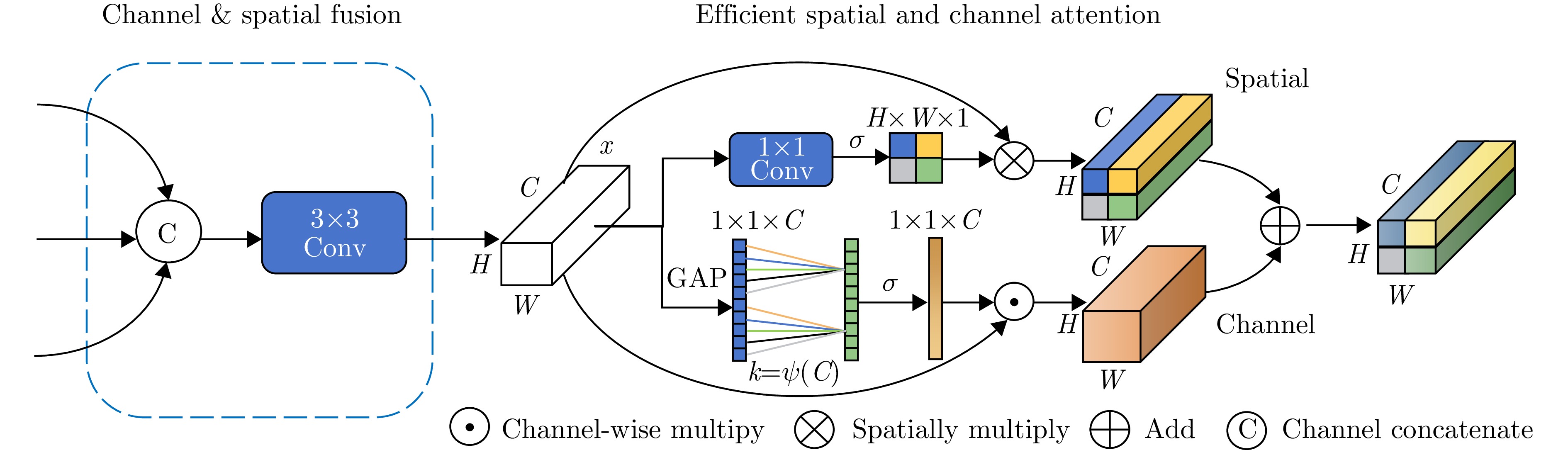
- Figure 5. Diagram of the ESCA module
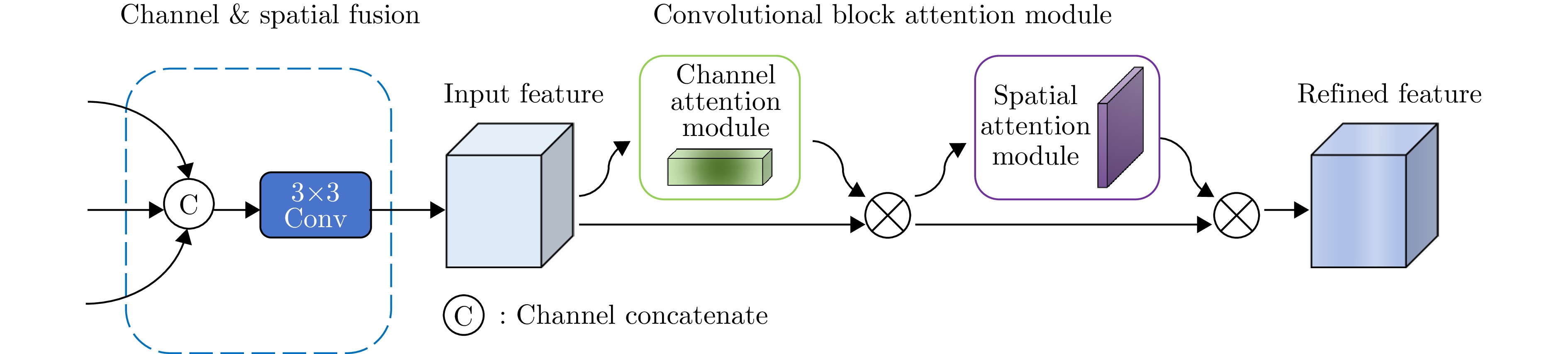
- Figure 6. Dynamic fusion module 1
- Figure 7. Dynamic fusion module 2
- Figure 8. CBAM is combined with the residual block of ResNet
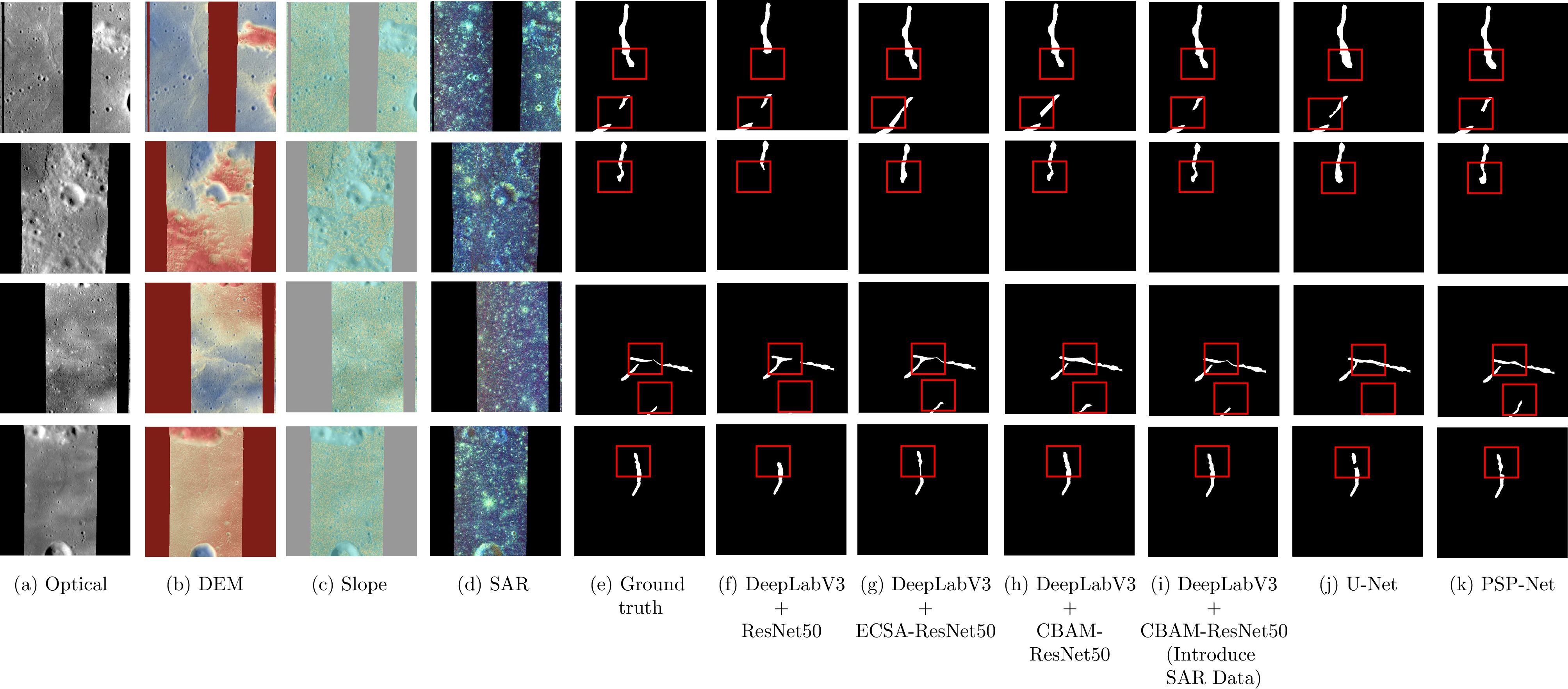
- Figure 9. Wrinkle ridges detection results of different networks
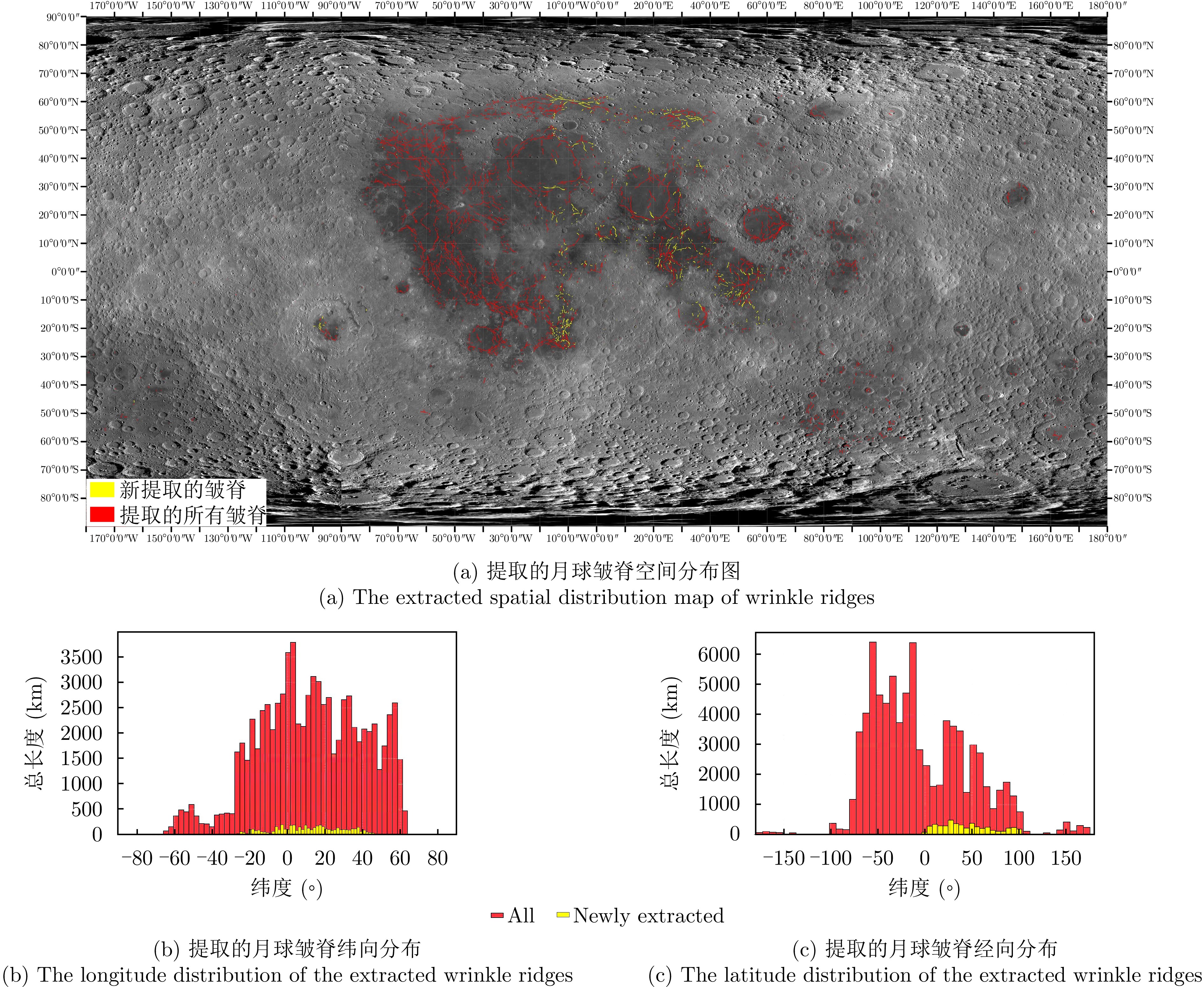
- Figure 10. Global distribution of extracted lunar wrinkle ridges
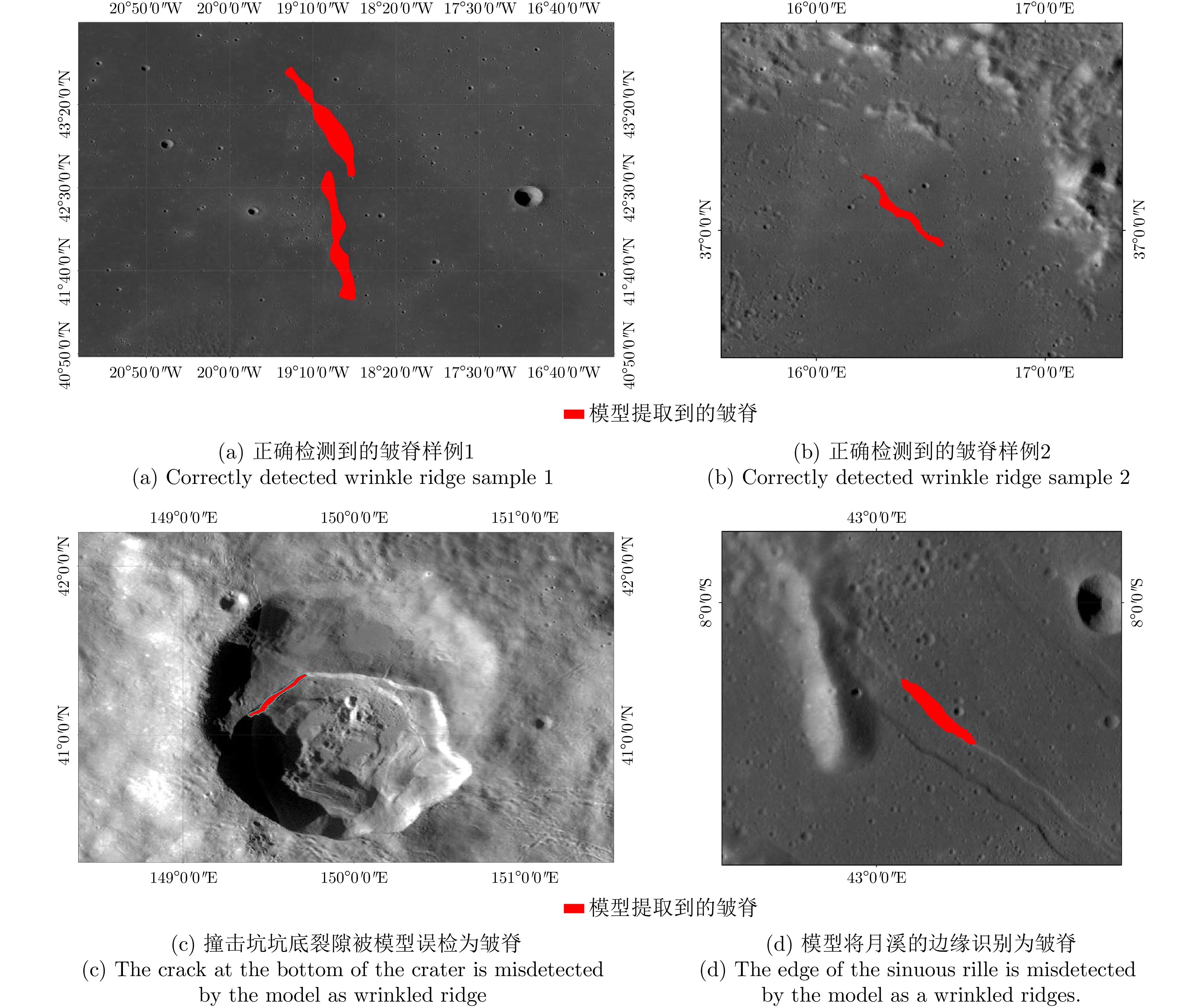
- Figure 11. The accurately detected wrinkled ridges examples and other linear constructions are misrecognized as wrinkled ridges examples
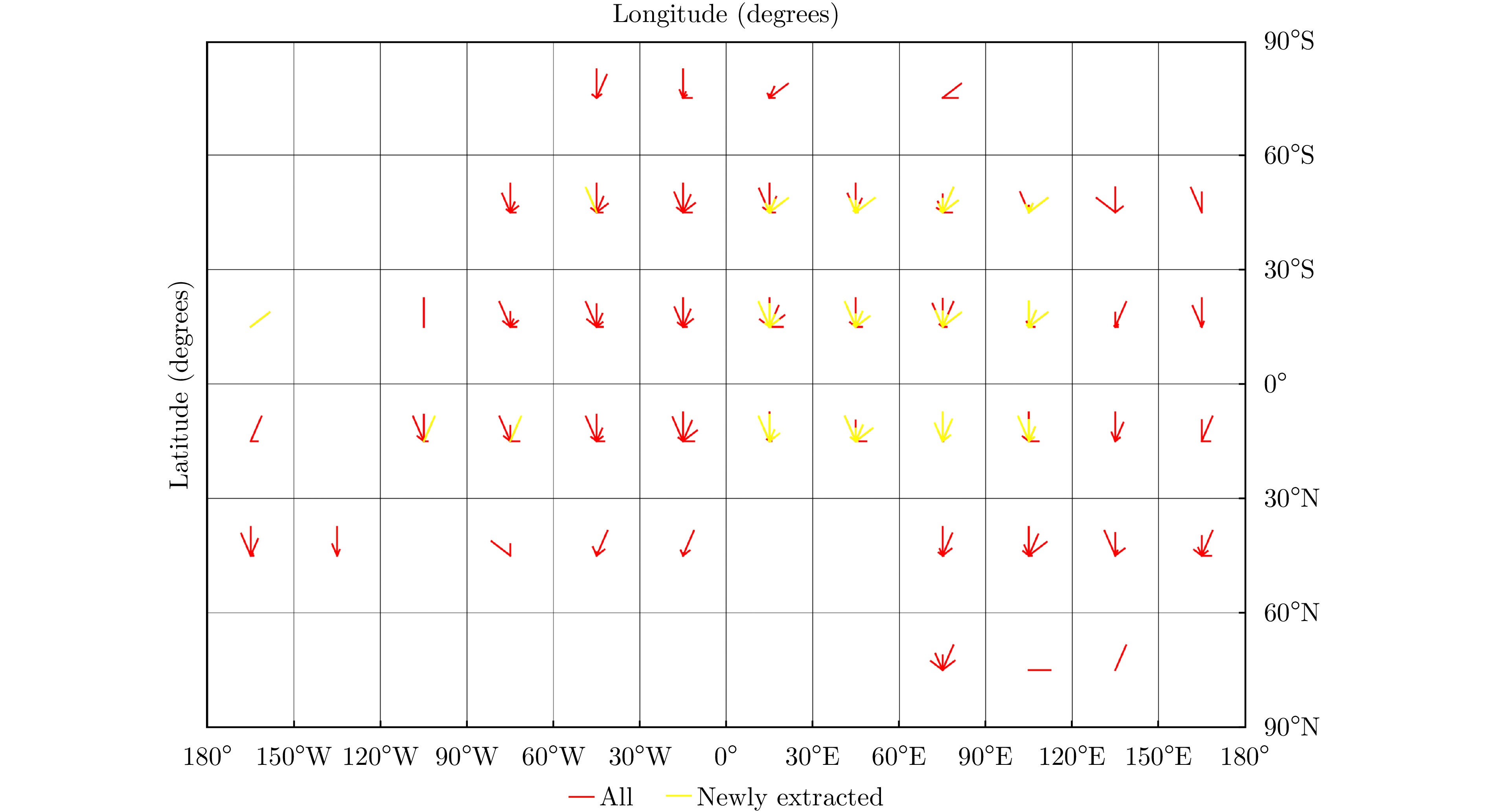
- Figure 12. Lunar wrinkle ridges trend distribution rose diagram
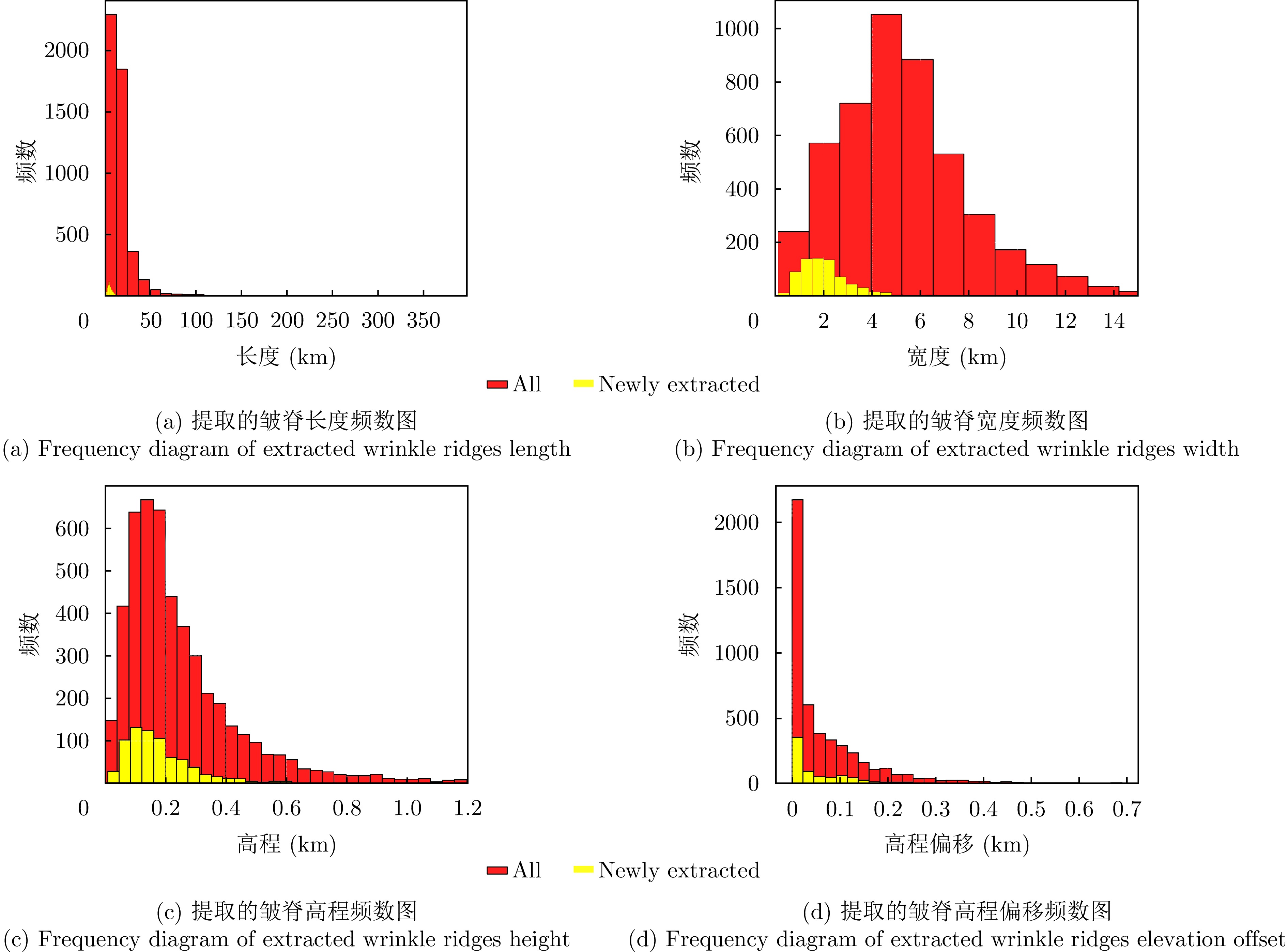
- Figure 13. The frequency distribution of the extracted lunar wrinkle ridges morphology parameters
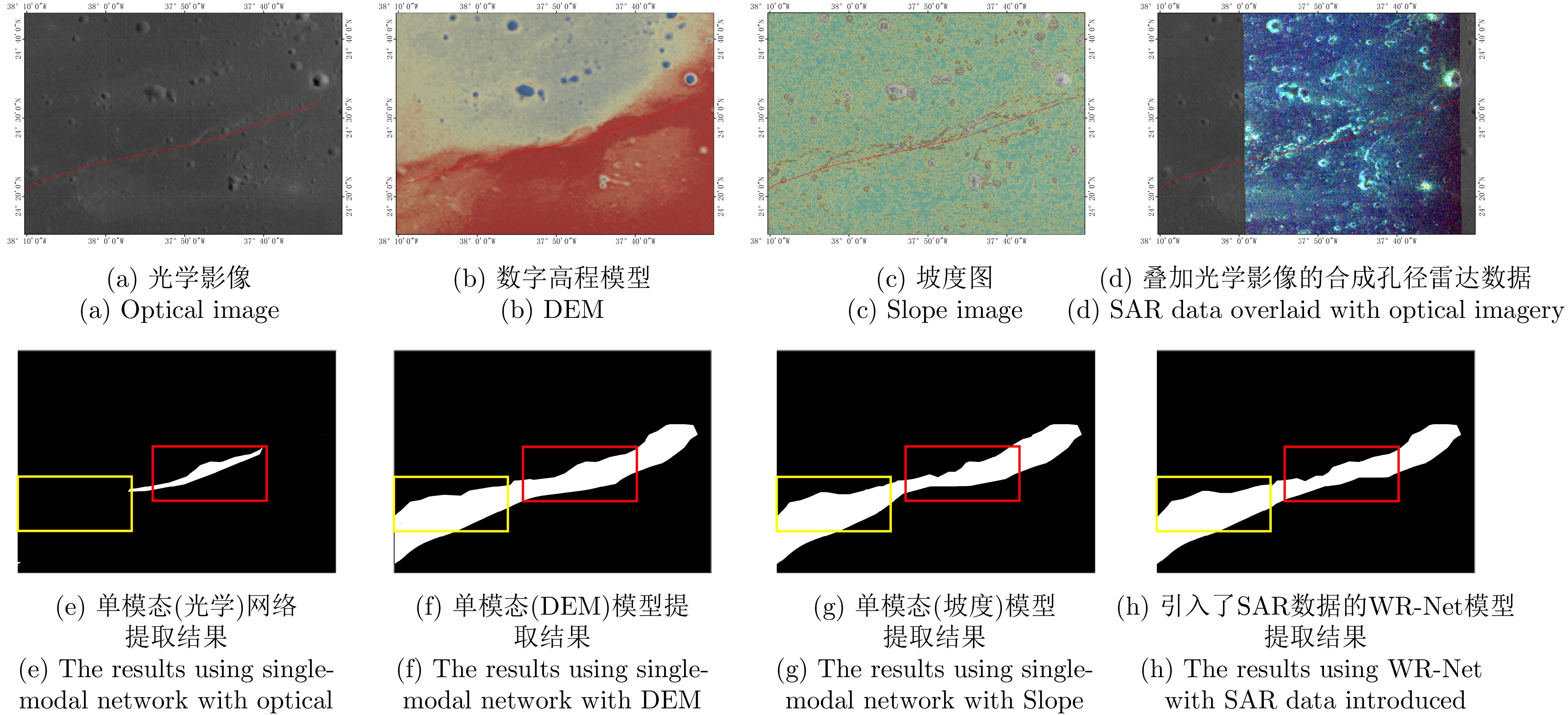
- Figure 14. Comparison chart of typical region extraction results
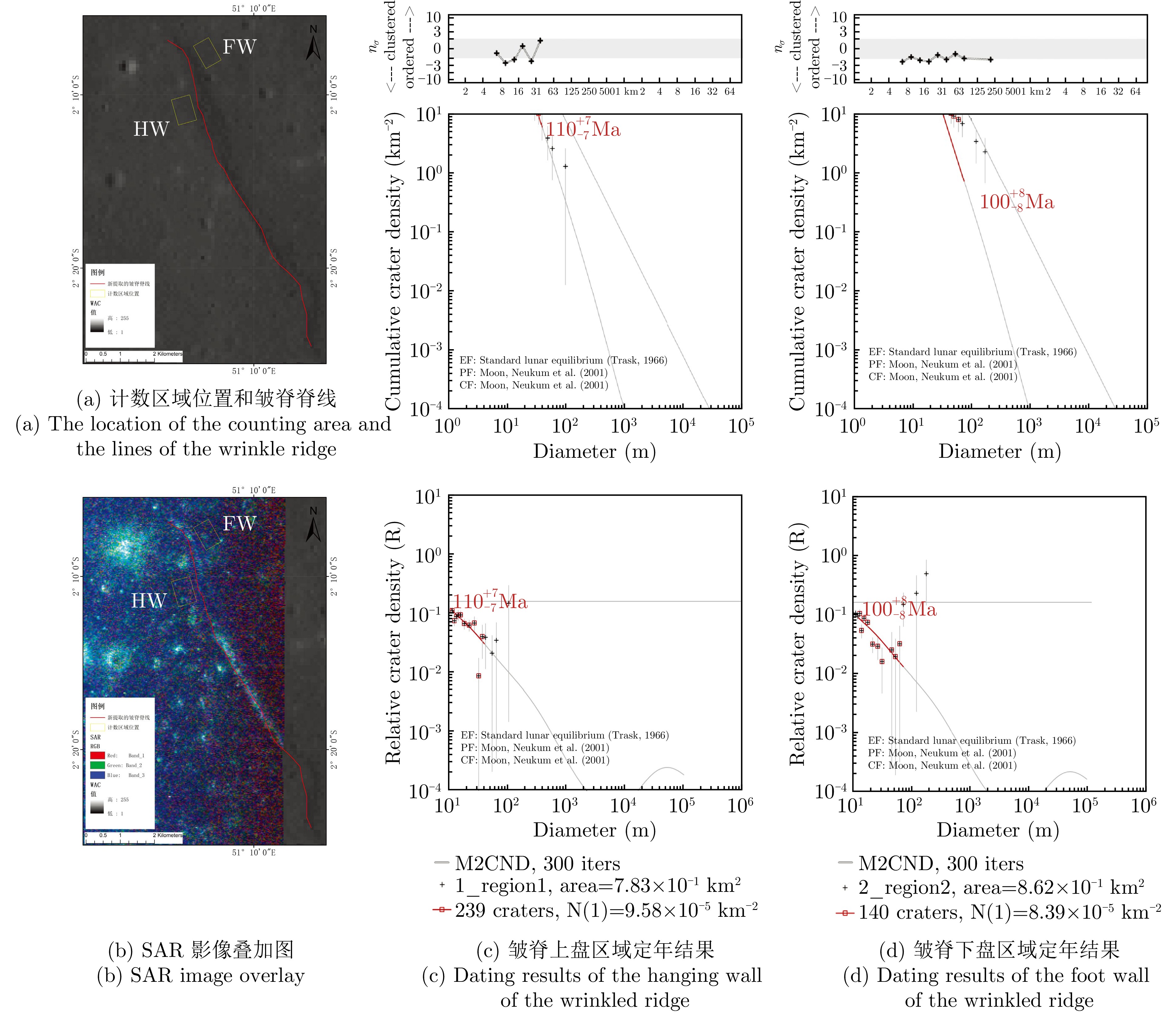
- Figure 15. The dating results of newly extracted small wrinkle ridges (2.23°S, 51.14°E)
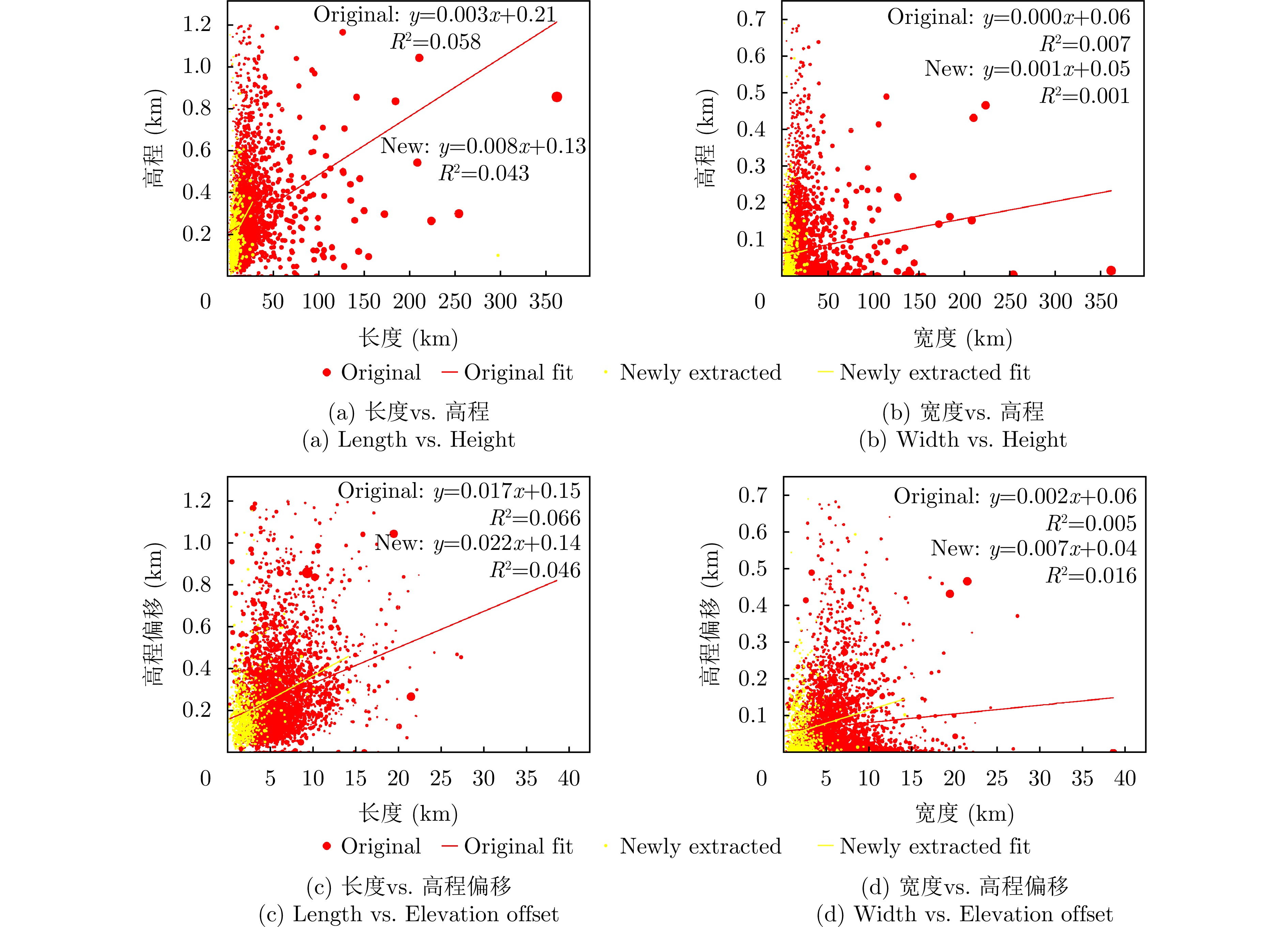
- Figure 16. The graph showing the relationship between the extracted wrinkle ridges length (or width), height and elevation difference (it should be noted that the number of segments has been weighted according to the length of each segment)