
 Submit Manuscript
 Peer Review
 Editor Work
- Home
- Articles & Issues
-
Data
- Dataset of Radar Detecting Sea
- SAR Dataset
- SARGroundObjectsTypes
- SARMV3D
- AIRSAT Constellation SAR Land Cover Classification Dataset
- 3DRIED
- UWB-HA4D
- LLS-LFMCWR
- FAIR-CSAR
- MSAR
- SDD-SAR
- FUSAR
- SpaceborneSAR3Dimaging
- Sea-land Segmentation
- SAR Multi-domain Ship Detection Dataset
- SAR-Airport
- Hilly and mountainous farmland time-series SAR and ground quadrat dataset
- SAR images for interference detection and suppression
- HP-SAR Evaluation & Analytical Dataset
- GDHuiYan-ATRNet
- Multi-System Maritime Low Observable Target Dataset
- DatasetinthePaper
- DatasetintheCompetition
- Report
- Course
- About
- Publish
- Editorial Board
- Chinese
| Citation: | ZHI Yuxiao, QIU Xiaohang, XU Jiangwan, et al. A horizon tracking algorithm for Chang’E-4 lunar surface penetrating radar based on dynamic search center[J]. Journal of Radars, 2026, 15(3): 827–843. doi: 10.12000/JR25216

|
A Horizon Tracking Algorithm for Chang’E-4 Lunar Surface Penetrating Radar Based on Dynamic Search Center
DOI: 10.12000/JR25216 CSTR: 32380.14.JR25216
More Information-
Abstract
The Moon’s shallow subsurface structure provides crucial insights into its geological evolution, material composition, and space weathering processes. With the acquisition of extensive radar datasets from recent lunar exploration programs, such as the Chang’E missions, high-resolution characterization of the lunar regolith’s stratigraphic and physical properties has become a focus and challenge in lunar science. Conventional radar layer identification and tracking methods often suffer from instability in complex scattering environments, because of their sensitivity to noise and subsurface heterogeneity. To address these limitations, this study proposes an automatic layer-tracking algorithm based on a Dynamic Search Center (DSC) approach. This algorithm employs a Gaussian-weighted prediction mechanism to balance historical trajectory trends with local signal responses and uses a multifeatured fusion decision scheme to enhance tracking robustness under noisy conditions. Numerical simulations demonstrate that, with a search radius l = 20 and a historical window n = 20, the algorithm achieves a layer identification error of less than 2% for shallow strata (<140 ns). Meanwhile, for deep layers (>170 ns), with considerable signal attenuation, incorporating an edge-direction weighting term reduces the tracking error by over 30%. When applied to lunar penetrating radar data from the Chang’E-4 mission, the proposed method successfully realizes automatic stratigraphic tracing in lunar radar profiles, producing layer boundaries that are highly consistent with previous interpretations. Simulation and in-situ results confirm that the DSC-based algorithm accurately delineates real subsurface interfaces across media and structural morphologies, effectively suppressing noise, while maintaining smooth trajectories. Overall, the proposed method achieves low manual dependence, high robustness, and high precision in automatic radar layer tracking, thereby providing a valuable reference for analyzing radar data from upcoming missions such as Chang’E-7 and Martian shallow-subsurface explorations. -

-
References
[1] LI Chunlai, SU Yan, PETTINELLI E, et al. The Moon’s farside shallow subsurface structure unveiled by Chang’E-4 lunar penetrating radar[J]. Science Advances, 2020, 6(9): eaay6898. doi: 10.1126/sciadv.aay6898.[2] LAI Jialong, XU Yi, ZHANG Xiaoping, et al. Structural analysis of lunar subsurface with Chang’E-3 lunar penetrating radar[J]. Planetary and Space Science, 2016, 120: 96–102. doi: 10.1016/j.pss.2015.10.014.[3] ZHANG Zongyu, DING Chunyu, SU Yan, et al. Subsoil structure at the Chang’E-6 landing site revealed by in-situ lunar regolith penetrating radar[J]. Communications Earth & Environment, 2025, 6(1): 640. doi: 10.1038/s43247-025-02631-4.[4] DING Chunyu, LI Chunlai, XIAO Zhiyong, et al. Layering structures in the porous material beneath the Chang’E-3 landing site[J]. Earth and Space Science, 2020, 7(10): e2019EA000862. doi: 10.1029/2019EA000862.[5] DING Chunyu, XIAO Zhiyong, SU Yan, et al. Compositional variations along the route of Chang’E-3 Yutu rover revealed by the lunar penetrating radar[J]. Progress in Earth and Planetary Science, 2020, 7(1): 32. doi: 10.1186/s40645-020-00340-4.[6] DING Chunyu, XIAO Zhiyong, and SU Yan. A potential subsurface cavity in the continuous ejecta deposits of the Ziwei crater discovered by the Chang’E-3 mission[J]. Earth, Planets and Space, 2021, 73(1): 53. doi: 10.1186/s40623-021-01359-7.[7] CARRIER III W D, OLHOEFT G R, and MENDELL W. Physical Properties of the Lunar Surface[M]. HEIKEN G, VANIMAN D, and FRENCH B M. Lunar Sourcebook: A User’s Guide to the Moon. Cambridge: Cambridge University Press, 1991: 475–594.[8] COLWELL J E, BATISTE S, HORÁNYI M, et al. Lunar surface: Dust dynamics and regolith mechanics[J]. Reviews of Geophysics, 2007, 45(2): RG2006. doi: 10.1029/2005RG000184.[9] MORGAN P, GROTT M, KNAPMEYER-ENDRUN B, et al. A pre-landing assessment of regolith properties at the InSight landing site[J]. Space Science Reviews, 2018, 214(6): 104. doi: 10.1007/s11214-018-0537-y.[10] RASERA J N, CILLIERS J J, LAMAMY J A, et al. The beneficiation of lunar regolith for space resource utilisation: A review[J]. Planetary and Space Science, 2020, 186: 104879. doi: 10.1016/j.pss.2020.104879.[11] FA Wenzhe. Simulation for ground penetrating radar (GPR) study of the subsurface structure of the Moon[J]. Journal of Applied Geophysics, 2013, 99: 98–108. doi: 10.1016/j.jappgeo.2013.08.002.[12] XU Jiangwan, DING Chunyu, SU Yan, et al. Lunar exploration based on ground-based radar: Current research progress and future prospects[J]. Remote Sensing, 2024, 16(18): 3484. doi: 10.3390/rs16183484.[13] ZHANG Ling, ZENG Zhaofa, LI Jing, et al. Simulation of the lunar regolith and lunar-penetrating radar data processing[J]. IEEE Journal of Selected Topics in Applied Earth Observations and Remote Sensing, 2018, 11(2): 655–663. doi: 10.1109/JSTARS.2017.2786476.[14] DONG Zehua, FANG Guangyou, ZHAO Di, et al. Dielectric properties of lunar subsurface materials[J]. Geophysical Research Letters, 2020, 47(22): e2020GL089264. doi: 10.1029/2020GL089264.[15] JIA Yingzhuo, ZOU Yongliao, PING Jinsong, et al. The scientific objectives and payloads of Chang’E-4 mission[J]. Planetary and Space Science, 2018, 162: 207–215. doi: 10.1016/j.pss.2018.02.011.[16] LI Chunlai, LIU Jianjun, REN Xin, et al. The Chang’E 3 mission overview[J]. Space Science Reviews, 2015, 190(1): 85–101. doi: 10.1007/s11214-014-0134-7.[17] XIAO Long, QIAN Yuqi, WANG Qian, et al. The Chang’E-5 Mission[M]. LONGOBARDO A. Sample Return Missions: The Last Frontier of Solar System Exploration. Amsterdam: Elsevier, 2021: 195–206. doi: 10.1016/B978-0-12-818330-4.00009-4.[18] SU Yan, WANG Ruigang, DENG Xiangjin, et al. Hyperfine structure of regolith unveiled by Chang’E-5 lunar regolith penetrating radar[J]. IEEE Transactions on Geoscience and Remote Sensing, 2022, 60: 5110414. doi: 10.1109/TGRS.2022.3148200.[19] SPUDIS P D, BUSSEY D B J, BALOGA S M, et al. Evidence for water ice on the Moon: Results for anomalous polar craters from the LRO Mini-RF imaging radar[J]. Journal of Geophysical Research: Planets, 2013, 118(10): 2016–2029. doi: 10.1002/jgre.20156.[20] GOSWAMI J N and ANNADURAI M. Chandrayaan-1: India’s first planetary science mission to the Moon[J]. Current Science, 2009, 96(4): 486–491. doi: 10.2307/24105456.[21] KUMAR A, KOCHAR I M, PANDEY D K, et al. Dielectric constant estimation of lunar surface using Mini-RF and Chandrayaan-2 SAR data[J]. IEEE Transactions on Geoscience and Remote Sensing, 2022, 60: 4600608. doi: 10.1109/TGRS.2021.3103383.[22] LI Shaobo, ZHAO Jianhu, ZHANG Hongmei, et al. A novel horizon picking method on sub-bottom profiler sonar images[J]. Remote Sensing, 2020, 12(20): 3322. doi: 10.3390/rs12203322.[23] QIU Zhi, ZENG Junyuan, TANG Wenhui, et al. Research on real-time automatic picking of ground-penetrating radar image features by using machine learning[J]. Horticulturae, 2022, 8(12): 1116. doi: 10.3390/horticulturae8121116.[24] WU Chengliang, FENG Bo, SONG Xiaonan, et al. Automatic horizon picking using multiple seismic attributes and Markov decision process[J]. Remote Sensing, 2023, 15(3): 552. doi: 10.3390/rs15030552.[25] DOSSI M, FORTE E, and PIPAN M. Automated reflection picking and polarity assessment through attribute analysis: Theory and application to synthetic and real ground-penetrating radar data[J]. Geophysics, 2015, 80(5): H23–H35. doi: 10.1190/geo2015-0098.1.[26] LI Shaobo, ZHAO Jianhu, ZHANG Hongmei, et al. An integrated horizon picking method for obtaining the main and detailed reflectors on sub-bottom profiler sonar image[J]. Remote Sensing, 2021, 13(15): 2959. doi: 10.3390/rs13152959.[27] LI Shaobo, LI Tie, SUN Aiguo, et al. Automated amplitude and phase attribute-based horizon picking applied to 3-D sub-bottom data[J]. IEEE Journal of Oceanic Engineering, 2025, 50(3): 2355–2368. doi: 10.1109/JOE.2025.3550984.[28] LVOVSKY A I. Fresnel equations[J]. DRIGGERS R G. Encyclopedia of Optical Engineering. New York: Taylor & Francis, 2013, 27: 1–6. doi: 10.1081/E-EOE2-120047133.[29] KSCHISCHANG F R. The Hilbert transform[J]. University of Toronto, 2006, 83: 277.KSCHISCHANG F R. The Hilbert transform[J]. University of Toronto, 2006, 83: 277.[30] DING Chunyu, LI Jing, and HU Rong. Moon-based ground-penetrating radar observation of the latest volcanic activity at the Chang’E-4 landing site[J]. IEEE Transactions on Geoscience and Remote Sensing, 2023, 61: 4600410. doi: 10.1109/TGRS.2023.3277992.[31] NEUVO Y, DONG Chengyu, and MITRA S. Interpolated finite impulse response filters[J]. IEEE Transactions on Acoustics, Speech, and Signal Processing, 1984, 32(3): 563–570. doi: 10.1109/TASSP.1984.1164348.[32] HUBER E and HANS G. RGPR—an open-source package to process and visualize GPR data[C]. The 17th International Conference on Ground Penetrating Radar (GPR), Rapperswil, Switzerland, 2018: 1–4. doi: 10.1109/ICGPR.2018.8441658.[33] BAIKOVITZ A, SODHI P, DILLE M, et al. Ground encoding: Learned factor graph-based models for localizing ground penetrating radar[C]. IEEE/RSJ International Conference on Intelligent Robots and Systems, Prague, Czech Republic, 2021: 5476–5483. doi: 10.1109/IROS51168.2021.9636764.[34] QIU Xiaohang, DING Chunyu, JIN Tian, et al. Quantitative analysis of subsurface dielectric properties by Chang’E-4 lunar penetrating radar over lunar days 24–31[J]. IEEE Transactions on Geoscience and Remote Sensing, 2025, 63: 4600313. doi: 10.1109/TGRS.2025.3547897.[35] FU Xiaohui, QIAO Le, ZHANG Jiang, et al. The subsurface structure and stratigraphy of the Chang’E-4 landing site: Orbital evidence from small craters on the Von Kármán crater floor[J]. Research in Astronomy and Astrophysics, 2020, 20(1): 008. doi: 10.1088/1674-4527/20/1/8.[36] SHI Ke, YUE Zongyu, DI Kaichang, et al. The gardening process of lunar regolith by small impact craters: A case study in Chang’E-4 landing area[J]. Icarus, 2022, 377: 114908. doi: 10.1016/j.icarus.2022.114908.[37] LAI Jialong, CUI Feifei, XU Yi, et al. Dielectric properties of lunar materials at the Chang’E-4 landing site[J]. Remote Sensing, 2021, 13(20): 4056. doi: 10.3390/rs13204056.[38] ZHANG Jinhai, ZHOU Bin, LIN Yangting, et al. Lunar regolith and substructure at Chang’E-4 landing site in South Pole-Aitken basin[J]. Nature Astronomy, 2021, 5(1): 25–30. doi: 10.1038/s41550-020-1197-x.[39] XIAO Zhiyong, DING Chunyu, XIE Minggang, et al. Ejecta from the Orientale basin at the Chang’E-4 landing site[J]. Geophysical Research Letters, 2021, 48(3): e2020GL090935. doi: 10.1029/2020GL090935. -
Proportional views

- Publishing Ethics
- Journal Insights
- Abstracting & Indexing
- Peer Review Policies
- Guide for Authors
- Conference
- ISSN 2095-283X (Print)ISSN 2097-339X (Online)
- CN 10-1030/TN
- CODEN LXEUAO
About Journal
- Sponsor: China Radio Detection and Ranging Industry Association (CRIA)
- Phone: 010-58887062
- Email:radars@aircas.ac.cn
- Publisher: Leida Xuebao Bianjibu (Editorial office of the Journal of Radars)
Contacts Us

京ICP备20021838号-14
Supported by: Beijing Renhe Information Technology Co. Ltd

Export File
Citation
Format
Content
 DownLoad:




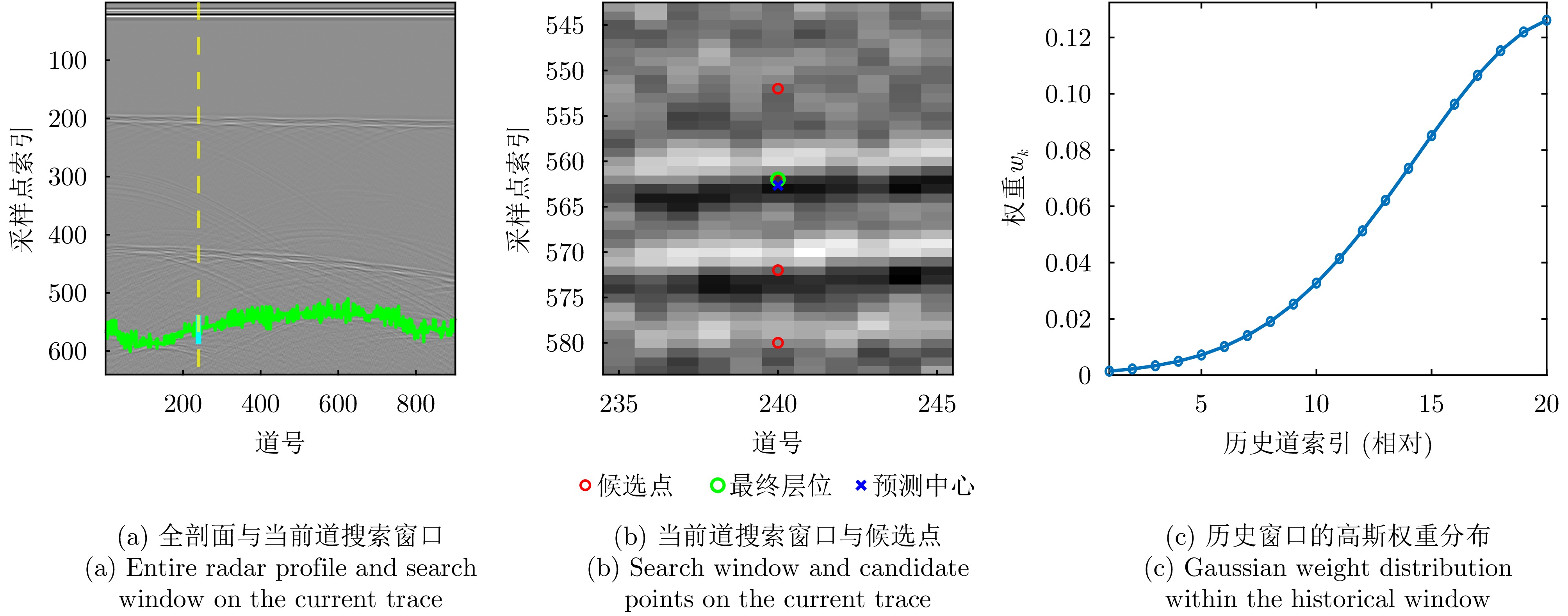
- Figure 1. Schematic of the dynamic search-center update mechanism based on a Gaussian distribution
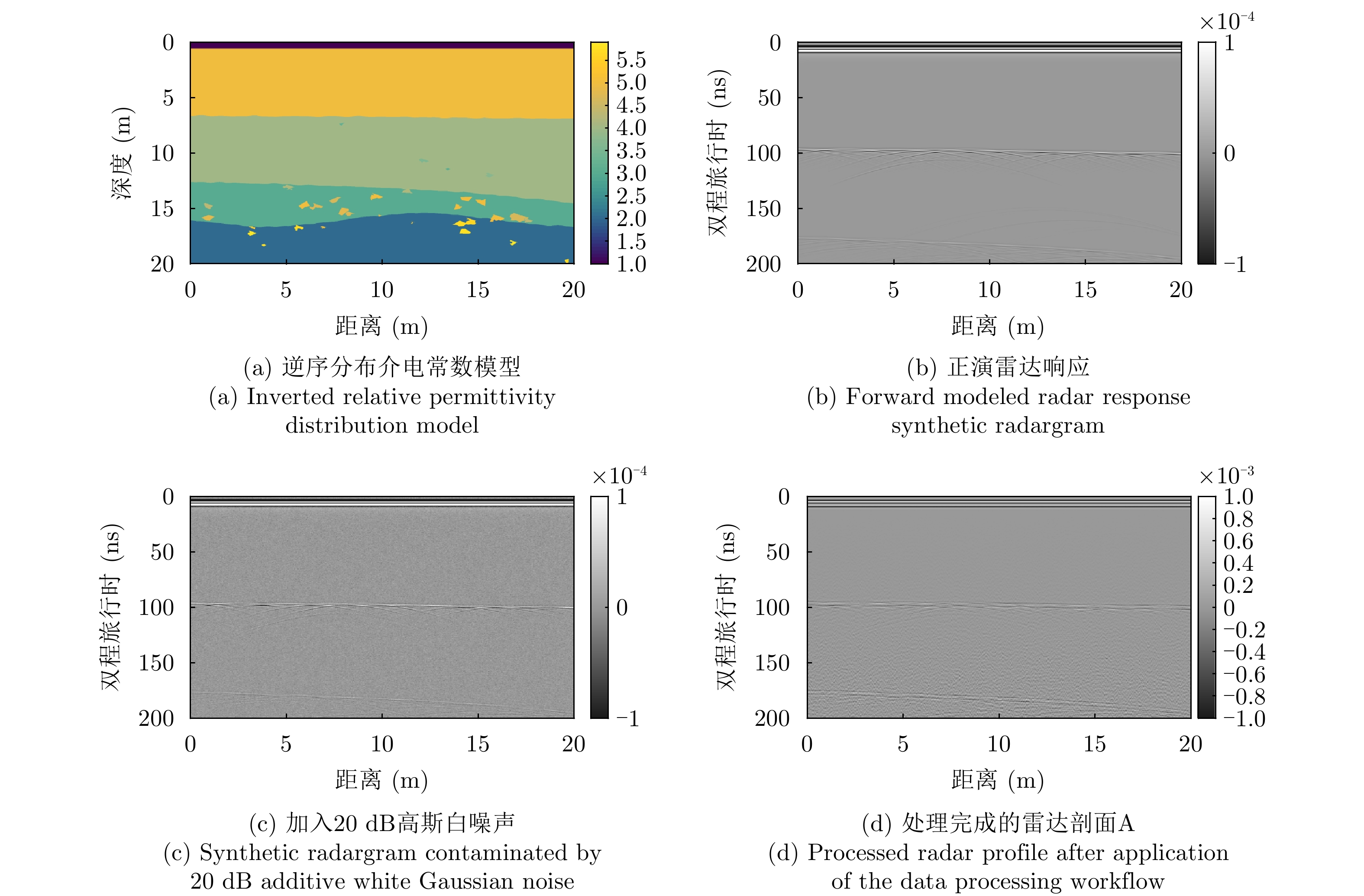
- Figure 2. FDTD forward radar response modeling and synthetic data generation
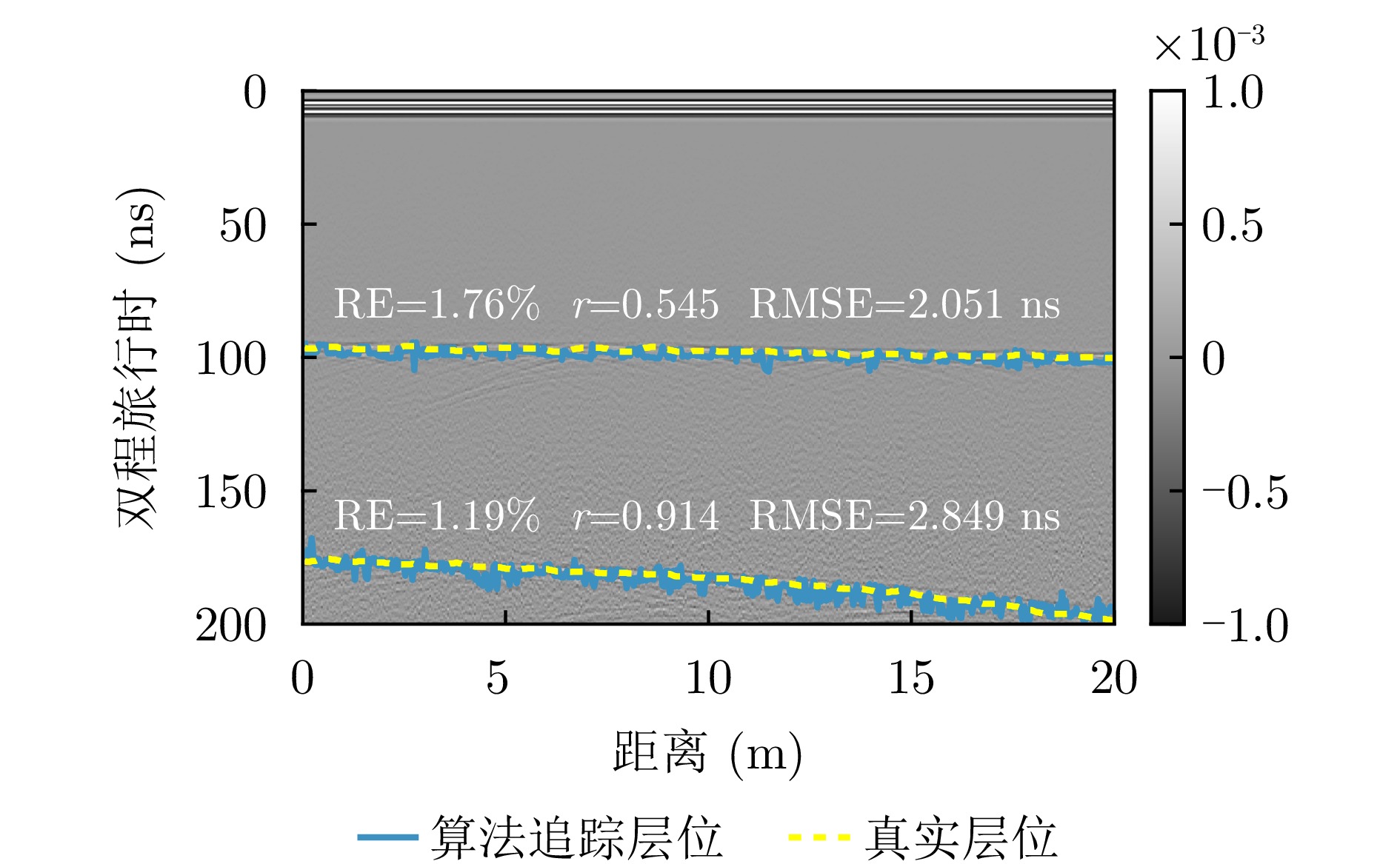
- Figure 3. Horizon tracking results of the dynamic search center algorithm on simulated data
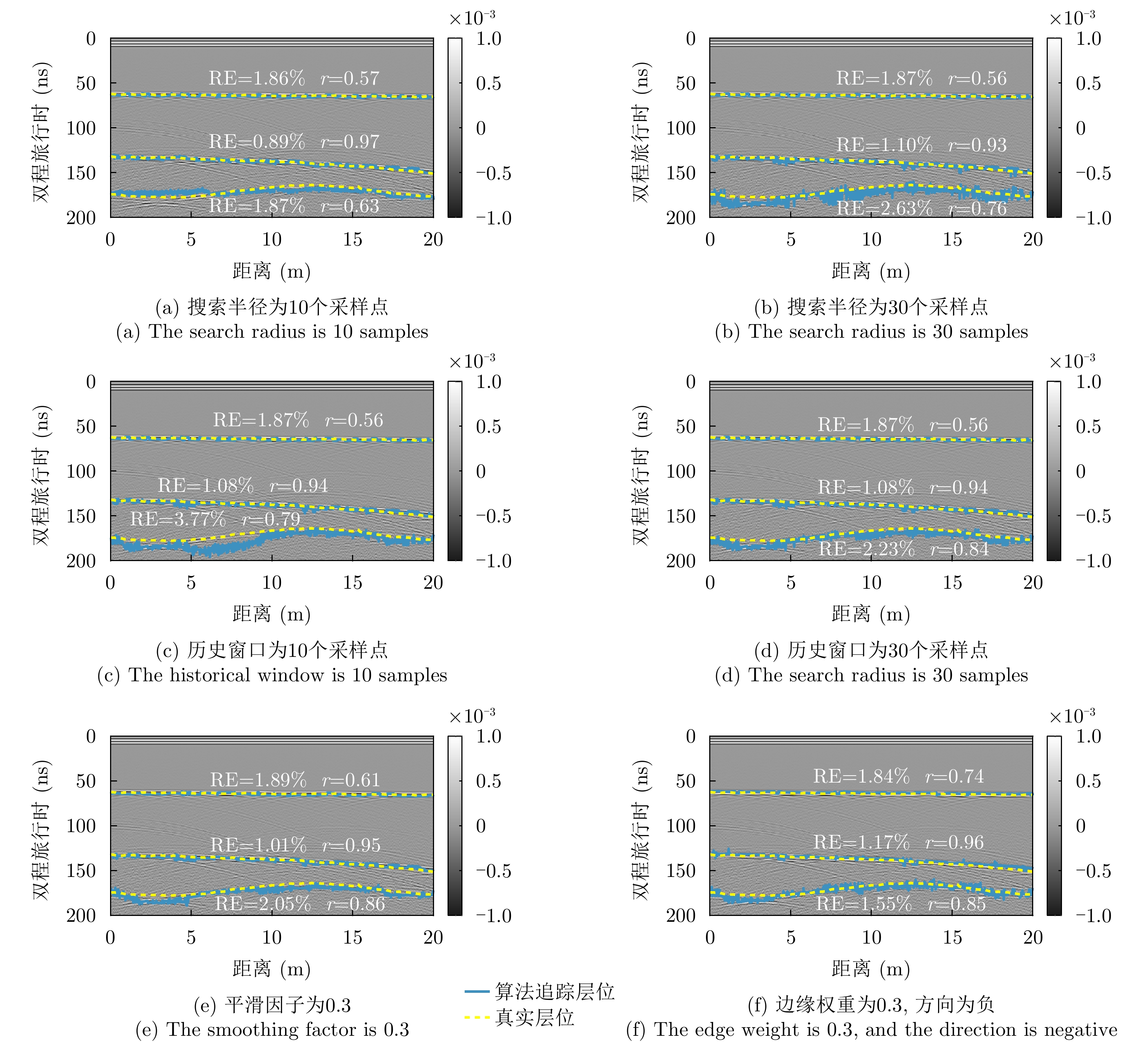
- Figure 4. Horizon tracking results of the algorithm under different parameter settings
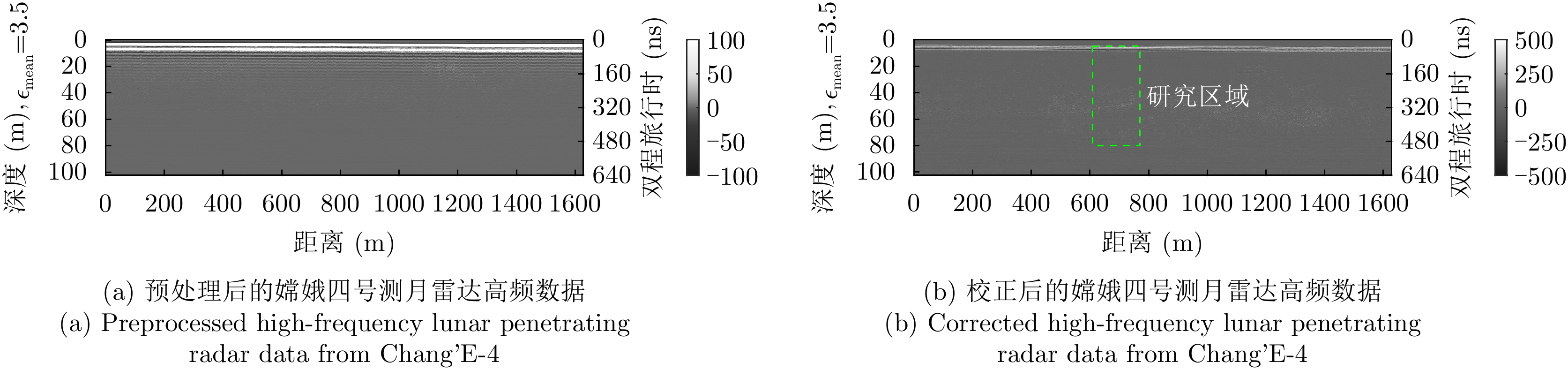
- Figure 5. Measured high-frequency channel data from the Chang’E-4 lunar penetrating radar
- Figure 6. CH-2 lunar penetrating radar data from the 600~800 m segment of the Yutu-2 traverse route, where the green dashed lines indicate the horizon boundaries identified by the algorithm
- Figure 1. Schematic of a dielectric constant reverse-distribution model and the corresponding forward radar response
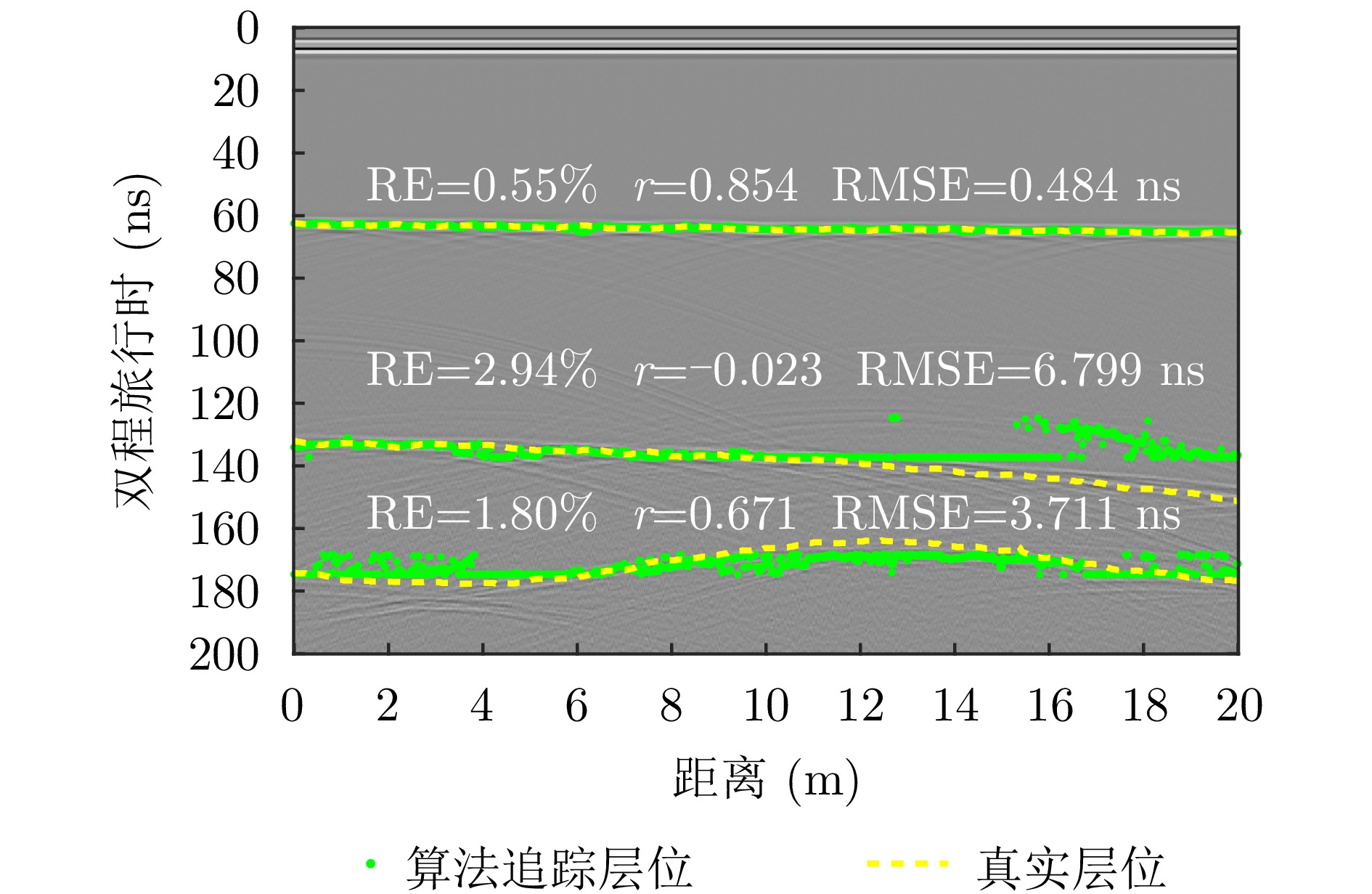
- Figure 2. Comparison of horizon tracking results for the reverse distribution dielectric constant model (solid lines: algorithm results; dashed lines: true horizons)
- Figure 3. Robustness evaluation of horizon picking under noise perturbations
- Figure 4. Horizon tracking results of the energy-based automatic picking algorithm