

 作者中心
作者中心 专家审稿
专家审稿 责编办公
责编办公 编辑办公
编辑办公
Sparse Array ISAR 3-D Imaging Method for Ship Targets via Joint Error Calibration and Super-resolution DOA Estimation
-
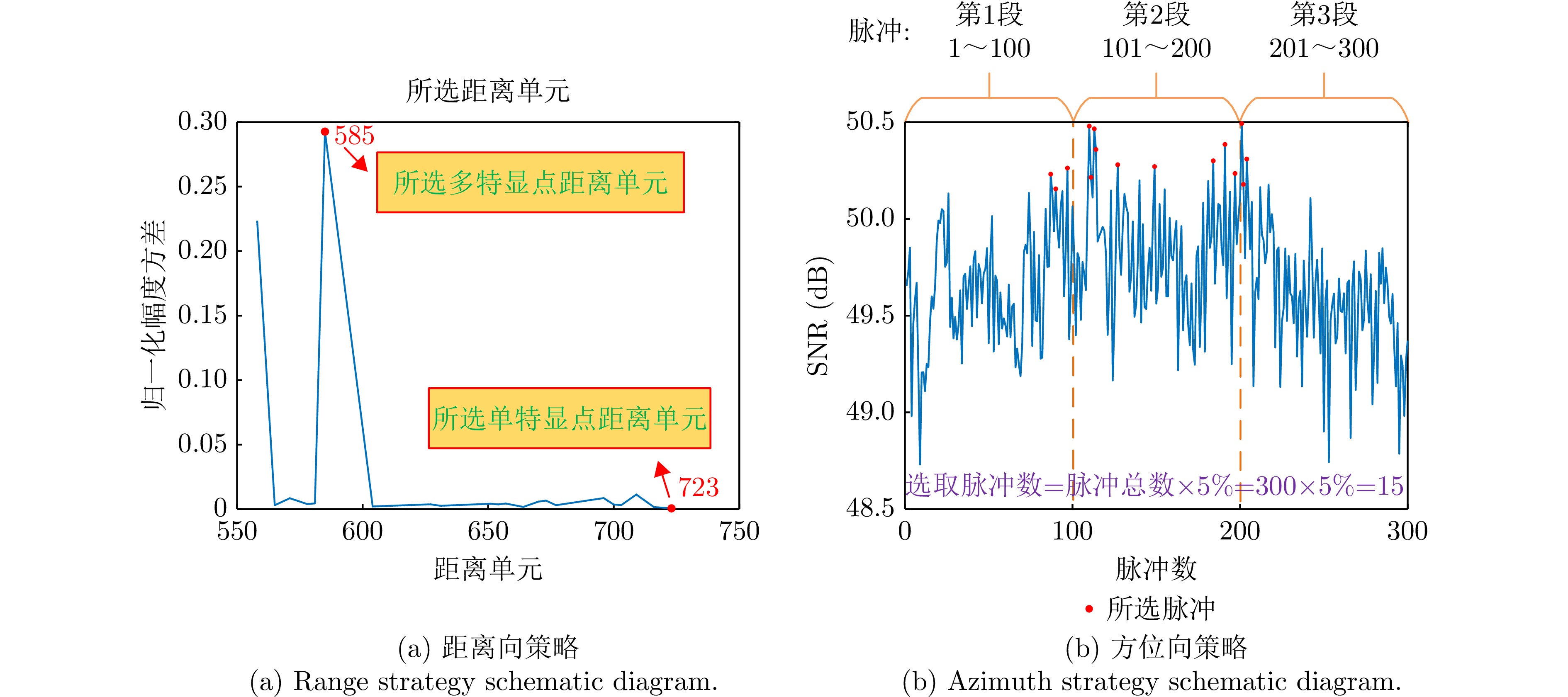
摘要: 岸基雷达因固定阵位限制探测能力受限,无人机集群利用其灵活部署特性构成空时混合孔径可实现舰船目标高分辨阵列逆合成孔径雷达(ISAR)三维成像。受海风等海洋环境影响,无人机集群非理想初始状态和速度同步误差会造成阵列构型畸变与ISAR复图像相位错位,降低目标测角与三维重构质量。针对上述问题,该文提出一种稀疏阵列ISAR联合误差校正与角度超分辨的舰船目标三维成像方法。该方法利用多脉冲与ISAR波达方向(DOA)估计的相关性构建关联匹配机制,抑制时变波程差造成的相位误差累积;将两维精细化速度误差模型和多准则融合指标嵌入DOA超分辨估计,实现多维误差补偿与超分辨测角一体化;依据单、多特显点的空间谱差异,结合误差时间分布特性与信噪比加权,提出距离维和方位维联合优化策略,提高测角精度和运算效率。点目标与电磁仿真结果表明,所提方法可在非理想稀疏无人机集群条件下实现舰船目标稳健三维成像,重构误差小于10%,可为舰船目标预警探测与引导打击提供技术支撑。Abstract: Shore-based radar systems are constrained by fixed deployment locations, which limits their detection capability. Owing to their flexible deployment, Unmanned Aerial Vehicles (UAVs) can form a space-time hybrid aperture to enable high-resolution array Inverse Synthetic Aperture Radar (ISAR) three-Dimensional (3-D) imaging of ship targets. However, marine environmental disturbances, such as sea winds, together with nonideal initial states and velocity synchronization errors within the UAV cluster, can distort the array geometry and cause phase misalignment among complex-valued ISAR images, thereby degrading target angle estimation and 3-D reconstruction quality. To address these issues, this paper proposes a sparse-array ISAR 3-D imaging method for ship targets via joint error calibration and super-resolution Direction of Arrival (DOA) estimation. The proposed method exploits the correlation between multipulse and ISAR DOA estimates to establish an association-matching mechanism that suppresses phase-error accumulation induced by time-varying differential ranges. A refined two-Dimensional (2-D) velocity-error model and a multicriteria fusion metric are incorporated into super-resolution DOA estimation, enabling the integrated estimation of multidimensional errors and angles. In addition, a joint Range-Azimuth Optimization Strategy (RAOS) is developed by exploiting differences in the spatial spectra of range cells containing either a single prominent scatterer or multiple prominent scatterers, together with the temporal distribution of errors and signal-to-noise ratio weighting, thereby improving both angle-estimation accuracy and computational efficiency. Point-target and electromagnetic simulations demonstrate that the proposed method achieves robust 3-D imaging of ship targets under nonideal sparse UAV-cluster conditions, with reconstruction errors below 10%, providing technical support for early-warning detection and strike guidance.
-
Key words:
- Array ISAR /
- UAV cluster radars /
- 3-D imaging /
- Ship targets /
- Error calibration
-
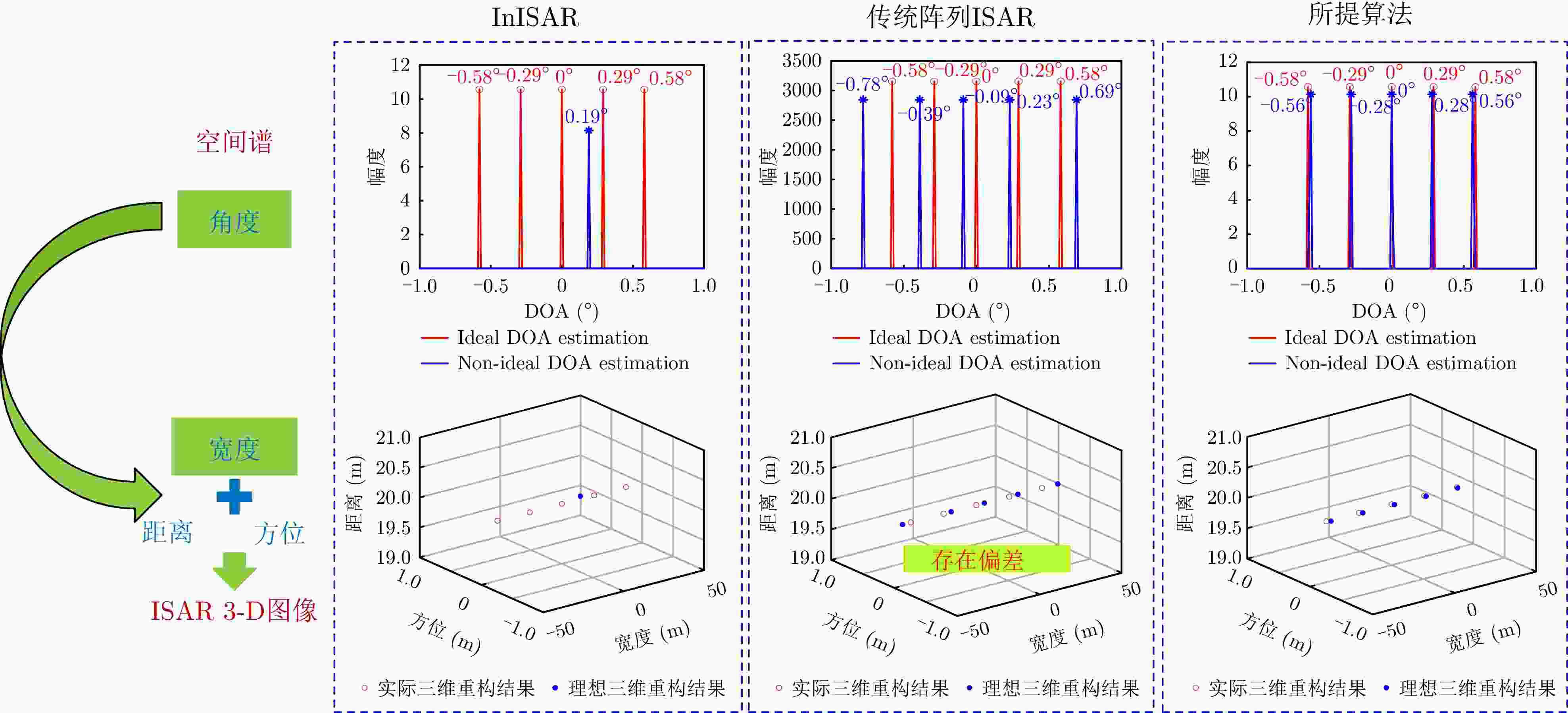
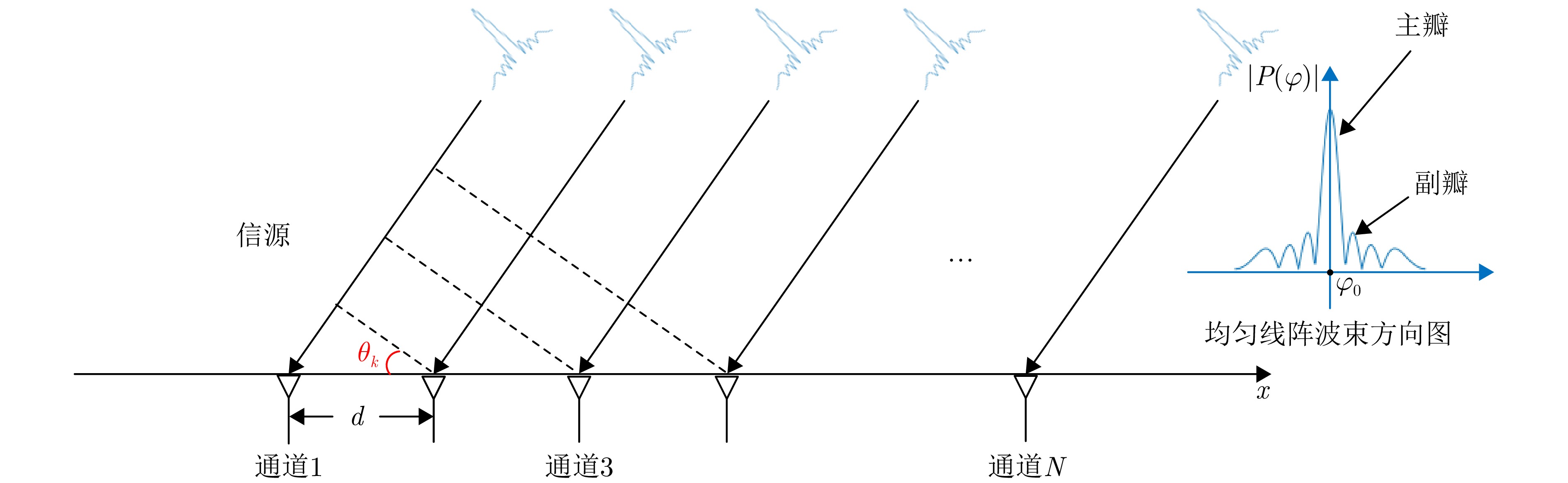
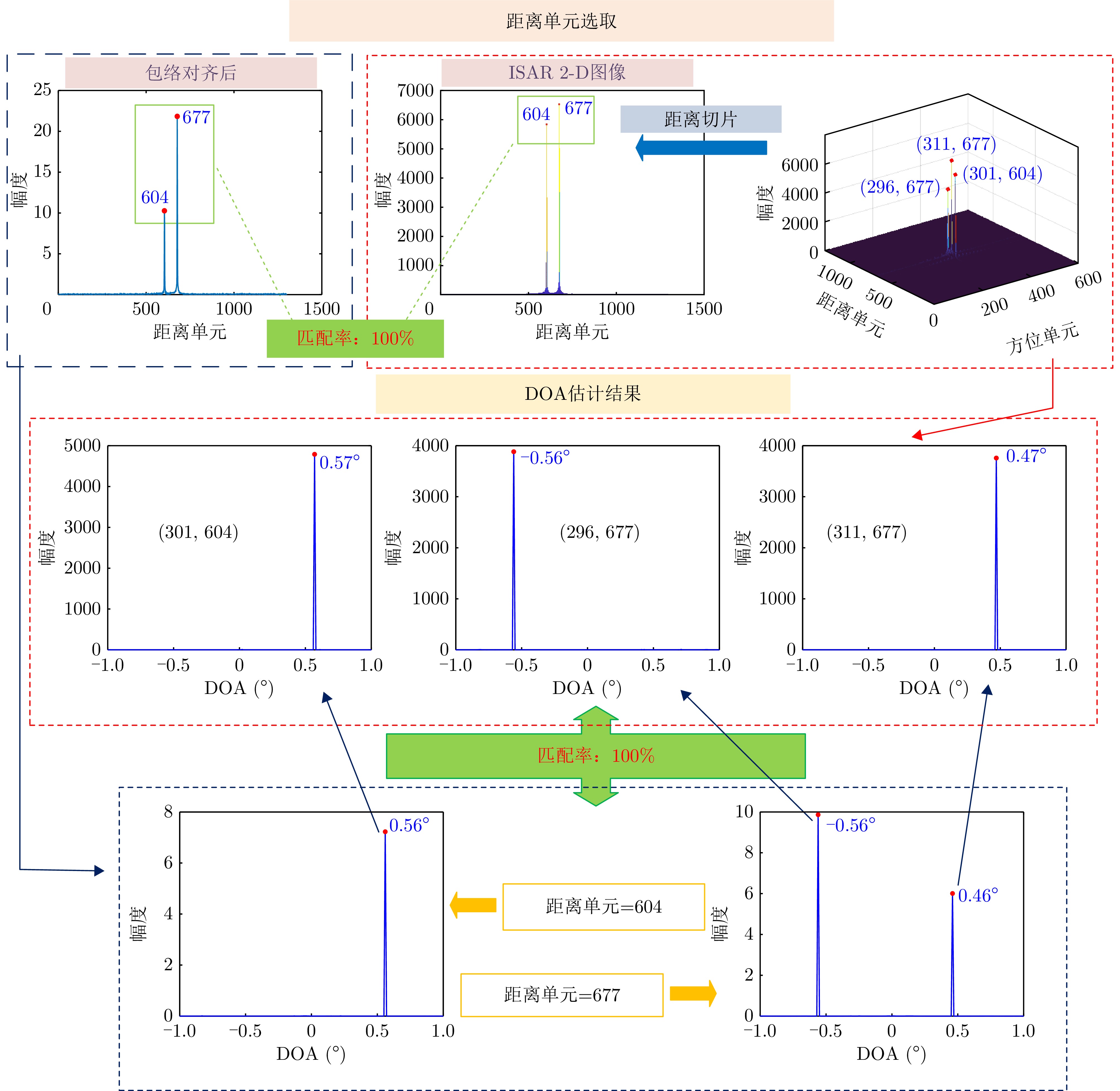
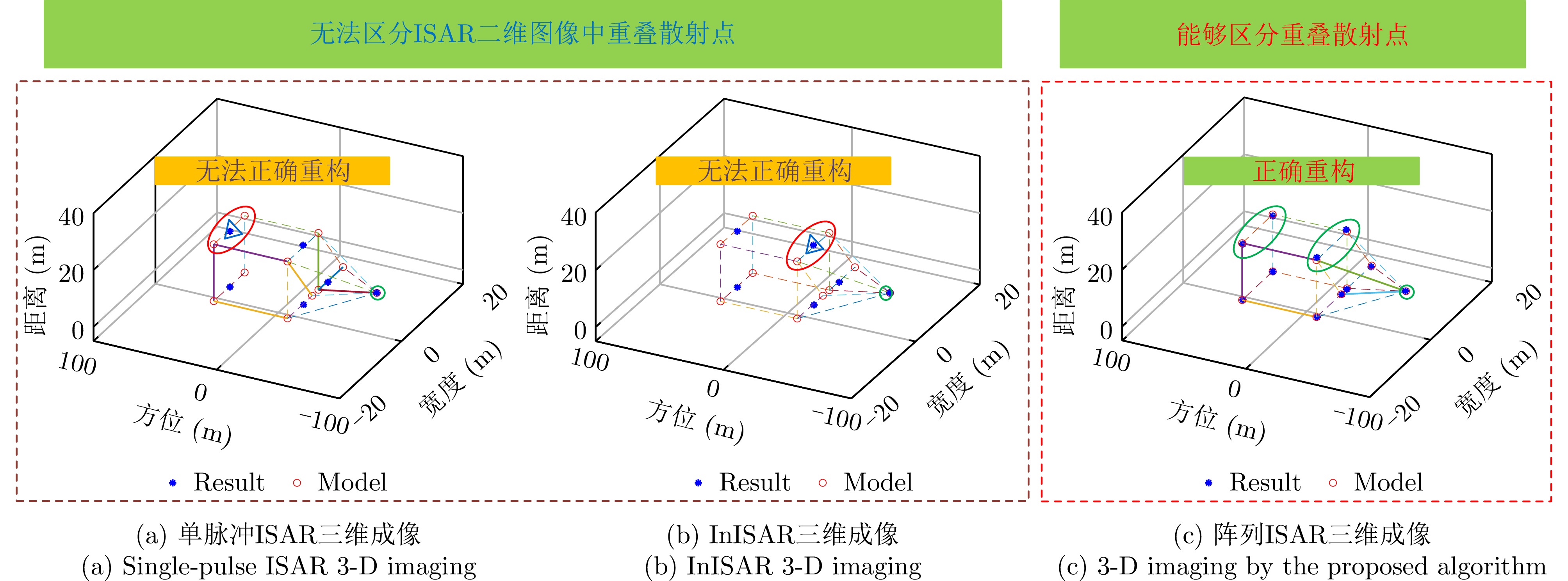
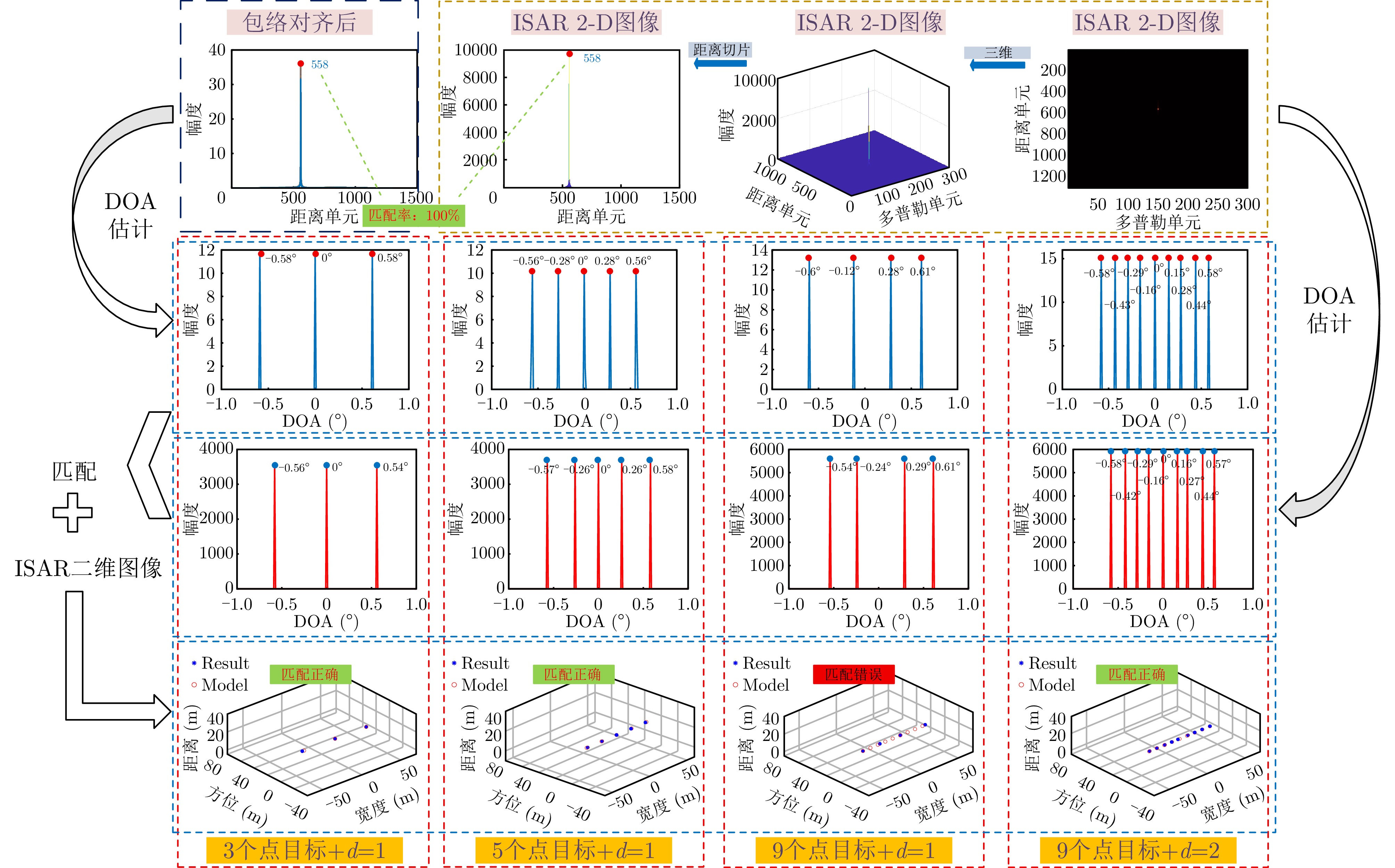
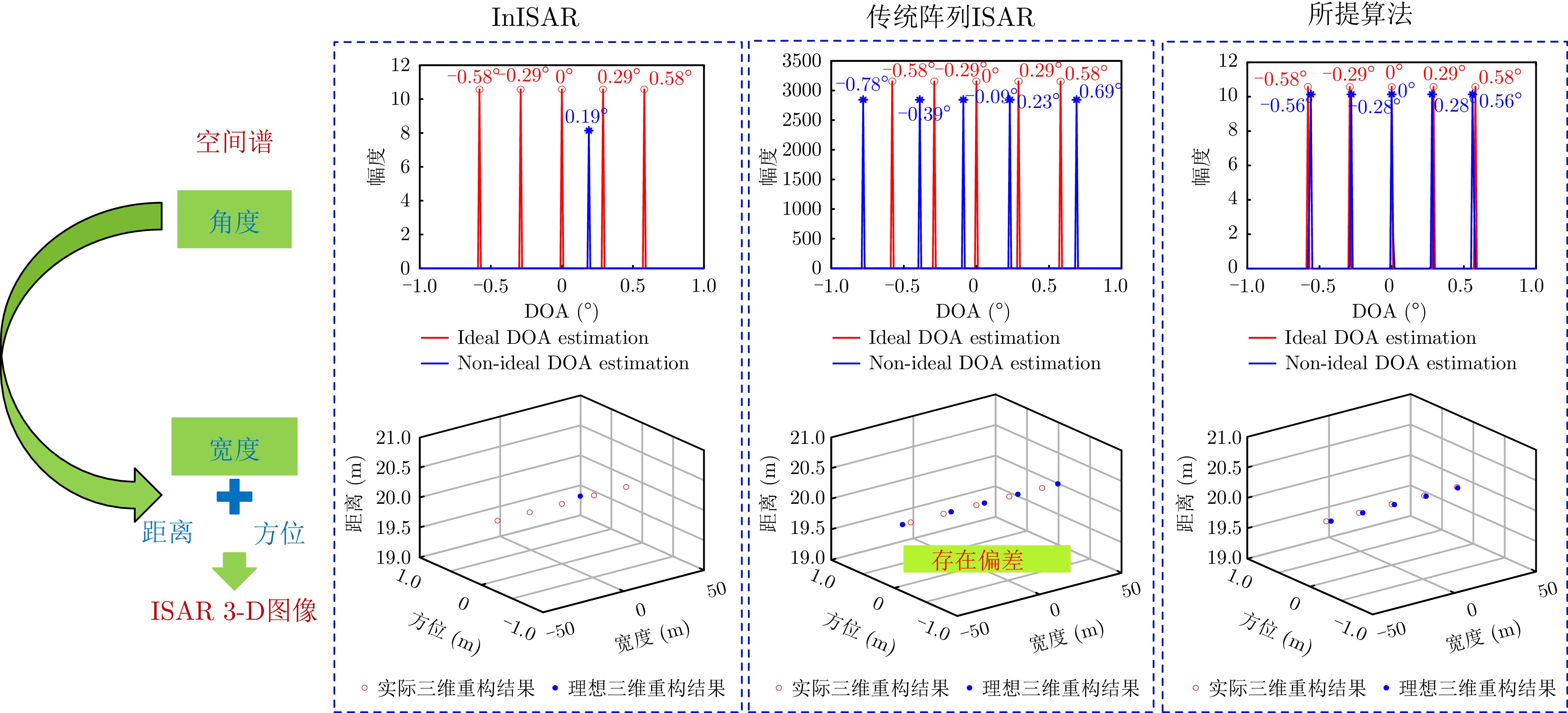
图 1 DOA估计和ISAR三维成像结果对比
Figure 1. Comparison of DOA estimation and ISAR 3-D imaging results
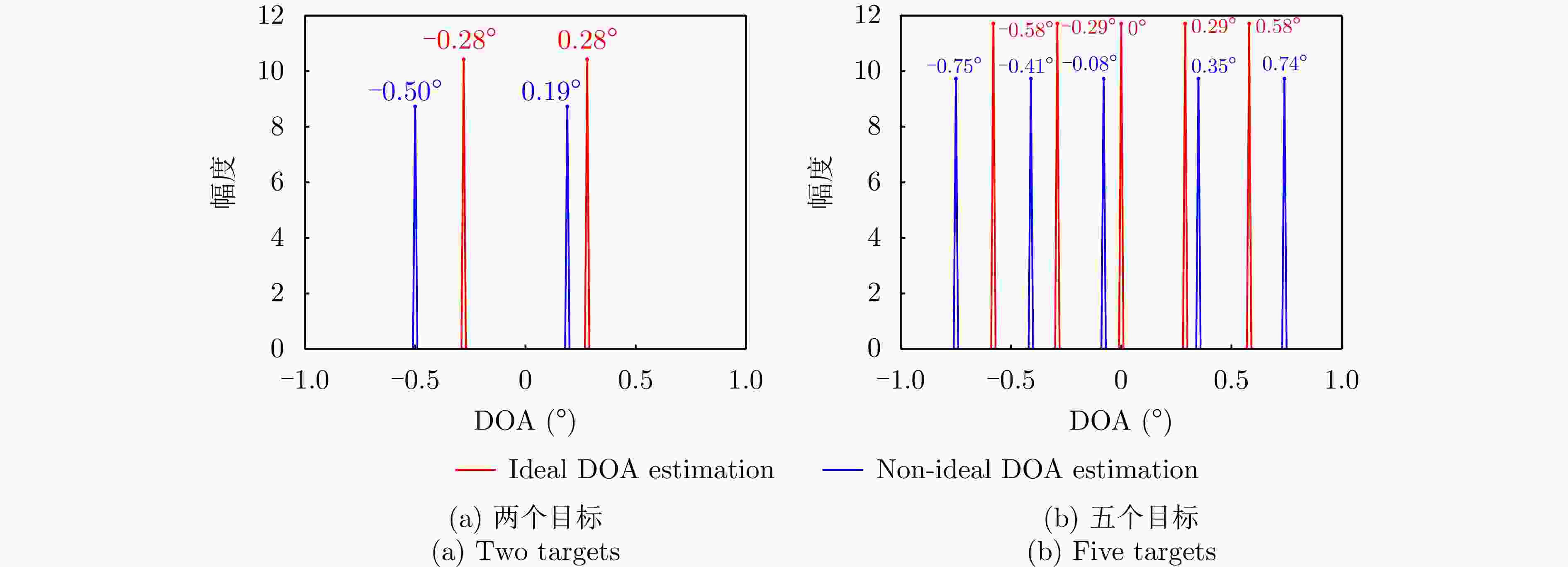
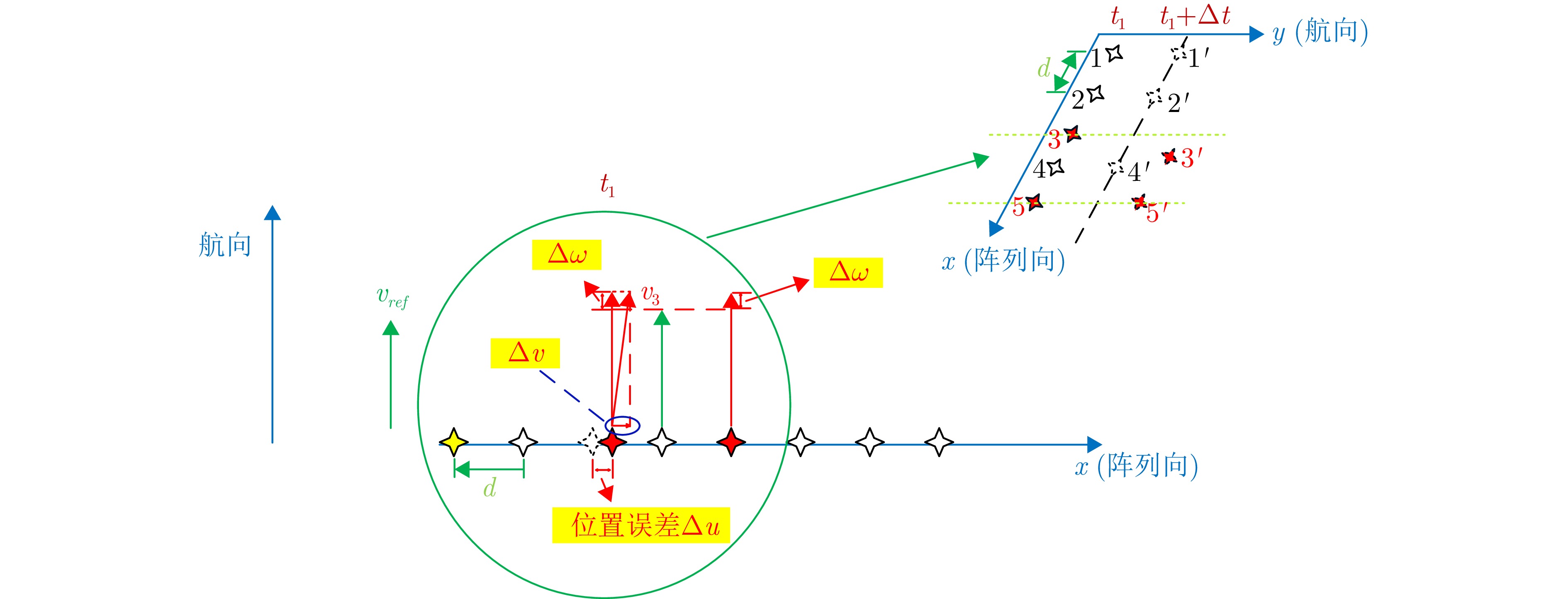
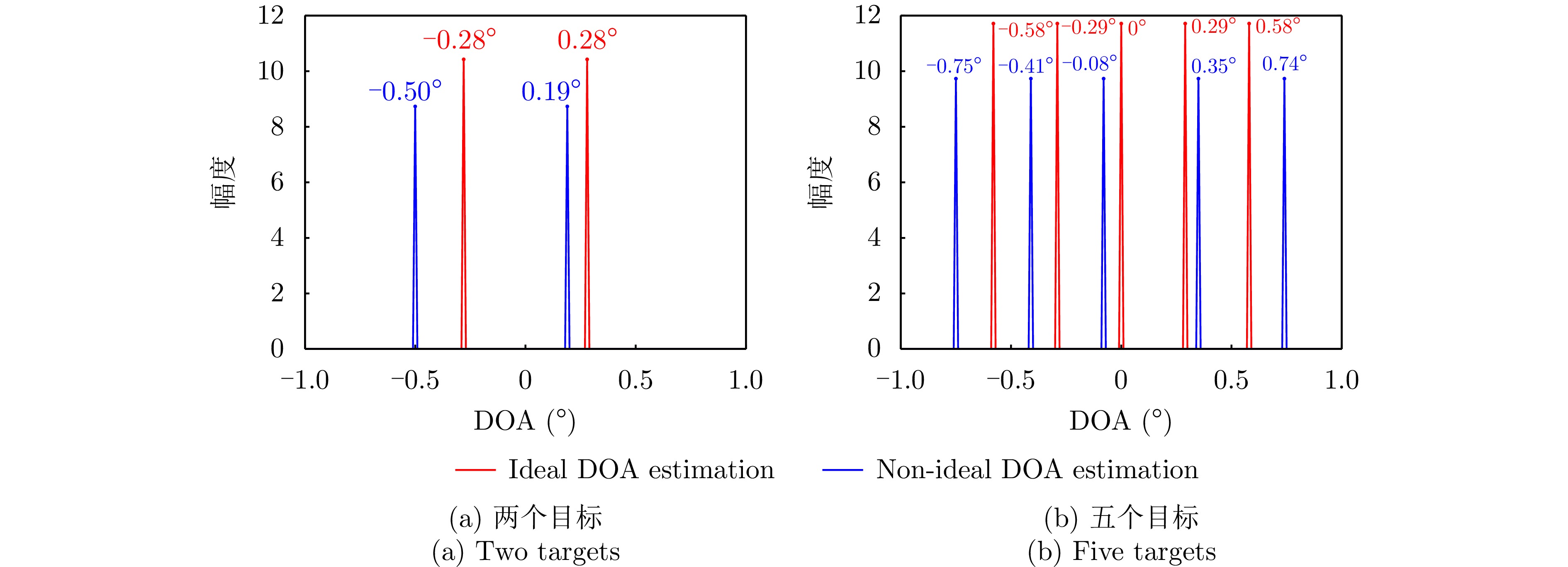
图 5 误差存在下使用SBL完成DOA估计结果
Figure 5. DOA estimation in one range cell with SBL with errors considered
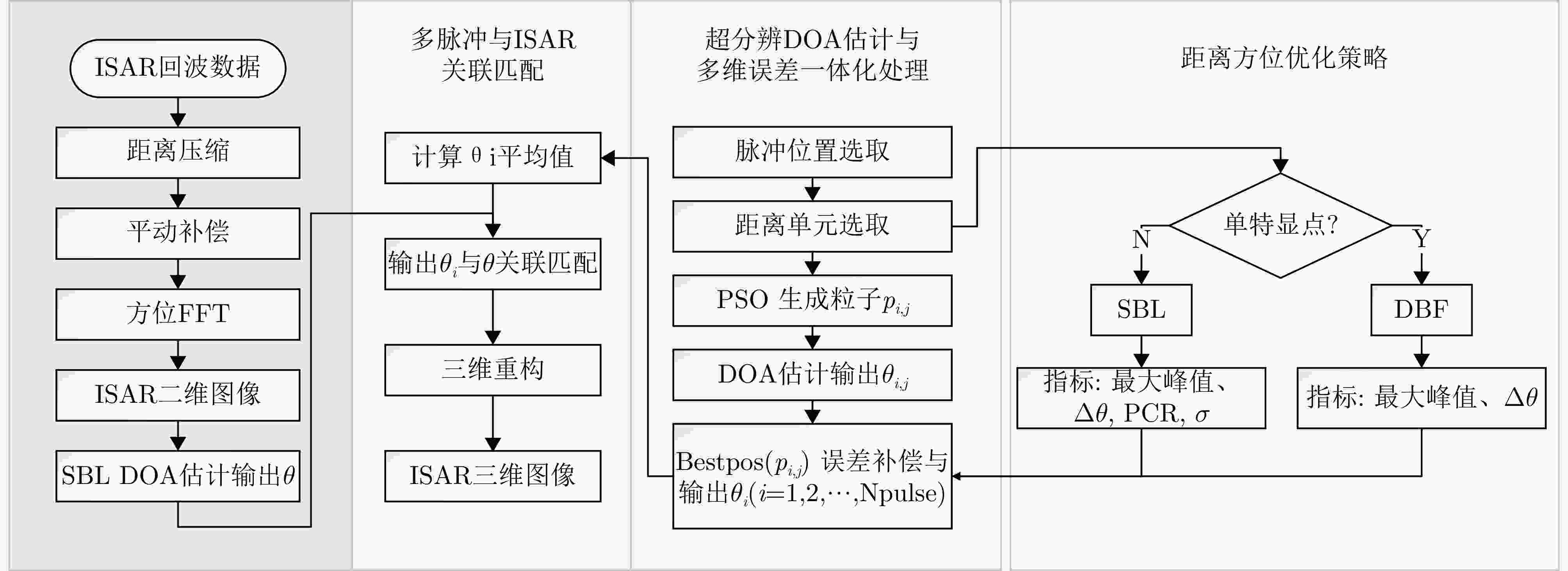
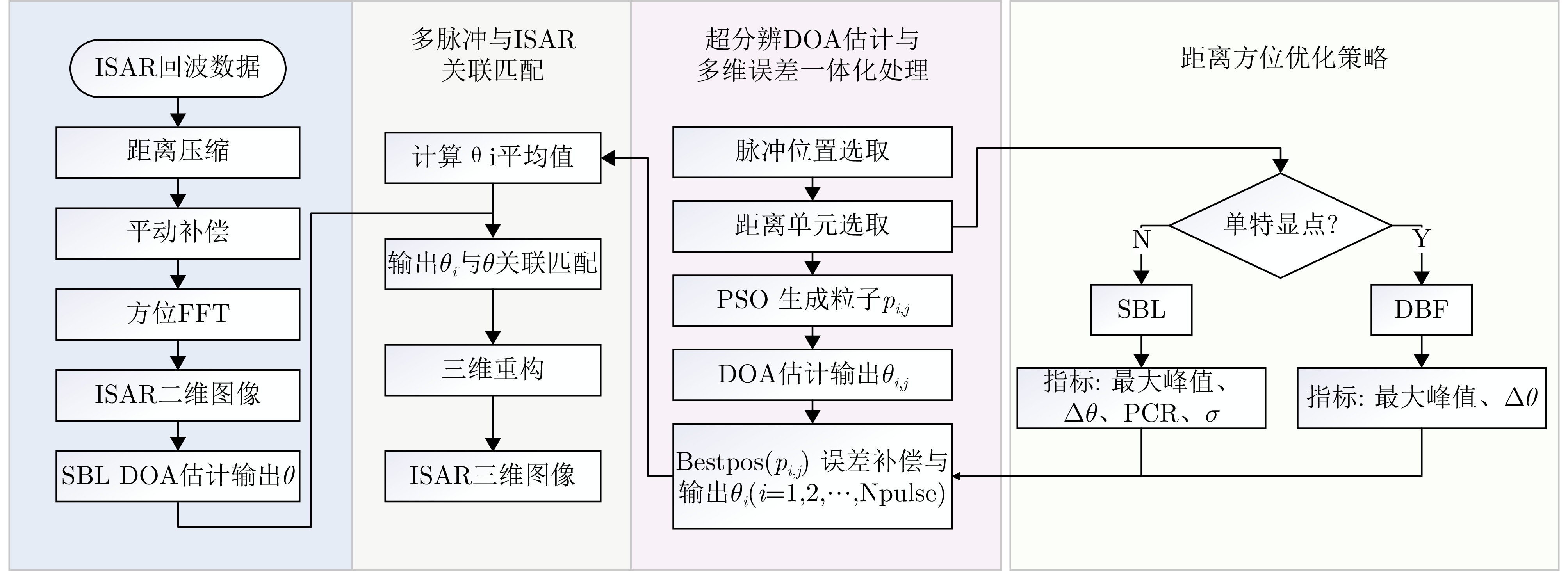
图 9 所提阵列ISAR三维成像方法流程图
Figure 9. Flowchart of the proposed array ISAR 3-D imaging method
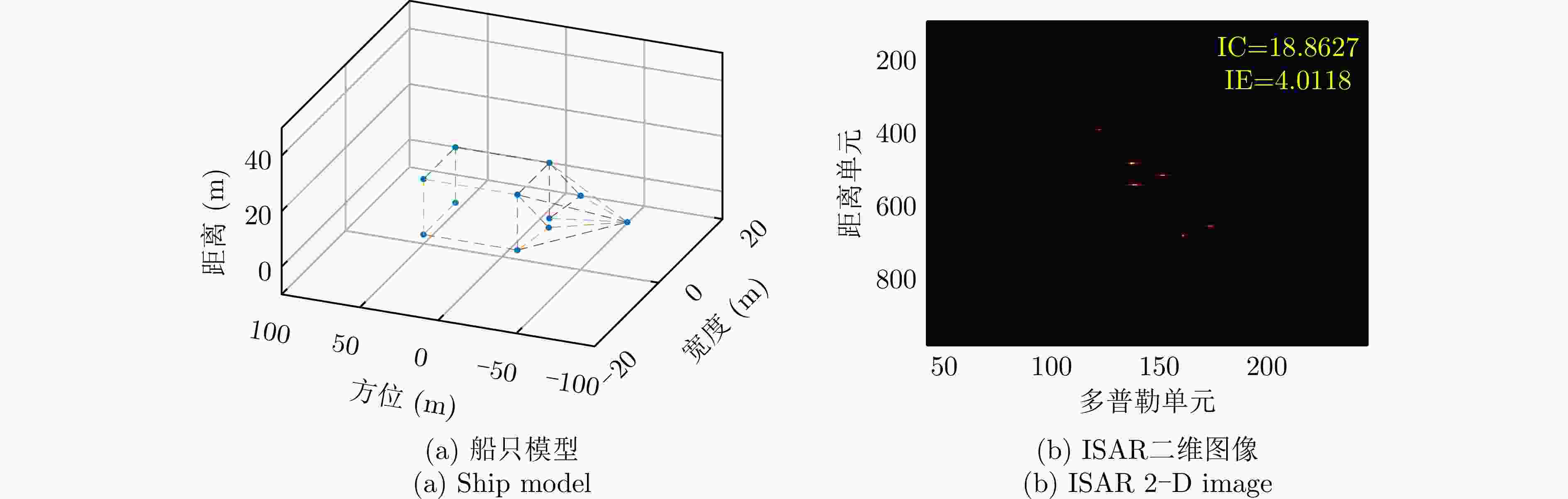
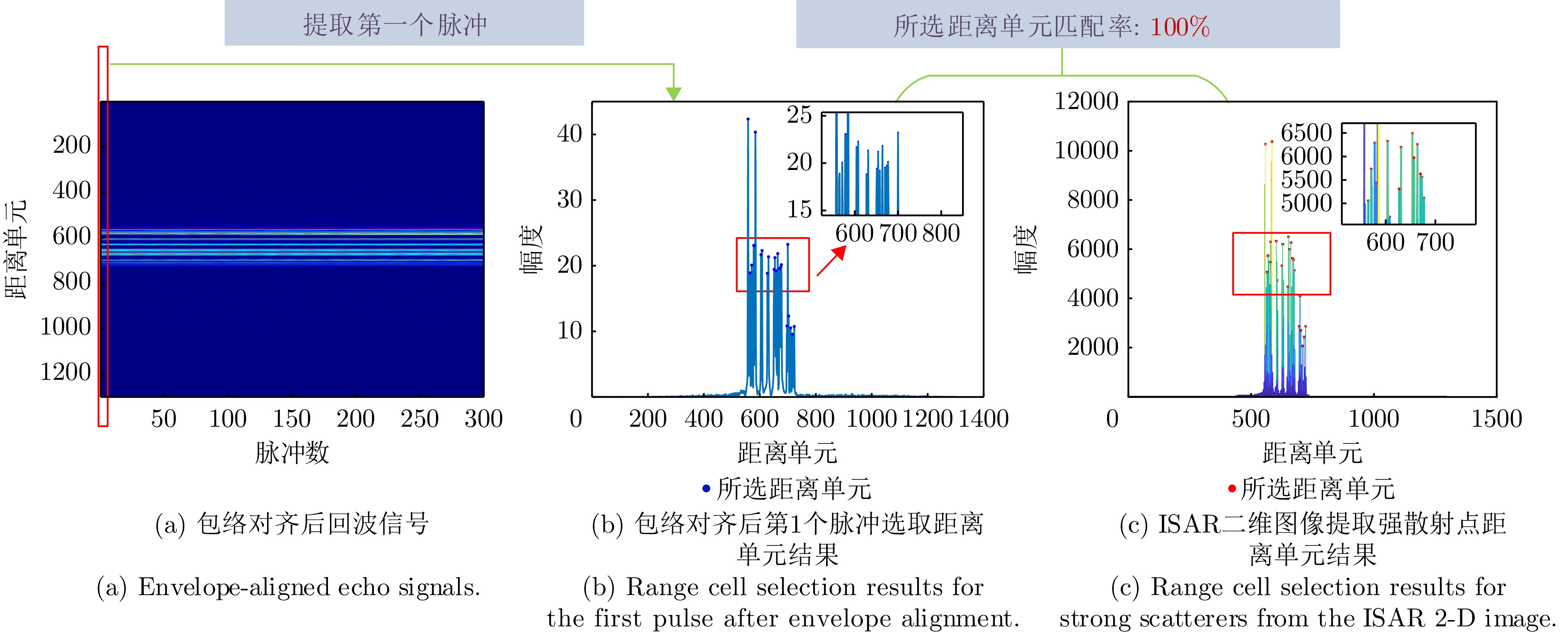
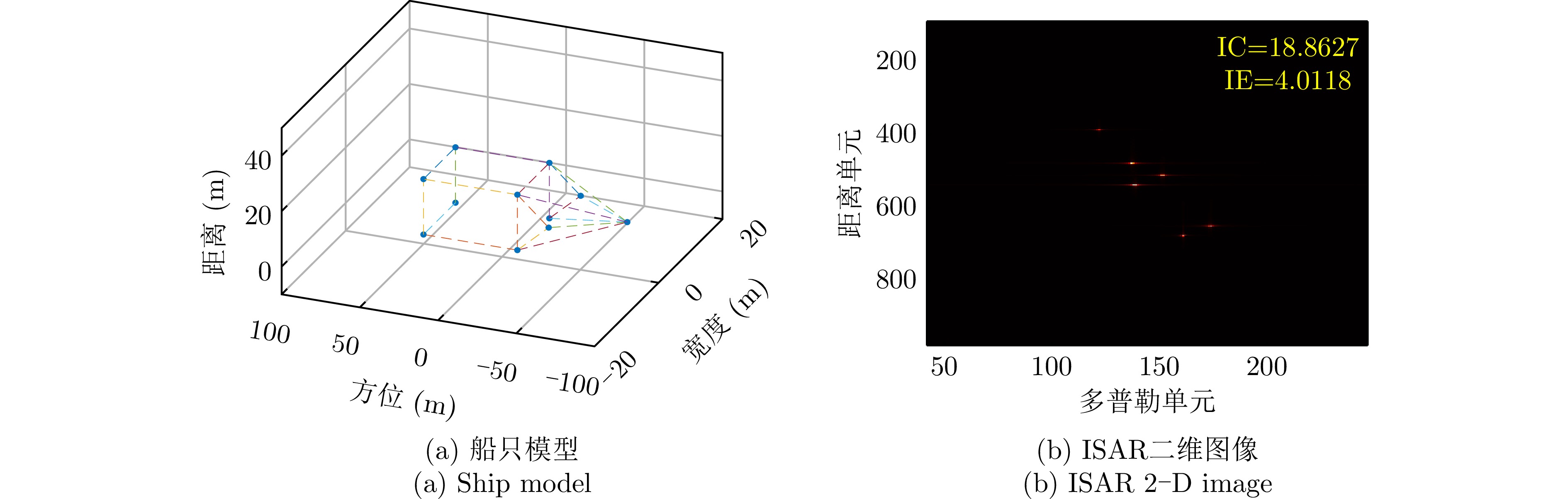
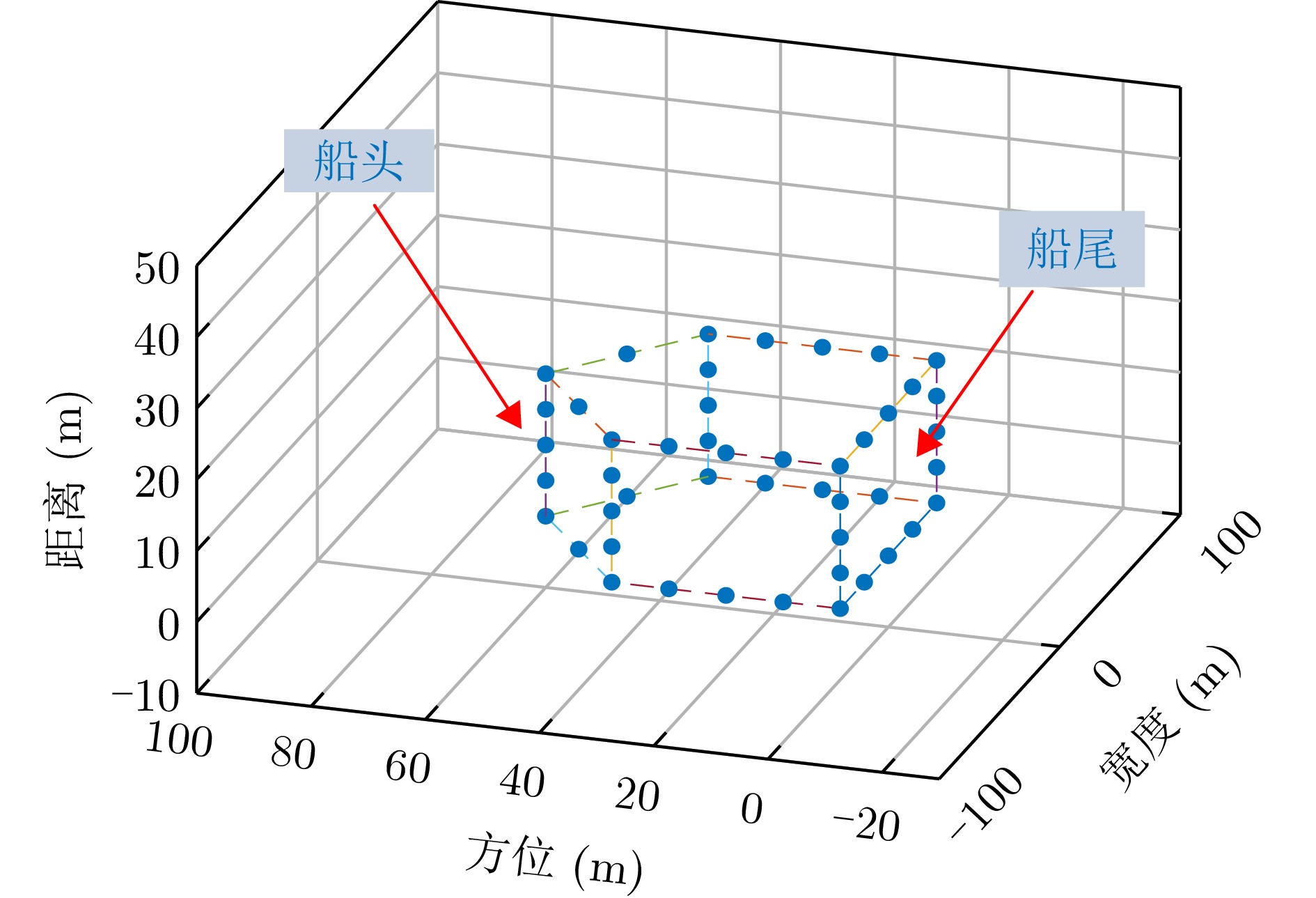
图 10 对比实验模型及ISAR二维成像结果
Figure 10. Comparison experiment model and ISAR 2-D imaging results
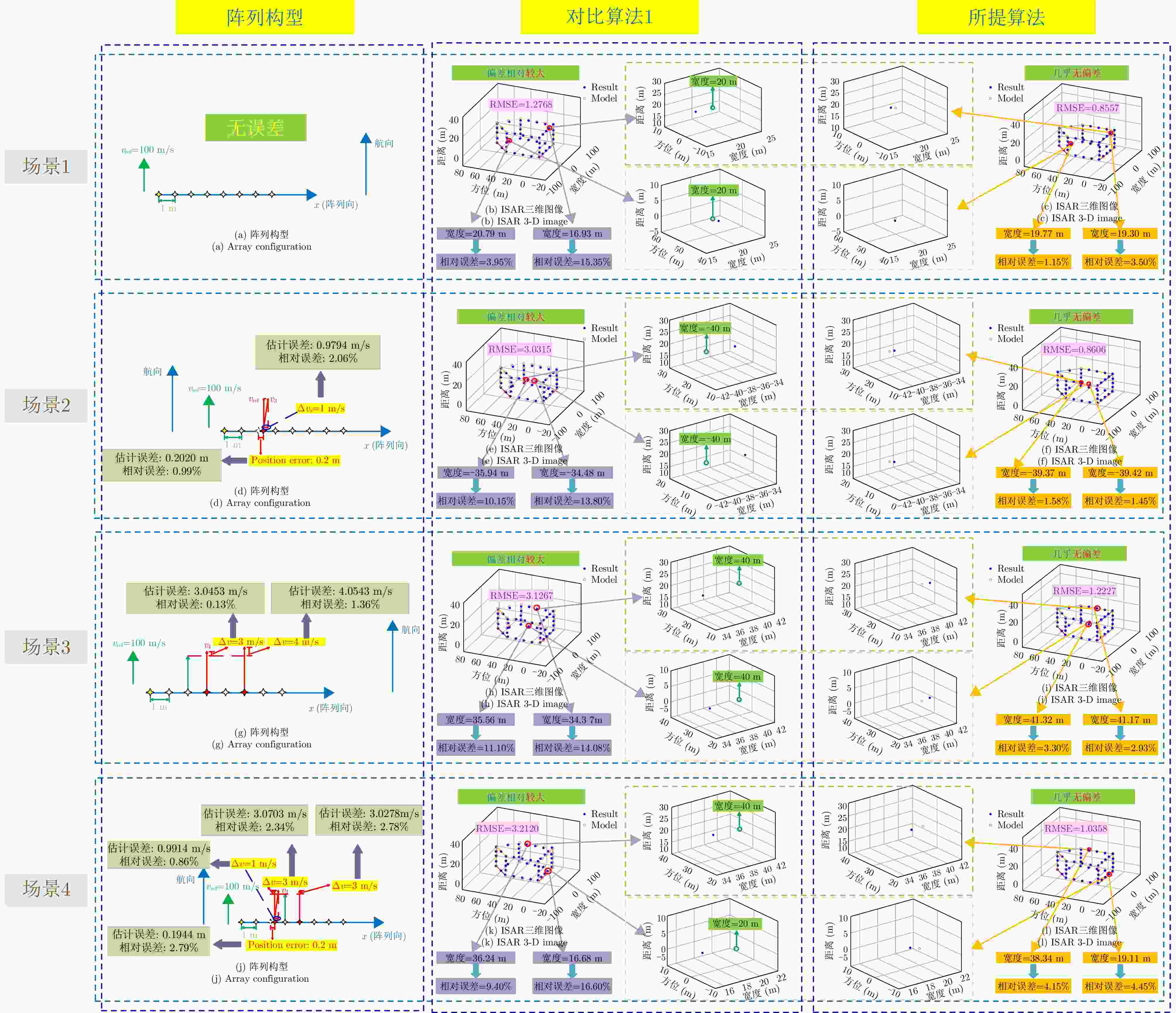
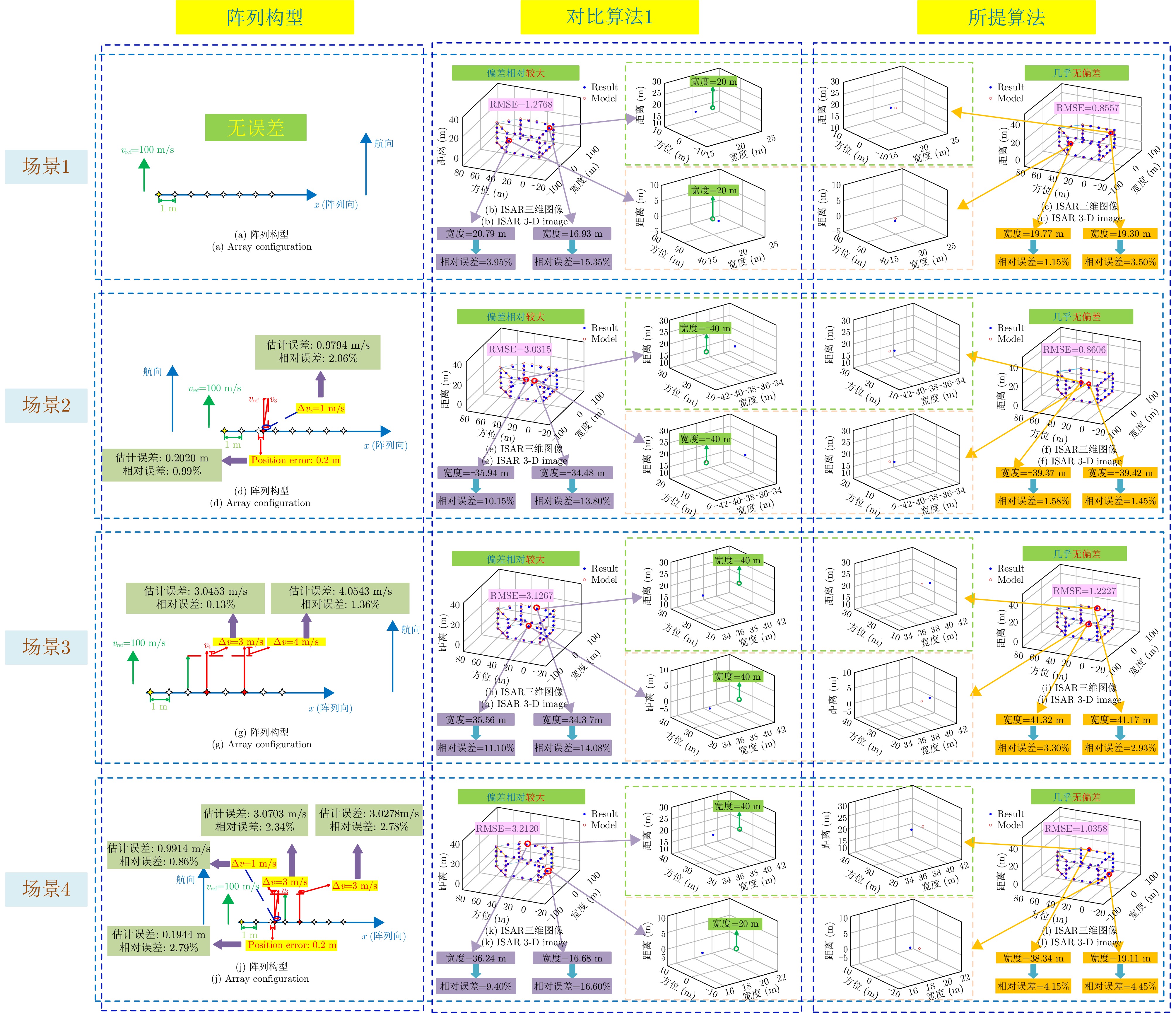
图 13 不同误差场景下对比算法1和所提算法ISAR三维成像结果对比
Figure 13. Comparison of 3-D ISAR imaging results between compared algorithm 1 and the proposed algorithm under varying error scenarios
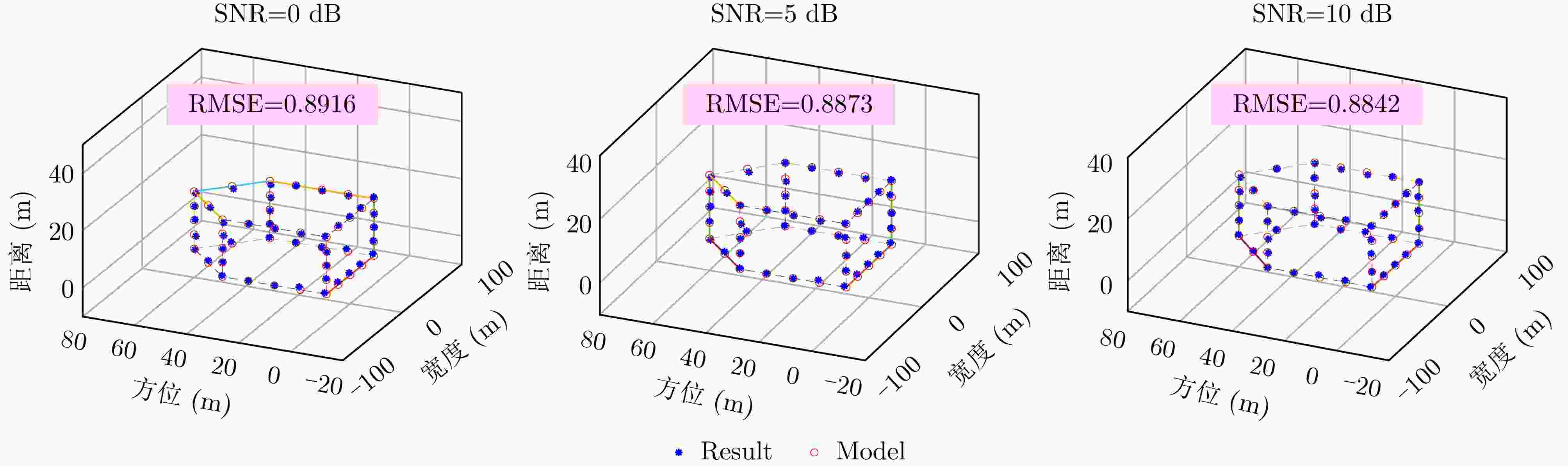
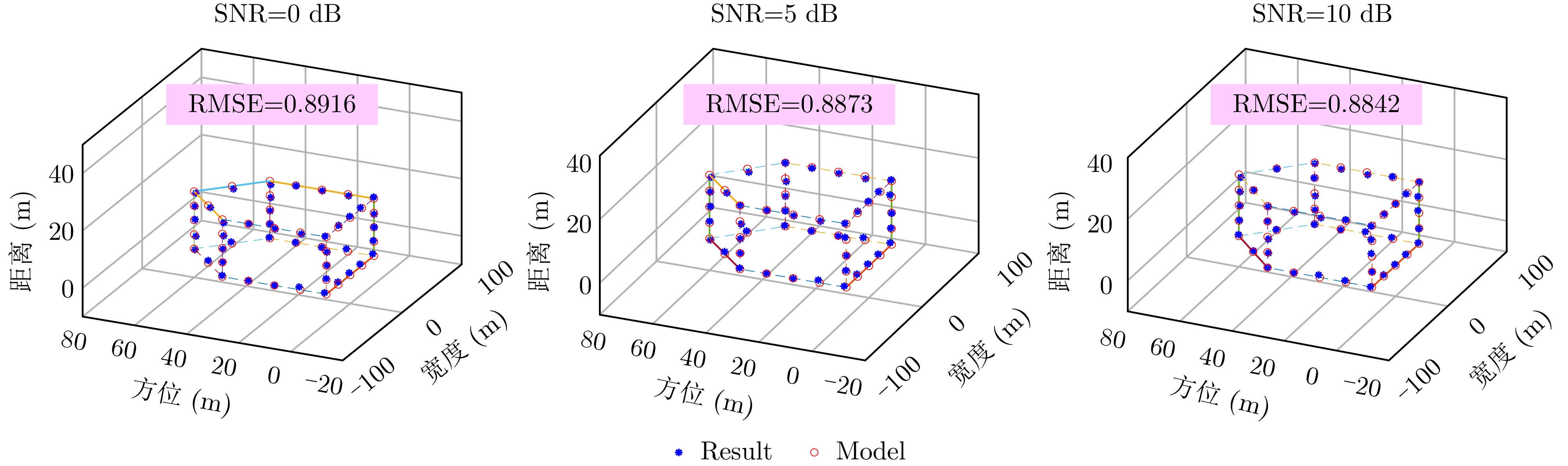
图 16 3种信噪比下所提算法三维成像结果
Figure 16. 3-D Imaging results under different SNRs with proposed algorithm
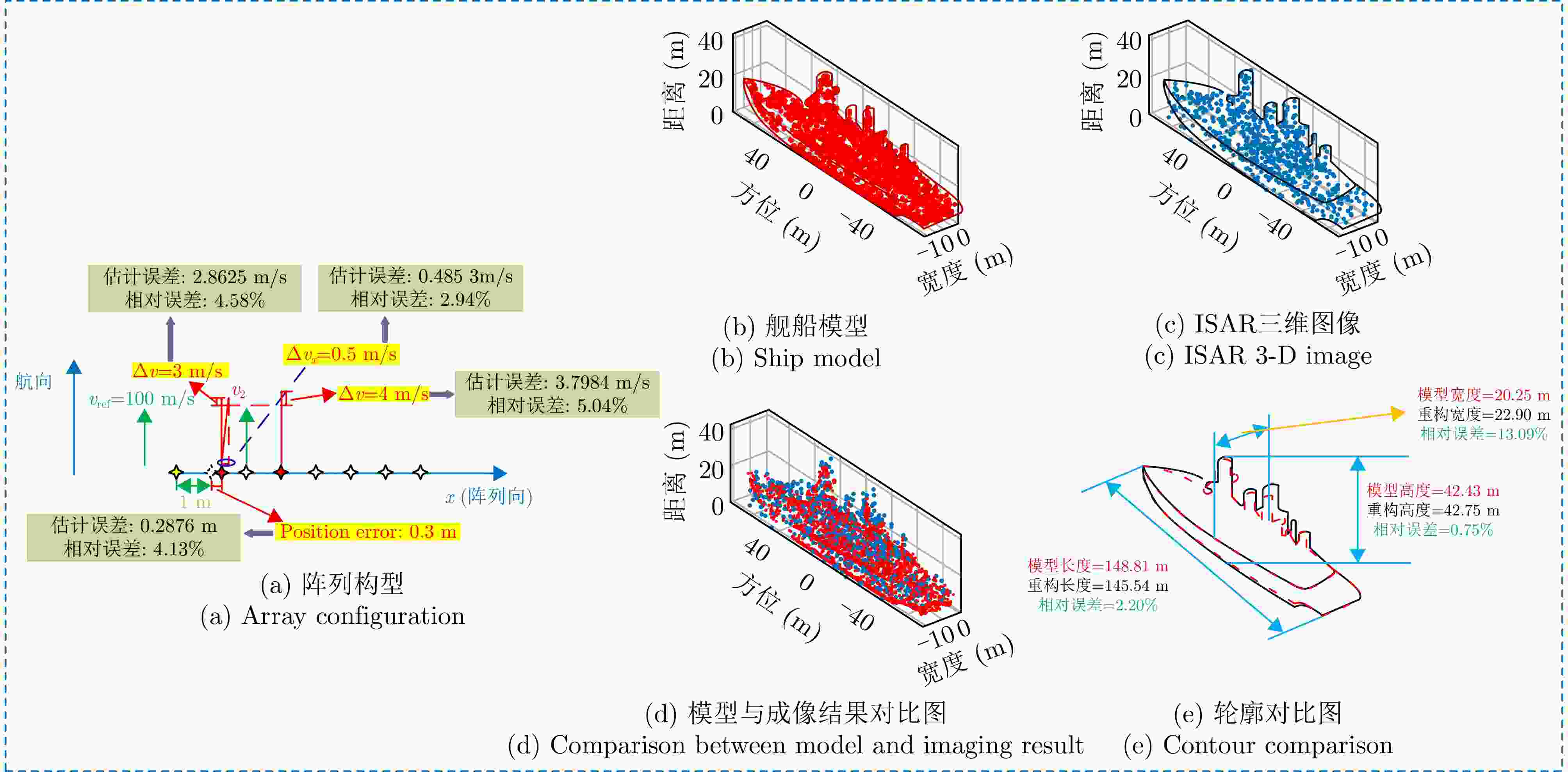
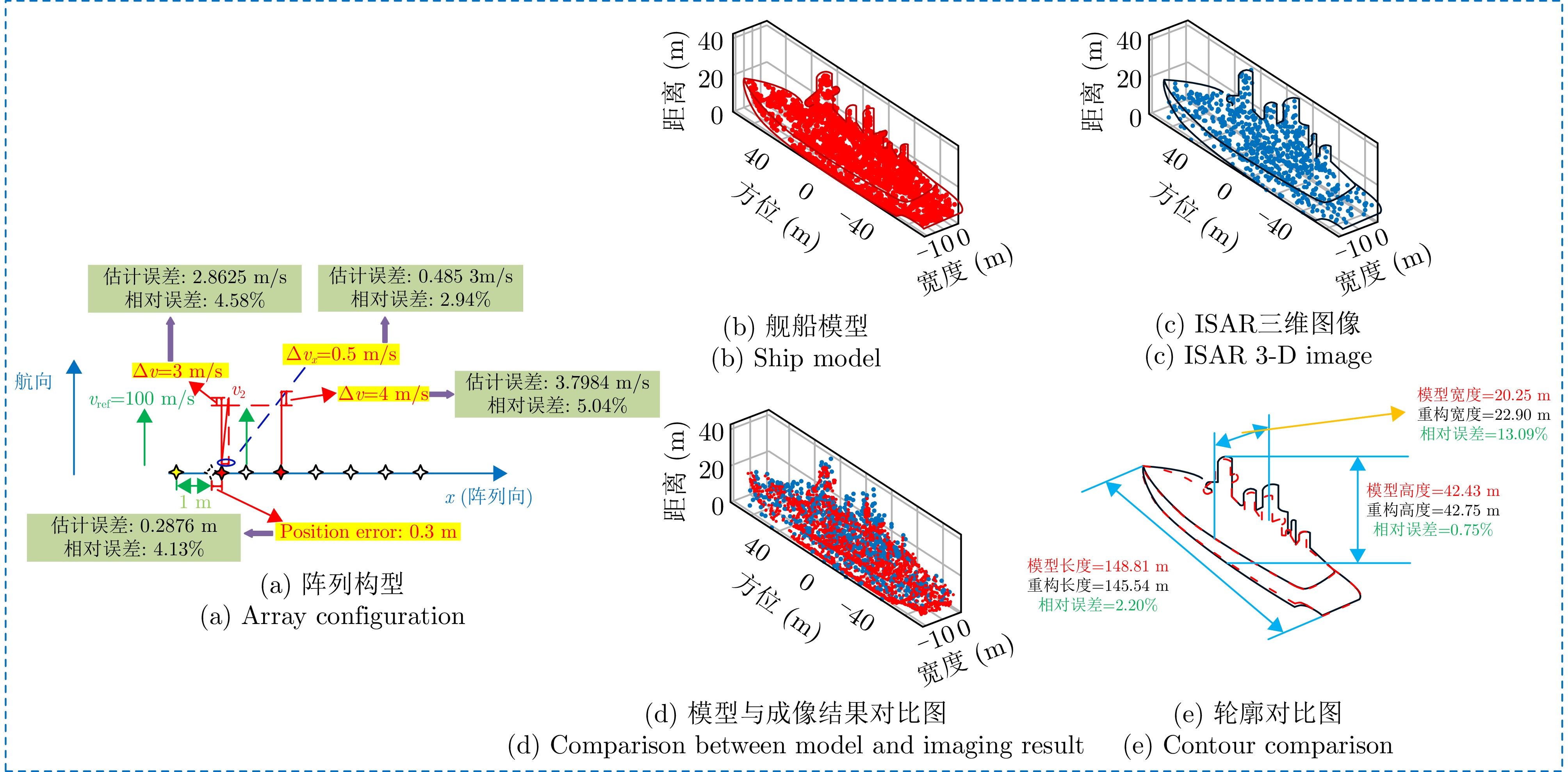
图 17 CAD舰船姿态1所提算法ISAR三维成像结果
Figure 17. Experimental results in the real-world scenario 1
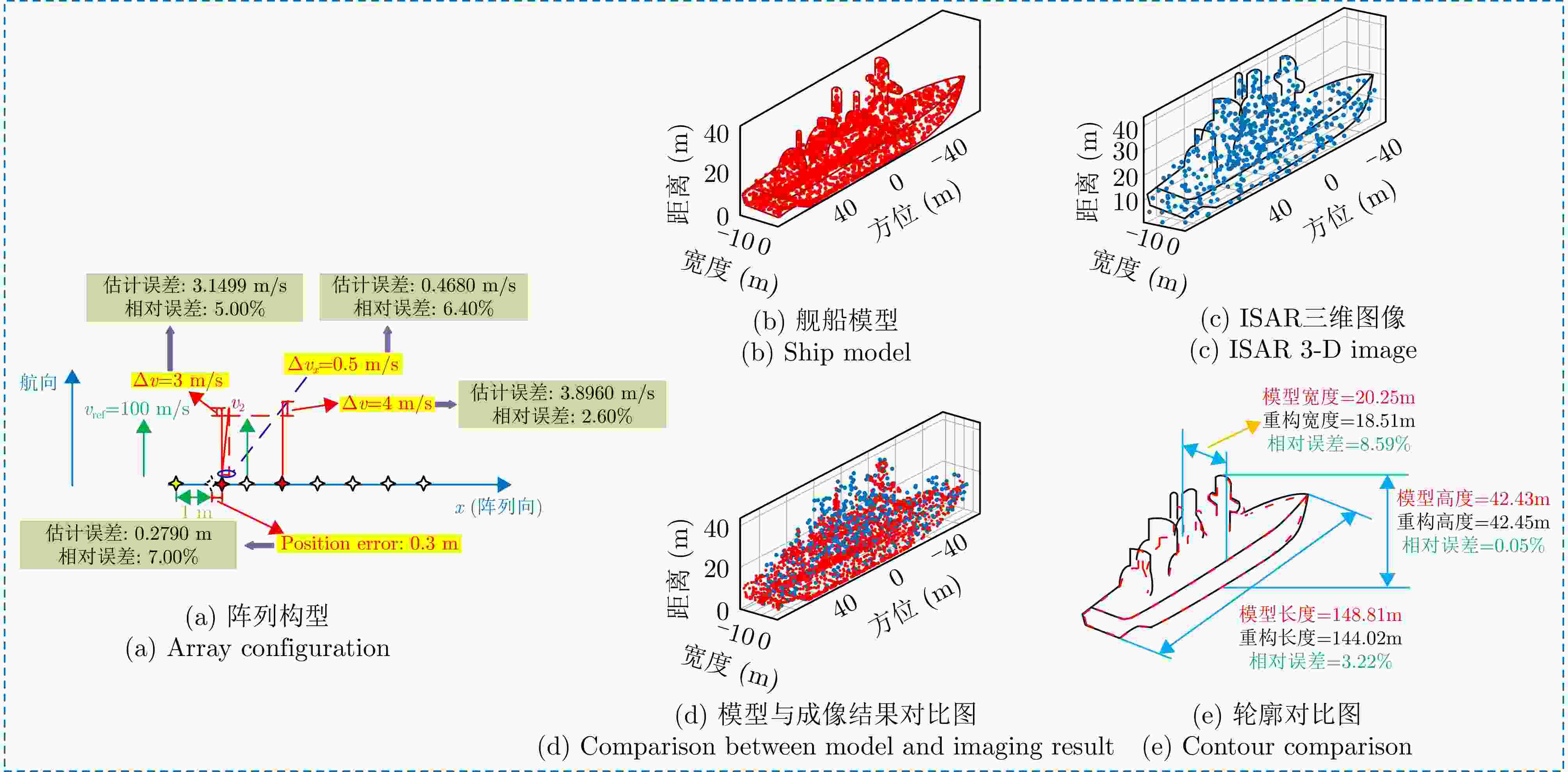
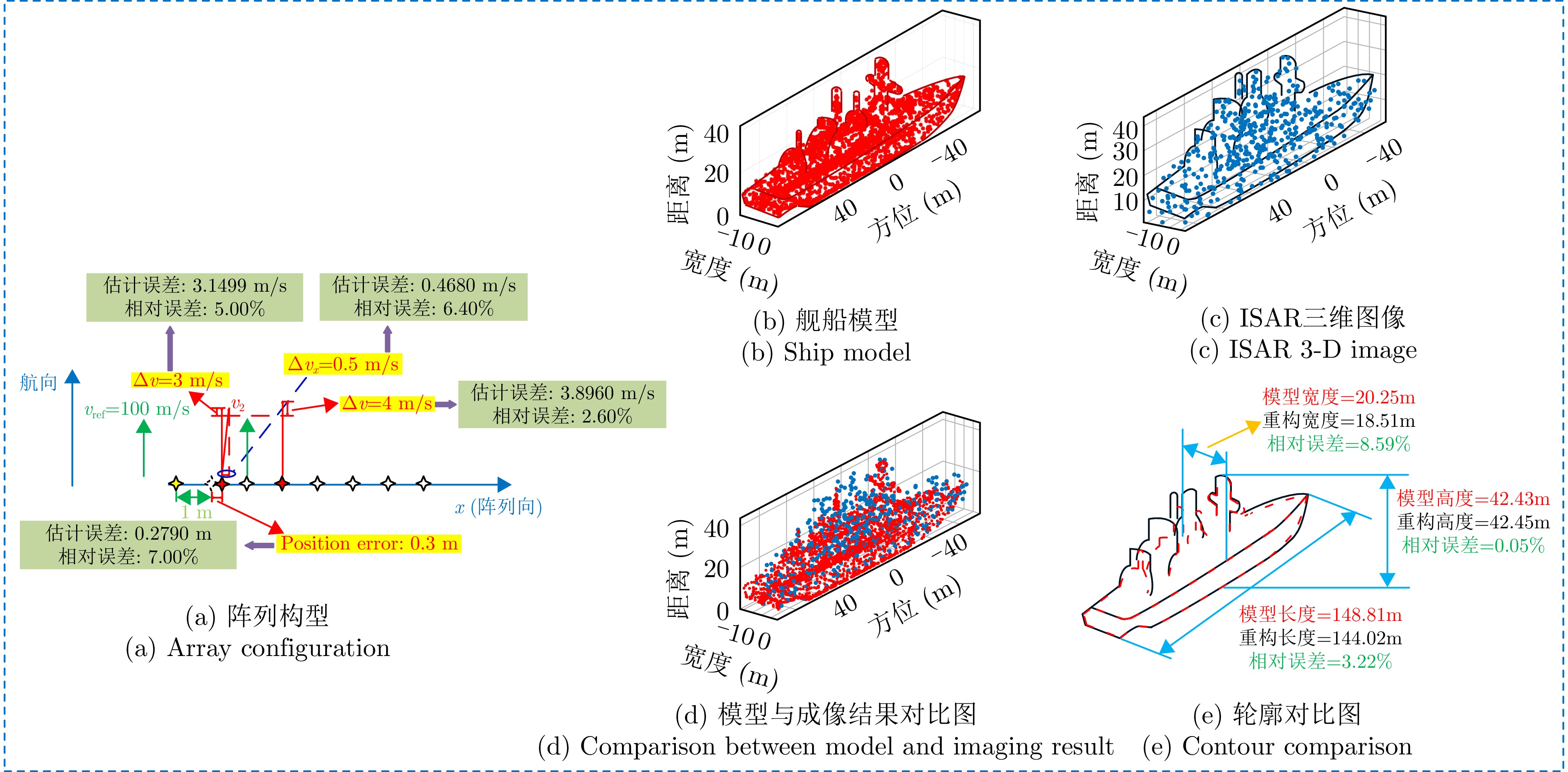
图 18 CAD舰船姿态2所提算法ISAR三维成像结果
Figure 18. Experimental results in the real-world scenario 2
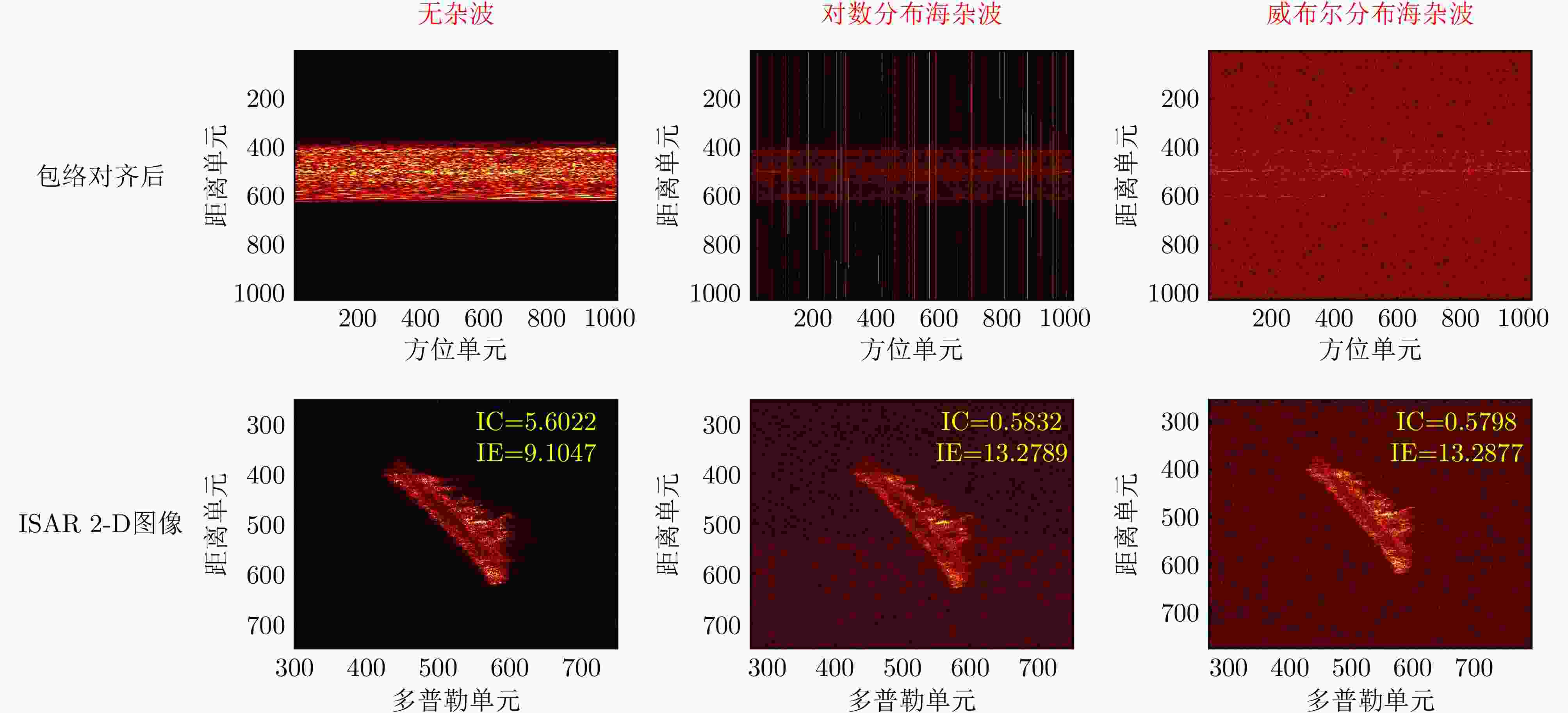
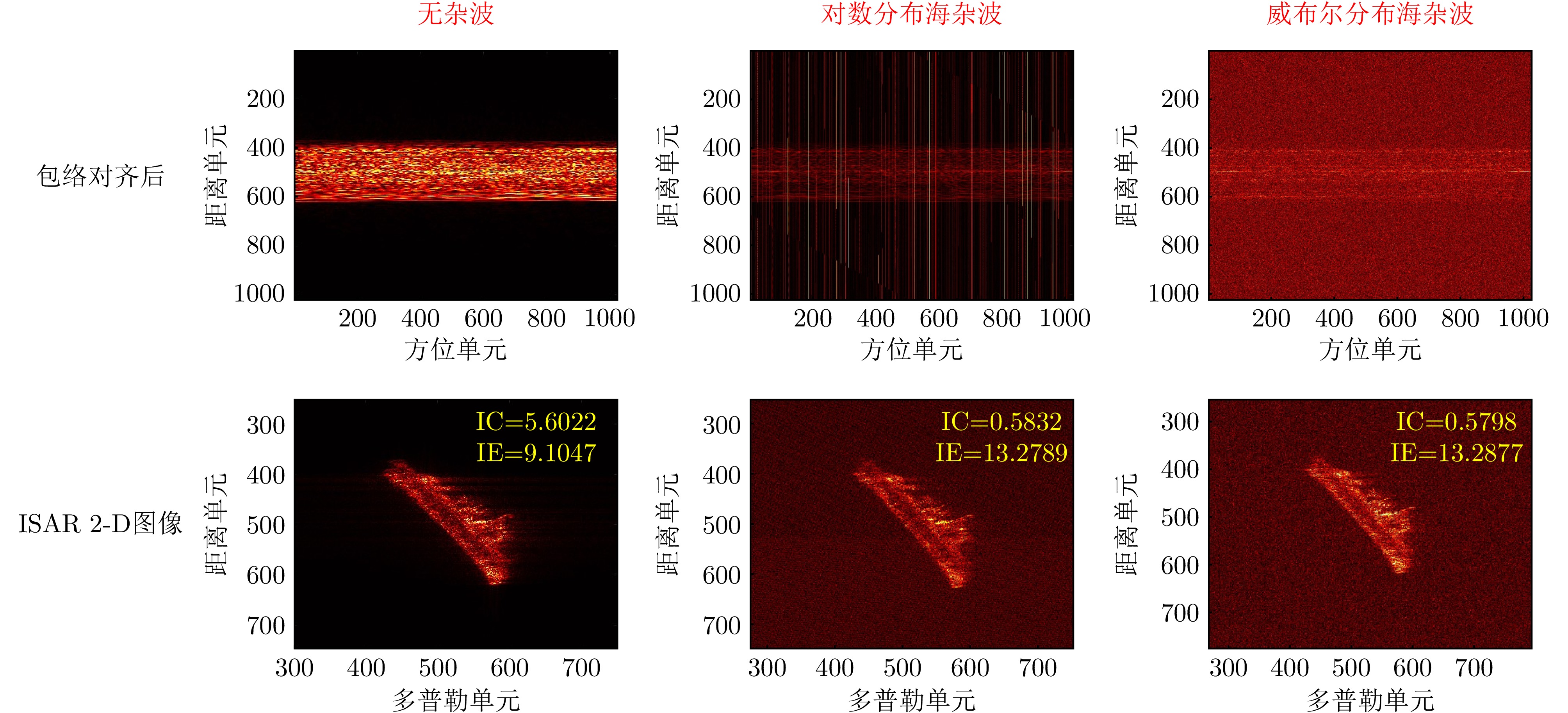
图 19 引入不同海杂波时ISAR二维成像结果
Figure 19. ISAR 2-D imaging results under different sea clutter conditions
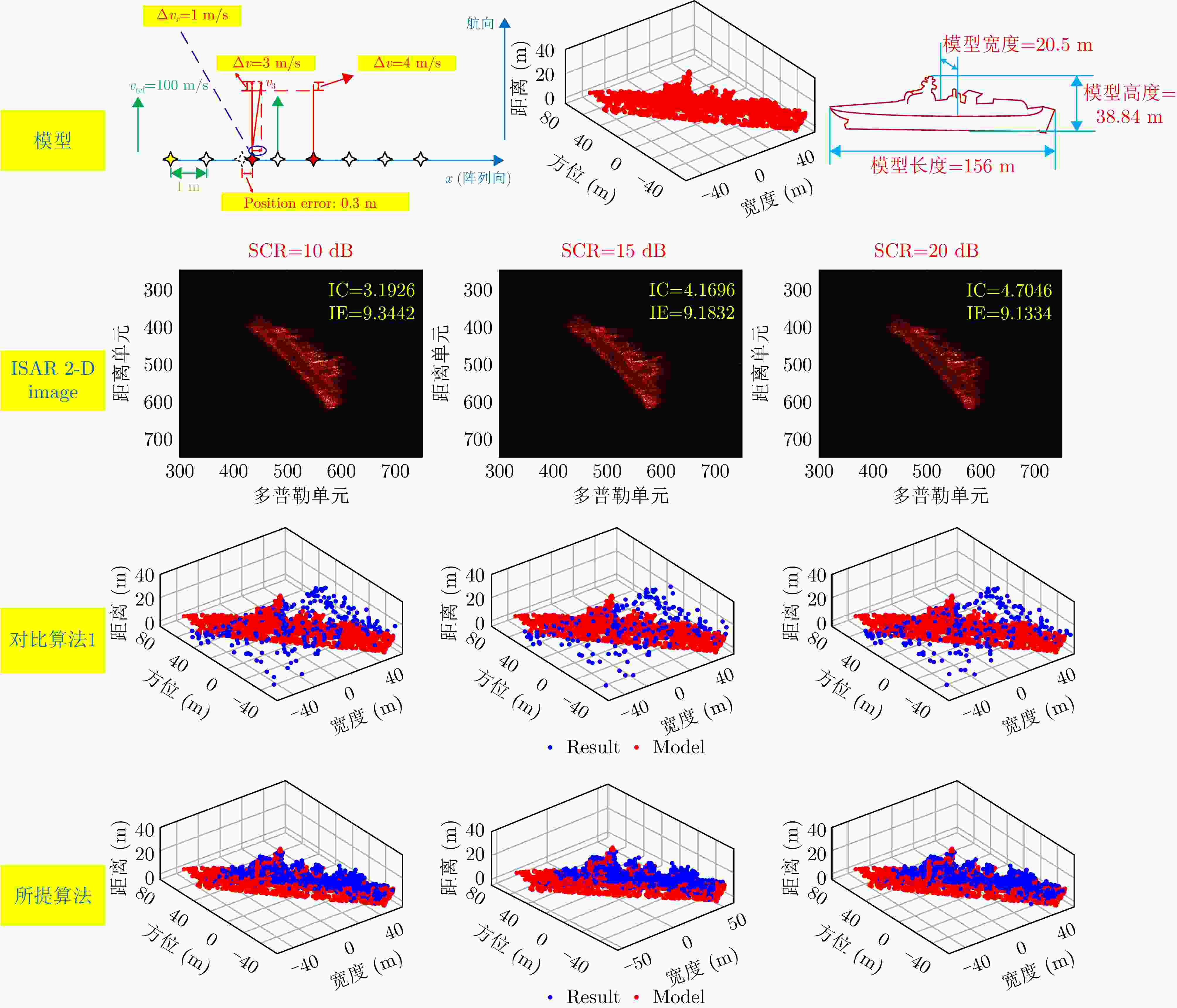
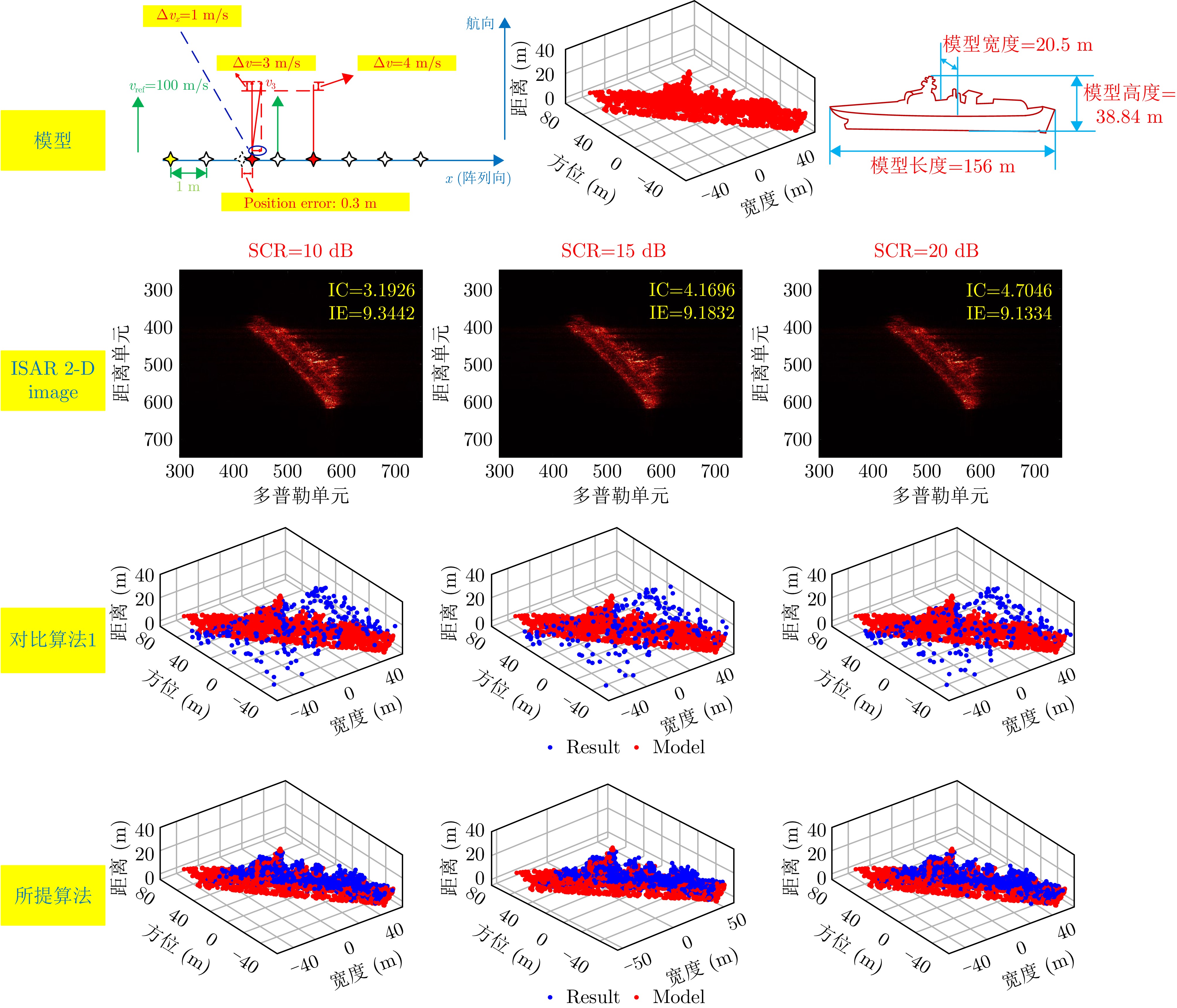
图 20 不同信杂比下对比算法1和所提算法三维成像结果图
Figure 20. Comparison of 3-D imaging results between comparison algorithm 1 and the proposed algorithm under different SCRs
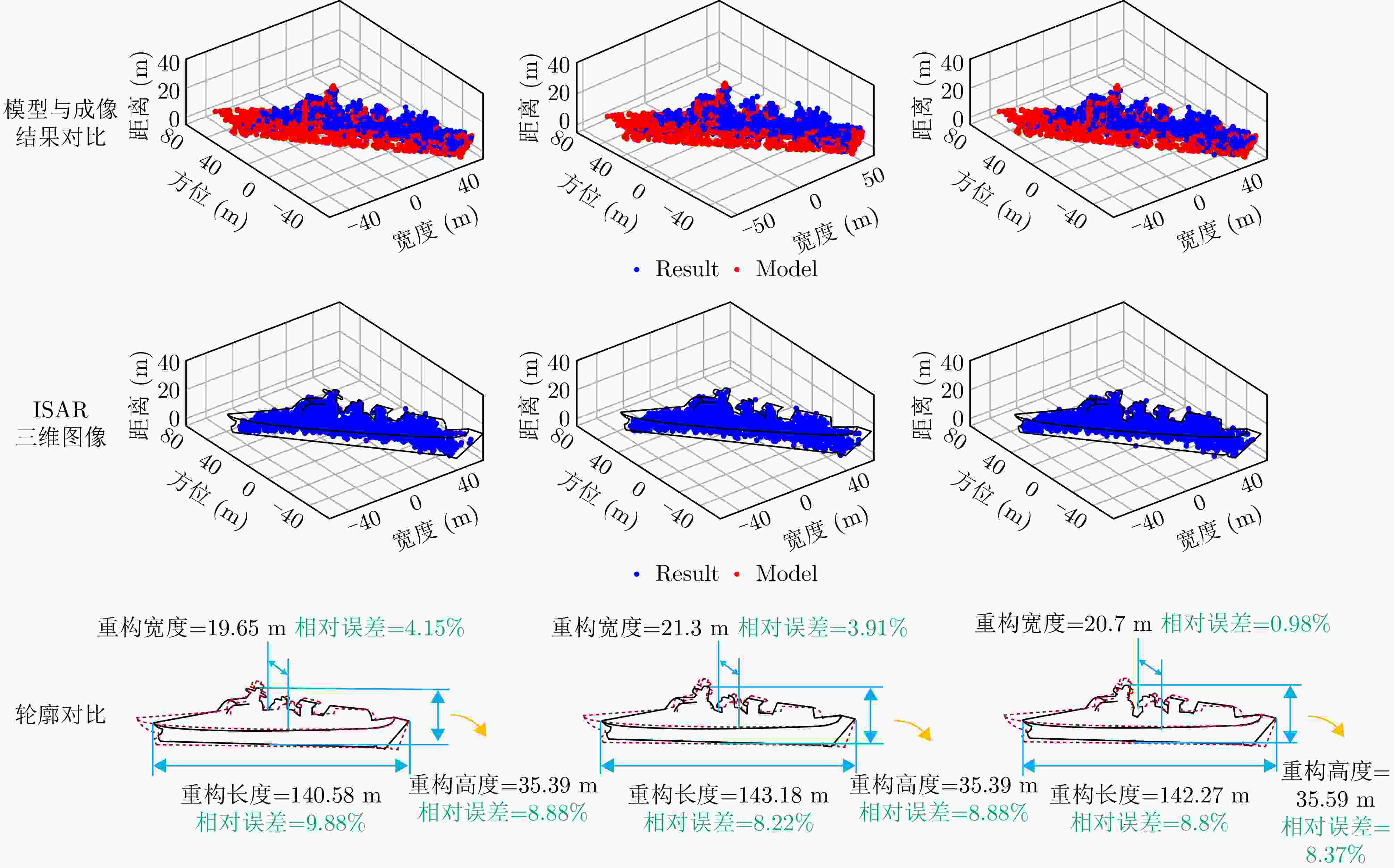
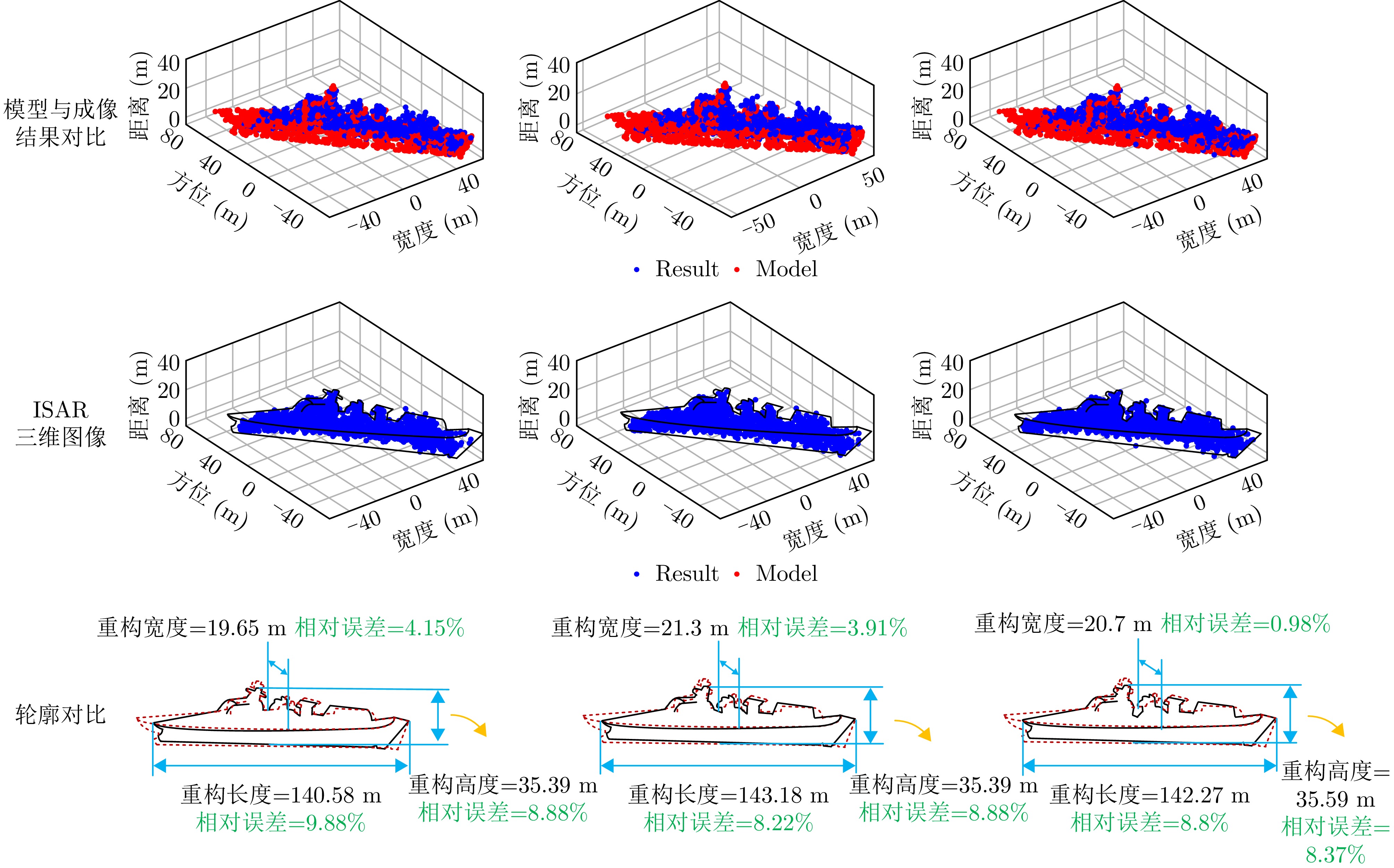
图 21 不同信杂比下所提算法ISAR三维成像结果图
Figure 21. ISAR 3-D imaging results of the proposed algorithm under different SCRs
1 超分辨DOA估计与多维误差补偿一体化处理
1. Integrated processing of super-resolution DOA estimation and multidimensional error compensation
输入:$ \boldsymbol{x} $, $ {\boldsymbol{\varSigma }} $, $ \boldsymbol{Q} $, $ {\boldsymbol{\varLambda }} $, stopping rule, M, N, limits 初始化:$ i=0 $, $ j=0 $, ${\boldsymbol{p}}^{\boldsymbol{i}} = \left({p}^{i,1},{p}^{i,2},\cdots ,{p}^{i,M}\right) = \mathrm{rand}\left\{\mathrm{limits}\right\} $,
$ \mathrm{gbest} $直到 $ i=N $ 1. $ i=i+1 $ 直到 $ j=M $ (1) $ j=j+1 $ (2) $ \mathcal{F}^{{i},j}=f\left({p}^{i,j}\right) $ (3) $ {\mathcal{L}}^{i,j}={\boldsymbol{\varPhi }}\mathcal{F}^{{i},j} $ 初始化:$ k=0 $, $ \varepsilon ={10}^{-2} $ 直到满足停止条件 (a) $ k=k+1 $ (b) $ {\gamma }_{k}=1-{\alpha }_{k}{{\varSigma }}_{k} $ (c) $ {\alpha }_{k}=\dfrac{{\gamma }_{k}+c}{{\overset{\frown }{x}}_{k}^{2}+d} $ (d) $ {\boldsymbol{\varLambda }}\mathbf{=}\mathrm{diag}\left\{{\alpha }_{1}^{-1},{\alpha }_{2}^{-1},\cdots ,{\alpha }_{N}^{-1}\right\} $ (e) $ \sigma =\dfrac{{\left|\left|\boldsymbol{y}-{\mathcal{L}}_{i,j}\boldsymbol{X}\right|\right|}_{2}^{2}+b}{M-\displaystyle\sum \limits_{i=1}^{M}{\gamma }_{i}+a} $ (f) $ {\boldsymbol{\varSigma }}\mathbf{=}{\boldsymbol{\varLambda }}-\sigma {\boldsymbol{\varLambda }}{\mathcal{L}}_{i,j}^{\mathrm{H}}{\boldsymbol{Q}}^{-1}{\mathcal{L}}_{i,j}{\boldsymbol{\varLambda }} $ (g) $ \overset{\frown }{\boldsymbol{x}}\mathbf{=}\sigma {\boldsymbol{\varLambda }}{\mathcal{L}}_{i,j}^{\mathrm{H}}{\boldsymbol{Q}}^{-1}\boldsymbol{y} $ (h) $ {\mathcal{C}}_{m}^{i,j}={h}_{1}{A}_{s}^{i,j}+{h}_{2}\Delta {\theta }^{i,j}+{h}_{3}{\rm{PCR}}^{i,j}+{h}_{4}{\sigma }^{i,j} $ 输出:$ \overset{\frown }{\boldsymbol{x}}=\arg \min {\left|\left|\boldsymbol{y}-{\mathcal{L}}_{i,j}\boldsymbol{x}\right|\right|}_{2} $, $ {\mathcal{C}}_{m}^{i,j} $ (4) $ \mathrm{pbest}=\max \left\langle \mathrm{pbest},{\mathcal{C}}_{m}^{i,j}\right\rangle $ 2. $ \mathrm{bestpos}=\arg \underset{{\boldsymbol{p}}^{{{}_{{i}}}}}{\max }\left\langle \mathrm{gbest},\mathrm{pbest}\right\rangle $ 3. $ {\boldsymbol{p}}^{{i}{+1}}={c}_{1}\times \left[{\boldsymbol{p}}^{{i}}-\mathrm{pbest}\right]+{c}_{2}\times \left[{\boldsymbol{p}}^{{i}}-\mathrm{bestpos}\right]+{\boldsymbol{p}}^{{i}} $ 输出:$ \mathrm{bestpos} $, $ \overset{\frown }{\boldsymbol{x}} $  下载: 导出CSV
表 1 实验所用三维成像算法
Table 1. 3-D imaging algorithms used in experiments
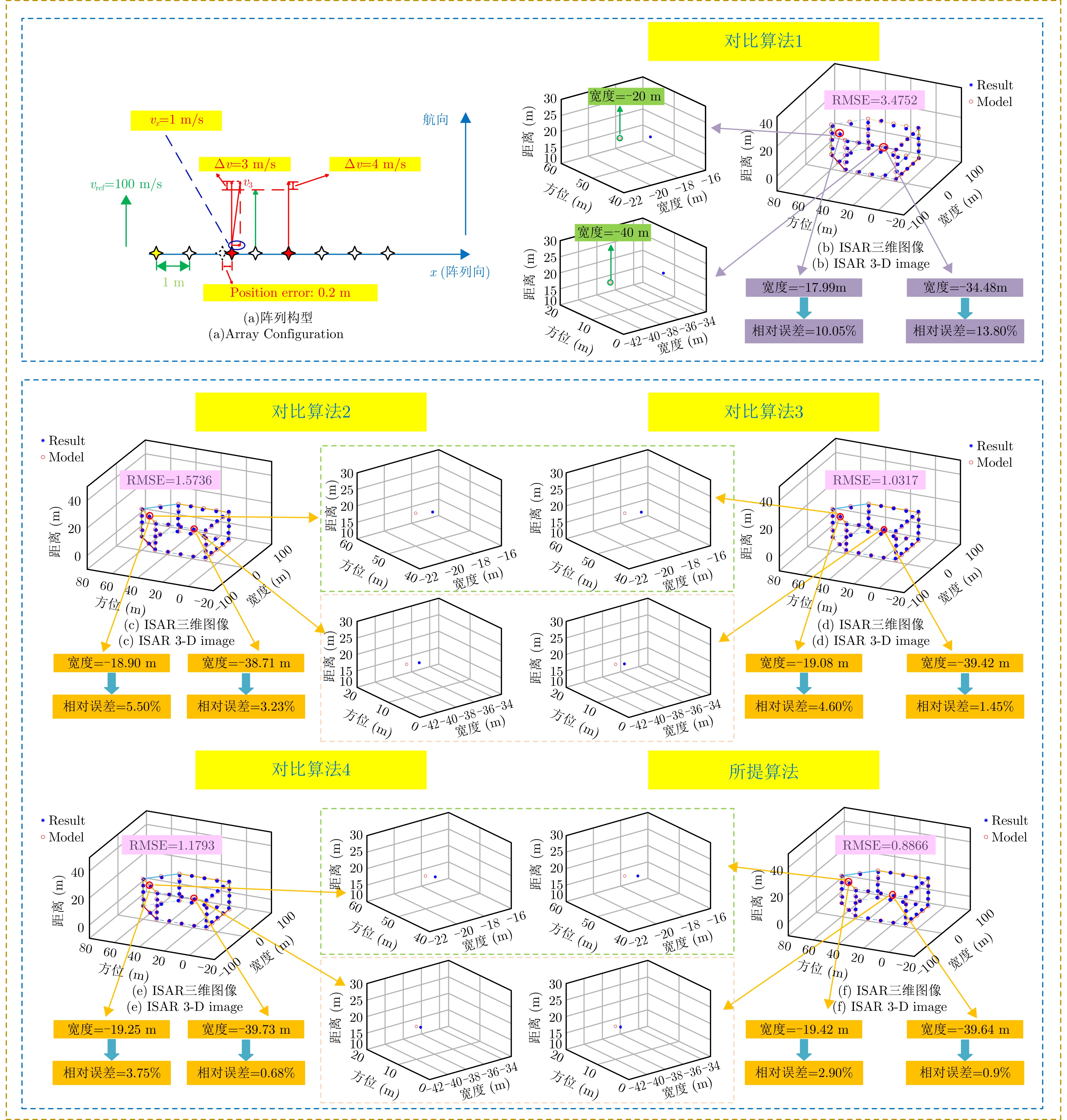
算法名称 算法细节 单脉冲ISAR RDA+和差法测角 InISAR RDA+干涉处理 对比算法1 RDA+SBL 对比算法2 RDA+SRDOA-AM+SRDOA-EC+SPSR 对比算法3 RDA+SRDOA-AM+SRDOA-EC+AOS 对比算法4 RDA+SRDOA-AM+SRDOA-EC+ROS 所提算法 RDA+SRDOA-AM+SRDOA-EC+RAOS
下载: 导出CSV
表 2 阵列ISAR三维成像系统主要仿真参数
Table 2. Main parameters of the electromagnetic simulation scene
参数 数值 参数 数值 中心频率 10 GHz 脉冲宽度 1 μs 带宽 300 MHz 采样频率 400 MHz PRF 300 Hz 中心斜距 4 km 距离单元 1300 脉冲数 300 阵元间距 1 m 阵元个数 8
下载: 导出CSV
表 3 4种策略下阵列误差估计结果
Table 3. Array errors estimation results with four strategies
算法 指标 真实值 估计值 相对误差(%) 平均误差(%) 对比算法2 阵元3阵列向位置误差 0.2 m 0.193486 m 3.26 7.61 阵元3阵列向速度误差 1 m/s 1.166218 m/s 16.60 阵元3航向速度误差 3 m/s 3.168175 m/s 5.61 阵元5航向速度误差 4 m/s 3.801440 m/s 4.96 对比算法3 阵元3阵列向位置误差 0.2 m 0.197384 m 1.31 3.45 阵元3阵列向速度误差 1 m/s 1.082571 m/s 8.26 阵元3航向速度误差 3 m/s 3.086318 m/s 2.88 阵元5航向速度误差 4 m/s 4.054391 m/s 1.36 对比算法4 阵元3阵列向位置误差 0.2 m 0.206382 m 3.19 4.13 阵元3阵列向速度误差 1 m/s 1.096488 m/s 9.65 阵元3航向速度误差 3 m/s 2.958247 m/s 1.39 阵元5航向速度误差 4 m/s 3.908311 m/s 2.29 所提算法 阵元3阵列向位置误差 0.2 m 0.201541 m 0.77 1.67 阵元3阵列向速度误差 1 m/s 0.967528 m/s 3.25 阵元3航向速度误差 3 m/s 3.047742 m/s 1.59 阵元5航向速度误差 4 m/s 3.957633 m/s 1.06
下载: 导出CSV
表 4 算法运行时间及RMSE对比
Table 4. Algorithm runtime and RMSE comparison
算法 运行时间(min) RMSE 对比算法1 0.26 3.4752 对比算法2 0.33 1.5736 对比算法3 7.61 1.0317 对比算法4 15.85 1.1793 所提算法 1.22 0.8866
下载: 导出CSV
表 5 电磁仿真参数
Table 5. Main parameters of the electromagnetic simulation scene
参数 数值 参数 数值 中心频率 10 GHz 脉冲宽度 1 μs 带宽 300 MHz 采样频率 400 MHz PRF 300 Hz 中心斜距 4 km 距离单元 1024 脉冲数 1024 阵元间距 1 m 阵元个数 8
下载: 导出CSV
表 6 不同信杂比下平均相对误差
Table 6. Average relative errors under different SCRs
信杂比(dB) 平均相对误差(%) 10 7.63 15 7.00 20 6.05
下载: 导出CSV
表 7 不同信杂比下误差估计结果
Table 7. Array errors estimation results under different SCRs
信杂比(dB) 指标 真实值 估计值 相对误差(%) 平均误差(%) 10 阵元3阵列向位置误差 0.2 m 0.1852 m 7.40 7.39 阵元3阵列向速度误差 1 m/s 1.0812 m/s 8.12 阵元3航向速度误差 3 m/s 3.3233 m/s 10.78 阵元5航向速度误差 4 m/s 3.8702 m/s 3.24 15 阵元3阵列向位置误差 0.2 m 0.2179 m 8.95 6.04 阵元3阵列向速度误差 1 m/s 1.0754 m/s 7.54 阵元3航向速度误差 3 m/s 2.8861 m/s 3.80 阵元5航向速度误差 4 m/s 4.1549 m/s 3.87 20 阵元3阵列向位置误差 0.2 m 0.2182 m 9.10 5.86 阵元3阵列向速度误差 1 m/s 1.0685 m/s 6.85 阵元3航向速度误差 3 m/s 3.1258 m/s 4.19 阵元5航向速度误差 4 m/s 3.8687 m/s 3.28
下载: 导出CSV
-
[1] WANG Feng, XU Feng, and JIN Yaqiu. Three-dimensional reconstruction from a multiview sequence of sparse ISAR imaging of a space target[J]. IEEE Transactions on Geoscience and Remote Sensing, 2018, 56(2): 611–620. doi: 10.1109/TGRS.2017.2737988. [2] ZHOU Yejian, ZHANG Lei, CAO Yunhe, et al. Attitude estimation and geometry reconstruction of satellite targets based on ISAR image sequence interpretation[J]. IEEE Transactions on Aerospace and Electronic Systems, 2019, 55(4): 1698–1711. doi: 10.1109/TAES.2018.2875503. [3] LIU Lei, ZHOU Zuobang, ZHOU Feng, et al. A new 3-D geometry reconstruction method of space target utilizing the scatterer energy accumulation of ISAR image sequence[J]. IEEE Transactions on Geoscience and Remote Sensing, 2020, 58(12): 8345–8357. doi: 10.1109/TGRS.2020.2986465. [4] RONG Jiajia, WANG Yong, and HAN Tao. Interferometric ISAR imaging of maneuvering targets with arbitrary three-antenna configuration[J]. IEEE Transactions on Geoscience and Remote Sensing, 2020, 58(2): 1102–1119. doi: 10.1109/TGRS.2019.2943613. [5] ZHANG Junqiu and WANG Yong. A three-dimensional imaging method of ship target via multistatic distributed InISAR[J]. IEEE Geoscience and Remote Sensing Letters, 2022, 19: 4511805. doi: 10.1109/LGRS.2022.3195362. [6] TIAN Biao, WU Wenzhen, LIU Yang, et al. Interferometric ISAR imaging of space targets using pulse-level image registration method[J]. IEEE Transactions on Aerospace and Electronic Systems, 2023, 59(3): 2188–2203. doi: 10.1109/TAES.2022.3209950. [7] 胡凤鸣, 田稷钒, 程国振, 等. 城市建筑SAR三维成像域几何连续性表征与少轨数三维成像[J]. 雷达学报(中英文), 2026, 15(1): 26–41. doi: 10.12000/JR24256.HU Fengming, TIAN Jifan, CHENG Guozhen, et al. Geometric continuity characterization of urban buildings in SAR 3D imaging domain and few-tracks 3D imaging[J]. Journal of Radars, 2026, 15(1): 26–41. doi: 10.12000/JR24256. [8] HADDAD N, BOUARABA A, HADJ-RABAH K, et al. Generalized parametric iterative approach for tomographic SAR reconstruction[J]. IEEE Geoscience and Remote Sensing Letters, 2024, 21: 4011005. doi: 10.1109/LGRS.2024.3406894. [9] 林雨青, 仇晓兰, 彭凌霄, 等. 基于多径模型的建筑区SAR三维成像中非视距目标重定位方法[J]. 雷达学报(中英文), 2024, 13(4): 777–790. doi: 10.12000/JR24057.LIN Yuqing, QIU Xiaolan, PENG Lingxiao, et al. Non-line-of-sight target relocation by multipath model in SAR 3D urban area imaging[J]. Journal of Radars, 2024, 13(4): 777–790. doi: 10.12000/JR24057. [10] WANG Yan, DING Zegang, LI Linghao, et al. First demonstration of single-pass distributed SAR tomographic imaging with a P-band UAV SAR prototype[J]. IEEE Transactions on Geoscience and Remote Sensing, 2022, 60: 5238618. doi: 10.1109/TGRS.2022.3221859. [11] MA Changzheng, YEO T S, ZHANG Qun, et al. Three-dimensional ISAR imaging based on antenna array[J]. IEEE Transactions on Geoscience and Remote Sensing, 2008, 46(2): 504–515. doi: 10.1109/TGRS.2007.909946. [12] MA Changzheng, YEO T S, TAN C S, et al. Sparse array 3-D ISAR imaging based on maximum likelihood estimation and CLEAN technique[J]. IEEE Transactions on Image Processing, 2010, 19(8): 2127–2142. doi: 10.1109/TIP.2010.2045711. [13] WANG Yong and LI Xuelu. 3-D imaging based on combination of the ISAR technique and a MIMO radar system[J]. IEEE Transactions on Geoscience and Remote Sensing, 2018, 56(10): 6033–6054. doi: 10.1109/TGRS.2018.2829912. [14] 全英汇, 吴耀君, 段丽宁, 等. 基于稀疏恢复的雷达信号处理研究综述[J]. 雷达学报(中英文), 2024, 13(1): 46–67. doi: 10.12000/JR23211.QUAN Yinghui, WU Yaojun, DUAN Lining, et al. A review of radar signal processing based on sparse recovery[J]. Journal of Radars, 2024, 13(1): 46–67. doi: 10.12000/JR23211. [15] 夏靖远, 杨志雄, 周治兴, 等. 一种基于元学习的稀疏孔径ISAR成像算法[J]. 雷达学报, 2023, 12(4): 849–859. doi: 10.12000/JR23121.XIA Jingyuan, YANG Zhixiong, ZHOU Zhixing, et al. A metalearning-based sparse aperture ISAR imaging method[J]. Journal of Radars, 2023, 12(4): 849–859. doi: 10.12000/JR23121. [16] LIU Xin, DU Changhao, WANG Jiacheng, et al. An LSTM-assisted calibration approach for self-time transfer performance optimization in multi-UAV networks[J]. IEEE Transactions on Aerospace and Electronic Systems, 2025, 61(6): 17333–17348. doi: 10.1109/TAES.2025.3603798. [17] SONG Haibo, WEN Gongjian, LIANG Yuanyuan, et al. Target localization and clock refinement in distributed MIMO radar systems with time synchronization errors[J]. IEEE Transactions on Signal Processing, 2021, 69: 3088–3103. doi: 10.1109/TSP.2021.3081038. [18] ZHANG Ming and ZHU Zhaoda. DOA estimation with sensor gain, phase and position perturbations[C]. IEEE 1993 National Aerospace and Electronics Conference-NAECON 1993, Dayton, USA, 1993: 67–69. doi: 10.1109/NAECON.1993.290894. [19] NG B C and SEE C M S. Sensor-array calibration using a maximum-likelihood approach[J]. IEEE Transactions on Antennas and Propagation, 1996, 44(6): 827–835. doi: 10.1109/8.509886. [20] 王鼎, 吴瑛. 一种新的阵列误差有源校正算法[J]. 电子学报, 2010, 38(3): 517–524.WANG Ding and WU Ying. A novel array errors active calibration algorithm[J]. Acta Electronica Sinica, 2010, 38(3): 517–524. [21] PAULRAJ A and KAILATH T. Direction of arrival estimation by eigenstructure methods with unknown sensor gain and phase[C]. IEEE International Conference on Acoustics, Speech, and Signal Processing, Tampa, USA, 1985: 640–643. doi: 10.1109/ICASSP.1985.1168341. [22] CHEN Tao, AN Qi, and LI Minxing. An error self-corrected DOA estimation model for sparse array based on ANM[C]. 2024 IEEE International Conference on Acoustics, Speech and Signal Processing (ICASSP), Seoul, Republic of Korea, 2024: 41–45. doi: 10.1109/ICASSP48485.2024.10447794. [23] 曹圣红. 存在阵列误差条件下波达方向估计算法研究[D]. [博士论文], 中国科学技术大学, 2014.CAO Shenghong. Direction of arrival estimation algorithms in the presence of array error[D]. [Ph.D. dissertation], University of Science and Technology of China, 2014. [24] FAN Liangyu, ZHU Xiaoqian, ZHU Jiahua, et al. MVDR beamforming algorithm for uniform circular array based on gain and phase errors[C]. 2021 4th International Conference on Information Communication and Signal Processing (ICICSP), Shanghai, China, 2021: 147–151. doi: 10.1109/ICICSP54369.2021.9611976. [25] ZHAO Lifan, BI Guo’an, WANG Lu, et al. An improved auto-calibration algorithm based on sparse bayesian learning framework[J]. IEEE Signal Processing Letters, 2013, 20(9): 889–892. doi: 10.1109/LSP.2013.2272462. [26] DAI Fengzhou, FU Haosheng, HONG Ling, et al. Off-grid error and amplitude-phase drift calibration for computational microwave imaging with metasurface aperture based on sparse Bayesian learning[J]. IEEE Transactions on Geoscience and Remote Sensing, 2022, 60: 5115514. doi: 10.1109/TGRS.2022.3188879. [27] 周子铂, 蒋李兵, 王壮. 一种基于波程差补偿的InISAR图像配准方法[J]. 雷达学报, 2018, 7(6): 758–769. doi: 10.12000/JR18070.ZHOU Zibo, JIANG Libing, and WANG Zhuang. Image registration based on wave path difference compensation for InISAR[J]. Journal of Radars, 2018, 7(6): 758–769. doi: 10.12000/JR18070. [28] KRIM H and VIBERG M. Two decades of array signal processing research: The parametric approach[J]. IEEE Signal Processing Magazine, 1996, 13(4): 67–94. doi: 10.1109/79.526899. [29] LIN Qingqing, XU Jun, CHEN Kai, et al. A single-board integrated millimeter-wave asymmetric full-digital beamforming array for B5G/6G applications[J]. Engineering, 2024, 41: 35–50. doi: 10.1016/j.eng.2024.04.013. [30] SCHMIDT R. Multiple emitter location and signal parameter estimation[J]. IEEE Transactions on Antennas and Propagation, 1986, 34(3): 276–280. doi: 10.1109/TAP.1986.1143830. [31] PAN Jingjing, SUN Meng, WANG Yide, et al. An enhanced spatial smoothing technique with ESPRIT algorithm for direction of arrival estimation in coherent scenarios[J]. IEEE Transactions on Signal Processing, 2020, 68: 3635–3643. doi: 10.1109/TSP.2020.2994514. [32] 舒月, 傅东宁, 陈展野, 等. 基于RD-ANM的毫米波雷达动目标超分辨DOA估计方法[J]. 雷达学报, 2023, 12(5): 986–999. doi: 10.12000/JR23040.SHU Yue, FU Dongning, CHEN Zhanye, et al. Super-resolution DOA estimation method for a moving target equipped with a millimeter-wave radar based on RD-ANM[J]. Journal of Radars, 2023, 12(5): 986–999. doi: 10.12000/JR23040. [33] SANTOSA F and SYMES W W. Linear inversion of band-limited reflection seismograms[J]. SIAM Journal on Scientific and Statistical Computing, 1986, 7(4): 1307–1330. doi: 10.1137/0907087. [34] AGHABABAIYAN K, SHAH-MANSOURI V, and MAHAM B. High-precision OMP-based direction of arrival estimation scheme for hybrid non-uniform array[J]. IEEE Communications Letters, 2020, 24(2): 354–357. doi: 10.1109/LCOMM.2019.2952595. [35] LEITE W S and DE LAMARE R C. List-based OMP and an enhanced model for DOA estimation with nonuniform arrays[J]. IEEE Transactions on Aerospace and Electronic Systems, 2021, 57(6): 4457–4464. doi: 10.1109/TAES.2021.3087836. [36] DAI Jisheng and SO H C. Real-valued sparse Bayesian learning for DOA estimation with arbitrary linear arrays[J]. IEEE Transactions on Signal Processing, 2021, 69: 4977–4990. doi: 10.1109/TSP.2021.3106741. [37] FU Haosheng, DAI Fengzhou, and HONG Ling. Two-dimensional off-grid DOA estimation with metasurface aperture based on MMV sparse Bayesian learning[J]. IEEE Transactions on Instrumentation and Measurement, 2023, 72: 8005818. doi: 10.1109/TIM.2023.3318716. -

计量
- 文章访问数:
- HTML全文浏览量:
- PDF下载量:
- 被引次数: 0